WEBGAMEARENA
  • Home
  • Featured
  • Technology
  • Fashion
  • Search
  • Home
  • About Us
  • Featured
  • Technology
  • Fashion
  • Contact

Recent Posts

Brain Implant Brings Simple Vision to Blind Man

Brain Implant Brings Simple Vision to Blind Man

Interview: Nuria Cruelles, Loewe perfumer

Interview: Nuria Cruelles, Loewe perfumer

Five-star retail experiences from across the Mediterranean

Five-star retail experiences from across the Mediterranean

Search

advertisement
Brain Implant Brings Simple Vision to Blind Man
Technology 2026-01-19 15:08:42

Brain Implant Brings Simple Vision to Blind Man

Brain Implant Brings Simple Vision to Blind ManNFK Editors - November 28, 2019Los Angeles, California —(Map)When Jason Esterhuizen was 23, an accident left him blind. Now, eight years later, special glasses and a device inside his brain are allowing him to make out some details of the world around him.When Mr. Esterhuizen had his accident in 2011, he was studying to be a pilot. But he had to give that up and focus instead on learning to deal with a world he couldn’t see.When Jason Esterhuizen was 23, an accident left him blind. Now special glasses and a device inside his brain are allowing him to make out some details of the world around him. The picture shows UCLA scientists checking Mr. Esterhuizen’s brain activity.(Source: UCLA.)He learned to read and write Braille – a system of writing created for blind people. He learned how to use a computer without seeing. And he learned how to get around as a blind person.Mr. Esterhuizen is from South Africa. In 2018, he and his wife moved to California in order to take part in a study that offered the possibility of helping him with his vision.After his accident, Mr. Esterhuizen had to learn how to get around as a blind person. In 2018, he and his wife (above) moved to California in order to take part in a study that offered the possibility of helping him with his vision.(Source: UCLA.)The study was being run by UCLA (University of California, Los Angeles) and a company called Second Sight. The goal of the study was to test an unusual medical product called Orion.There are three important pieces to Orion. One part looks like a pair of glasses. But the glasses are really for holding a camera on the person’s head. They also send wireless signals. The second part of Orion is a tiny computer that processes the video from the camera.There are three important pieces to Orion. The glasses hold a camera and can send wireless signals. A tiny computer processes the camera’s video. And the brain implant receives signals from the glasses. Mr. Esterhuizen is shown practicing finding objects.(Source: UCLA.)So that’s where the “sight” comes from. But how does it get to the brain? The third part is a tiny device – an implant – that is inserted directly into the patient’s brain. That’s what’s new and different about Orion.For years, Second Sight and other companies have been working on ways to get visual information into the brains of blind people. Most of the efforts have focused on connecting to the retina – a layer at the back of the eye that turns light into electrical signals for the brain.Most efforts to bring sight to blind people have focused on connecting to the retina – a layer at the back of the eye that turns light into electrical signals (above). The light circle to the right is where the optic nerve leaves the retina, taking vision information to the brain.(Source: Alexander Churkin [CC BY 3.0], via Wikimedia Commons.)By sending electrical signals to the retina, some visual information can be sent to the brain. So far Second Sight has given about 350 people retinal implants.But a retinal implant wasn’t possible for Mr. Esterhuizen. That’s why Orion’s direct connection to the brain was especially interesting to him. As Dr. Nader Pouratian, the surgeon who gave Mr. Esterhuizen his implant, said, “With the current system we’re testing, you don’t even need to have eyes for the device to work.”A retinal implant wasn’t possible for Mr. Esterhuizen. That’s why Orion’s direct connection to the brain interested him. Dr. Nader Pouratian, the surgeon who gave Mr. Esterhuizen his implant, said, “With the current system we’re testing, you don’t even need to have eyes for the device to work.” Above, Dr. Pouratian points to the location of the device.(Source: UCLA.)Mr. Esterhuizen’s vision isn’t “fixed”. He can’t see normally. But he can tell dark from light. He says he sees “little white dots on a black background, like looking up at the stars at night.”There are six people in the world trying out the Orion. Mr. Esterhuizen is one of two in the US.Mr. Esterhuizen’s vision isn’t “fixed”. He can’t see normally. But he can tell dark from light. “Now I can do things that I couldn’t do before,” he says. “I can sort the laundry, find my way in lighted hallways…and cross the street more safely. It’s making my life much easier.”(Source: UCLA.)“Now I can do things that I couldn’t do before,” Mr. Esterhuizen said. “I can sort the laundry, find my way in lighted hallways without using a cane, and cross the street more safely. It’s making my life much easier.”Sourceswww.voanews.comwww.uclahealth.orgonezero.medium.comwww.insideedition.comucla.multimedia-newsroom.comLos Angeles, CaliforniaView Larger MapShare:In April, Lego announced a new project with its famous bricks: the company is making Braille bricks to help blind students learn to read, write, and do math.Blind Sailor Sails Non-Stop Across the PacificNFK Editors - Apr 28, 2019Mitsuhiro Iwamoto has been blind since he was 16. He wanted to prove that his blindness didn’t limit what he can do. Last week Mr. Iwamoto became the first blind person to sail non-stop across the Pacific Ocean.You might be interested in…Scientists Surprised by Clever Fishing WolfNFK Editors - Dec 3, 2025In 2021, the Heiltsuk Nation in Canada set traps to catch invasive European green crabs. The traps kept getting destroyed, and no one knew how. When scientists set up a camera to learn what was going on, they got a surprise: a clever wolf had used a series of complicated steps to get food from the trap.Pig Kidney Transplant Trial Begins in USNFK Editors - Nov 12, 2025Doctors at a hospital in New York have begun a program that will test whether specially designed pig kidneys can be used to replace human kidneys. The results of the trial program could help thousands of people who are waiting for a new kidney.ISS Celebrates 25 Years of People Living in SpaceNFK Editors - Nov 6, 2025This week marks 25 years of humans living in space. On November 2, 2000, three astronauts became the first full-time workers at the International Space Station. Since then, the ISS has never been empty.Is Seeing Believing? AI Videos Look Extremely RealNFK Editors - Nov 5, 2025Over the last year or so, the quality of AI-generated videos has become so good that it’s extremely difficult to tell whether a video is real or not. An English TV channel recently ran a show about AI. At the end of the episode, the “woman” presenting the show announced that she wasn’t real.

Interview: Nuria Cruelles, Loewe perfumer
Fashion 2026-01-04 18:48:29

Interview: Nuria Cruelles, Loewe perfumer

Over the past decade, Loewe has transformed from a dormant Spanish heritage brand into one of the world’s most relevant luxury houses. This is largely thanks to its creative director, Jonathan Anderson, and the many ways in which he has revitalised the house’s fashion business, with mesmerising runway shows in Paris, a growing range of accessories and a commitment to artisanal production. Now, customers are equally excited about discovering the brand’s perfume and home-scent collections. Driving the momentum is Nuria Cruelles, the nose behind Loewe Perfumes. Cruelles, who also trained as an oenologist, grew up smelling the delicate floral notes of Loewe Aire on many women in her native Spain. Today, she has been working to give the brand’s original perfumes a new lease of life, as well as creating fresh hits. Much like Anderson, she has a flair for rule-breaking and is known to experiment with the most unconventional ingredients. She tells monocle about the new formulas that she has been concocting and explains how she created one of the most sought-after home fragrance lines using nothing but the humble ingredients in her kitchen.What drew you to the world of perfumery?As a child, I always found myself trying to guess what perfumes people were wearing. Over time, it became an obsession. I started by studying chemistry because being a perfumer is all about blending different ingredients and understanding chemical reactions. A perfume is alive. I spent some time travelling around Europe and, when I returned to Spain, Loewe called. It’s a dream to work for the only luxury Spanish brand.What does Loewe and the global recognition that it has received in the past decade mean for Spain?We’re all so proud. Through Loewe, we can show the world who we are, what we can do and the crafts that we specialise in. That’s why we want to highlight ingredients from Spain in our perfumes. Tell us about the new collection that you have been working on and its ties to Spain.The idea was about having a single ingredient define a whole collection. We began by thinking about Spain and how to incorporate more of our values in the perfumes. The country is easily associated with the Mediterranean and aromatic scents but we wanted something even more special so we used rockrose from the south of Spain. It’s a very rustic, balsamic odour. It’s like discovering a rough diamond and having to polish it. When we are distilling it, we choose the cleaner, fresher facets of the ingredient to tailor it to our needs. We turned it into something sophisticated. It’s like gastronomy – a chef can take a few basic elements and create art. Do you try to keep a dialogue going between the fashion and perfume sectors of the business?Jonathan Anderson has always respected my expertise and what I can bring to the table. At the same time, his collections inspire us: the shapes, the colours and the textures of the clothes that you see on the runway all inform the perfumes. Was the process of creating home scents very different to the way that you create perfumes?We wanted to ensure a point of differentiation between the two. I wanted to use singular elements: the leaves of tomatoes, beetroot, cucumber. Translating this type of formula into candles that smell good when you burn them requires real skill. It’s like architecture: the simplest structures are usually the most complex.What scents would you recommend for different moments at home?For relaxing in a bath, try the oregano line – it’s calming, like lavender. If you’re hosting a dinner, go for one of the tomato, cucumber or sweet-pea candles, something that matches the food. For the bedroom, I recommend our wasabi candle and the honeysuckle room spray. Do broader market trends influence your work?We want to be trendy but we don’t follow trends. The key is to choose an ingredient and work around it. Dress it up and use it to create different textures and feelings. The perfume talks to you and it will tell you what it needs. You just need to listen. Could you tell us about the day-to-day process of creating new formulas?To create, you need peace and time. That’s why I recently decided to move from the centre of Barcelona to the countryside. Now I grow tomatoes in my backyard. I wake up every morning to water them and I’m always walking barefoot with my children. You might smell the soil after the rain, along with some patchouli or magnolias that happen to be behind you, and you immediately get inspired. If certain smells work together in nature, I try them in the laboratory.What’s your advice for someone who wants to find their signature scent?At Loewe, we offer a rainbow of options so you can choose different ones for different occasions. You can also combine them and create your own essence. Everyone can be an alchemist.perfumesloewe.com 

Five-star retail experiences from across the Mediterranean
Fashion 2026-01-20 20:21:18

Five-star retail experiences from across the Mediterranean

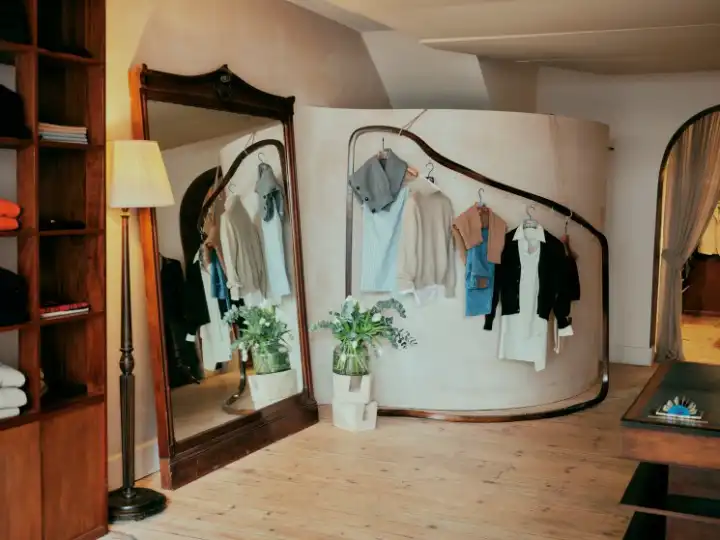
Sunny travels offer you the chance to explore new, more carefree versions of yourself – and your wardrobe. You might pick up a punchier fragrance, swap your classic watch for a bright-yellow waterproof Swatch chronograph or experiment with new patterns. But when you return home, these purchases often feel out of place. So you store them away, together with your memories of the trip.If that scenario feels familiar, it’s probably because, until recently, most resort destinations had little to offer beyond souvenir shops stocked with everyday necessities for forgetful travellers and mass-produced beachwear. Having made enough bad shopping decisions, today’s holidaymakers are seeking more meaningful items that are unique to the place that they’re visiting but will also enrich their lives when they get back home. Montesol Experimental, in the heart of Ibiza’s Old TownSelect swimwearHoteliers have spotted the opportunity and have started to put more effort into satisfying guests’ appetite for purchases on the road. Retail is no longer just an afterthought. Where once, even in the most luxurious establishments, hotel boutiques were usually confined to badly lit corners and run by third-party companies, many have now evolved into thoughtfully designed retail spaces employing in-house creative teams to curate one-of-a-kind fashion selections, home decor and locally produced beauty products. These boutiques have become an important part of the hospitality experience, helping to lure people in, just as the right restaurant atmosphere or a signature drink on a bar menu might.Here, Monocle speaks to the creative directors, buyers and entrepreneurs who have taken up residence in sunny locations around the world, upgrading hotel boutiques in places such as the Greek isle of Paros, Italy’s Porto Ercole and the Cayman Islands.1.Bohemian exhibitsMontesol ExperimentalIbiza, Spain The Montesol Experimental hotel opened in the heart of Ibiza’s Old Town last year in a building that dates back to the early 20th century. “When we had the opportunity to get the oldest hotel in Ibiza, a Unesco World Heritage site, we were thrilled,” says Pierre-Charles Cros, co-founder of the Experimental Group, which also owns the island’s much-loved Experimental Beach club. The building was renovated by Parisian designer Dorothée Meilichzon, who used pastel colours to capture Ibiza’s sunny, bohemian spirit.Ever-changing curationPit stop at Café MontesolAll that glittersBespoke selection of accessories and craft piecesSpecial attention was paid to the boutique, which you’ll find by the hotel’s entrance. Cros saw a chance to use the space as a window into the Montesol experience, providing a taste of the best that Ibiza has to offer. The challenge was in creating the most interesting space possible within the compact area. “We wanted to showcase a selection of items that changes several times throughout the season and features a wide range of local talent,” says Cros, pointing to the rows of colourful kaftans lining the limewash walls, leather bags by Spanish brand Malababa, handwoven jackets by Gypsy Truck and gold jewellery crafted in nearby workshops. “If you make it too practical, it stops being about presenting a curation and doesn’t really inspire anybody,” says Cros. “Building a strong hotel brand extends to retail. It’s yet another dimension of the service that you offer guests to ensure that they remember you after they have gone home.”montesolexperimental.com2.Heart of the countryHôtel Crillon le BraveVaucluse, FranceSince Hôtel Crillon le Brave was established in 1989, its owners have considered shopping to be an important part of the customer experience. “We have always had a retail corner,” says general manager Dagmar Lombard. However, it was only when fashion and property entrepreneur Patrick Pariente acquired the premises 30 years later that it introduced a dedicated boutique space filled with Made in France keepsakes.Overlooking the countryside of Vaucluse, 35km northeast of Avignon, the boutique offers guests glimpses of the village’s surroundings before they even step out of the 17th-century hamlet. Its rails are lined with souvenirs such as silk scarves crafted in northern France by Inoui Editions, linen dresses from Luxe Provence made between Provence and Paris, and embroidered cotton blouses from Valentina Store produced in an atelier a few kilometres away in Malaucène. Hôtel Crillon le Brave’s boutiqueScarves from Inoui EditionsDagmar LombardVaucluse’s countrysideAs well as highlighting the region’s savoir-faire and skilledcouturières, the in-house Hôtel Crillon le Brave collection of wicker baskets, espadrilles and outerwear has proven to be an effective communications tool, spreading the word for the luxury hotel group, which has outposts in Saint-Tropez, Paris and Méribel. Every space takes inspiration from its surroundings; in Crillon le Brave, this translates to rustic shelving, Génoise-tiled floors and luscious pots of lavender. “As a family-owned hotel, we like to tell a story through the brands that we stock,” says Lombard.maisonspariente.com3.Caribbean collectionDolores at Palm HeightsCayman IslandsUrban fashion capitals no longer have exclusivity when it comes to brand collaborations. Today, you can find limited-edition items by the likes of Wales Bonner, Tekla and Bode even in the Caribbean. In the Cayman Islands, the founder and creative director of the Palm Heights hotel, Gabriella Khalil, regularly teams up with some of fashion’s most in-demand names for the hotel’s shop, Dolores. The boutique stocks exclusive items such as sarongs by Christopher John Rogers and striped pyjamas by Danish giant Tekla. New York-based Bode even adapted the hotel’s towels into smart terry jackets. “We have collaborated with Bode on our uniforms from the very beginning and, since then, we have also designed our first collection with them,” says Khalil. “Art, design and fashion has always been a part of our ethos.”Khalil also prioritises designers and brands from the Caribbean. “I launched Dolores with [crochet knitwear specialist] Diotima because the label’s clothes are made between Jamaica and New York, and now we’re collaborating with [Jamaican-US label] Theophilio,” she says. “We want to involve people who are making waves in fashion but we’re also in the Caribbean, so we need our items to reflect that.”The hotel’s line of merchandise, Palm Heights Athletics (PHA), consists of branded shorts, jumpers, socks and, soon, a range of pha sunglasses. “We want to provide items that people will use when they go home, not just on holiday,” says Khalil. “I was nervous about launching a hotel shop at first but I have surprised myself with how passionate I have become about Dolores.”palmheights.store4.Exclusive experiencesIl PellicanoPorto Ercole, ItalyTuscany’s Argentario coast is best known for its clear waters and rugged cliffs. For Marie-Louise Sciò, it’s also home. Her family has been running Il Pellicano here since 1979. The hotel was opened in the 1950s by a US socialite and a UK aviator as a haunt for their glamorous friends, and has always had a certain magic associated with it.Sciò, who took over as CEO and creative director in 2011, wanted her guests to be able to take some of that magic home with them. So she opened the Pellicano boutique and began curating collections that capture the hotel’s old-school elegance. “The boutique was born of a desire to extend the Pellicano’s charm into a shopping experience,” she tells Monocle. “I wanted a space where guests could find items that resonate with our philosophy.”Joy is central to this – hence the bright interiors, complete with pink cabinets and sunny accents. Sciò, who is her own best customer, mixes artisanal Italian brands such as Florence-based Loretta Caponi, best known for handcrafted bedding, with more established names including Métier, a London-based leather-goods label. In 2020 she launched Issimo Corner, a dedicated space for limited-edition products designed for Il Pellicano in collaboration with Scio. The exclusivity enhances the hotel’s five-star offering.issimoissimo.com5.House specialitiesLoja boutique at Casa MãeLagos, PortugalWhen former investment banker Veronique Polaert opened Loja boutique at Casa Mãe hotel in southern Portugal, she envisioned a retail destination in its own right and wasn’t discouraged by the lack of comparable shops in the region. Polaert was born in France and has lived in London and Los Angeles. Not being native to the area allowed her to take a risk in a city where change happens slowly. “Locals said that the concept wouldn’t work because Portugal’s hotel retail industry tends to focus on items considered useful for guests staying at the hotel, while our boutique was about decor,” says Polaert, who works with artisans across the country to design exclusive items for the boutique and promote Brand Portugal.Loja stocks limited-edition collaborations with furniture designers, textile ateliers and marble sculptors, including stoneware pieces by Braga-based Atulipa and colourful cotton beach towels by Futah, made in the northern Douro region. Polaert’s commitment to Made in Portugal also extends to the boutique’s interiors: she worked with Algarve-based firm Alberto Rocha on the custom tiles, while weaver Teresa Gameiro created jute rugs for the entrance. As for the staff’s smart uniforms, they were designed by Porto-based label La Paz, whose maritime-inspired garments also line the shop’s rails. “We curate a selection that reflects our sunny aesthetics,” says Polaert, who sees value in creating a sense of place and telling the stories of the region with her wares. “The trend of promoting local craftsmanship in hotels remains a niche concept but I like to think that Loja is proof that hotel retail can go beyond a mainstream approach.”casa-mae.com6.Retail romanticsAnthologist at CosmeParos, GreeceAndria Mitsakos has been working in the hospitality industry since the 1990s, helping to shape the communications strategies of a wide range of hotels, from Coquillade Provence and El Mangroove in Costa Rica to Phaea Blue Palace in Crete. “I remember the gift shops of the 1990s, which were stacked with things that you would never buy or necessities such as sun cream,” says Mitsakos. “We have moved through a number of different phases since then. For a while, hotel boutiques didn’t exist, then the big brands came in and started renting the retail space. Today we’re returning to authenticity.”What does authenticity look like when it comes to resort retail? “Items that have a sense of place, are exclusive to the area and tell a story of local craft,” says Mitsakos. She recently moved to her native Athens from the US and opened her by-appointment showroom, Anthologist. The shop is brimming with such products: think leather and brass belts for cinching caftans, gold and blue enamel jewellery paying homage to the Aegean sea, vintage textiles,komboloibracelets handmade using glass beads and customised stationery. This summer, Mitsakos will take Anthologist on the road with a boutique at Cosme hotel on Paros, hoping to meet travellers who share her passion for artisanal fashion. “People aren’t looking to buy the same items that they can purchase at home,” she says. “In summer resorts in particular, purchases are driven by emotion.”Andria MitsakosExterior of the CosmeA more intimate retail experienceCrocheted bag by AnthologistCosme is located in Naoussa, a village at the heart of the island. Mitsakos’s space is in the middle of the lobby. “It’s completely open, with no lock and key, and no opening hours,” she says. “You just pass through, rather than having to open a door and commit to spending time inside.” She points to a new trend in hotel retail that is all about creating more inviting shopping spaces. “It’s like being in someone’s closet. As you walk past, you might try on a blouse or pick up a beautiful bracelet. It’s a poetic approach that takes me back to the era of the grand hotel.” Because it’s in a summer outpost, the shop’s selection naturally caters for hot weather but Mitsakos also sprinkles in home decor pieces such as hand-blown vases or year-round fashion items such as kimonos to ensure that customers will still use these purchases long after they fly home with them.Even as resort retail evolves, established luxury names will always dominate a part of the market, says Mitsakos. “Travel is aspirational. People want to spend while they’re on holiday, so this is an easy way for the big brands to gain access to a new clientele.” Yet people are now seeking out intimate experiences, creating more space for concepts such as Anthologist to pop up. “Ours is a very romantic approach to retail,” says Mitsakos. “I picture someone coming in, buying stationery and a beautiful pen, writing a letter and tucking it into their lover’s bag before leaving for the airport.”anthologist.comBringing it all back homeFew things can bring back memories like a holiday purchase, however small – even a T-shirt or a cap picked up on your travels can revive moments spent in the sun if they feature, say, the logo of your favourite summer resort. “Hotel merchandise is so popular because it represents an experience,” says Francesco Sersale, head of business development and marketing at the family-run Le Sirenuse hotel on the Amalfi Coast. “It’s a marker of having been somewhere.” Given their limited availability, items such as a graphic T-shirt from Positano seafood restaurant Da Adolfo, featuring its widely recognised fish motif, or a tote bag from Les Roches Rouges hotel on the Côte d’Azur could be considered more exclusive than many designer accessories. Here are three must-have items from the Mediterranean.Float from Hotel du Cap, AntibesT-shirt from Da Adolfo, PositanoTrinket tray from Le Sirenuse

Bacteria Show New Ways to Recycle Plastic
Technology 2026-01-09 05:57:14

Bacteria Show New Ways to Recycle Plastic

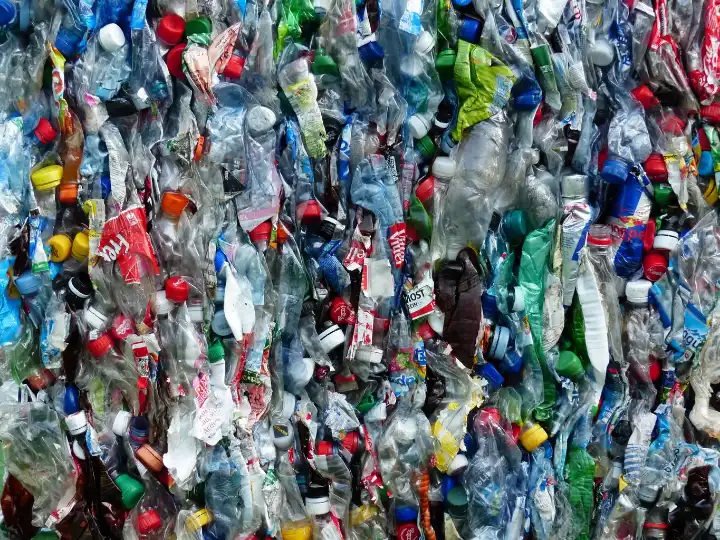
Bacteria Show New Ways to Recycle PlasticNFK Editors - May 1, 2020Recently, researchers have reported on two different ways to break down different kinds of plastic. The new advances could lead to easier, high-quality recycling, and help deal with toxic plastic pollution.The world is drowning in plastic, but only 9% of plastic products are ever recycled. Every year, over 17 trillion pounds (7.72 trillion kilograms) of plastic are washed into the oceans.The world is drowning in plastic, but only 9% of plastic products are ever recycled. Every year, over 17 trillion pounds (7.72 trillion kilograms) of plastic are washed into the oceans.(Source: Carsten ten Brink, via Flickr.com.)But bacteria may help recycle, even when humans don’t.Bacteria are tiny living things – so small you need a microscope to see them. Bacteria feed themselves in many different ways. Some bacteria can “eat” other things by changing the chemicals in those things into something that will help the bacteria grow.The secret to this is enzymes. Bacteria use enzymes to cause chemical changes. Enzymes can work like a pair of scissors, snipping and breaking apart other materials.Bacteria are tiny living things that can “eat” other things by causing chemical changes using enzymes. Enzymes can break apart other materials. The drawing above shows how theIdeonella sakaiensisbacteria breaks down a plastic bottle.(Source: G.Mannaerts [CC BY-SA], via Wikimedia Commons.)PETMost people are familiar with PET*plastic. It’s used in water and soda bottles. About 140 billion pounds (63.5 billion kilograms) are produced every year. Most PET is thrown away, but even when it’s recycled, it can’t be made into new bottles. Usually it’s turned into products like carpets.In 2012, in a pile of decaying leaves, scientists discovered an enzyme called LCC*that slowly breaks apart PET plastic. Years later, scientists working at the French company Carbios chose LCC from nearly 100,000 enzymes. It was the best at breaking down PET.Most people are familiar with PET plastic. It’s used in water and soda bottles. About 140 billion pounds (63.5 billion kilograms) are produced every year. Most PET is thrown away, but even when it’s recycled, it can’t be made into new bottles.(Source: Hans-2, via Pixabay.)But the scientists wanted to improve LCC. They studied the enzyme and the way it attacked the PET. By testing thousands and thousands of slight changes to the enzyme, they came up with a new version of LCC. The new version can survive at higher temperatures and can eat through PET very quickly.The process turns the PET plastic back into the materials that it was made from. Those materials can then be used again to make new bottles or other products.The researchers tested their new LCC against the original enzyme, and were impressed with the results. The new enzyme was able to break up 90% of the PET in just 10 hours. The lighter area in the image above shows plastic being eaten by an enzyme (not LCC).(Source: Screenshot, VOA News.)The researchers tested their new LCC against the original enzyme, and were impressed with the results. When the conditions were just right, the new enzyme was able to break up 90% of the PET in just 10 hours. The original enzyme took about 20 hours and only broke up half of the PET.Carbios hopes to start recycling plastic on a large scale by 2024 or 2025.PolyurethanePolyurethane is light and flexible. It’s used in products from shoes to diapers. It’s also used in larger products like furniture, refrigerators, and even buildings. In 2015, Europe produced around 7 billion pounds (3.18 billion kilograms) of polyurethane.But polyurethane is hard to recycle, since it doesn’t melt when it’s heated. It also contains dangerous chemicals that can cause cancer.Polyurethane is light and flexible. It’s used in products from shoes (above) to diapers. It’s also used in larger products like furniture, refrigerators, and even buildings. In 2015, Europe produced around 7 billion pounds (3.18 billion kilograms) of polyurethane.(Source: SABO S.p.A., PressReleaseFinder, via Flickr.com.)In March, German scientists reported on a new kind of bacteria that can help break down polyurethane. The scientists found the bacteria, calledPseudomonas sp.TDA1, in an area with lots of older, cracking plastic. It’s the first kind of bacteria known to help break down polyurethane.The scientists hope that by studying the way the bacteria attacks polyurethane, they’ll discover new ways of breaking down this dangerous plastic.Scientists have discovered a new kind of bacteria that can help break down polyurethane. Studying how the bacteria attacks polyurethane could lead to new ways of breaking down the plastic. Above, polyurethane used in a building (between the two parts of the wall).(Source: KVDP [Public domain], via Wikimedia Commons.)*PET stands for Polyethylene terephthalate. LCC stands for leaf-branch compost cutinase.Check Yourself0/41. Bacteria are tiny living things that feed on unusual "foods".True   False2. Bacteria use enzymes to cause _______________ changes.3. How much of the PET was the new LCC enzyme able to break down?20%50%90%10%4. What disease can be caused by the dangerous chemicals in polyurethane?The scientists at Carbios had to try many things that didn't work before they found a solution that worked well. How do you motivate yourself to keep going even when things don't seem to be working out?ResetSourceswww.sciencemag.orgwww.theguardian.comarstechnica.comwww.theguardian.comwww.voanews.comwww.smithsonianmag.comwww.dw.comearther.gizmodo.comShare:

Step into atelier Luca Avitabile, Naples’ bespoke shirtmaker
Fashion 2026-01-12 03:14:55

Step into atelier Luca Avitabile, Naples’ bespoke shirtmaker

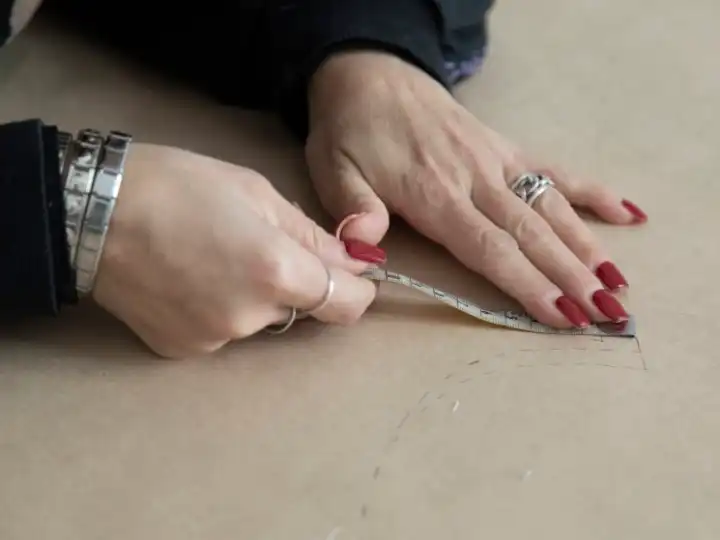
Calling on an expert cloth-cutter shouldn’t be reserved for special occasions or formal suiting. Skilled artisans around the world take commissions for everything from made-to-measure shirts to custom-made gloves, ties and footwear designed to last a lifetime. Booking an appointment with a local tailor or visiting a specialist atelier while on the road is a smart investment that will ensure that you feel good and look your best during professional engagements and social gatherings. The process also opens up opportunities to build relationships with the people making your clothes and to follow the process from beginning to end, a refreshing change from fast fashion and next-day deliveries.Naples is a city that’s teeming with workshops that produce one-of-a-kind items. You’ll find the best ties at Marinella, expertly cut trousers at Marco Cerrato, elegant leather gloves at Omega and the finest-quality shirts at Luca Avitabile. “A made-to-measure shirt offers almost infinite possibilities and a level of comfort that is hard to get any other way,” says Neapolitan shirtmaker Luca Avitabile, who is part of a tight circle of southern-Italiansartorieoffering bespoke shirting for discerning shoppers from around the world.Finished productsPersonal measurementsEarning your stripesThe experience of having a shirt made at Avitabile’s atelier usually starts with a walk along the streets of Naples. Connoisseurs know to steer their way to Via Toledo, a hectic shopping promenade in the city centre. Between the blinking shop signs, they duck through a discreet entryway, walk one flight up an echoing stone stairwell, ring the bell and step into Avitabile’s terrazzo-floored fitting room. After a cup of coffee and the usual pleasantries, Avitabile will pull out a tape and swiftly start taking measurements. It is a seasoned performance. Avitabile was born into the trade – his father was a shirtmaker, as were his grandparents – and also has a degree in shirt-cutting from the Instituto Secoli in Milan.The model of the shirt follows the Neapolitan custom of having slightly higher armholes than the English standard. “It allows for a snug fit without sacrificing comfort,” he says. Then it’s time to get creative and choose from an array of options: the shape and stiffness of the collar, the type of cuff, the question of front pockets. In Avitabile’s drawers, there are hundreds of fabric swatches, from striped Carlo Riva twill to Alumo’s soft Swiss cotton or even Japanese denim. And don’t forget the buttons: should the mother-of-pearl be Australian or Tahitian? Though Avitabile works with old-school rigour, his version of the tailored look is relaxed. On most days the shirtmaker wears the Friday polo, sewn from a lightweight piqué fabric, paired with a sharp overshirt. The casual models were introduced in 2020 as part of a ready-to-wear line and have proven to be just as popular custom-made. “Clients who come for a classic shirt usually add a [made-to-measure] overshirt or a polo to their order,” says Avitabile.Choosing materialsAfter the introductory appointment, Avitabile sits down to cut a shirt pattern from plain muslin. He then follows this up with a fitting. “This is the most delicate part of the whole process,” says Avitabile, who is a firm believer that there is nothing that can’t be fixed with a few pins and another turn of the sewing machine. “That is my favourite part.”After the fitting, the atelier is ready to start cutting into real fabric. Within six weeks the finished shirts land on customers’ doorsteps, wherever they are in the world. The workshop archives every customer’s personal shirt pattern, meaning that after your first order, in-person fittings are no longer essential.Of course, this decidedly old-fashioned process is far lengthier than heading to a department store and picking out a mass-produced item that’s sitting on a shelf. But it’s also a satisfying one that gives you a chance to invest in valuable craft traditions, experience exceptional service and get creative too.lucavitabile.itMonocle comment: Fast fashion is convenient but also limited and bad for the environment. Having clothes tailored puts you at the centre of the process – and the outcome. The result? A wardrobe that you’ll love for a lifetime.

Pitti Uomo: 97th edition
Fashion 2026-01-19 00:11:09

Pitti Uomo: 97th edition

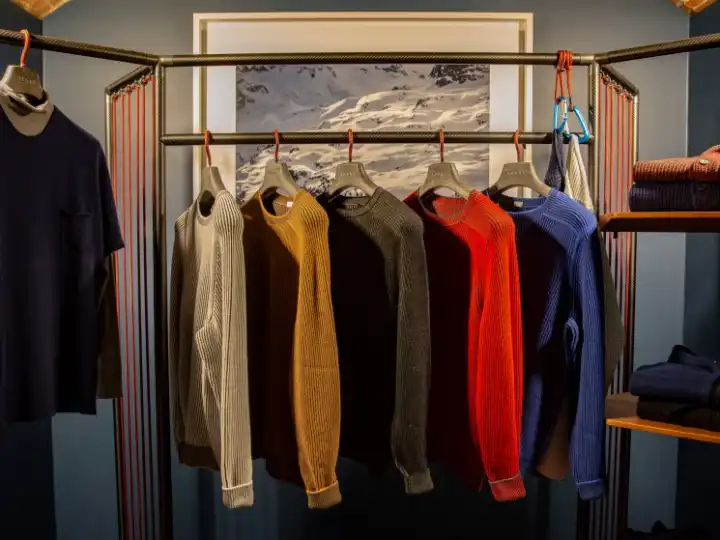
The year is young but the menswear industry has already wrapped up one of its key events: the autumn/winter edition of Pitti Uomo. The menswear tradeshow, which took place this week in a crisp yet sunny Florence, is now in its 31st year and continues to occupy a unique place in the fashion world: it is by far the biggest and most impressive tradeshow, for men’s or womenswear. Some 30,000 buyers and editors flocked to the hallowed halls of the Fortezza da Basso and attended off-site runway shows by Jil Sander and Stefano Pilati’s young label Random Identities. Although official figures have yet to be released, according to fair CEO Raffaello Napoleone, this season there were increased buyer numbers from every nation except Russia and Italy. (The Italian market continues its decline when it comes to internal consumption of clothing.) Here are our Top 15 picks from the fair: these items will hit shops from August but now’s as good a time as any to start making your winter wishlist.

Plant Therapy: The Safe, Pure & Trusted Essential Oil Expert – Your Comprehensive Aromatherapy Guide
Featured 2025-12-29 04:47:06

Plant Therapy: The Safe, Pure & Trusted Essential Oil Expert – Your Comprehensive Aromatherapy Guide

In today’s pursuit of natural wellness and mind-body balance, essential oils have become an integral part of modern lifestyles. Since its founding in 2011 in the USA, Plant Therapy has grown into a globally trusted brand for aromatherapy enthusiasts and families, thanks to its unwavering commitment to quality, safety, and education. This guide will take you deep into how Plant Therapy enables every user to embark on their own essential oil journey safely and confidently through rigorous scientific testing, transparent business practices, and extensive expertise.1. Core Brand Philosophy: Safety First, Education FoundationalPlant Therapy’s brand foundation is built on a simple promise: to provide the highest quality essential oils that everyone can use with peace of mind. This philosophy materializes through three core pillars: ● 100% Natural & Pure Quality: All oils undergo stringent Gas Chromatography-Mass Spectrometry (GC/MS) testing, with reports from independent third-party labs ensuring no additives, no dilution, and chemical profiles that meet expected standards. ● KidSafe® Commitment: With a special focus on family safety, the brand developed the KidSafe® product line, which includes synergies specifically formulated and assessed by toxicologists for children aged 2-10, along with safety guides, allowing the whole family to enjoy aromatherapy benefits safely. ● Unparalleled Customer Education & Support: Plant Therapy boasts a team of certified aromatherapists who provide a strong knowledge backbone through blogs, weekly live sessions, detailed usage guides, and one-on-one customer support, eliminating confusion and risks associated with usage. 2. Core Product Ecosystem: From Singles to Personalized SolutionsPlant Therapy offers a one-stop aromatherapy solution with clearly designed product lines catering to everyone from beginners to experts. ● Single Essential OilsA curated collection of over 150 single oils, from common Lavender and Lemon to rare Sandalwood and Rose, each traceable to its plant source and extraction method, forming the foundation for personalized blends. ○ Explore Singles: Single Essential Oils ● Synergy Blends & Special FormulationsExpertly pre-blended formulas designed for specific needs, such as "Tranquil" for sleep or "Respiratory Aid" for congestion, saving users the hassle of DIY blending. ○ Find Your Solution: Synergy Blends ● KidSafe® LineSynergies and carrier oils specially developed for children aged 2-10, using gentle formulations, making them the top choice for parents. ○ Choose for Kids: KidSafe® Essential Oils ● Carrier Oils & Personal CareHigh-quality carrier oils like Sweet Almond and Jojoba are essential for safe topical application. The brand also offers a wide range of ready-to-use skincare, haircare, and cleaning sprays made with safe essential oils for daily convenience. ○ Complete Your Toolkit: Carrier Oils For Essential Oils | Plant Therapy and Natural Body Care ● High-Quality DiffusersTo ensure the optimal aromatic experience, Plant Therapy offers quiet, durable ultrasonic diffusers, the ideal companion for releasing the benefits of essential oils.3. Quality Assurance: The Power of Transparency & SciencePlant Therapy’s credibility is built on impeccable quality control. ● Publicly Accessible GC/MS Reports: Full test reports for each batch of oil are published on their website, ensuring complete ingredient transparency for customers to review at any time. ● Affordable Luxury: By operating on a direct-to-consumer model, they eliminate middleman markups, making top-tier essential oils more accessible. ● Sustainable & Ethical Sourcing: The brand is committed to working with trusted farms worldwide to ensure sustainable plant sources and ethical procurement practices. 4. How to Start Your Aromatic JourneyFor new users, Plant Therapy offers a simple and straightforward entry path. 1. Start with a Beginner Set: The "Beginners’ Set" is highly recommended, containing the most commonly used oils, a carrier oil, and detailed guides, offering great value. 2. Dive into Learning: Utilize the rich "Blog" and "Learn" sections on the website to understand oil chemistry, safe dilution ratios, and specific applications. 3. Shop Smart: For consumers looking to expand their collection or purchase for family, Plant Therapy's Black Friday sale is the premier annual event, featuring significant discounts across almost all product lines, making it the perfect time to stock up on staples or try premium rare oils. Subscribing to their newsletter provides first access to promotions. 5. Conclusion: A Trusted Partner in Natural WellnessPlant Therapy is more than just an essential oil retailer; it is an educational platform and community dedicated to promoting safe and effective aromatherapy. It has successfully translated complex professional knowledge into safe practices easily adopted by ordinary households. Whether you seek stress relief, better sleep, family wellness support, or simply to enjoy beautiful aromas, Plant Therapy provides products and knowledge you can trust 100%, allowing the power of natural healing to safely integrate into every day of your life.Ready to begin a safe and effective aromatherapy experience? Visit the Plant-Based Beauty Products | Natural Living Solutions | Plant Therapy now to explore the full product range and access free educational resources.

News Roundup: US Rocket Launch, Tower Protest Ends, & a Name Change
Technology 2025-12-26 12:32:48

News Roundup: US Rocket Launch, Tower Protest Ends, & a Name Change

News Roundup: US Rocket Launch, Tower Protest Ends, & a Name ChangeNFK Editors - May 31, 2020SpaceX Launches First US Human Spaceflight Since 2011On Saturday afternoon, a SpaceX Falcon 9 rocket lifted off from Florida, carrying two American astronauts into space. It was the first time people have been sent into space from the US in nearly 10 years. It’s also the first time a private company has sent people into space.On Saturday afternoon, a SpaceX Falcon 9 rocket lifted off from Florida (above), carrying two American astronauts into space. It was the first time people have been sent into space from the US in nearly 10 years.(Source: NASA/Bill Ingalls [Public domain], via Wikimedia Commons.)The launch marks a big change for NASA. In the past, NASA designed and owned its ships, but had other companies build them. The Falcon 9 rocket and the Crew Dragon capsule (which carries the astronauts), are built and owned by Elon Musk’s SpaceX company.For nearly 10 years, the US has been paying Russia to carry its astronauts into space. That makes this launch a big step for the US-based space program, though it’s still seen as a test.NASA astronauts Bob Behnken and Doug Hurley have each made several trips into space before. The two will fly through space for about 19 hours before docking with the International Space Station (ISS) on Sunday morning.NASA astronauts Bob Behnken (left) and Doug Hurley (right), shown above during a test in March, have each made several trips into space before. The two will fly through space for about 19 hours before docking with the International Space Station on Sunday morning.(Source: NASA.)It’s not clear exactly how long the astronauts will remain on the ISS, but when they leave, they will also be the first to test Crew Dragon’s return to Earth.Update:The Crew Dragon capsule safely docked with the ISS on Sunday morning.South Korean Man Ends Year on Top of TowerOn Friday, a man in Seoul, South Korea came down from an 82 foot (25 meter ) tower, where he has spent nearly a year. Kim Yong-hee spent 354 days on a small platform on top of a tower in a busy area of the Korean capital as a protest against the company Samsung.Mr. Kim was fired by Samsung 25 years ago for trying to organize Samsung’s workers into unions. Unions help workers protect their rights and make better deals with companies.On Friday, Kim Yong-hee came down from an 82 foot (25 meter ) tower, where he spent nearly a year as a protest against the company Samsung. The tweet below from the New York Times shows Mr. Kim in April.Overlooking the busiest intersection in Seoul is an 82-foot traffic camera tower. At the top is Kim Yong-hee, a 60-year-old man with a sleeping bag, plastic sheeting and placards denouncing Samsung. He has been there for 315 days. https://t.co/S9AtnHDYx2— The New York Times (@nytimes) April 19, 2020Mr. Kim has been protesting against Samsung in different ways for the last 25 years. On June 10, 2019, Mr. Kim used a crane to reach the platform at the top of the tower. He has lived there ever since. His friends sent him food and other supplies with a rope. He lowered his waste the same way.Now Samsung has apologized to Mr. Kim and made a deal with him. As a result, Mr. Kim has finally ended his protest, coming down on a fire ladder. He was greeted with flowers at the bottom.Elon Musk and Grimes Rename Their Baby – SlightlyWhen singer Grimes and Elon Musk (the man behind the Tesla car company and the SpaceX company mentioned above) had a baby, it made the news. That was partly because both parents were famous. But it was also because they chose to name the boy “X Æ A-12”.Embed from Getty ImagesIn early May, singer Grimes and Elon Musk (shown above in 2018) announced that they had had a baby and had named it “X Æ A-12”. Now the baby has been renamed “X Æ A-Xii”.The couple explained how they came up with the name X Æ A-12. The ‘X’ stands for something unknown. The ‘Æ’ is meant to stand for AI (Artificial Intelligence). The A-12 comes from a kind of airplane.Now the couple has announced that the child’s name has been changed – but not by much.Instead of “X Æ A-12”, the baby is now named, “X Æ A-Xii”. Xii still means ’12’, but it’s written in a number system known as Roman numerals. Grimes says she thinks the Roman numerals look better.Sourceswww.nytimes.comwww.theverge.comwww.npr.orgwww.nytimes.comwww.dw.comwww.scmp.comwww.theguardian.comwww.abc.net.auwww.bbc.comShare:

Tailoring’s youthful refit
Fashion 2026-01-02 10:30:53

Tailoring’s youthful refit

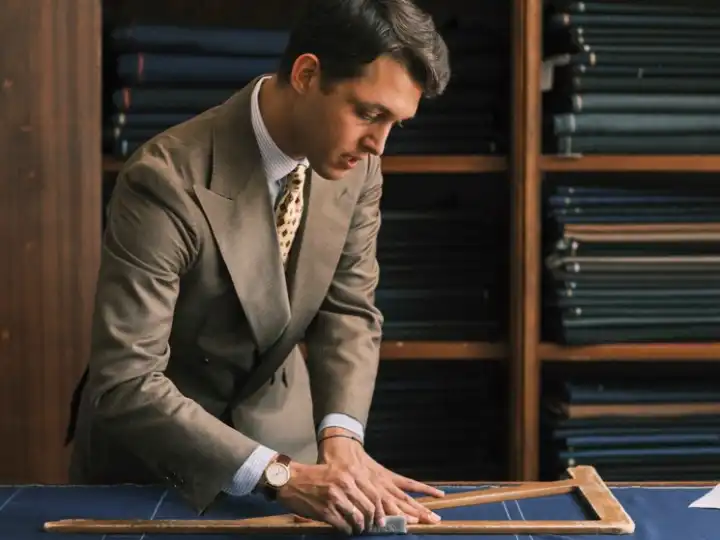
FashionAugust 24, 20212 MIN 7 SECTailoring’s youthful refitThey might not fit the archetype of the high-end tailor but a new generation of smart young outfitters are now at the cutting edge of bespoke menswear. We get the measure of four such craftsmen in London, Berlin, Hong Kong and Perugia.Editor Agathe TrouetteSubscribeEmailiTunesYouTube

Using Apps to Track the Spread of the Coronavirus
Technology 2026-01-02 21:21:31

Using Apps to Track the Spread of the Coronavirus

Using Apps to Track the Spread of the CoronavirusNFK Editors - April 30, 2020Governments and businesses worldwide are creating smartphone apps to help track the spread of the new coronavirus. The apps could be an important part of easing up on lockdowns, but they are also causing some worries.Tracking the spread of a disease is an important step in stopping an outbreak. By tracking down people who have been in contact with COVID-19 patients, health experts can warn them, and keep the virus from spreading further. This is called “contact tracing”.As governments remove coronavirus lockdown limits, they’ll need to be able to quickly identify and contain new outbreaks. Contact tracing will be an important part of that process.Tracking the spread of a disease is an important step in stopping an outbreak. By tracking down people who have been in contact with COVID-19 patients, health experts can warn them, and keep the virus from spreading further. This is called “contact tracing”.(Source: CFCF [CC BY-SA], via Wikimedia Commons.)But because the coronavirus spreads so quickly to so many people, it’s almost impossible to trace all contacts with phone calls and in-person visits. That’s why many people hope that digital contact tracing with smartphones will help.Most contact tracing apps collect information about where people have gone and the people they’ve had contact with. The apps use smartphone features like GPS (for the phone’s location) and Bluetooth (to learn about other nearby phones).Most contact tracing apps collect information about where people have gone and the people they’ve had contact with, using GPS and Bluetooth. This picture from Hong Kong in the early days of the coronavirus shows how phones might help keep track of contacts.(Source: 中国新闻网 [CC BY], via Wikimedia Commons.)The apps can notify users when one of their recent contacts has been found to have the coronavirus. Some systems also notify governments or health care workers.Currently, dozens of apps have been created or are being developed around the world. But there are concerns about privacy and security with these apps. Some people worry the apps are being made too quickly and may not protect people’s private information.Currently, dozens of apps have been created or are being developed around the world. But there are concerns about privacy and security with these apps. This screenshot is from an app made for Singapore which has been shared with other countries.(Source: Ben McLean [CC BY-SA], via Wikimedia Commons.)Others are afraid the apps will let governments track people in ways that could be used for much more than just controlling the coronavirus. They fear that once governments have the ability to track people, they won’t give it up, even if the threat of the coronavirus passes.Some app developers are working to protect user privacy. Apple and Google have recently teamed up to create an app for Apple and Android phones. Under Apple and Google’s system, information about contacts will stay on a user’s phone unless the user chooses to share it.Some app developers are working to protect user privacy. Apple and Google teamed up to create an app which keeps information about contacts on a user’s phone unless the user chooses to share it. The cartoon above shows how contact tracing can be made private.(Source: [CC0, Public Domain] (modified) Nicky Case.)For these apps to work, governments will need to make sure people are being tested for the coronavirus. Test results are what start the contact tracing process. In some systems, health care workers report results. In others, it’s up to the patient.About 60% of the people in an area need to use an app for it to be helpful in limiting the spread of the virus. That could be a problem. In places which already have apps, the numbers of users are far lower. Norway has one of the highest sign-up rates, but only 30% of people in Norway are using the app.About 60% of the people in an area need to use an app for it to be helpful in limiting the spread of the virus. There are also other challenges, like making sure apps don’t drain phone batteries too quickly. For many older phones, the apps may not work at all.(Source: Martin Abegglen, via Flickr.com.)There are also other challenges, like making sure apps don’t drain phone batteries too quickly. For many older phones, the apps may not work at all.Still, if smartphone apps can handle most contact tracing, they could help limit the spread of the coronavirus, and make it easier for health care workers to track the people that the apps don’t catch.Check Yourself0/41. Contact tracing is a way of tracking down people who have come into contact with a sick person.True   False2. Digital contact tracing with smartphone _______________ could help make contact tracing more automatic.3. Which of the following was NOT mentioned as a possible problem with contact tracing apps?the apps aren't games so they won't be popularthe apps might use too much batterythe apps might not protect private informationthe apps might give governments too much power4. In Apple and Google's system, the _______________ decides if they will share information.Think back to your life before the lockdown. List the places where you got together with people. Could you have remembered everyone you came into contact with during a two-week period?ResetSourceswww.nytimes.comwww.wired.comwww.bbc.comwww.nzherald.co.nzwww.abc.net.auwww.laht.comwww.dw.comwww.theguardian.comtheconversation.comShare:This week marks 25 years of humans living in space. On November 2, 2000, three astronauts became the first full-time workers at the International Space Station. Since then, the ISS has never been empty.Is Seeing Believing? AI Videos Look Extremely RealNFK Editors - Nov 5, 2025Over the last year or so, the quality of AI-generated videos has become so good that it’s extremely difficult to tell whether a video is real or not. An English TV channel recently ran a show about AI. At the end of the episode, the “woman” presenting the show announced that she wasn’t real.

A bustling Japanese market that offers a luxury shopping experience
Fashion 2026-01-11 08:47:46

A bustling Japanese market that offers a luxury shopping experience

May 2024InventoryA monthly round-up of all you needThat food in Japan is outstanding is hardly news but what really separates the average meal in Tokyo from other big cities is often the quality of the ingredients. From grapes wrapped in muslin on the vine to freshly caught fish handled with the gentlest touch, Japanese producers are on another level. And what if the humble shopper wanted to get their hands on such produce? One new food market in Tokyo is offering just that and more under one roof. This is no regular supermarket – and is priced accordingly – but it’s a fascinating stop for anyone wanting to get to the heart of why the best Japanese food is so good. Even the sushi counter here, Sushi Saito, is a Michelin-starred operation.Choose your own ‘dashi’ at Okume ShotenGet your daily catch from the best fish wholesalersThe Azabudai Hills Market – part of Mori Building’s giant new development – covers 4,000 sq m and 34 speciality shops. “We have had lots of experience with restaurant tenants but we had never done food retail,” says Masanori Tsukamoto, who developed the market with his colleague Takashi Ohgaki. “When we thought about how to do really good food retail, it was all about high-quality products,” says Tsukamoto. “We realised that great restaurants had access to the best produce so we talked to the ones we worked with about where they were getting their produce from. Sushi restaurant Saito told us that it was getting its fish from [seafood wholesaler] Yamayuki. We felt that it would be innovative if businesses that were only doing B2B became available B2C.”Serving food with finesseTraditional welcome at Maehara grilled-eel shop“We wanted to showcase the richness of Japanese food culture, so we selected retailers of the highest quality for each category,” Ohgaki tells Monocle. “And to show the variety of Japanese cuisine, not just sushi and tempura but also home cooking, from potato salad tokaraage.” Hiyama butchers’ shop has been based in Ningyocho – a quaint Tokyo neighbourhood – for more than 100 years. The Hiyama buyers favour Yonezawa wagyu from Yamagata, marbled with just the right amount of fat; the thinnest slices need only be licked by a flame and they’re good to go. Tsukiji Toritoh is another traditional wholesaler founded in 1907 on the fringes of Tsukuiji fish market; this is where the bestyakitorirestaurants are sourcing their birds – and now you can too.For fish, the team has netted top-drawer fishmongers Nezu Matsumoto and Yamayuki, which supplies many of the best restaurants in Tokyo. “I’ve been selling fish for 40 years but once I hit 60, I wanted to explore food education,” says Yukitaka Yamaguchi,  owner of Yamayuki. “It’s difficult to find an [marine] environment like Japan anywhere else. I want to show what’s out there. I don’t think farming is bad but I want people to know the natural taste of real, wild fish.” By working face to face with customers, Yamaguchi can also give advice. “We get to say, ‘It’s delicious if you eat it this way’”, he adds. One of the staff is skilfully cutting a 164kg tuna caught in Shimoda.For fresh fruit and vegetables, the market has called on Kyoto Yaoichi, a greengrocer, to handle only the best and most in season of produce: bamboo shoots (still covered in soil), the juiciest Japanese strawberries and perfectly ripemikancitrus. There are also unfurled ferns, fresh wasabi and edible flowers. This is the place for those ¥50,000 (€300) melons and presentation boxes of uniform Japanese cherries but they also have everyday vegetables – just better versions. Look at the sad, out-of-season produce in the typical urban supermarket and weep.Arranging vegetables at Kyoto YaoichiPremium fish lunchboxes There are 34 restaurants and food countersNezu Matsumoto is renowned for its fish and chirashi sushiBlend your own beans at Ogawa Coffee LaboratoryMeidi-Ya supermarketCitrus at Kyoto YaoichiSlicing tuna at YamayukiThe bread shop, Comme’N Tokyo, whose popular mother shop is in Okusawa in Tokyo, is excellent, though you might never find out. So long are the queues that only the most dedicated will be going home with one of its baguettes or pastel-coloured meringues. The young baker in charge, Shuichi Osawa, was the first Japanese to take home top prize at international bread competition Mondial du Pain. Osawa knows his audience and there are almost 100 varieties on offer. Just don’t be in a hurry.For pickles, customers will head to Nakaya, which, like so many classic food shops, originated on the outer edges of Tsukiji fish market. Nakaya is based in rural Ibaraki and specialises in vegetables pickled in rice bran. Free from additives, these pickles bear no relation to the wincingly sharp onions in a jar but allow the taste of the vegetable to shine through. Fordashistock – made frombonitoand the basis of so much Japanese cooking – the amateur chef can go to Okume Shoten, which has been selling seafood since 1871. Customers can select their owndashi. For miso, look no further than Tokyo favourite Sano.Expert counter service at Nezu Matsumoto Sealing the dealVarious cuts of fishVariety and vitality in actionNeighbourhood favourites include Hiyama butchers Baskets at the ready“The age group of our customers runs from seniors to young children,” says Ohgaki. “We have fish tanks that little kids can see, as well as a bakery dedicated for children [Comme’N Kids], so it’s a fun place for them as well.” From this month the Azabudai Hills Market Lab will host events and workshops that offer opportunities to eat the produce at pop-up sushi counters and sit-down lunch bars. Every aspect of a meal is available here, with ingredients so superb, that even the least adept cook might make the meal of a lifetime.azabudai-hills.comCase study:RiceRice is a Japanese preoccupation that potato-loving Western cultures can never quite get t o grips with. At Azabudai Hills, customers can buy from celebrated century-old Tokyo rice shop Sumidaya Shoten, which is now run by Shinichi Katayama. The rice is top quality, of course, but Katayama is also keen to teach people how to prepare it properly. “No matter how good the rice is, if it is cooked incorrectly, it will not be delicious.”Case study:WineWine is given its own space on an upper floor and run by Yamajin, a century-old wine merchant from Utsunomiya, led by Kenichi Ohashi, the only person in Japan to hold the Master of Wine title. It sells big French classics, amphora-aged wines from Georgia and a strong saké selection, and has a counter for trying the odd glass or two. For coffee lovers, emerge from the entrance (admiring the architecture by Thomas Heatherwick and architect Ai Yoshida of Japan’s Suppose Design) and pick up beans from Kyoto roasters Ogawa Coffee Laboratory. Dozens of varieties are lined up like fragrances and staff will blend according to taste.

Australian Bushfires Threaten Animals
Technology 2026-01-10 08:41:50

Australian Bushfires Threaten Animals

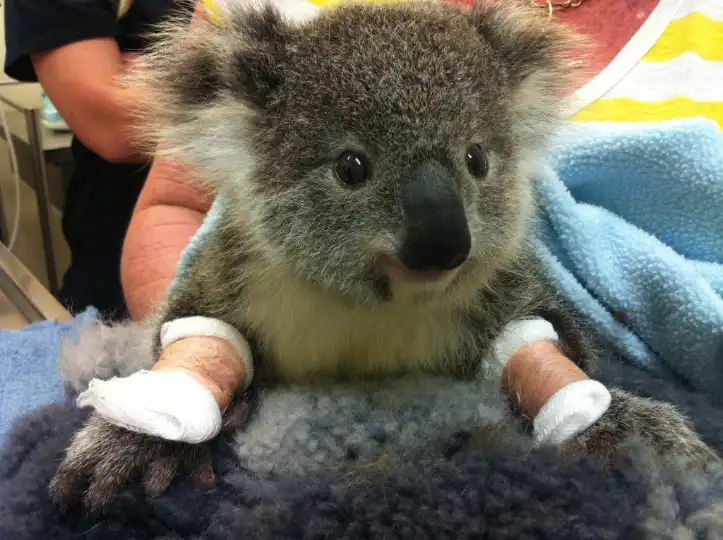
Australian Bushfires Threaten AnimalsNFK Editors - January 15, 2020New South Wales, Australia —(Map)Cooler weather and rain are expected in Australia, where this year’s bushfire season has brought damage like never before. The fires have been terrible for humans, and worse for animals.Since September, the fires have burned around 31,000 square miles (80,000 square kilometers). That’s nearly as large as Austria. Thousands of homes have been burned and 28 people have died.Cooler weather and rain are expected in Australia, where this year’s bushfire season has brought damage like never before. The fires have been terrible for humans, and worse for animals. This picture is from December.(Source: Sean Cox, USDA Forest Service.)Australia’s Bushfires     Bushfires are common in Australia because of the hot, dry weather. Strong winds can blow the flames and make them travel far and fast.     This year’s bushfires have set records for their size and the destruction they’ve caused. The country has been going through a very long drought. The dry conditions make things burn easily. Other weather patterns have just made things worse.     Though the bushfires weren’t caused directly by climate change, the climate crisis has helped create conditions that make fires like this more likely and more serious.Though the expected cooler weather and rain will make the fires easier to manage, experts believe many fires will continue for months. “These fires aren’t out and they’re not going to be out until they burn themselves out or we finish with a really big rain event,” said Victoria’s premier (leader), Daniel Andrews.Still, the change in weather is some of the best news Australia has had for months.Though the expected cooler weather and rain will make the fires easier to manage, experts believe many fires will continue for months.(Source: Michelle Moore, Bureau of Land Management, National Interagency Fire, via Flickr.com.)Early on, most reports about the bushfires focused on the loss of land and cost to humans. Recently, people have become more aware of the effects of the fires on animals.Chris Dickman, a scientist at the University of Sydney tried to figure out how many animals might have been killed by the fires. The number he came up with was surprisingly large: over 1 billion animals. Other scientists say it’s very hard to get this number right.A scientist at the University of Sydney says that over 1 billion animals may have been killed in the fires. The picture shows USDA Forest Service fire fighter Dave Soldavini, who is volunteering, with a rescued joey (young kangaroo).(Source: US Embassy Canberra.)Fast animals, or those that can fly, may be able to escape a bushfire. Slow-moving animals like koalas, may not.In New South Wales, around 8,000 koalas – about a third of the state’s koalas – are believed to have been killed. In other areas, like Kangaroo Island in South Australia, as many as 25,000 may have died.Slow-moving animals like koalas may not be able to escape the fires. Around 8,000 koalas are believed to have been killed in New South Wales. In other areas, the numbers could be as high as 25,000. The koala shown above was hurt in a fire in 2013.(Source: Ausgrid photos, via Flickr.com.)The loss of animals would be a tragedy any time and anywhere, but it could be especially bad news in Australia, which is home to many special animals that can’t be found anywhere else.Scientists worry that the bushfires might put an end to some kinds of animals that were already in danger of dying out.The loss of animals is especially bad news in Australia, which has many special animals not found anywhere else. Scientists worry that the bushfires might put an end to some kinds of animals that were already in danger of dying out. There were only a few hundred remaining Glossy Black Cockatoos, shown above. Now much of the area they live in has been destroyed.(Source: Aviceda [CC BY-SA], via Wikimedia Commons.)It’s not just about animals killed directly by the fires. Even when animals survive, it can be hard for them to stay alive in the world left behind by the fires. That’s because many of the places they live and their sources of food have been destroyed.For that reason, workers for Australia’s National Park are using helicopters to drop sweet potatoes and carrots onto 12 different areas where rock-wallabies live. Rock-wallabies often survive bushfires, but can have difficulty finding enough to eat once the fires have passed.Workers for Australia’s National Park are using helicopters to drop sweet potatoes and carrots onto 12 different areas where rock-wallabies live. Rock-wallabies like the one above often survive bushfires, but can have difficulty finding enough to eat once the fires have passed.(Source: Jesper Örtlund [CC BY-SA], via Wikimedia Commons.)The “1 billion animals” number doesn’t include farm animals like sheep and cows. Some people expect the fires to kill as many as 100,000 farm animals.Other animals, like thousands of wild camels, are being killed on purpose in order to protect farms and homes. Because of the drought, thirsty camels have been invading places where people live, looking for water.Insects and fish are also not included in the number. For fish, the worst could still be in the future. There is so much ash on the ground from the fires that when strong rains finally do arrive, rivers and lakes will be heavily polluted with ash.For fish, the worst could still be ahead. There is so much ash on the ground from the fires that when strong rains finally do arrive, rivers and lakes will be heavily polluted with ash. The picture above shows ash from the bushfires in New South Wales on a Newcastle beach.(Source: Tim J Keegan [CC BY-SA], via Wikimedia Commons.)Sourceswww.theguardian.comwww.abc.net.auwww.smithsonianmag.comwww.theguardian.comwww.abc.net.auwww.smithsonianmag.comwww.nytimes.comwww.voanews.comNew South Wales, AustraliaView Larger MapShare:

Coronavirus: More, Faster Tests, & Re-Using Masks
Technology 2025-12-30 12:10:21

Coronavirus: More, Faster Tests, & Re-Using Masks

Coronavirus: More, Faster Tests, & Re-Using MasksNFK Editors - April 2, 2020This article is the second in a series about different ways people are working hard to help bring the challenges of the coronavirus pandemic under control.Companies around the world are working quickly to help solve problems created by the new coronavirus, COVID-19. Recently, two big problems have been that there aren’t enough tests and that there aren’t enough masks.It is very important to be able to test quickly whether someone has COVID-19. Test results can help doctors figure out how to treat a patient, and whether they need to be isolated.It’s very important to be able to test quickly whether someone has COVID-19. Test results can help doctors figure out how to treat a patient, and whether they need to be isolated. Above is a kit used to test for COVID-19 in the US.(Source: U.S. Centers for Disease Control [Public domain], via Wikimedia Commons.)More importantly, when health experts know that someone has the disease, they can try to trace back, to find and help other people that person came in contact with. This can help to limit the spread of the disease.Getting clear numbers of how many people have the disease also helps scientists predict how the virus might spread, and figure out the best ways to fight it.Around the world, most countries haven’t been prepared to do enough tests. Germany can now test 500,000 people a week. The US has only recently tested 1 million people in total. Above, a drive-through testing station in Germany.(Source: Henning Schlottmann [CC BY-SA], via Wikimedia Commons.)But around the world, most countries haven’t been prepared to do enough tests. Even when tests did become available, they had to be sent off to a laboratory. It can take days to get the results back. In the US, the average wait time is still four to five days.Many companies have been working hard to produce more tests. They’ve also been working to produce faster tests. A US company called Abbott Laboratories has been given permission to begin producing machines that can tell in about 15 minutes whether someone has the coronavirus or not.A US company called Abbott Laboratories has been given permission to begin producing machines that can tell in about 15 minutes whether someone has the coronavirus or not. The machines, called ID Now (above), are small enough that they can be moved easily.(Source: Abbott Laboratories.)The machines, called ID Now, are about the size of a toaster – small enough that they can be moved easily. And best of all, the test materials don’t have to be sent off to a lab. The whole test happens on the machine.Other companies in the US and Australia have created similar tests. One of the problems with these tests is that they only catch patients who have had the coronavirus for several days, and miss people who just got the disease.With Abbott’s new machine, the test materials don’t have to be sent off to a lab. The whole test happens on the machine. One problem with these tests is that they only catch patients who have had the coronavirus for several days.(Source: Abbott Laboratories.)Early testing in the US was slowed because of strict government rules about what tests were allowed. These rules were designed to protect people. Normally, medical equipment and methods must be very carefully tested.But the coronavirus crisis is so severe that governments are now agreeing to new ideas with less double-checking than usual. One area where this is true is in the re-using of protective gear like masks and gowns.Because so many people have the coronavirus, supplies of medical gear like masks are running very low. Masks are generally used once and thrown away.The US government has agreed to allow a special cleaning system made by a company called Battelle. The system can clean up to 80,000 masks a day so that they can be re-used. Each mask can be re-used up to 20 times. Above, masks ready to be cleaned.(Source: Battelle.)Now the US government has agreed to allow a special cleaning system made by a company called Battelle. The system can clean up to 80,000 masks a day so that they can be re-used. Each mask can be re-used up to 20 times. This will make the current supply of masks last a lot longer.Two of Battelle’s machines are in use in Ohio. More machines will be sent to New York, Seattle, and Washington, DC.NewsForKids.net has these COVID-19 resources:• Overview of COVID-19• Coronavirus Words Explained• Collection of our articles on COVID-19• Regular, detailed COVID-19 updatesCheck Yourself0/41. The article names two things that there aren’t enough of. What are they?2. Testing people quickly for COVID-19 helps health experts control the spread of the disease.True   False3. The new machine from Abbot Laboratories can give test results in 15 minutes. What's one problem with it?test materials need to be sent to a labit's too bigit's hard to moveit only works on people who've had COVID-19 for several days4. Battelle created a cleaning system that allows people to re-use masks up to _______________ times.How can early testing help prevent the spread of viruses like COVID-19?ResetSourceswww.theguardian.comwww.npr.orgwww.theverge.comwww.msn.comwww.news.com.auwww.vox.comwww.npr.orgwww.usatoday.comen.wikipedia.orgShare:Scientists have created the first gene-editing medicine made for a single patient. The patient – a young baby who was sick because of a problem with his DNA – is now greatly improved, and is expected to go home soon.Doctors Say Vaccines Key to Fighting US Measles OutbreakNFK Editors - Mar 18, 2025The US is facing a serious measles outbreak, with over 300 cases reported across 14 states so far this year. That’s more cases in the first three months of 2025 than in all of last year. The rise in measles cases is connected to a drop in vaccination rates.

Shimon the Robot Writes and Sings Songs
Technology 2025-12-27 03:14:48

Shimon the Robot Writes and Sings Songs

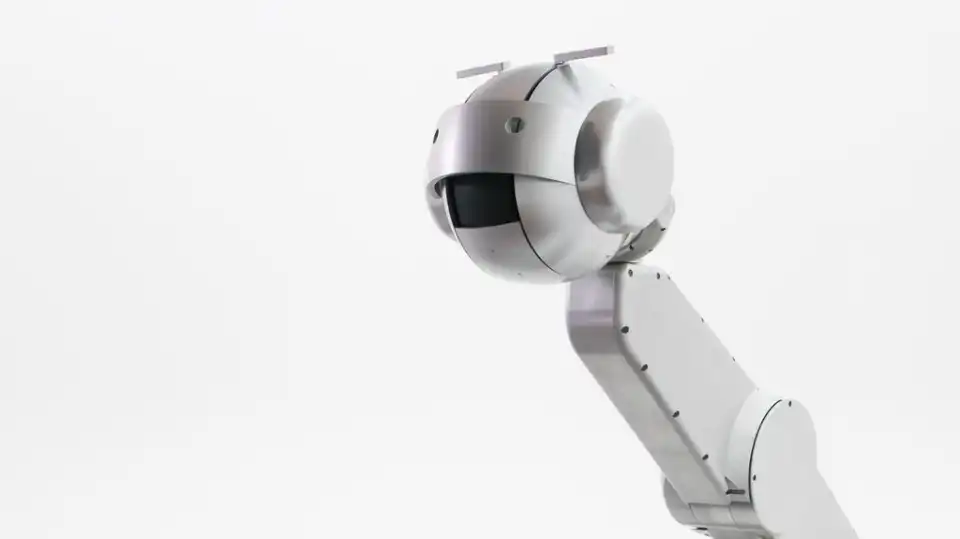
Shimon the Robot Writes and Sings SongsNFK Editors - April 1, 2020Researchers at Georgia Tech have been working to improve a musical robot called Shimon. Now Shimon doesn’t simply play music, he also writes the words to his own songs – and sings them.Shimon is a four-armed robot with a ball-like head. He holds small mallets in his “hands” to play a kind of xylophone called a marimba. As Shimon plays, his head moves around in time to the music.Shimon is a four-armed robot with a ball-like head. He holds small mallets in his “hands” to play a kind of xylophone called a marimba. As Shimon plays, his head moves around in time to the music.(Source: Gil Weinberg, Georgia Tech.)Shimon has been around for quite a while as a musical robot. Even back in 2015, he was playing with other musicians at the Kennedy Center in New York. What Shimon could do back then was already pretty cool.Using “deep learning”, Shimon was taught to write his own music. Deep learning – also known as Artificial Intelligence (AI) – means that computer programs sort deeply through huge amounts of information. This allows them to find patterns humans may not have noticed. The programs can then use those patterns in new and surprising ways.Using “deep learning”, Shimon was taught to write his own music. He can create his own music in real time, while playing with other musicians. This is called “improvising”. Above, project members Gil Weinberg (left) and Richard Savery play with Shimon.(Source: Gil Weinberg, Georgia Tech.)For Shimon, that meant he could not only make up his own music, he could do it in real time, while playing with other musicians. This is called “improvising”.Now Shimon is back with a whole bunch of new tricks. He can write the words to his own songs, and sing them.Now Shimon is back with a whole bunch of new tricks. He can write the words to his own songs, and sing them.(Source: Gil Weinberg, Georgia Tech.)Shimon learned to write the words for the songs the same way he learned to write music – by being “fed” thousands and thousands of examples. Shimon was trained on the lyrics (words) to 50,000 songs.Georgia Tech professor Gil Weinberg, who leads the Shimon project, gets Shimon going with a starting idea. Shimon then writes the lyrics based around that idea. Mr. Weinberg usually provides much of the music for the songs, but Shimon helps out there, too.Georgia Tech professor Gil Weinberg, who leads the Shimon project, gets Shimon going with a starting idea. Shimon then writes the lyrics based around that idea.(Source: Gil Weinberg, Georgia Tech.)Richard Savery, one of the researchers, says, “You’ll get a word like ‘storm’, and then it’ll generate a whole bunch of related words, like ‘rain’.” He says Shimon comes up with many ideas, keeps the good ones, and builds on them.Singing the songs is another story. To give Shimon a voice, the Georgia Tech team worked with experts at Pompeu Fabra University in Spain. The voice was created using AI and sounds very much like a man.Shimon’s face has also gotten new features. Shimon’s mouth now moves smoothly in time as he sings. He also has eyebrows, which allow his face to show more emotion.Shimon’s face has also gotten new features. Shimon’s mouth now moves smoothly in time as he sings. He also has eyebrows, which allow his face to show more emotion.(Source: Gil Weinberg, Georgia Tech.)To show off Shimon and his new abilities, the researchers have recorded one of Shimon’s songs, called “Into Your Mind”. They have made a video for the song, which is out on YouTube.Later this spring, the team plans to put out an album of about 8-10 of Shimon’s songs. The album will be released on the music streaming service Spotify. There are also plans for Shimon to go on tour with a band to play and sing his songs live.To show off Shimon and his new abilities, the researchers have recorded one of Shimon’s songs, called “Into Your Mind”. They have made a video for the song, which is out on YouTube (above).(Source: Gil Weinberg, Georgia Tech.)For Mr. Weinberg, that’s the main goal behind the Shimon project – not to have robots take over, but to have robots and humans make something beautiful together.Did You Know…?By chance, Shimon’s new song has some words of hope for people stuck at home because of the coronavirus: “Home is where the rainbow comes.”Screenshot from video for “Into Your Mind”, by Shimon.(Source: Gil Weinberg, Georgia Tech.)Check Yourself0/41. Shimon plays a kind of xylophone called a _______________.2. What skill does Shimon NOT have?singing songsplay the marimbaplaying drumswriting songs3. To learn to write songs, Shimon was trained on the _______________ of 50,000 songs.4. Later this spring, the team will put out an _______________ of Shimon’s songs.Do you think robots like Shimon mainly replace humans, or do they help humans and robots work together?ResetSourcestechcrunch.comnewatlas.comspectrum.ieee.orgqz.comwww.news.gatech.eduwww.news.gatech.edugizmodo.comShare:Scientists at Loughborough University in the United Kingdom have created what they call “the world’s smallest violin”. The violin is made of metal and is so tiny that it can only be seen with a powerful microscope. The project was designed to test new technology for building extremely small things.

Apotheke, the Athenian natural cosmetics brand taking beauty back to basics
Fashion 2026-01-11 02:14:05

Apotheke, the Athenian natural cosmetics brand taking beauty back to basics

“This is all about bringing back a liberating simplicity to people’s lives,” says Eva Papadaki, as she moves through 10am Apotheke (Greek for “storage room”), her new concept shop in Athens’ vibrant neighbourhood of Gazi. Just beside the boutique – where Papadaki picks a collection of homeware, cosmetics and culinary ingredients – is a garage that repairs old cars. There’s a link to these unlikely neighbours: both are focused on preservation.The idea for Apotheke (as it’s usually known) was born in the basement of the brutalist, concrete 10am Lofts building where Papadaki, for the past seven years, has based her talent management agency for photographers and artists. “It feels like I have given birth to this project and there’s so much sentiment attached to it for me,” she says, looking up towards the space’s incredibly high ceilings. Minimalist shelving units line the walls, displaying limited-edition products that Papadaki promises are sustainable all the way down to the manner in which they are transported from her native Crete to Athens.On the wall, a film projection of the inky blue, sun-scorched Aegean landscapes and whitewashed houses captures the very essence of Papadaki’s new brand – a conscious movement back to simple living, inspired by the ways her Greek grandparents lead their lives. It’s why she has sourced limited-edition ingredients from Cretan producers who she has known since childhood. Olive oil, honey, handmade soaps, beeswax candles (just like the ones used in Greek Orthodox churches) and moisturising beeswax balms that can be applied all over the body. Most products fit in a beauty cabinet as much as they do in a kitchen pantry and will inspire you to rethink your beauty rituals – replacing complex formulas with natural ingredients and finding joy in the process rather than just the result, from applying a soothing balm on your pulse-points to lighting incense.Minimalist living was the guiding principle for the shop fit-out but Papadaki also wanted to pay homage to the history of the building. “This was once a warehouse for dried foods,” she says. “I love the word ‘Apotheke’ because it also refers to our inner, metaphorical storage rooms, where we keep our memories, our feelings, our spirit.” Her own spirit remains firmly in her native Crete. “It’s where I’m from and it’s where I will always go back to,” she says, referencing the sounds, scents and landscape of the island, which inspired all the products now available at Apotheke.Her commitment to local sourcing was also guided by her experiences growing up on the Mediterranean island. “So many people talk about sustainability but no mass-produced product is really sustainable,” she says. “Here, products are not made in huge quantities. The honey and the oil might run out. It’s whatever nature can give in that moment. I always want to be in tune with and respectful of what nature has to give me.”Papadaki travels to Crete to pick up the products herself and ensure that she maintains an ongoing dialogue with the producers she collaborates with. Her ultimate aim? To transport people to Crete, every time they light the Apotheke incense or use the wild herb soap that has been made using her grandmother’s old recipe.Every Saturday, Papadaki opens the heavy doors of Apotheke to Athens’ ever-growing community of artists, designers and photographers, making the most of the airy space as a gathering spot as well as a shop. Nodding back to her previous job as a talent agent, the idea of Apotheke Saturdays is to create opportunities for creatives to come together and inspire each other with conversations about art, creativity – and, of course, the best natural beauty remedies.“I want to offer a space for artists to showcase their work, so we have this weekly gathering that is interlinked with the ethos of Apotheke,” she says. “It’s all about returning to your roots.”10amapotheke.com

Companies Rush to Make Ventilators
Technology 2026-01-12 07:17:15

Companies Rush to Make Ventilators

Companies Rush to Make VentilatorsNFK Editors - March 31, 2020This article is the first in a series about different ways people are working hard to help bring the challenges of the coronavirus pandemic under control.Worldwide, doctors, nurses, and other health care workers are struggling to find the special equipment they need to deal with the coronavirus. Now people around the world are moving quickly to tackle these problems.Because the COVID-19 pandemic has affected so many people so quickly, hospitals worry they may not have enough ventilators to keep up.Ventilators are machines that can move air into and out of the lungs of a person who can’t breathe well on their own. Because COVID-19 has affected so many people so quickly, hospitals worry they may not have enough ventilators to keep up.(Source: Quinn Dombrowski, via Flickr.com.)Ventilators are machines that can move air into and out of the lungs of a person who can’t breathe well enough on their own. Most cases of COVID-19 don’t require a ventilator. But in some severe cases, especially among older people, ventilators are needed.Ventilators cost huge amounts of money – as much as $30,000 – so companies normally don’t make that many of them. Now countries around the world are racing to make more.In Italy, one of the countries that’s been hit hardest, only one company makes ventilators. The company makes just 125 machines a month. The government has now ordered the company to make 500 a month and has sent soldiers to help out.Ventilators cost huge amounts of money – as much as $30,000 – so companies normally don’t make that many of them. Now countries around the world are racing to make more.(Source: أمين [CC BY-SA], via Wikimedia Commons.)The United States (US) currently has more COVID-19 cases than any other country. Health experts worry that hospitals could soon need more ventilators than there are.With its factories closed because of the pandemic, car maker General Motors (GM) has been working hard since mid-March to change some of its factories to build ventilators instead of cars.GM is working with a ventilator company called Ventec (above). Ventec only produces about 200 ventilators a month. Now, working together, the two companies hope to make as many as 10,000 ventilators each month.(Source: Ventec Life Systems.)GM is working with a ventilator company called Ventec. Ventec only produces about 200 ventilators a month. Now, working together, the two companies hope to make as many as 10,000 ventilators each month.The companies had to scramble to find all the parts they’ll need to make 10,000 machines a month, but they say the new ventilators should be on their way to hospitals before the end of April.The companies had to scramble to find all the parts they’ll need to make 10,000 machines a month, but they say the new ventilators should be on their way to hospitals before the end of April. Above, a Ventec ventilator in a hospital.(Source: Mark Stehle/AP Images, Ventec Life Systems.)Elon Musk, who runs the Tesla car company, has promised to give hospitals in New York hundreds of ventilators he bought in China. New York is the US state hit hardest by the pandemic. Mr. Musk says he’s also working to convert one of his factories in New York to make ventilators.In the United Kingdom (UK), inventor James Dyson says he’s come up with a new design for a ventilator that’s quick and easy to produce. That will make it simpler for factories to make many of them. The UK government has already ordered 10,000 of the machines, which Mr. Dyson calls CoVent. The inventor says he plans to give 5,000 of his ventilators away to other countries.Inventor James Dyson (above) says he’s come up with a new design for a ventilator that’s quick and easy to produce. That will make it simpler for factories to make many of them. The UK government has already ordered 10,000 of the machines, which Mr. Dyson calls CoVent.(Source: The Royal Society [CC BY-SA 3.0], via Wikimedia Commons.)Tackling the problem from another angle, MIT has come up with a cheap way of making ventilators which brings the cost down to around $500. The university is releasing the design information so that experts in other parts of the world can make the ventilators.MIT’s ventilator, called the E-Vent, is based on an old student project. It may be especially useful in poorer countries. Like most ventilators, the E-Vent works automatically. But the bag it uses to move air was originally designed to be pressed by a doctor or nurse. That could come in handy in emergencies or in places where the electricity sometimes goes out.MIT has come up with a cheap way of making ventilators which lowers the cost to about $500. The university is releasing the design information so that experts around the world can make them. Above, MIT’s system is hooked up to a dummy to show how it works.(Source: MIT.)NewsForKids.net has these COVID-19 resources:• Overview of COVID-19• Coronavirus Words Explained• Collection of our articles on COVID-19• Regular, detailed COVID-19 updatesCheck Yourself0/41. Because so many serious COVID-19 patients need help breathing, hospitals worry they might not have enough _______________.2. General Motors is working on making ventilators. What does it normally make?carsbicyclesairplaneslight bulbs3. General Motors and Ventec hope to make 10,000 ventilators a month. How many ventilators does Ventec currently make?4. MIT has come up with a cheap way of making ventilators that costs just $_______________.What sorts of changes do you think might be needed to turn a car factory into one that makes medical equipment?ResetSourceswww.voanews.comwww.cnn.comwww.nytimes.comwww.zdnet.comwww.cnet.comwww.bbc.comnews.mit.eduShare:Scientists at Loughborough University in the United Kingdom have created what they call “the world’s smallest violin”. The violin is made of metal and is so tiny that it can only be seen with a powerful microscope. The project was designed to test new technology for building extremely small things.

A Bangkok food emporium’s recipe for success
Fashion 2025-12-31 20:03:04

A Bangkok food emporium’s recipe for success

Gourmet Market’s flagship in Bangkok is a giant food emporium found inside the city’s premier shopping mall, Siam Paragon. Every morning, staff form a line at the end of each aisle to greet the first customers of the day with a cheerfulsawadee. This sizeable welcoming party makes food shopping feel like a royal visit. A repeat performance after lunch involves dancing to music.“An exceptional customer experience is crucial to food retail because there are so many options,” says Ploychompu Umpujh, who heads up Gourmet Market’s 17 branches and the rest of the food department at The Mall Group, one of Bangkok’s leading mall operators. “We have to consistently improve and think beyond what the customer wants.”Supermarket shopping might have been boiled down to an exact science in many parts of the world but in Thailand the pie charts and schematics come with five-star service and lashings of entertainment. At Gourmet Market, a handful of floor staff are trained to guide customers through fresh produce and groceries, giving ordinary items the star treatment usually associated with fine wine and premium cuts of meat. Then there’s the “you hunt, we cook” scheme, with chefs on hand to whip up a recipe for customers using ingredients sourced from the supermarket.“Food appreciation is in our DNA,” says Umpujh, before rattling through a shopping list of supporting reasons. These include Thailand’s diverse cuisine and cooking styles, a service mindset, the dominance of agricultural exports and the central role of food in daily life. “Have you eaten?” is a popular way of saying hello. And the likely response is, “Yes, I have but I’m starting to get peckish.”Beyond the fun and frivolity, putting food on Thai plates is big business. The department that Umpujh leads contributes the largest slice of the Mall Group’s overall revenue and Gourmet Market plans to double in size in five years, primarily via shop expansions. It’s fair to say that Bangkok’s premium supermarkets are home to some of the freshest concepts in food retail.From left toright:1. Adithep Saomok, Sales representative, fruit,“Durian season begins in April – I can’t wait.”2. Napaporn Wongmas, Assistant general manager, Gourmet Eats,“Joined Umpujh’s team a year ago but she has been with the company for more than 15 years.”3. Thanida Limsirivallop, General manager of merchandising, Gourmet Eats,“When international food brands come to Thailand, she’s in charge of bringing them to us first.”4. Rewadee Arunyakanont, Assistant manager, Gourmet Market,“She handles promotions and the planogram system; in other words, how products are placed on the shelves.”5. Yarnintorn Temiyaputra, General manager of operation, Gourmet Market, Siam Paragon,“He looks after all of the operations at the flagship store, from customer service to controlling the area where suppliers come to drop off products every morning.”6. Pongsak Oransuwanchai, Group general manager, supermarket merchandising (food),“He goes to the local street-food stalls to convince the owners to come into malls.”7. Pakawat Chintacanun, Group general manager, supermarket merchandising,“Industry veteran who knows everything about the fresh department and seasonal products.”8. Watsakarn Pongsanguansuk, Group general manager, supermarket merchandising (grocery),“A proven executor. When asked for different merchandising from abroad, she always makes things happen.”9. Saknarin Kamphrommee, Sales representative, fruit,“Fresh fruit and vegetables generate the most sales.”10. Rapeepan Sawangchang, Section manager Gourmet Fresh,“Apples are our biggest sellers and cherries sell really well on promotion.”11. Panita Haritaworn, General manager, marketing, Gourmet Marketand Gourmet Eats,“Very creative, a good leader and not scared to try new things.”12. Chidchanok Boonchamnan, Assistant general manager, marketing, Gourmet Market,“She mainly looks after Gourmet Market’s many events. End of the year and Songkran in April are the most important.”

NEOWISE: Rare Comet Can be Seen With Bare Eyes
Technology 2025-12-24 22:58:01

NEOWISE: Rare Comet Can be Seen With Bare Eyes

NEOWISE: Rare Comet Can be Seen With Bare EyesNFK Editors - July 17, 2020There’s a new sight in the sky these days – the newly-discovered Comet NEOWISE is flying past the Sun. This marks the first time since the 1990s that people have had a chance to see a comet with their bare eyes.A comet is basically a ball of dirty ice that orbits the sun. As the comets come close to the sun, the sun melts some of the ice, which forms a tail behind the comet as it flies through space.There’s a new sight in the sky these days – the newly-discovered Comet NEOWISE (above) is flying past the Sun. This marks the first time since the 1990s that people have had a chance to see a comet with their bare eyes.(Source: SimgDe [CC BY-SA], via Wikimedia Commons.)Most comets have an orbit that looks like a flattened circle. Comets spend most of their time moving slowly, far away from the Sun. As they pass the Sun, they speed up.The size and shape of a comet’s orbit affect how long it takes to complete its orbit. Halley’s comet is a famous comet that comes around once every 75 years. But the orbit of NEOWISE is so flat and stretched out that the last time it was here was about 6,800 years ago.Because of the long time it takes to orbit, NEOWISE was only just discovered a couple of months ago. It was spotted in March using a special space telescope run by NASA.Because of the long time it takes to orbit, NEOWISE was only recently discovered, using a special space telescope run by NASA. The first view of Comet NEOWISE came from this string of fuzzy red dots on March 27, 2020.(Source: Courtesy NASA/JPL-Caltech. [Public domain], via Wikimedia Commons.)The name of the telescope system that first spotted the comet is NEOWISE (Near-Earth Object Wide-field Infrared Survey Explorer), so that’s how the comet got its name. Its official name is even less catchy – C/2020 F3.It’s not exactly true that the comet was just discovered. People almost certainly saw NEOWISE around 6,800 years ago, but that was before humans had even invented writing, so there are no records of it passing.NEOWISE is easy to see now because it’s close to the Sun. At its farthest, NEOWISE will be 630 times farther away from the Sun than Earth is. The image above shows part of Comet NEOWISE’s orbit, and its position on April 19, 2020.(Source: NASA [Public domain], via Wikimedia Commons.)NEOWISE is easy to see now because it’s close to the Sun. At its farthest, NEOWISE will be 630 times farther away from the Sun than Earth is. (If you want to do the math, multiply the distance between the Earth and the Sun – 93 million miles (150 million kilometers) – by 630.)NEOWISE actually has two tails. One tail is made of bits of ice melted flying off the comet. The second tail is made of plasma – gas that is charged with electricity. That’s similar to the idea behind a neon light.The icy tail flows straight behind NEOWISE, but the plasma tail is bent toward the Sun because of the Sun’s magnetic field.NEOWISE actually has two tails. One is made of bits of ice. The second is made of plasma – gas charged with electricity. The icy tail flows straight behind NEOWISE, but the plasma tail bends toward the Sun because of the Sun’s magnetic field.(Source: Andy.niko [CC BY-SA], via Wikimedia Commons.)Even at its closest – which will be on July 23 – the comet will still be as far away from the Earth as Mars is. But it should still be bright enough to see, even without binoculars or a telescope.The comet’s brightness will depend on how big the icy tail grows. Lots of ice particles reflecting the Sun’s light could make the comet even brighter.Even at its closest – which will be on July 23 – the comet will still be as far away from the Earth as Mars is. But it should still be bright enough to see, even without binoculars or a telescope.(Source: JochenK2002 [CC BY], via Wikimedia Commons.)The comet is visible in the northern hemisphere (half of the world). The best time to view it is about an hour and a half after sunset, low in the northwest sky. It should be just below the constellation (group of stars) known as Ursa Major (the Big Dipper).The comet is visible in the northern hemisphere. The best viewing time is about 90 minutes after sunset, low in the northwest sky. It should be just below the constellation known as Ursa Major (the Big Dipper) – shown at the bottom of this photo.(Source: Alex Zelenko [CC BY-SA], via Wikimedia Commons.)Did You Know…?Though you won’t need any special equipment to see Comet NEOWISE, you’ll get a much more detailed view if you are able to look at it with binoculars or a telescope.Check Yourself0/41. Comet NEOWISE is a recently discovered comet which becomes visible about once every 6,800 years.True   False2. Comet NEOWISE is named for the _______________ system which was used to discover it.3. Comet NEOWISE has two tails. One is made of ice. What's the other one made of?4. Comet NEOWISE is visible from the _________ hemisphere.southernnorthernDoes is seem strange to think that you can see something today that was last seen by people 6,800 years ago? What do you think people thought of the comet back then?ResetSourceswww.nytimes.comwww.theverge.comwww.jpl.nasa.govtheconversation.comwww.smithsonianmag.comphys.orgwww.abc.net.auwww.cbc.caen.wikipedia.orgShare:This week marks 25 years of humans living in space. On November 2, 2000, three astronauts became the first full-time workers at the International Space Station. Since then, the ISS has never been empty.Meteorite That Hit House Is Older Than EarthNFK Editors - Aug 14, 2025When a fireball fell through the sky in the southeastern United States on June 26, it caught the attention of people across seven states. It was a meteor breaking up as it fell through the Earth’s atmosphere. A small part of the space rock tore through a house in Georgia. Scientists now say the meteorite is older than the Earth.Blue Origin Sends Six Women Into SpaceNFK Editors - Apr 16, 2025On Monday, the aerospace company Blue Origin launched its spacecraft RSS Kármán Line on a ten minute trip into space. The spaceship carried the first all-female crew to go into space since Russian astronaut Valentina Tereshkova’s solo mission in 1963.Private Company Makes Perfect Moon LandingNFK Editors - Mar 5, 2025On Sunday, a company called Firefly Aerospace became the first private company to make a perfect landing on the moon. Firefly is working with NASA, and its spacecraft, Blue Ghost, is carrying out several experiments for the space agency.

Coast to clothes: Fashion labels that tailor to an island lifestyle
Fashion 2026-01-09 12:09:01

Coast to clothes: Fashion labels that tailor to an island lifestyle

1.MirèioFranceMargaux Varnavidou has spent more than a decade working for luxury groups such as LVMH and living in busy cities including New York and Paris. Her husband, Paul-Henri Bayart, meanwhile, pursued a career in finance. Both were operating at the same lightning-fast pace but, in 2020, they pressed pause. During the coronavirus lockdowns, they began spending more time in the Mediterranean, between Bayart’s native Provence and Cyprus, where Varnavidou’s maternal family is from.Coast-inspired colour paletteThe sunshine, slower pace of life and proximity to the sea inspired the couple to get creative and embark on their first joint project, Mirèio – a fashion brand inspired by their mutual Mediterranean heritage and the region’s sunny, carefree spirit. “Despite our different backgrounds, we were both passionate about clothing first and the Mediterranean second,” says Varnavidou.After nearly two years of researching, gathering inspiration from living by the sea and visiting flea markets, they debuted Mirèio with their now-signature Smock shirts. These laidback designs can be thrown over a swimsuit but also layered with a T-shirt for breezy island evenings. They’re made from a sturdy cotton fabric and feature charming Provençal prints, rendered more contemporary by their unisex, boxy silhouettes. “We love Provençal prints but everything in the market felt outdated – we wanted to rework these patterns into more modern, comfortable designs,” says Varnavidou. “The inspiration came from a traditional French sailor jacket that my husband’s grandmother used to have in her wardrobe. My husband used to wear a lot of [these jackets] too, so we created what we wanted to wear personally.” Some of the Smocks for women feature a playful, extra large sailor collar, while unisex styles feature a shorter, classic one.Paul-Henri BayartMargaux VarnavidouSpirit of the seaMoment in the sunThe south of France was the central reference point for the couple as they were dreaming up the concept for Mirèio, the Provençal form of the name Mireille. “That’s the name of my husband’s grandmother and the title of a famous Frédéric Mistral poem about two lovers coming together, which resonated with us,” says Varnavidou, reminiscing of recent roadtrips that took them from Arles to St Tropez and Marseille. The fabrics for the collections are sourced from a manufacturer in Saint-Étienne-du-Grès that has been operating since the early 19th century and specialises in traditional printed textiles.“The mission is to revive and celebrate the spirit of the Mediterranean but also its unique savoir-faire. Even if it’s expensive to produce here, we have to stay true to our ethos.”Varnavidou’s Cypriot heritage – her family is from the town of Famagusta and now lives in Larnaca – and time spent on the island also had a role to play when it came to shaping the label. After all, there’s a shared language across the region, centred on joy, generosity and openness. “We are true children of the Mediterranean and love the entire region from east to west,” says Varnavidou. “The lifestyle touches every part of our lives, from the music we like to our children’s names. It’s not just a source of inspiration for the brand.”Mirèio shoesProvençal printsIt’s why last year, the couple also chose to open Taverna, a Cypriot restaurant, in Paris’s 11th arrondissement, serving all the dishes that Varnavidou enjoys when spending summers on the island. “The two projects feed each other,” she adds. “Taverna has a stronger Cypriot identity but we wear the Smocks in the restaurant and often use Mirèio as inspiration for the decor; it’s a full Mediterranean ecosystem.” Just like the couple gave the traditional sailor jackets a modern twist, they have also been working to add their own take on traditional, almost outdated, dishes that you would only be able to taste in a Cypriot grandmother’s kitchen, such astavabaked lamb.Delicious island food, year-round sunshine and traditional cotton textiles have all helped to bring Mirèio to life and attract the interest of multi-brand boutiques, including Les Galeries Tropeziennes in St Tropez, Joyeuserie in Hong Kong and Bon in Tucson, Arizona, which now stock the label. But perhaps the most important inspiration the couple took away from living across the Mediterranean is the region’s flair for slow living – and working. They make a point not to design big seasonal collections and prefer to gradually introduce new pieces, or “surprises”, as they call them, every few months – the latest being an elegant sleeveless vest. “This isn’t a Parisian brand,” says Varnavidou, who is preparing trips to St Tropez, Cyprus and the Greek islands this summer. “We want to work at a slower pace – it’s a way to turn every piece into a signature. We always return to Cyprus as a family but also make sure that we explore other parts of the region to keep decoding the local lifestyle and inspiring our designs.”mireio-paris.com2.Cecilia SörensenMallorcaFinnish-born, Mallorca-based fashion designer Cecilia Sörensen’s clothes evoke a breeziness that’s synonymous with island life. “Being in Mallorca relaxes my designs,” she tells MONOCLE. “Everything is more laidback and slow here. If I were designing my collections in Finland, they would be more austere and stiff.” Loose dresses made from cotton muslin – ideal for throwing over a swimming suit – and kimono-inspired jackets cut to a boxy fit quickly became her signature styles. They’re romantic yet, at the same time, rooted in reality.After learning the craft of tailoring in Helsinki, Sörensen decamped to Barcelona, where she launched her namesake brand in 2002. Six years ago she relocated to Mallorca with her husband and children, and settled in a village in the Tramuntana mountain range that makes up the northwest of the Balearic island. “Mallorca is special,” says Sörensen. “It almost hurts to travel because I miss the mountains when I’m not here.” At her workshop a 20-minute drive from her home in Alaró, Sörensen works with five seamstresses to produce every item in her seasonal collections, using cotton from a family-owned mill in Barcelona, as well as linen, jacquard and wool sourced from Spain and Italy.Designer in the Alber dressShirt dress in olive-green linen“I cut the first pattern and make the prototype, then the seamstresses take it from there,” says Sörensen. There’s a lot of back-and-forth during this stage, with some designs dialled down and details, such as the internal pockets of waistcoats, tweaked to perfection.Earthy tonesSuch attention to detail is aided by her commitment to keeping operations close to home and producing everything, from start to finish, on the island. “It would be less expensive to produce in Barcelona but it’s important to do it here.” The designer has even been known to hand-deliver orders, cycling directly from her atelier to the boutique in Palma that carries her label – another attempt to work responsibly and minimise her carbon footprint.In the blackThe label is stocked beyond Mallorca, in a number of independent boutiques in Austria, Germany, Belgium and the US. Buyers are drawn to Sörensen’s carefree designs, particularly her shirt dresses and oversized blouses, all rendered in earthy terracotta and yellow tones reminiscent of Mallorcan sunsets. Even the darker knitted vests and linen overshirts carry the island ease that Sörensen has come to embody. “I’ve lived in Spain on and off for 20 years now,” she adds. “I hope that my designs can offer something that feels grounded in reality and the local community, rather than the stereotypical white linen outfits for expats sipping white wine.”ceciliasorensen.com3.Isole&VulcaniItalyFilicudi is a small island in the volcanic Aeolian chain north of Sicily, a pyramid of lava-made land where there are no cars, no streetlights and a mere 200 or so residents.Swimwear brand Isole&Vulcani was born here in 1989, when Daniela Fadda put together her first designs using just cotton and knots. Today, Cristiano Fini, Fadda’s son, maintains the brand with his wife, Sara Goldschmied, its designer and daughter of jeans pioneer Adriano Goldschmied. Naturally, the couple met and married on Filicudi. “We’re obsessed,” says Fini. “The island is our favourite place.”To respect the brand’s idyllic land of origin, Isole&Vulcani collections offer some of the most responsibly made swimwear on the market. Unlike most commercial swimwear, which is made from synthetic fibres such as Lycra, nylon and other plastics, the label uses certified Italian-made organic cotton-jersey and natural dyes, with minimal elastic. “It feels completely different on the skin to plastic materials,” says Fini.Dive right in!The natural dyes also create a palette of soft, earthy hues – marsala, berry, olive – that mirror the landscapes of the island. Most summers, the duo also release printed and special-edition styles in collaboration with other design talents, such as Marta Ferri and even Adriano Goldschmied.Boutique in FilicudiThe brand has a flagship shop in Milan but its Filicudi boutique is still going strong. Manufacturing has come a long way since Fini’s mother ran the brand. Originally, the suits lacked stitching because sewing machines and electricity were hard to come by here. Though that’s no longer an issue today, Fini and Goldschmied still ensure that only the minimum of seams are stitched with a machine – all in the name of honouring Filicudi’s raw beauty.isolevulcani.com

A look inside Azabudai Hills – Tokyo’s ‘city within a city’
Fashion 2026-01-16 17:17:50

A look inside Azabudai Hills – Tokyo’s ‘city within a city’

Grand in both scale and ambition, Azabudai Hills officially opened its doors for the first time in November 2023. A moment that was more than 30 years in the making, the opening marked a new phase for a mixed-use development that will eventually host approximately 20,000 employees and 3,500 residents across 8.1 hectares. The so-called “city within a city” in Tokyo’s bustling Toranomon business district will include education and healthcare facilities, along with museums, galleries, shops and restaurants. A focus on wellbeing and the environment is also set to shape the evolution of the development, which is powered entirely by renewable energy and is home to verdant public spaces.The first stage included the opening of Mori JP Tower, the largest of the development’s three towers, which offers five floors of retail and restaurants next to a central square. When Monocle visits the building on a crisp morning, Pelican Café is drawing a crowd with its freshly toastedshokupanand sandwiches, while eager shoppers wait patiently for the shops to open for business. By lunchtime, the restaurants, which range from sushi shops to Italian counter dining, are abuzz with a mix of workers and curious visitors from near and far. Casting an eye over the retail spaces on offer, Monocle presents a handful of early finds from Tower Plaza on the following pages.There will be more. Azabudai Hills Market launches in January and a wave of further openings are scheduled for spring. Pace Gallery will join a host of high-end retailers in the Heatherwick Studio-designed Garden Plaza, while Janu Tokyo, the first hotel under Aman’s new sister brand, will overlook the central plaza.Monocle comment: The grand scale of the Azabudai Hills development – not to mention its attention to detail – speaks of its ambition to have a significant impact on life in Japan’s capital. Sometimes it pays to go all in.On the way to Tower PlazaFurniture at The Conran ShopTailor-made options at Maison et VoyageWindow shoppingFlowing linesBrowse the shelvesAnother level: Inside Tower PlazaGrowth trajectoryTableware selection at The Conran ShopAll hands on deckThe Azabudai Hills crowdMaison et Voyage AzabudaiFashionLaunched in November 2023, the debut collection of Tomorrowland’s menswear brand pairs smart tailoring with a hint of nostalgia. Leather flight jackets are joined by argyle knits in soft cashmere, while a collaboration with JM Weston has yielded loafers in crocodile and box-calf leather, and suede. The brand adds its own modern touches, paying homage to the classics and respecting the good old days.On Tower Plaza’s second floor, the Maison et Voyage flagship shop brings the label to life in a space filled with hints of Paris and London, as well as antique display cases, artwork and other paraphernalia. It’s here that the brand’s offerings are presented alongside a selection of classic labels. Leather bags from Ghurka and the fine wares of Lock & Co Hatters line the shelves, while vintage eyewear, timepieces and accessories fill the showcases.“This shop was created as a place where fun-loving grown-ups can enjoy creating a more sophisticated look,” says Tomorrowland’s Kohei Sugiyama. “It’s for the kind of person who, rather than simply travelling in a pair of sweats, wants to dress up with a tuxedo jacket or loafers to match their destination.” A range of made-to-order services are offered in the in-store salon, with the selection of suits, shirts and other items bringing Tomorrowland’s expertise to the fore.“We propose a quiet luxury, based on the idea that instead of going out of our way to talk about brands, it’s simply about wearing clothes of the highest quality,” says Sugiyama.Ogaki ShotenBooksFounded in 1942, Kyoto-based bookshop Ogaki Shoten selected Azabudai Hills as the site for their first outpost in Tokyo. Spanning almost 1,000 sq m, the bookshop’s four main sections feature shelves filled with publications. Designed by Gyoken’s Naoyuki Nomura, the book-themed interior includes quiet pockets for reading, along with gallery-style displays for exhibitions. An in-store café and bar, Slow Page, serves siphon coffee made with an in-house blend, along with whisky and curry rice. “We aim to create reading spaces where people can relax, so we’re very particular about furniture and want to make the kind of shop where customers can stay for hours,” says assistant shop manager Kosuke Ogaki. “Our main concept is a bookshop that connects people with books. For example, there are many children in the Azabudai Hills area, so we decided to create a picture-book gallery. There are many children’s titles and all are individually chosen by one of our Kyoto-based staff.” Inside the gallery, the colourful line-up seesThe Very Hungry Caterpillarand other English-language titles joining works by Japanese illustrators Tupera Tupera and Noritake, while everything from the plush carpet to the low-level displays and benches are designed with readers of all ages in mind. It’s a considered approach that reinforces the role that a bookshop can play within residential developments, catering to the needs of community members young and old.The Conran Shop TokyoFurnitureThe Conran Shop continues to win fans in Japan. Following the April 2023 opening of a Daikanyama shop, the first to be locally and independently managed, the Azabudai Hills outpost adopts a similar approach, presenting another fresh take on the retailer’s wares. Known as The Conran Shop Tokyo, the 1,300 sq m space is coloured with green, red and navy hues, with bold Tajimi-made tiles and timber flooring.“The concept is standard but high quality; everyday but special,” says Shinichiro Nakahara, CEO of The Conran Shop Japan. “There’s an abundance of one-of-a-kind pieces, made in collaboration with Japanese makers and craftspeople, and made-to-order items, which are unique to Japan. We only select and present those products that [we feel] are truly essential.”The Conran Shop’s seventh location in Japan also includes a new foray into the world of dining. Inspired by the late founder Terence Conran’s passion for food and entertaining, the 45-seat Orby restaurant was born. Led by head chef Makoto Konno, owner of Tokyo’s Uguisu and Organ, the restaurant combines modern French with elements of British cuisine. Konno brings his own style to dishes such as beef wellington, Welsh rarebit and Victoria sponge, incorporating seasonal produce from across Japan. “From the natural wine we serve to the fact we make everything in-house from scratch, there is a connection to The Conran Shop’s approach to craft,” says Konno.Le Grand Closet de ParigotFashionThe idea of the world’s largest walk-in wardrobe was the thought behind this new style of select shop by Parigot, a longstanding retailer based in Onomichi, Hiroshima. Inside, visitors are surrounded by a line-up of designer womenswear sourced from Paris, Milan and beyond, along with Japanese labels such as cfcl and Toga. “Azabudai Hills attracts people from various places but many of our visitors have a keen eye for fashion, fine-tuned over many years, or are looking to rediscover the fun of fashion,” says shop manager Yuta Suetsugu. Creating a comfortable space for customers was paramount, resulting in an impressive line-up of collaborators from the world of interiors, design and music. Wonderwall’s Masamachi Katayama was tasked with the interior. “I designed it to evoke the sensation of peering into a private closet with a perfect collection, rather than a public retail space,” he says.This attention to detail also extends to the music. Created by Toshio Matsuura, a former founding member of jazz and funk trio United Future Organisation, relaxing tunes ease customers into the day, gradually shifting in style and tempo as the day unfolds.The shop’s format and premium offering marks a new retail model for the family-run company, which will celebrate its centenary in 2025. Plans are now under way to extend the concept to a men’s boutique, due to open in Ginza in spring 2024. Plenty to look forward to.

The summer essentials that will elevate your wardrobe this season
Fashion 2026-01-10 18:22:19

The summer essentials that will elevate your wardrobe this season

Hunza GUKLondon-based swimwear label Hunza G has found success thanks to its elegant cuts and signature crinkle fabric, which is stretchy enough to fit any body shape and to see you through a lifetime of summer dips. Now the brand is expanding beyond its popular swimsuits for the first time with the Weekend capsule collection, a line of laid-back shirt-and-shorts sets. They come in blue striped cotton, as well as black-and-white linen and work both on the beach and as loungewear.As the brand celebrates its 40th anniversary, its aim is to add even more to its offering. “The shirting capsule is just the beginning,” says creative director Georgiana Huddard.hunzag.comKlokeAustraliaBased in Melbourne, Kloke is a contemporary fashion label co-founded by partners in life and business, Amy Gallagher and Adam Coombes. Its spring/summer 2024 collection features eye-catching embroidered caps and lightweight seersucker shirts. We have our eye on this khaki number (pictured): it’s a smarter alternative to the classic T-shirt and highlights Gallagher and Coombes’ flair for breathable, warm weather-appropriate fabrics and loose silhouettes – ideal for long, sunny days at the beach.kloke.com.auVilebrequin + Inès de la FressangeFranceSitting on a light-filled patio in central Paris, Inès de la Fressange muses on what makes the perfect swimwear. “I just want to feel good in my skin and be able to wear my swimsuit in different kinds of circumstances,” she says. The 66-year-old former model created the versatile designs she had been searching for by joining forces with Vilebrequin, a label based in St Tropez known for its colourful swimming trunks for men. In 2013 it added women’s resort wear to its offer. The collection includes striped Balinese trousers and foldable sun hats – the kinds of items that De la Fressange would pack for a weekend at the beach. The collection also happens to be in the colours of the French flag – a nod to the Olympics. “The idea was to celebrate France andchic à la française,” says Roland Herlory, CEO of Vilebrequin. “Working with Inès seemed like a perfect fit.”vilebrequin.comAcqua di ParmaItalyAcqua di Parma has unveiled Chapeau, candles-cum-design objects shaped, as the name suggests, like a hat. Dorothée Meilichzon, founder of Paris-based design agency Chzon, worked on the witty new design, which consists of two ceramic candle holders, both of which feature the label’s signature Luce di Colonia scent. Its citrus and floral notes instantly evoke the smell of summer.acquadiparma.comGet onboardGlobalBoat shoes were invented in 1935 after businessman Paul Sperry fell off his sailing boat. After observing his cocker spaniel’s foot pads, he created the famous non-slip Sperry Top-Siders, featuring incised rubber soles that mimicked his dog’s paws. Since then, his lightweight, preppy designs have become the shoe of choice for everyone from US presidents to sailing enthusiasts around the world. Sperry’s shoes were always rooted in function and comfort – he never wanted to ignite a fashion trend. Still, boat shoes are now the most in-demand style of the summer, with brands such as Miu Miu designing their own.Boat shoes add the right amount of pep to summer looks, especially when paired with crisp cotton shorts for men or elegant midi skirts for women. We recommend reacquainting yourself with this wardrobe classic with Sebago’s Portland design in navy or a John Lobb pair in yellow (both pictured).sebago.co.uk,miumiu.com,johnlobb.comValextraItalyTo toast the Paris Olympic Games, Italian leather-goods specialist Valextra has created a capsule collection of limited-edition bag charms, inspired by the sports that will compete this summer. Think tennis balls, basketballs, golf balls and volleyballs transformed into 3D charms with long leather straps that can be added to keyrings or the handles of your favourite day bag. They look particularly good hanging from Valextra’s denim and raffia striped totes – a chic, playful way to channel your love of sport.valextra.comHereuSpainHereu’s new collection of leather coin purses, which come in the shape of fruit, was designed to channel the sunny spirit of the Mediterranean – and add humour to any summer outfit. The purses are made using a soft, grainy calf leather in artisanal factories across Spain in line with the label’s commitment to offer limited editions of handcrafted products and support family-owned workshops.hereustudio.comJean-Marc PontrouéCEO, Panerai, Italy & SwitzerlandSwiss-Italian watchmaker Panerai is one of the younger players in a watch market dominated by storied Swiss firms. But rather than trying to play catch-up, CEO Jean-Marc Pontroué has been focusing on carving out Panerai’s niche in the world of sailing watches and all things adventure. The label has a history of supplying the Italian Royal Navy and is best known for styles such as the water-resistant Submersible, created in partnership with Luna Rossa, the sailing team under the Prada Group. But among dedicated watch collectors, it’s known for giving its most loyal customers access to money-can’t-buy-adventures, from sailing with the Luna Rossa Prada Pirelli team to rigorous military training. Here he tells us about the power of the in-person experience.What sets Panerai apart?Panerai only started in 1987 and took off in the early 2000s. But this is a brand based on a community of dedicated collectors who watched Panerai grow; that’s its beauty. It’s Italian, it’s masculine and it has a strong technical component. What are you focusing on this year?We have one clear message and that’s our partnership with Luna Rossa and the 37th America’s Cup in Barcelona. It’s a natural playground for Panerai. What is your strategy when it comes to bricks-and-mortar retail?I believe in the power of physical retail but it has to be experiential. When people come into one of our shops, they get to learn about our story and enjoy a slice of Italy. We also make sure to follow our customers wherever they go: we built a shop aboard the [cruise ship] MSC Luxury Explora and we were one of the first watch brands to open in Saudi Arabia and in summer locations such as Capri and Santorini. We love the element of surprise.panerai.com

Is the Clock Running Out for TikTok?
Technology 2026-01-07 20:55:01

Is the Clock Running Out for TikTok?

Is the Clock Running Out for TikTok?NFK Editors - September 24, 2020US President Donald Trump has insisted that the popular app TikTok be sold to an American company or be shut down. The company has been given an extra week to work out a deal before the US bans it.TikTok is a hugely popular social media app owned by the Chinese company ByteDance. TikTok allows users to create and share short videos. The algorithm (formula) the company uses to suggest videos is so powerful that many users find it hard to stop using the app.Embed from Getty ImagesTikTok is a hugely popular social media app owned by the Chinese company ByteDance. TikTok allows users to create and share short videos.But because TikTok is run by a Chinese company, the app has raised concerns in the US. Many groups worry that the Chinese government could use the app to gather information on the app’s millions of users.There are some reasons to be concerned. China’s government keeps tight control over what Chinese users can see, do, and say on the internet. The government also demands that Chinese companies work with the government when asked.Embed from Getty ImagesThe crackdown on Chinese technology companies is one part of a larger battle. In the last few years, the relationship between Mr. Trump’s government and China has become extremely tense.The crackdown on Chinese technology companies is one part of a larger battle. In the last few years, the relationship between Mr. Trump’s government and China has become extremely tense.Cracking Down on Chinese Tech Companies     The US government has already taken action against Chinese cell phone maker Huawei and the Chinese technology company ZTE. The US believes the Chinese government may be able to spy on people using equipment made by these companies.     WeChat is another powerful Chinese social media app used by over a billion people each month. It’s run by the Chinese company TenCent, which shares information on its users with the Chinese government. As with TikTok, the US government is working to limit or shut down WeChat in the US.As TikTok became more popular, many government groups began taking steps to make sure it wasn’t used to leak information. For example, most US military branches have banned the use of TikTok on government devices.Embed from Getty ImagesAs TikTok became more popular, many government groups began taking steps to make sure it wasn’t used to leak information. For example, most US military branches have banned the use of TikTok on government devices.On August 6, Mr. Trump announced that TikTok must be sold to an American company or be shut down. The step was highly unusual.The US president has powers to limit the way foreign companies can act in the US, but the ban seemed extreme to many. The exact threat from TikTok wasn’t very clear. Some experts have pointed out that many US companies, such as FaceBook, collect even more information.Embed from Getty ImagesOn August 6, Mr. Trump announced that TikTok must be sold to an American company or be shut down. The US president has powers to limit the way foreign companies can act in the US, but the ban seemed extreme to many.TikTok has sued the US government, saying the move limits free speech – an important idea in the US. It’s an unusual position for the US, since the US often criticizes China for its lack of internet freedom.The US company Microsoft made an offer for TikTok, which was turned down. As time was running out, the US companies Oracle and Walmart reported a new deal, which seemed to be accepted by all sides. Even Mr. Trump seemed to like the deal.Embed from Getty ImagesAs time was running out, the US companies Oracle and Walmart reported a new deal, which seemed to be accepted by all sides. Even Mr. Trump seemed to like the deal.Under the deal, TikTok will create a new company called TikTok Global, and part of that will be sold to US buyers. Not everyone agrees on how quickly that will happen and what will be included in the sale. For example, TikTok says it will not give away the secrets behind its algorithm.The US Department of Commerce has given TikTok an extra week – until September 27 – to work out the details. If the agreement isn’t approved, the US could begin blocking downloads of the TikTok app starting this Sunday, and completely ban the app by November 12.The US Department of Commerce has given TikTok an extra week – until September 27 – to work out the details of the deal. If the agreement isn’t approved, the US could begin blocking downloads of the TikTok app starting this Sunday.(Source: Solen Feyissa, via Flickr.com.)Many people expect that the US ban of TikTok will lead China to crack down on US companies doing business in China.Did You Know…?The US is not the only government pushing back against Chinese technology. As a result of disagreements between India and China, India has banned TikTok, WeChat, and all other apps made in China.Check Yourself0/41. TikTok is a hugely popular social media _______________ owned by the Chinese company ByteDance.2. Because TikTok is run by a Chinese company, some groups worry that the Chinese government could use the app to gather _______________ on the app’s users.3. _______ has demanded that TikTok be sold to an American company or be shut down.the Chinese governmentPresident Donald Trumpthe US Congressthe US military4. For now, it looks like Oracle and Walmart have reached a deal that will allow part of TikTok Global to be sold to US buyers.True   FalseMany apps, including apps from US companies, collect a lot of information. Why do you think companies are so interested in gathering information on their users?ResetSourceswww.nytimes.comwww.npr.orgwww.theverge.comwww.nytimes.comwww.npr.orgwww.theguardian.comwww.voanews.comwww.npr.orgwww.nytimes.comShare:This week marks 25 years of humans living in space. On November 2, 2000, three astronauts became the first full-time workers at the International Space Station. Since then, the ISS has never been empty.

You’ve got male: Brands to keep an eye out for in 2024
Fashion 2026-01-18 14:11:03

You’ve got male: Brands to keep an eye out for in 2024

MaglianoItalyItaly is known for storied fashion houses but emerging designers such as Bologna-born Luca Magliano are bringing new energy to its menswear scene. After winning LVMH’s Karl Lagerfeld Prize last year, Magliano presented his new collection in Florence at Pitti Uomo.Offering a take on classic dressing updated with subtle draping, he also collaborated with some Pitti Uomo heavyweights. One was Kiton, creating a suit cut in a Neapolitan silhouette. “Kiton’s drastic hand-sewn approach allows it to reach the highest standards,” he says.magliano.websiteDrôle de MonsieurParis“It’s hard to launch a brand when you’re not in a major city but we wanted to show that it’s possible,” says Dany Dos Santos, who co-founded Drôle de Monsieur with Maxime Schwab in Dijon in 2014. Embracing their outsider status, the duo made a name for themselves with casualwear bearing slogans such as “Not from Paris Madame”, a phrase that became a rallying cry for entrepreneurs in second-tier cities across the country. In 2023, however, Drôle de Monsieur finally opened its first bricks-and-mortar shop in the heart of the French capital.The boutique evokes an elegant 1970s hotel lounge, with art deco-style walls and a till that resembles a bar counter. “Hospitality and fashion have a lot in common,” says Dos Santos. “Both aim to make clients feel at home.” Alongside casual items bearing playful graphics, you’ll find a range of more formal designs: we recommend the elegant trench coats and shearling jackets.droledemonsieur.comBrioniItalyUnder design director Norbert Stumpfl, Brioni has been quietly evolving into one of the key premium menswear labels in the market, offering meticulously crafted garments made using featherlight, natural materials and rare couture techniques. Stumpfl tends to favour minimal designs and neutral colours, letting the quality of his clothing do most of the talking. But when it comes to evening wear, he also makes a point to sprinkle the right amount of glamour on his designs. A firm believer in the power of a sharply tailored jacket, his latest evening wear creations, presented in Milan’s Circolo Filologico, included tuxedos and dinner jackets featuring elongated lapels and earthy colours, nodding to the work of Spanish artist and designer Mariano Fortuny.You’ll also find jackets in the brand’s signature herringbone cloth that feature a layer of barely visible glass beads. Then there are one-of-a-kind pieces including a silk tuxedo jacket (pictured) with glitter embroidered underneath the fabric to add a faint sheen: a testament to the Brioni artisans’ impressive skills and Stumpfl’s commitment to “the culture of the human touch”.brioni.comThe Elder StatesmanLos AngelesAt Pitti Uomo, popular looks usually make themselves clear as soon as you start approaching the Fortezza da Basso, where the event takes place. This year, there was a colourful mood when it came to attendees’ accessories. The buyers, editors and stylists still wore the tweed coats and monochrome suits they are known for but also added woollen beanies in an array of bold colours.On the runways of Milan and Paris later in the month, show guests kept their hats on to stand out and break up all-black winter uniforms. The accessory also made its way into brand showrooms – the luxurious styles by LA-based label The Elder Statesman, in mood-boosting yellow and green hues, were among our highlights.elder-statesman.comCeline X Master&DynamicGlobalFashion brands are now aspiring to connect with customers when they are eating, drinking and listening to music, not just when they are getting dressed. The result is a host of cross-sector collaborations, from Valextra’s tie-in with Bar Basso’s baristas to Bottega Veneta’s partnership with Korean kite artisans. This season, headphones were regularly spotted in brands’ showrooms, displayed next to hats or footwear. We have our eye on a pair by Celine in tan leather or black calfskin, made in collaboration with Master&Dynamic.celine.com;masterdynamic.comAcabaParisLeather gloves have become designers’ accessory of choice this season. Silvia Fendi added elegant pairs in saffron, burgundy, all-grey and khaki for Fendi – inspired by countryside living and hunting outfits worn by the UK’s Princess Anne. Giorgio Armani played with textures, juxtaposing velvet coats with padded leather gloves.This is an easy styling trick: pick an eye-catching shade, from deep red to green or yellow, pair them with wardrobe staples like denim or monochrome suits – and if you get too warm, fold them over the belt of your coat. We like stocking up at Paris-based Acaba, a storied glove-maker whose shop at the Palais Royale is filled with handmade gloves in every shade.acaba.frcommentLooks promisingNatalie TheodosiFor the menswear industry, the year starts with a medley of shows, presentations and social gatherings in Florence, Milan and Paris. The fast-paced schedule offers an opportunity to gather inspiration and take the temperature of the market. This year the mood was cautionary, with brands and retailers forecasting that, after three years of explosive growth, the luxury sector might finally find that its clients are bulging less.However, challenging economic times encourage creativity and necessary course corrections. In this case, brands are slowing down, returning to their founding values and thinking about new ways to connect with customers. Some are doing so by raising quality standards, sourcing premium materials and partnering with artisanal manufacturers. Others are increasingly thinking beyond fashion: to keep customers interested there’s a need to create richer experiences.For Gucci, for instance, success has become equated as much to people singing along to its remix of the 1970s Italian classic “Ancora, Ancora, Ancora” as buying into its new minimal aesthetic. In the same spirit, fellow Italian label Valextra joined forces with Milanese institution Bar Basso on a leather case and a pair of cocktail glasses, while in Paris, Louis Vuitton used its runway show to debut new music, including a collaboration between its creative director Pharrell Williams and folk band Mumford&Sons. This marks a new era for branding – expect to see fashion brands pursuing more partnerships with chefs, architects, musicians and hoteliers this year.How will these shifting dynamics translate into the way we dress? Given the higher stakes, designers are suggesting that we too need to raise our standards and start dressing the part. There was a collective celebration of formality and the power of dressing up: smart brogues replaced trainers, sporty parkas were swapped with tailored coats and neck ties made a firm comeback, particularly at Prada, where the catwalk was transformed into a series of chic cobalt-blue office cubicles. We round up our highlights on these pages.Theodosi is Monocle’s fashion director

Scientists Invent a Lickable “Taste Display”
Technology 2025-12-27 11:02:52

Scientists Invent a Lickable “Taste Display”

Scientists Invent a Lickable “Taste Display”NFK Editors - June 4, 2020Tokyo, Japan —(Map)Scientists at Meiji University in Japan have come up with something they call a “taste display”. The device can create the taste of any chosen flavor when it is pressed against the tongue.Humans are able to identify different flavors through the taste buds on their tongues. If you look at your tongue in a mirror, you’ll see lots of tiny bumps. These aren’t your taste buds, but most of the bumps contain taste buds – hundreds of them.Humans are able to identify different flavors through the taste buds on their tongues. If you look at your tongue in a mirror, you’ll see lots of tiny bumps. Most of the bumps contain hundreds of taste buds.(Source: Anthonylightening [CC BY-SA], via Wikimedia Commons.)Taste buds have tiny openings that take in very small amounts of whatever we’re eating. Special “receptor cells” in the taste buds can then have a chemical reaction to the food, creating one of five basic tastes. The way these basic tastes combine creates the overall flavor of the food we’re eating.The five basic tastes are sweet, sour (or acidic), salty, bitter, and umami. Bitter flavors are sharp, like coffee, unsweetened chocolate, or the peel of an orange or lemon.The five basic tastes are sweet, sour (or acidic), salty, bitter, and umami. Bitter flavors are sharp, like coffee, unsweetened chocolate, or the peel of an orange or lemon. Umami is sometimes called “savory”. Above, a labeled view of the end of the new “taste display”.(Source: Homei Miyashita .)The fifth taste may sound unusual. It wasn’t even given a name until 1908. Umami is sometimes called “savory”. It’s a rich taste, common in soups, gravies, cheeses, and soy sauce. Umami can help bring out other tastes.Together, these five basic tastes create the flavors of everything we eat. Different amounts of these basic tastes create completely different flavors. That’s the main idea behind the “Norimaki Synthesizer” – the new taste display.The five basic tastes create the flavors of everything we eat. Different amounts of these basic tastes create completely different flavors. That’s the main idea behind the “Norimaki Synthesizer” (above).(Source: Homei Miyashita .)The device’s creator, Homei Miyashita, got the idea for calling it a “taste display” from computer screens. Computer screens are made up of thousands of little pixels which are only able to show red, green, or blue. But the color purple, for example, can be displayed by mixing red and blue.The “Norimaki Synthesizer” works roughly the same way, but with tastes. One part of the device is a tube that is held in the hand and touched to the tongue. Inside this tube are five smaller tubes. Each contains a gel with the chemicals needed to create one of the five basic tastes.One part of the device is a tube that is held in the hand and touched to the tongue. Inside this tube are five smaller tubes. Each contains a gel with the chemicals needed to create one of the five basic tastes.(Source: Homei Miyashita .)The tube is covered with copper. When the tip is touched to the tongue, an electric circuit is formed. That electric circuit begins to release tiny amounts of the gels to the taste buds.When the tube touches the tongue with no added electricity, the user can taste all five tastes. But, by using a small box with sliding controls, the amount of different tastes can be lowered, creating different flavors.The researchers have been able to create sweet flavors like a gummy candy and more salty and sour tastes like sushi, simply by moving the sliders around.When the tube touches the tongue, the user can taste all five basic tastes. But, by using a small box with sliding controls, the amount of different tastes can be lowered, creating different flavors. The researchers have created flavors like gummy candy and sushi.(Source: Homei Miyashita .)The device doesn’t create anything you can smell, though. It also can’t produce the effect of spicy foods.The current version of the Norimaki Synthesizer is just a prototype – a rough version to test the idea.Mr. Miyashita believes that in the future, we may be able to share flavors over the internet. He says one day you may be able to see a meal on TV and actually be able to taste it.Check Yourself0/41. There are five basic tastes: sweet, sour, salty, bitter, and umami.True   False2. Different amounts of the five basic tastes combine together to create different _______________.3. When the tip of the Norimaki Synthesizer is touched to the tongue, an _______________ circuit is formed.4. Can the Norimaki Synthesizer allow you to smell flavors, too?Yes   NoDoes the Norimaki Synthesizer sound interesting to you? If you had one, what would you use it for?ResetSourceswww.hackster.iogizmodo.comwww.meiji.ac.jpwww.dezeen.comwww.digitaltrends.comen.wikipedia.orgTokyo, JapanView Larger MapShare:

Adopt your own look: The case for dressing in a personal uniform
Fashion 2026-01-01 19:19:14

Adopt your own look: The case for dressing in a personal uniform

For New York writer Fran Lebowitz, it’s an Anderson&Sheppard suit, made bespoke on Savile Row. For the designer Rei Kawakubo of Comme des Garçons, it’s a black leather biker jacket and a trademark razor-cut bob. At Milan Fashion Week, Miuccia Prada tends to take her catwalk bow in a pleated midi skirt topped off with some fine knitwear. In a world filled with novelty, a recognisable look, a trademark garment or signature silhouette, can work as a calling card. Think of a uniform as a kind of personal branding. However you choose to dress, the clothes you don are a chance to impress a version of yourself upon the world, to say something to those you meet without speaking out loud. To wear the same item, or a variation on a theme, wherever you go, adds another layer of definition to your image. At the same time, having a uniform removes a layer of decision-making from your morning routine. Perhaps that’s partly why for generations, men in positions of power have relied on the same variation of a well-cut, navy or grey suit. There’s something quite precious about having a signature look: it speaks to an intentionality around getting dressed that requires time and attention – two of the ultimate luxuries of the modern world.  I’ve always aspired to have a uniform, poring over pictures of Diane Keaton as Annie Hall in masculine Ralph Lauren separates and envying peers who built wardrobes around a single designer or trademark piece. Instead, for the majority of my twenties, my own wardrobe was a collection of oddities with no through-line connecting them. In hindsight, I wasn’t ready to pin myself down. My work-life often felt precarious, so I wanted my clothes to act as armour and give me the flexibility I needed to move from one project to the next. That’s one of the powers of clothing, after all – it’s the camouflage an individual needs to gain access to different kinds of context. One morning, I would put on a turtleneck and a smart blazer to meet a new client in a boardroom; another afternoon, I would wear a vintage Laura Ashley dress and trainers to interview an off-duty actor in a neighbourhood café. The single signature style felt like an indulgence that I couldn’t quite afford. A signature style is a way of taking stock of the changes that define us: places, jobs, people, decisions made and regrettedOver time, though, I started defining a uniform and turning particular colours, fabrics and silhouettes into staples. To get there, you can start by tracking down multiple iterations of your favourite styles and silhouettes, the moment you find them. I like slightly wide-legged trousers, men’s shirts, tweed or corduroy layers, knit turtlenecks, a little blue denim, a little white linen and always a dark woollen coat in winter. It’s also better to aim for coherence over strict concurrence and dress for your lifestyle. Out of practicality and a love of walking, I wear my colourful Hoka trainers almost every day. It’s an ever-evolving process, informed by the places we experience and the people we meet along the way. Last year, I moved home to Dublin, fully aware that the cities we inhabit leave traces on us. It’s not that a city comes with its own dress code but it pushes us to adapt to a new set of circumstances. Until recently, I felt myself to be a Londoner and I dressed for the city’s temperamental nature: its rain and morning fog; its influences, from Savile Row and sportswear alike. I was conscious that my neighbours, my colleagues, strangers on the Tube carriage – most of us had not grown up here. We decided to move here of our own volition; like getting dressed in the morning, it was a choice we had made for ourselves, as a way of determining our own lives.Dublin, by contrast, is a smaller city – you can walk across it in an hour or two – with long winters that are reminiscent of the Nordics. It’s why here wool is mandatory and a big coat trumps everything. Since making the move, I’ve started wearing colourful vintage scarves to keep warm. I reach for one almost every day and tie it loosely at the throat. Then I go about my day, just the smallest bit more certain of who I am, where I find myself and why. This evolution is a reminder that signature style is a way of taking stock of the changes that defined you: places, jobs, people, decisions made and regretted.Where to begin to figure out your own style signature? Pinpoint the garments you most enjoy wearing – it might be a blazer with particularly sharp shoulders, a fedora in a specific shade of green or the perfect pair of loafers – and double down. Filling your wardrobe with the items that bring pleasure will shape the impression you leave among acquaintances both new and old.The unmistakeablesMajor players who defined their own look1.Miuccia PradaEmbodying Milanese elegance, Prada is always seen in midi skirts and slim-fit cardigans of her own design.2.Rei KawakuboThe Comme des Garçons designer carries an air of mystery, partly thanks to her all-black uniform and signature bob. 3.Steve JobsNever without his signature Issey Miyake rollneck sweaters, Jobs understood the power of personal branding from early on.4.Fran LebowitzThe writer is known as much for her sharp wit as her flair for boxy Savile Row blazers and brown cowboy boots. 5.Tom FordFord applies his sense of precision when dressing himself in a uniform of slim suits and aviator glasses. 6.Karl LagerfeldA uniform of fingerless gloves, sharp suits and dark sunglasses turned the fashion designer into a pop-culture icon.Monocle comment: Rethink your shopping habits by taking a step back from the fast fashion cycle and returning to the atelier, where you get to meet the makers, learn about the production process and invest in fully personalised items.

How Catalan creatives are drawing on Spain’s design history to create new collections
Fashion 2025-12-26 14:57:57

How Catalan creatives are drawing on Spain’s design history to create new collections

Barcelona is a city built on the riches of its manufacturing heritage. For much of the 19th century, Catalonia was known as “the factory of Spain” and the wealth generated by its booming textiles industry helped fund the development of Barcelona’s cultural scene and its impressive architectural landmarks.The city might no longer be quite the industrial powerhouse that it once was, but it has retained a reputation as a hub for innovation and cultural taste-making. There are still manufacturers to be found in and around the city, producing small batches of premium quality wares, while in the neighbourhood of Poblenou, warehouses and factories have been transformed into all manner of creative studios filled with young Catalan designers who are determined to make their mark on the international fashion landscape.Here, we round up some of the most noteworthy regional designers who remain committed to producing their collections in their hometown.1.Shoulder seasonÖlendÖlend co-founders Adriana Dumon and Fran Rios first crossed paths while working as filmmakers in Barcelona. After taking a diy backpack-making course together, they started creating their own designs. Encouragement from friends and family inspired them to officially launch Ölend in 2012 and start selling commercially. “Our initial inspiration was Nordic aesthetics, with very geometric shapes,” says Dumon. “But over time we evolved and began incorporating more colours and organic shapes.” Today, Ölend produces totes, backpacks and shoulder bags in lightweight nylon, all designed in its Poblenou atelier. All bags come in bright colours, with internal and external pockets. “City life requires designs that are functional and versatile,” says Dumon. olend.net2.Hidden gemAprès SkiFounder Lucía Vergara and her team design Après Ski’s jewellery collections in the brand’s small shop-cum-atelier down a narrow side street in El Born. A few years ago, she started making her own clothing for models to wear in her jewellery campaigns. Customers expressed interest in buying the full look, prompting Vergara to add unisex shirts, jackets and hats to Après Ski’s collection. Pieces are limited, as they’re mostly made using vintage fabrics. “I search for fabric everywhere, from flea markets to auctions,” says Vergara. apresski.es3.Material rewardsBieloBielo founder Josep Puig Romeu’s family has been producing premium knitwear since the mid-1980s. From the small town of La Llacuna, its manufacturing business has used state-of-the-art Japanese knitting machines to create designs for the likes of Marni and Balenciaga. “Since the age of 20, I was gaining experience across all departments: knitting, programming, finishing,” says Puig Romeu. “I also worked closely with various luxury brands and their designers.” With all this experience under his belt, Puig Romeu set up Bielo in 2013 to experiment with techniques and materials. His creations are a mix of the minimal – chunky wool cardigans, simple grey sweaters – and the eccentric, from patterned capes to reversible jumpers. The Admo navy cardigan (pictured) will make a great layering piece as you transition into spring.bielo.cat4.Trunk callBassalIt was a visit to Kyoto that inspired Pol Bassal to open his own shop in Barcelona. “I kept noticing all these really well-designed stores selling Japanese brands,” he says. “I thought that’s what my city is missing.” His eponymous, multi-brand shop opened next to La Pedrera-Casa Milà in 2020, stocking mostly Spanish designers with the odd high-end international label thrown in. There’s also a range of swimwear designed by Bassal himself, ranging from one-piece suits for women and swimming trunks for men featuring upbeat colours and graphic patterns. “I noticed a lack of swimwear made using premium, European-sourced materials and thought it was time to do something about it,” he says. bassal.store5.Body of evidenceRodaMarta Jubero Domènech took an unconventional route to becoming a beauty entrepreneur. The Barcelona native was working in San Francisco for an aerial-software company when she realised that she could take what she had learned in tech and use it in cutting-edge cosmetics. “I’d come into contact with the ways in which data science could be applied to health,” she says. “I noticed that beauty was missing the modern way of formulating products.” In 2020, Jubero Domènech returned to Barcelona, where she set up Roda with her brother, Virgili. Their first step was to create a database of more than 10,000 ingredients and 2,000 dermatological studies. They then analysed the data using AI-assisted techniques to develop the product formulas. The result is a concise range that prioritises ingredients from the Mediterranean region.  rodacosmetics.com6.Delivering the goodsManuel DreesmannAfter graduating from his design studies in Germany, Bremen-born Manuel Dreesmann headed to Barcelona to forge a new life for himself. “I instantly fell in love with the city and its vibrant atmosphere,” says Dreesmann, who took on various freelance design jobs before launching his own leather goods brand in 2018. “Initially, I was just making things for friends and family. As more and more people started showing interest, I decided that this could be the project upon which I build my career.” In 2021 he opened an atelier and showroom in the El Born neighbourhood. It’s here that Dreesmann and his small team of artisans create their wares, cutting and stitching with precision to create a range of bags, belts, wallets and laptop sleeves. “We carefully select only the finest, vegetable-tanned leathers,” he says. “Most of it comes from renowned tanneries in Igualada, just a stone’s throw from Barcelona.” manuel-dreesmann.com7.Working classBastidaBastida is known for its unisex range of workwear, made in workshops along Barcelona’s industrial fringes. You’ll spot Bastida-designed uniforms in some of Spain’s most elegant establishments, from Seville to Madrid, but its heavy cotton T-shirts and loose trousers work just as well in day-to-day life.bastidaforwork.com

Magic Hour: A Cosmic Ritual in a Cup of Tea, at Sunrise and Sunset
Featured 2025-12-26 02:51:01

Magic Hour: A Cosmic Ritual in a Cup of Tea, at Sunrise and Sunset

In the rush of modern life, how often do we pause to feel the rhythm of nature's cycles? Magic Hour is more than tea; it is an invitation—to consciously connect with yourself, with others, and with the turning of our planet during the golden hours of dawn and dusk, through the simple act of drinking tea.Magic Hour advocates for a mindful tea ceremony at the magical hours of sunrise and sunset.I. Origin Story: The Planetary Rhythm Realized in Ojai ValleyThe inspiration for Magic Hour came from a profound moment of connection with nature. In Ojai, California, the founder witnessed a majestic scene: the full moon rising on one side of the valley as the sun set on the other. In that moment of celestial balance, she felt the palpable magic of our planet spinning silently through the cosmos.“I realized we could mark these moments in each of our days with a simple tea ceremony,” she recalls.Thus, the concept of the “Magic Hour” was born—referring to those brief, beautiful times at sunrise and sunset when the sky is illuminated with a stunning glow. The brand aims to bring this awareness of natural wonder into daily life through tea.II. Core Products: A Tea Grimoire for Different “Magic Hours”Magic Hour’s teas are far more than beverages; they are ritual tools carefully designed for specific moments and needs. The product line is clearly divided into three series, guiding the day’s energy cycle: 1. The [Dawn · Departure] SeriesDesigned for the morning “Magic Hour,” aiming to gently awaken the body and mind and set clear intentions for the day. Based on organic green tea and white tea, infused with vibrant herbs like lemon verbena, citrus, and mint, they offer light antioxidant support and gentle uplift without the sharp of caffeine.Explore the Dawn Series 2. The [Dusk · Return] SeriesCorresponding to the post-sunset “Magic Hour,” this series guides the transition from daytime busyness to nighttime tranquility. Featuring caffeine-free soothing herbal blends, with core ingredients like chamomile, lavender, valerian root, and rose petals, known for their calming properties to release stress and settle the mind for restful sleep.Explore the Dusk Series 3. The [All-Day · Sanctuary] SeriesFor any moment that calls for a pause, nourishment, and connection. This series includes low-caffeine oolong teas, nurturing floral/fruit infusions, and modern adaptogen blends (like Ashwagandha, Reishi), designed to support balance, stress resilience, and inner strength throughout the day.Explore the All-Day SeriesIII. Beyond Tea: A Complete Ritual ExperienceMagic Hour offers not just tea leaves, but a complete sensory and spiritual experience kit: ● Curated Organic Teas: High-quality teas and herbs sourced from certified organic farms globally. ● Handcrafted Tea Ware: Exclusive cups and pots made in collaboration with ceramic artists, offering a warm, tactile ritual experience. ● Ritual Guide Cards: Beautiful cards accompanying each tea with brewing tips and meditation prompts. ● Online Community Practice: Regularly hosted "Global Synchronized Magic Hour" virtual tea circles, connecting practitioners worldwide.IV. Sustainability & Ethical SourcingThe brand deeply believes that reverence for the Earth is part of the magic. Therefore, all teas are organically certified, packaging is compostable, and partnerships are maintained with tea gardens and farms practicing fair trade principles, ensuring every step from earth to cup is taken with respect.Conclusion: Two Daily Pauses to Align with the CosmosAt its heart, Magic Hour is about rediscovering the daily miracles we possess but often overlook. It connects the grand rotation of the planet with personal inner peace, one cup of tea at a time. This Black Friday, consider giving the gift of magic to yourself or someone you cherish. Let each dawn and dusk become a conscious, beautiful pause.

Where next for luxury retail?
Fashion 2026-01-08 19:44:46

Where next for luxury retail?

The debateTowards the end of last year, luxury retail’s long-simmering problems reached boiling point. Global marketplace Farfetch was de-­listed from the New York Stock Exchange, only avoiding bankruptcy when South Korean e-commerce giant Coupang bought its assets. London-based Matchesfashion met a similar fate. Valued at $1bn (€924m) just a decade earlier, it was acquired for £52m (€61m) by the Fraser Group, a business with little background in luxury. Meanwhile, Net-A-Porter remains without a buyer and US retailer Neiman Marcus has laid off more than 100 employees while it reportedly considers a merger with Saks Fifth Avenue.At first glance, it might seem as though the luxury e-commerce sector, once known for its innovation and expert curation, fell apart overnight. Yet many of its current problems – overstocking and unhealthy discounting, for example – go back to the 2007 financial crisis and beyond. Breaking bad business habits will take time and many in the industry are taking a wait-and-see approach, as companies restructure under new owners. Yet this is also an opportunity to rethink the shopping experience, build better partnerships with brands and be more creative. Specialist retailers with a clear purpose are rising in popularity again, while labels are taking back control and experimenting with their flagship shops. We speak to experts from across the field to assess what went wrong and what lies ahead.“This is an opportunity to rethink the shopping experience, build better partnerships with brands and be more creative”Meet the panelIda PeterssonThe buyerPetersson started her career as a buyer at Harvey Nichols department store in 2002, before becoming departmental buying manager for shoes, accessories and jewellery at Net-A-Porter. She went on to become the buying director of Farfetch-owned luxury retailer Browns, leading its men’s, women’s and accessories departments.Christopher MorencyThe brand strategistMorency covered luxury fashion and retail as a reporter for The Business of Fashion and editorial director of Highsnobiety, before pivoting to become the chief brand officer of Budapest’s Vanguards Group in 2022. With fellow Highsnobiety alumnus Tom Garland, he launched new creative-growth company Edition+Partners and its sister agency, State of the Art, in January.Georgia StevensonThe investorStevenson is a partner at European private-equity firm Index Ventures, which she joined in 2019. She focuses on consumer and retail investments across the continent, with a particular focus on marketplaces. She previously worked at Deliveroo, launching the service in towns and cities across the UK.Looking at recent developments in fashion retail, what do you think led the industry to this point?Ida Petersson: The first time that I experienced major economic turmoil in my career was in 2008, after the collapse of Lehman Brothers. Everything in the US went on an 80 per cent discount. Our customers were global, so when they saw a product at full price at Harvey Nichols in London, they just went to the US. That’s when unhealthy discounting practices started and I don’t think we ever fully recovered. The second round of problems started at the height of the pandemic, when bricks-and-mortar shops were suffering and put everything on sale. That forced many brands to drop their wholesale partnerships. Meanwhile, e-commerce retailers became overexcited, thinking that they could continue to grow in double- or triple-digit numbers.Christopher Morency: In that environment, the only thing that these companies were competing on was price. They made a stab at community-building for a while but were really betting on price and speed. That’s not good enough. Discounting will only take you so far before you end up with a loss-making business and a lot of enemies. This is why luxury brands pulled out of retailers and only use the consignment model.Does e-commerce still have potential?CM: The media loves a sensational headline – “Is this the end for e-commerce?” No, this is a multibillion-dollar sector. There are so many players out there and the offer is homogeneous, so we’re seeing a consolidation that needed to happen.Georgia Stevenson: At Index Ventures, we have worked with a number of e-commerce businesses as seed investors – Farfetch, Net-A-Porter, Etsy – as well as brands with their own retail networks, such as Glossier or Anine Bing. We’re bullish on the future of e-commerce and excited about what Farfetch is doing, as well as what the partnership with Coupang will mean in terms of logistics and fulfilment. There will, of course, be challenges. In the short term, for example, there needs to be more focus on sustainable value propositions. Do you really need to deliver to the customers’ door in 10 minutes? But such re-evaluation is part of the process. We’re not the type of investors who would back off just because there are challenges.“E-commerce has so many players and the offer is homogeneous, so we’re seeing a consolidation that needed to happen”Will the changing relationship between brands and retailers continue to shape the market in 2024?CM: LVMH and Kering brands stopped discounting and engaging with wholesalers years ago because they wanted to control their stock, pricing and distribution. Now smaller brands are becoming equally fed up and focusing on direct sales and partnerships with boutiques that build more respectful relationships with them.IP: The wholesale model of doing business can create a vicious circle. Many of the big players in that space are just seeking margins. Brands don’t always fully understand what they’re getting into when they sign up to it because they get too excited by a big name. But I’ve recently seen a shift: some brands are choosing to go with more specialist retailers because they are more protective and use discounting far less. And their customer base is loyal and drawn to creativity.“The wholesale model of doing business can create a vicious circle. Many of the big players are just seeking margins”Do direct-to-consumer brands have more power today?GS: As investors, we’re excited by direct-to-consumer brands. These businesses know their customers and connect with them without having to rely on third parties. Across our portfolio, there’s a theme of going back to basics, doing less and focusing on core products. That will continue as a result of the current funding environment. Wholesalers can play a part in a brand’s distribution strategy but you can’t be a hostage to them. Look at Glossier, which has an amazing direct-to-consumer audience and successful shops but, after years of building that ecosystem, recognised that working with [French retailer] Sephora was another avenue.CM: Traditional industry power structures are breaking down. In past decades, a group of about 20 people – retail buyers, sales agents and editors – would determine which businesses would grow. But they no longer have the same influence, so many brands are doing things differently and seeing returns. That also reflects the tools that people now have at their disposal. They can whip up a Shopify page within 20 minutes and start selling.GS: Exactly. A retailer procures, curates and sells goods, and everyone can do that today. So questions around the future of retail remain open. The market is no longer just for big brands or large enterprises.As dynamics shift and brands take back control, have attitudes to investment changed? What are the benefits of raising capital?GS: It’s an opportunity to build a community and retail experience without relying on those 20 or so traditional players to give you access to their customers. End, which is in our portfolio, is a good example: it used investment to become more scalable and move in different avenues.Where do multi-brand retailers fit in this new landscape?CM: The role of retailers hasn’t changed. Wholesale has always been a great tool for brand awareness and discovery. Retailers have always done those two things better than anyone else. They just got distracted by the number of brands that they can work with: Net-A-Porter takes on and drops hundreds of brands every season. Customers don’t need that much choice.Retailers need to return to their role as curators and facilitators for new brands. And these start-ups should see wholesale as marketing channels, rather than as a cash cow. Otherwise, the retailer becomes your boss or, in effect, an unofficial investor.IP: A multi-brand retailer offers customers a way to explore a universe, which can be really magical. Very few people are loyal to one brand alone; most want to be part of the multi-brand experience. That’s why 2024 will be the year of the specialist. And that doesn’t necessarily have to be done on a small scale. It’s about having a distinctive identity. We were successful at Browns when we were clear about who we were. There’s a lesson in that for retailers: there needs to be more collective risk-taking. You can’t just set yourself apart with discounts.“A multi-brand retailer offers customers a way to explore a universe. Very few people are loyal to one brand alone”What should new owners of online retailers do to rescue the sector?IP: The most successful will allow business units to run independently. Groups often try to tie everything together and make everything fit in one box. That’s when brands lose their identity. Look at LVMH: its brands are allowed to be very different. Walk into a Dior shop and you wouldn’t think that the label has the same owner as Loewe. People are obsessed with efficiency but if you have the same team doing everything, you erase individuality and things go wrong.CM: What is it that makes e-commerce enjoyable? When I look at retailers’ “What’s new” pages, it’s often all the same. There needs to be another layer to the experience that’s tailored to today’s customer, whether it’s social commerce or live elements. It should be about more than just offering a product at a good price. You can’t be a big, faceless entity. You have to level with the people who are buying your stuff, beyond your top-spending customers.How do you achieve that?GS: Shops need to be destinations in their own right. You have to be intentional about every touchpoint with customers – online, offline, pre-purchase and post-purchase.CM: People are starting to consider what their business could look like outside of the fashion industry. They want to reach even higher, tapping into hospitality, media and design. We can see that people, including younger generations, still value shopping together. That’s where hospitality spaces come in. On high streets, fewer people are carrying shopping bags but restaurants are full. It’s about understanding how to embrace the social element of shopping: acting as a curator, not just a seller. Then a shop can become a marketing channel. Loewe does this so well: a theme runs through what’s in the shop windows, the products and even the design of the receipt, so a customer is buying into a story.What are the biggest challenges that these businesses face as they attempt to change course?GS: A key challenge will involve supply chains. There’s a lot of volatility right now. On top of that, there’s the need to meet consumer expectations in terms of where a product is made. Successful retailers have to understand how to leverage technology and build better supply chains. That encompasses everything from giving attention to payment terms, setting up new shipping infrastructures and using sustainable packaging.What about new opportunities?GS: One of the opportunities that we are excited about is personalisation. We’re only at the start of this. Brands have been concentrating on the infrastructure of operating online but now it’s about understanding what it actually means to be in this space and to provide a good experience, beyond that “What’s new” page. Artificial intelligence will offer better personalisation in the long term but, in the meantime, there’s a lot of low-hanging fruit. The general theme of being a kind of concierge has a lot of potential.IP: People are shopping very differently and it’s an exciting time to be experimenting. The way in which brands interact with male audiences has changed completely, regardless of their age. Even more traditional men – the kind who would historically come in once a season to do a big shop – have started to become more interested in fashion and be influenced by the news, TV series and social media. This has led to more impulsive shopping. There’s a big opportunity in menswear.“Traditional power structures are breaking down. They no longer have the same influence so many brands are doing things differently”Many of these issues are centered in the West, particularly the UK and US. What can we learn from other markets?IP: In Japan, for example, retailers’ commitment to the shop experience is on another level and I still don’t understand why this hasn’t come to Europe or the US. Whether it’s a boutique or a department store, the Japanese focus on the physical product but also employ things such as art, music and food to create something fully immersive. Mexico City is exciting right now, with so much new retail opening there, and India offers another huge opportunity. If you open your mind and you’re willing to listen and learn, this could be an amazing time. But you have to lose the fear.“There will, of course, be challenges but we’re bullish on the future of e-commerce”ConclusionNot so long ago, online and wholesale models of fashion retail seemed to be the future, offering scale and reach unimaginable in decades past. Yet their focus on speed and efficiency at all costs has proved to be their undoing, as major players struggle to survive and new owners sweep in, promising change. For businesses that are daring enough to reimagine the sector to meet the fast-evolving expectations of consumers, however, new opportunities abound.

News Roundup: Brexit, the Sun, & the Grammys
Technology 2025-12-30 04:44:52

News Roundup: Brexit, the Sun, & the Grammys

News Roundup: Brexit, the Sun, & the GrammysNFK Editors - February 1, 2020Brexit is Official: UK Finally Leaves the European UnionAt 11 o’clock on Friday night, the United Kingdom officially left the European Union, ending a process that began 3 1/2 years ago.Brexit is a word made up to describe the“BritishExit“from the European Union. In 2016, in a special vote called a “referendum”, more than half of the people of the United Kingdom chose to leave the EU.Prime Minister Boris Johnson and Brexit fans have been celebrating. Last night, a digital timer was projected onto the wall of the prime minister’s home, counting down the minutes and seconds until Brexit was complete.At 11 o’clock on Friday night, the United Kingdom officially left the European Union, ending a process that began 3 1/2 years ago. Prime Minister Boris Johnson and Brexit fans have been celebrating. Above is a Brexit celebration at Westminster in London on January 31.(Source: David Howard, via Flickr.com.)For Mr Johnson, it represents the completion of a goal he has long worked for. For many others in the UK, it represents the final stage of something they fought hard to prevent. Mr. Johnson is now the leader of an extremely divided country.For many in the UK, yesterday represented the final stage of something they fought hard to prevent. The picture shows Brexit day protests in central London on January 31, 2020.(Source: Steve Eason, via Flickr.com.)Making things even more difficult is the fact that the next challenge of Brexit has arrived. The UK and EU now have until the end of the year to work out the details of the relationship they will have in the future. Many expect that making these new agreements will be just as difficult as reaching the original Brexit deal.Telescope Produces Amazing New Pictures of the SunOn Wednesday, scientists at the University of Hawaii released new pictures showing the sun in more detail than has ever been seen before. The images show the sun’s surface broken down into many sections. Though the sections appear to be small, each is roughly the size of Texas.On Wednesday, scientists at the University of Hawaii released pictures showing the sun in more detail than has ever been seen before. The images show the sun’s surface broken into many sections. Though the sections appear small, each is roughly the size of Texas.(Source: National Science Foundation [Public domain], via Wikimedia Commons.)The pictures were taken by the Daniel K. Inouye Solar Telescope, which was recently built on the island of Maui, Hawaii. Solar telescopes are built for studying the sun. The Inouye Telescope is the world’s largest solar telescope.Jeff Kuhn, who works at the University of Hawaii, says the telescope represents a huge improvement in our ability to study the sun. “It’s a big deal,” he says.The telescope represents a huge improvement in our ability to study the sun. Scientists plan to use the telescope to map the magnetic fields in the sun’s outer layer, or corona. The picture shows a highly detailed picture of the sun’s surface taken by the telescope.(Source: National Science Foundation [Public domain], via Wikimedia Commons.)Scientists plan to use the telescope to map the magnetic fields in the sun’s outer layer, or corona. “Space weather” caused by sudden changes in the corona, can have big effects on Earth, interfering with satellites, GPS services, and even taking out electrical systems.The telescope isn’t quite complete yet. Several more tools will be added over the next few months, making it even more powerful.18-Year-Old Billie Eilish Cleans Up at the GrammysLast Sunday night, the 62nd Grammy Awards – America’s best-known music prizes – were announced at a ceremony in Los Angeles.The big winner of the night was Billie Eilish, an 18-year-old singer who started out recording songs in her bedroom with her brother. Ms. Eilish wrote her first hit song, “Ocean Eyes”, when she was just 14.Last Sunday night, the 62nd Grammy Awards were announced. The big winner of the night was Billie Eilish, an 18-year-old singer. Ms. Eilish won Best New Artist, and four more of the night’s big awards. Ms. Eilish is shown at a concert last summer.(Source: ©Lars Crommelinck Photography [CC BY], via Wikimedia Commons.)On Sunday Ms. Eilish won Best New Artist, and four more of the night’s big awards. Her song “Bad Guy” won Song of the Year and Record of the Year. Her first album, “When We All Fall Asleep, Where Do We Go?” won Album of the Year and Best Pop Vocal Album.At age 18, she’s the youngest person ever to win the Album of the Year award. Ms. Eilish’s brother, Finneas O’Connell, 22, also won an award as Producer of the Year for their work together.“I never thought this would happen in my whole life,” Ms. Eilish said. “I’m so honored and grateful to be here.”Sourceswww.theguardian.comwww.npr.orgwww.nytimes.comwww.nytimes.comwww.smithsonianmag.comwww.dw.comwww.npr.orgwww.bbc.comwww.voanews.comShare:This week marks 25 years of humans living in space. On November 2, 2000, three astronauts became the first full-time workers at the International Space Station. Since then, the ISS has never been empty.Meteorite That Hit House Is Older Than EarthNFK Editors - Aug 14, 2025When a fireball fell through the sky in the southeastern United States on June 26, it caught the attention of people across seven states. It was a meteor breaking up as it fell through the Earth’s atmosphere. A small part of the space rock tore through a house in Georgia. Scientists now say the meteorite is older than the Earth.Vera Rubin Telescope Reveals Amazing ImagesNFK Editors - Jun 25, 2025On Monday, scientists released the first pictures taken by the Vera C. Rubin Observatory in Chile. The observatory has a powerful new telescope that’s designed to take complete pictures of the southern night sky over the next ten years. It’s expected to bring huge changes to the way scientists study space.

The Agenda: How the Olympics could jeopardise the French capital’s ‘bouquinistes’
Fashion 2026-01-01 10:06:09

The Agenda: How the Olympics could jeopardise the French capital’s ‘bouquinistes’

Retail: ParisFinal pagesJulia Webster Ayusoon the Olympian threat looming over the iconic booksellers on the banks of the Seine.“There’s the Louvre, the Passerelle des Arts, the Vert-Galant garden.” Jérôme Callais is pointing to the different monuments he can see from his workplace, a book stall on Paris’s Quai de Conti. “When I finish in the evening, I walk across the Pont Neuf and watch the sunset.” For the past 400 years, booksellers such as Callais have lined the banks of the Seine. They are as intrinsic to Paris as the Eiffel Tower or Notre-Dame but in recent years their existence has come under threat. First there were thegilet jaunesprotests and transport strikes disrupting their trade, then came the coronavirus lockdowns that forced them to close. Now they face an existential challenge: citing security concerns, city hall announced in July that the booksellers’ iconic green boxes must be removed in time for the opening ceremony of the 2024 Olympic Games, which will take place on the river. Thebouquinisteshave never left their spot and are worried that they won’t survive the move.“The authorities are supposed to promote the city and its monuments, and now they want to make one of the biggest symbols of Paris disappear,” says Callais, who is the president of the Cultural Association of Booksellers of Paris. “It makes no sense.” He explains that most of the wooden boxes were set up 50 years ago or more and risk falling apart if moved. The authorities have said that they will pay for the temporary relocation of 50 per cent of the booksellers to a “literary village” in Bastille and offered to replace any damaged boxes. But thebouquinistesdon’t think that this is viable and it’s unclear when they will be allowed back – if at all. Callais, who makes no more than a few dozen euros a day from sales, says that depriving thebouquinistesof their place by the Seine could deal a final blow to those who are already struggling. “Nobody does this for the money,” he says. “I would make much more if I stayed at home and sold my books online. But this is a different ethos: you meet people, you share things, you watch the world go by. Sitting in front of a computer, that’s not life for me.” When Monocle visits on a sunny Monday afternoon, an elderly woman stops to reminisce about her youth, a student lingers for a chat about music (Callais had a previous career as a double-bass player) and a book dealer arrives to offer his selection of old editions. Most have heard the news and offer their support.Thebouquinisteshave survived previous attempts to ban their practice, including by Baron Haussmann, the architect of modern Paris. Today the 233 sellers don’t pay rent but are assigned a space by local authorities where they can set up five boxes, which they must open at least four days a week (if weather allows). The majority of what they sell must be made up of secondhand books, prints or magazines, though they’re also allowed to sell some souvenirs. Everybouquinisteis a bibliophile and some are specialists. All are a human lifeline in the age of Amazon. On the other side of the bridge, Véronique sells mostly comics, and a few steps upstream from her, Gilles Morineaux focuses on rare books. Though mostbouquinistesare retirees, young people also see the profession’s appeal. Among them is 19-year-old history student Fanfan Derai, who works as an assistant on Morineaux’s stall, a role known as anouvre boîtes(“box opener”). “It’s a fantastic profession,” she says. “You meet all kinds of people.” Could she see herself here in the future? “I would like to have a different career first, and then return to the quais,” she says. Hopefully thebouquinisteswill still be here.Julia Webster Ayuso is a journalist and Monocle contributor based in Paris.

For Real? Huge Dinner, Sore Fingers, & Smelly Buses
Technology 2026-01-11 11:10:15

For Real? Huge Dinner, Sore Fingers, & Smelly Buses

For Real? Huge Dinner, Sore Fingers, & Smelly BusesNFK Editors - July 4, 2020Prague Holds a Massive Dinner to Celebrate SummerThe city of Prague in the Czech Republic held a huge open-air dinner last Tuesday to celebrate summer and the relaxing of coronavirus lockdown rules. A group called Pianos in the Streets organized the meal.The group set up a 550-yard (500 meter) table crossing the city’s famous Charles Bridge and invited people to reserve their seats online. In less than 40 seconds, all of the seats had been reserved. People were asked to bring their own food and drinks, and hundreds of people did.Embed from Getty ImagesThe city of Prague in the Czech Republic held a huge open-air dinner last Tuesday to celebrate summer and the relaxing of coronavirus lockdown rules. A 550-yard (500 meter) table was set up. Hundreds came, bringing their own food and drinks.The Czech Republic is eager to encourage tourists to visit the country now that travel rules have been relaxed. Prague’s mayor said, “We need to send the world a symbol that we live again.”Though the number of coronavirus cases in the Czech Republic has gone up in recent days, during its lockdown, the country did a good job of getting the virus under control.“Finger on the App” Contest Ends Early With Four WinnersA company called MSCHF teamed up with a YouTube star to create an unusual contest called “Finger on the App”.YouTube star Jimmy Donaldson, also known as “MrBeast”, worked with MSCHF to create a game as simple as it was challenging. All users had to do was download the app, wait for the game to begin, and then keep their finger on the app longer than anyone else.The game was set up to handle millions of players and designed so that people had to pay attention to the app. Every few minutes the app would tell users to move their fingers to a new location on the screen.An unusual contest called “Finger on the App” required players to do exactly that for as long as possible. After over 70 hours, the contest was ended early with four winners instead of one. Above, a screenshot of the Finger on the App website.(Source: Website screenshot, Finger on the App.)The prize for winning the contest was $25,000 – or possibly nothing. That’s because of a special contest rule: everyone who lost the contest was allowed to vote for how much money the winner should get. The winner would only earn the average of the amounts chosen by the people who lost.The game began on June 30 and didn’t end until more than 70 hours later, when Mr. Donaldson ended the contest early, giving each of the four remaining players a reward of $20,000. He also gave the winners a bit of advice: “Go to sleep!”Berlin Transportation Company Wants Smelly RidersBecause of the coronavirus, riders on public transportation in Germany are required to wear face masks. Though most people follow the rules, some people aren’t wearing their masks correctly. They’re only covering their mouths, but leaving their noses uncovered.Now the Berlin transportation company BVG thinks it may have found a solution for that problem – smelly riders. On Wednesday, BVG made posts on social media sites encouraging riders NOT to use deodorant under their arms. The company is hoping that if the body smells on the bus are strong enough, even lazy mask wearers will have a good reason to cover their noses.The Berlin transportation company BVG thinks it may have found a solution to sloppy mask wearers – smelly riders. On Wednesday, BVG made the post below on social media sites, encouraging riders NOT to use deodorant under their arms.Though the posts were made partly as a joke, it could have an effect. Over 10,000 people have seen and “liked” the posts, which helps spread the word about how important it is to correctly wear a mask to limit the spread of the coronavirus.Sourceswww.laht.comwww.cnn.comwww.cnbc.comwww.theverge.comwww.forbes.comtechcrunch.comwww.dw.comwww.thelocal.deShare:Scientists from Japan and Taiwan may have solved an old mystery: how did ancient people with simple tools and little scientific knowledge make long, dangerous ocean trips to new places? To test their ideas, the researchers made a trip of their own in a canoe they built from a tree using stone tools.

Using Sewage to Track the Spread of the Coronavirus
Technology 2026-01-14 05:46:24

Using Sewage to Track the Spread of the Coronavirus

Using Sewage to Track the Spread of the CoronavirusNFK Editors - May 7, 2020Worldwide, many efforts are being made to test people for the new coronavirus. But scientists are also looking at an unusual way of testing for the virus – studying water that’s been flushed down toilets.When you pour something down the drain or flush it down a toilet in most cities, it goes into a sewer. This “sewage” or wastewater is then cleaned and treated so that the clean water can be used again.But sewage also carries important information about what’s going on with the people who create it. Many diseases leave traces which show up in human poop and pee. In fact, signs that a person is fighting a virus or harmful bacteria can show up in their poop before the person even realizes they are sick.Sewage carries important information about what’s going on with the people who create it. Many diseases leave traces which show up in human poop and pee. Above, a wastewater treatment plant in Yakima, Washington.(Source: Steve Groom [CC BY-SA], via Wikimedia Commons.)Scientists have known for years that they can learn a lot about a city’s diseases by studying its wastewater. As scientists have developed new ways of testing for diseases, that process has gotten simpler and more accurate.In 2013, the Israeli government was able to respond to an outbreak of poliovirus after discovering it in wastewater. Recently, signs of a hepatitis A outbreak appeared in Detroit’s sewage almost a week before any cases were reported.“Sewage is a source of information on human health,” says Newsha Ghaeli. Above, Mariana Matus (left) and Newsha Ghaeli (right), the people who started Biobot, a company that studies wastewater..(Source: Biobot.)“Sewage is a source of information on human health,” says Newsha Ghaeli. She’s one of the creators of Biobot, a company that studies wastewater. Biobot has now teamed up with several other organizations to use wastewater to study the spread of the coronavirus.Tracking the spread of the coronavirus has been tricky. Because people can carry the virus without showing any signs of it, it’s hard to know how widely it’s spread. Often, by the time health experts realized there was a case or two in an area, the disease had already spread widely.Imagine if health experts could tell that the virus was spreading in an area before any cases were reported. Teams in the Netherlands, Australia, Sweden, and the US are studying wastewater to make this happen.(Source: Biobot.)Imagine if health experts could tell that the virus was spreading in an area before any cases were reported. Teams in the Netherlands, Australia, Sweden, and the US are working to make this happen.To get a clear picture of how many people have COVID-19, lots of people need to be tested, including many who feel just fine. But because so many places don’t have enough tests, often the only people who get tested are those who appear to have the disease.To get a clear picture of how many people have COVID-19, lots of people need to be tested, including many who feel fine. So far most tests have been given to people who appear to have the disease. Above, a sailor gets tested for the coronavirus.(Source: US Navy Medicine [Public domain], via Wikimedia Commons.)That’s where testing wastewater can be useful. Sewage can’t give exact numbers, but based on the virus-related material they collect, scientists can make a good guess about roughly how many people have the virus.For example, based on Biobot’s testing in Massachusetts, the company believes that many more people have the virus than are currently reported. Biobot is working with water companies in 40 states to collect more information.With more detailed information, not just in the US, but around the world, scientists should be able to make more accurate estimates about the spread of the coronavirus.(Source: Biobot.)With more detailed information, not just in the US, but around the world, scientists should be able to make more accurate estimates about the spread of the coronavirus.This could be especially useful as cities, states, and countries begin relaxing lockdown rules. Keeping a careful eye on wastewater could give governments an early warning signal for outbreaks, which could save many lives.Check Yourself0/41. Signs that a person has a disease can show up in their poop before they even know they are sick.True   False2. Studying sewage helped scientists in _______________ deal with an outbreak of poliovirus.3. Studying wastewater can help scientists _______________.tell exactly how many people have the coronavirusget a rough idea how many people have the coronavirus4. Testing wastewater for the coronavirus could be especially useful as governments relax their _______________.Unusual methods often help scientists come up with new information. What else do you think scientists might be able to learn from studying sewage?ResetSourceswww.nature.comwww.nytimes.comwww.abc.net.auwww.theverge.comwww.voanews.comtheconversation.commedium.comShare:This week marks 25 years of humans living in space. On November 2, 2000, three astronauts became the first full-time workers at the International Space Station. Since then, the ISS has never been empty.Massive “Fatberg” Cleared From London SewerNFK Editors - Oct 9, 2025A water company in England has removed a massive “fatberg” which was blocking pipes in a London sewer. The fatberg was a hardened mess of grease, oil, wet wipes, and other items that had been put down toilets and sinks instead of into trash cans.Egypt, Sudan Worried as Ethiopia Opens Massive DamNFK Editors - Sep 10, 2025On Tuesday, Ethiopia held a special event to officially open Africa’s largest dam. The $5 billion Grand Ethiopian Renaissance Dam is expected to bring electricity to millions of people in Ethiopia. But the dam has upset Egypt and Sudan, which rely heavily on the Nile River for its water.

Microsoft’s Undersea Data Center Passes Test
Technology 2026-01-06 03:43:45

Microsoft’s Undersea Data Center Passes Test

Microsoft’s Undersea Data Center Passes TestNFK Editors - September 17, 2020Orkney Islands, Scotland —(Map)The computer company Microsoft recently ended an unusual experiment by pulling up a data center that has been serving internet requests from under the sea for the last two years. The company says the experiment was a success.The computer company Microsoft recently ended an unusual experiment by pulling up a data center that has been serving internet requests from under the sea (above) for the last two years. The company says the experiment was a success.(Source: Jonathan Banks, Microsoft.)Data centers are usually large buildings full of hundreds or thousands of high-powered computers called servers. You may not think about data centers much, but they’re responsible for everything that we do on the Internet.When we search for something, or load a webpage, our requests follow a bouncing path through the internet until they reach one or many servers, which give us back the information we asked for. As the internet has grown, the need for data centers has also grown.Data centers are usually large buildings full of hundreds or thousands of high-powered computers called servers. The servers use lots of energy. Some energy is needed to make the computers run, but much of the energy is used to keep the servers cool.(Source: Florian Hirzinger – www.fh-ap.com [CC BY-SA], via Wikimedia Commons.)Data centers have many problems. The servers use huge amounts of energy. Some of this is needed to make the computers run, but much of the energy is used to keep the servers cool. If computers overheat, they’re far more likely to break.Microsoft wanted to try putting a data center under the sea, to see if the seawater could naturally cool the computers, saving energy and money.Microsoft wanted to try putting a data center under the sea, to see if the seawater could naturally cool the computers. So the company created a special data center (front) that could fit inside a large tank (rear).(Source: Frank Betermin, Microsoft.)So the company created a special data center that could fit inside a large tank. Microsoft hired a company that builds submarines to design the tank. They wanted the unit to be large enough to hold lots of computers, but small enough to move around on a truck.In 2018, the company lowered their data center into the water near the Orkney Islands. The data center was called “Northern Isles”, since it was located in Scotland’s northern islands.In 2018, the company lowered their data center into the water near the Orkney Islands. The air in the tank was replaced with a gas called nitrogen, to keep oxygen from damaging the computer parts.(Source: Scott Eklund/Red Box Pictures, Microsoft.)The air in the tank was replaced with a gas called nitrogen, to keep oxygen from damaging the computer parts. Special cables provided a high-speed internet connection and electricity. The electricity came from nearby wind and solar energy sources.After a few tests, the Northern Isles data center was put to work. For the last two years, its 864 servers have been helping the internet run. Earlier this year, some of the servers were used to do research on the coronavirus.Special cables provided the data center with a high-speed internet connection and electricity. The electricity came from nearby wind and solar energy sources. Above a windmill in the Orkney Islands, near Microsoft’s Northern Isles datacenter.(Source: Scott Eklund/Red Box Pictures, Microsoft.)In July, the company pulled the data center back to the surface. It was covered with a thin coat of algae, and had some small sea animals clinging to it. But other than that, it was fine.So how did the data center do? Very well, it turns out. Northern Isles used far less energy than a land-based data center would have used over the same amount of time.In July, the company pulled the data center back to the surface. It was covered with a thin coat of algae, and had some small sea animals clinging to it. But other than that, it was fine.(Source: Jonathan Banks, Microsoft.)The conditions were good for the computers, too. Microsoft says that the number of servers that normally have problems on land is eight times higher than the number of servers that broke underwater.The company says that’s probably because there wasn’t any oxygen in the container. It also helped that there were no humans near the servers, so the machines and their cables never got bumped by accident.Microsoft says that the number of servers that normally have problems on land is eight times higher than the number of servers that broke underwater. Above, a Microsoft worker inspects a server from the data center.(Source: Jonathan Banks, Microsoft.)Microsoft is excited about the results produced by its underwater data center, and is eager to apply the lessons they learned to other data centers in the future.Check Yourself0/41. A special high-powered computer that serves internet information is called a _______________.2. Normally data centers use lots of _______________ to run the servers and to cool them.3. How many servers did Microsoft's undersea data center have?4808641,0247684. Microsoft's undersea data center used less energy and was better for the computers than a land-based data center.True   FalseMicrosoft's experiment seemed to work well for one data center. Can you think of any problems that might come up if lots of companies suddenly started putting lots of data centers under the sea?ResetSourceswww.bbc.comarstechnica.comwww.theverge.comgizmodo.comwww.zdnet.comnews.microsoft.comnews.microsoft.comOrkney Islands, ScotlandView Larger MapShare:This week marks 25 years of humans living in space. On November 2, 2000, three astronauts became the first full-time workers at the International Space Station. Since then, the ISS has never been empty.Is Seeing Believing? AI Videos Look Extremely RealNFK Editors - Nov 5, 2025Over the last year or so, the quality of AI-generated videos has become so good that it’s extremely difficult to tell whether a video is real or not. An English TV channel recently ran a show about AI. At the end of the episode, the “woman” presenting the show announced that she wasn’t real.

Shock at Powerful Facial Recognition Program
Technology 2026-01-10 11:01:10

Shock at Powerful Facial Recognition Program

Shock at Powerful Facial Recognition ProgramNFK Editors - February 12, 2020In January, the New York Times reported on a company which claimed its computer program could identify almost anyone from a picture. The news that a small company had secretly done this shocked many people.When a computer system identifies a person from their face in a picture, it’s called “facial recognition”. Usually, the program compares one photo to a computerized library, or “database”, of known photos.Typically, a facial recognition program takes measurements based on important parts of the face and uses those measurements to create a math formula that describes the face. Then it searches the database for faces with similar formulas.(Source: IBM Research, via Flickr.com.)Typically, a facial recognition program takes measurements based on important parts of the face and uses those measurements to create a math formula that describes the face. Then it searches the database for faces with similar formulas.Many police departments use facial recognition. It can be helpful when police just have a picture of a suspect, but no other information. In some cases, facial recognition has helped identify criminals and solve cases.For companies like Amazon, Microsoft, and NEC, facial recognition is big business. These companies often sell their programs to police departments or to prisons. But until recently, these programs mainly used databases filled with pictures of criminals and pictures from driver’s licenses.For companies like Amazon, Microsoft, and NEC, facial recognition is big business. These companies often sell their programs to police departments or to prisons. Above, Brad Smith, President of Microsoft, gives a talk on facial recognition.(Source: Brookings Institution, via Flickr.com.)But in January, the New York Times (NYT) reported on a small company called Clearview AI. Using a collection of 3 billion pictures of ordinary people, Clearview claimed it could identify almost anyone, tell where they lived, and provide links to images of them on the internet – whether they were a criminal or not.Many companies could have done this, but they didn’t because of worries about privacy. Clearview didn’t share those worries.The New York Times reported that a small company called Clearview AI was using a collection of 3 billion pictures of ordinary people to identify almost anyone, whether they were a criminal or not. The screenshot is from Clearview AI’s website.(Source: Screenshot, Clearview AI.)Clearview’s library of images is based on pictures of ordinary people that the company took from websites like Facebook, Instagram, Twitter, and YouTube – all without permission.The NYT reported that Clearview was selling its program to over 600 police departments in the US. Clearview’s program is reported to work well, and it has helped solve several crimes very quickly.Clearview’s library of images is based on pictures of ordinary people that the company took from websites like Facebook, Instagram, Twitter, and YouTube – all without permission.(Source: Alex O, via Flickr.com.)But what Clearview is doing bothers many people, and not just because the company doesn’t have permission to use the photos.Many people find it scary that a private company is able to secretly identify just about anyone walking down the street. They point out that the technology could be misused in many ways. They also worry that when Clearview makes mistakes, it could make innocent people look like criminals.Clearview is selling its program to over 600 police departments in the US. Many people find it scary that a private company has the power to identify almost anyone from just a picture. The app shown above is by NEC, not Clearview.(Source: NEC Corporation of America, via Flickr.com.)Many of the websites have now demanded that Clearview stop taking photos from their sites. Clearview says that it did nothing wrong and doesn’t have any plans to remove the photos it has stored. Even if the photos were erased, Clearview still has the math formulas that describe the faces.Currently, Clearview is mainly used in the US and Canada, but the company has had talks about selling its technology to 22 different countries.Though some cities and towns in the United States have banned facial recognition, the US doesn’t currently have laws limiting facial recognition. It also doesn’t have laws that prevent collecting information from the internet for the purpose of identifying people.(Source: Marco Vanoli, via Flickr.com.)Though some cities and towns in the United States have banned facial recognition, the US doesn’t currently have laws limiting facial recognition. It also doesn’t have laws that prevent collecting information from the internet for the purpose of identifying people.This is one of many areas where technology is moving far more quickly than lawmakers are.Sourceswww.nytimes.comwww.abc.net.auwww.nytimes.comwww.buzzfeednews.comwww.buzzfeednews.comwww.buzzfeednews.comwww.vox.comwww.cnn.comwww.axios.comShare:Scientists at Loughborough University in the United Kingdom have created what they call “the world’s smallest violin”. The violin is made of metal and is so tiny that it can only be seen with a powerful microscope. The project was designed to test new technology for building extremely small things.

Images Show Signs of New Planet Being “Born”
Technology 2026-01-13 04:30:20

Images Show Signs of New Planet Being “Born”

Images Show Signs of New Planet Being “Born”NFK Editors - May 26, 2020A team of scientists believe they have captured the first picture of a planet being created. The new planet is far outside our solar system and is thought to be a gas giant like Jupiter or Saturn.The planet in the picture is known as an “exoplanet”. That means a planet that isn’t going around our sun. Instead, it’s going around its own sun – a star known as AB Aurigae, which is about 4 million years old. Four million years may seem like a long time, but it’s young for a star.This map shows where AB Aurigae is (red circle). Other well-known stars and groups of stars are included to show where AB Aurigae can be found in the sky.(Source: ESO, IAU and Sky & Telescope.)AB Aurigae, is a star about 520 light years from Earth. That’s about 3,120,000,000,000,000 miles (3.1 quadrillion miles/5 quadrillion kilometers) away.To create the pictures, a team of international scientists used European Southern Observatory’s “Very Large Telescope” (ESO’s VLT) in Chile. The VLT is made of four large telescopes which can work together as one even more powerful telescope.To create the pictures, a team of international scientists used European Southern Observatory’s “Very Large Telescope” (ESO’s VLT) in Chile. The VLT is made of four large telescopes which can work together as one even more powerful telescope.(Source: ESO [CC BY], via Wikimedia Commons.)The VLT has been used to study AB Aurigae before. Scientists are interested in AB Aurigae’s system because it is surrounded by a thick disc of dust and gas. These are the building blocks that planets are made of, and that’s something scientists are eager to study.Anthony Boccaletti, who led the study, says,”Thousands of exoplanets have been identified so far, but little is known about how they form.”Scientists are interested in AB Aurigae’s system because it’s surrounded by a thick disc of dust and gas. These are the building blocks that planets are made of, and that’s something scientists are eager to study. This image shows the disc around AB Aurigae.(Source: ESO/Boccaletti et al..)Scientists believe planets form when the gas and dust begin to gather together. As this material spins, it disturbs the dust and gas around it, and some of what is stirred up gets added to the growing planet.The pictures from AB Aurigae don’t actually show the planet. Instead, they show a “twist”. The scientists believe the twist is created by a new planet, which is leaving a path behind it, almost like the path of water left behind a motorboat. As the planet orbits the star, the path begins to form a spiral shape.The pictures from AB Aurigae don’t actually show the planet. They show a “twist” (above, bright yellow). The scientists believe the twist is created by a new planet, which is leaving a path behind it. As the planet orbits the star, the path begins to form a spiral shape.(Source: ESO/Boccaletti et al..)The pictures are the most detailed pictures ever taken of AB Aurigae’s system. Normally, the light from the star itself is so bright that little else can be seen. To get the pictures, the scientists used a tool known as SPHERE*, which helped them block out the light from AB Aurigae and reveal the area around it.The team believes that the exoplanet will be a gas giant, like Jupiter or Saturn. The twist is about as far away from AB Aurigae as Neptune is from our sun.The twist is about as far away from AB Aurigae as Neptune is from our sun. The right-hand image zooms in on the area in the red square on the left-hand image. The ‘twist’ is circled in white. The blue circle is included to show the size of the orbit of Neptune.(Source: ESO/Boccaletti et al..)Though the scientists believe the twist is an exoplanet, they plan to continue to watch and track it. By keeping track of how quickly it moves and the path that it takes, they will be able to confirm for sure whether it is actually a planet.*SPHERE stands for Spectro-Polarimetric High-contrast Exoplanet REsearchDid You Know…?The ESO is now building an “Extremely Large Telescope”, which will be even better for studying exoplanets.Check Yourself0/41. An _______________ is a planet that orbits a star outside our solar system.2. AB Aurigae is about 4 million years old. Is that old or young for a star?3. The scientists can't actually see the planet being created, but located it by the twist and spiral of its path.True   False4. The scientists expect the planet to be a gas giant, like Saturn or _______________.Our sun is over 1,000 times older than AB Aurigae. How old would something 1,000 times older than you be? How about 1,000 times younger?ResetSourceswww.cbc.cawww.abc.net.auwww.smithsonianmag.comwww.vice.comwww.eso.orgShare:Scientists have taken pictures of a star that is farther away than any single star ever seen. They were only able to see the star because gravity made it look bigger.You might be interested in…ISS Celebrates 25 Years of People Living in SpaceNFK Editors - Nov 6, 2025This week marks 25 years of humans living in space. On November 2, 2000, three astronauts became the first full-time workers at the International Space Station. Since then, the ISS has never been empty.Meteorite That Hit House Is Older Than EarthNFK Editors - Aug 14, 2025When a fireball fell through the sky in the southeastern United States on June 26, it caught the attention of people across seven states. It was a meteor breaking up as it fell through the Earth’s atmosphere. A small part of the space rock tore through a house in Georgia. Scientists now say the meteorite is older than the Earth.Australian Moths Use the Stars to Guide ThemNFK Editors - Jul 9, 2025Scientists have made a surprising discovery about one of Australia’s migrating moths – Bogong moths use the stars to help guide them on their long trips across Australia. The moths are the first insects known to use the stars as a guide while migrating.Vera Rubin Telescope Reveals Amazing ImagesNFK Editors - Jun 25, 2025On Monday, scientists released the first pictures taken by the Vera C. Rubin Observatory in Chile. The observatory has a powerful new telescope that’s designed to take complete pictures of the southern night sky over the next ten years. It’s expected to bring huge changes to the way scientists study space.

Scientists Recreate Voice of 3,000-Year-Old Mummy
Technology 2025-12-27 13:25:23

Scientists Recreate Voice of 3,000-Year-Old Mummy

Scientists Recreate Voice of 3,000-Year-Old MummyNFK Editors - February 4, 2020Leeds, England —(Map)Scientists have used modern technology to recreate the voice of an Egyptian mummy who’s been dead for 3,000 years. During his lifetime, the mummy was a priest whose job was to sing and chant.Nesyamun is a mummy from ancient Egypt. For the last 200 years, Nesyamun has been part of the collection at Leeds University Museum. During his lifetime, over 3,000 years ago, Nesyamun sang and chanted as a priest in Thebes, the capital of Egypt.Scientists have recreated the voice of Nesyamun, an Egyptian mummy who’s been dead for 3,000 years. During his life, Nesyamun sang and chanted as a priest. The picture shows part of Nesyamun’s coffin.(Source: Leeds Museums and Galleries, via Flickr.com.)When he died, Nesyamun was mummified and sealed in a decorated coffin. The coffin had the words “Nesyamun, true of voice” written on it.In 2016, scientists took Nesyamun to Leeds General Infirmary, where they put the mummy in a CT scanner.A CT scanner uses a computer to combine many different X-ray pictures taken from different angles to build a 3D image of an object. This allows scientists and doctors to see inside of things without cutting them open.A CT scanner uses a computer to combine many different X-ray pictures taken from different angles to build a 3D image of an object. This allows scientists and doctors to see inside of things without cutting them open. Above, Nesyamun is shown in the CT scanner.(Source: © Leeds Teaching Hospitals/Leeds Museums and Galleries, via Scientific Reports.)The CT scanner gave the scientists a complete picture of Nesyamun’s vocal tract – basically the tube running from the throat to the lips that is used to make sounds. Because the process of turning Nesyamun into a mummy was done so well, his vocal tract was in surprisingly good shape.Once the scientists had images of the vocal tract, they were able to make a 3D-printed copy of it.The CT scanner gave the scientists a complete picture of Nesyamun’s vocal tract. With this, they were able to make a 3D-printed copy of it. Above, the 3D-printed copy of Nesyamun’s vocal tract.(Source: Howard, et al, via Scientific Reports.)Dr. David Howard, one of the main scientists involved in the project had done some similar work before. He created something he called a “Vocal Tract Organ” (VTO). This is basically a speaker that can push sounds through a 3D-printed vocal tract.The scientists chose a simple sound as a test. The sound was somewhere between the vowels heard in the words “bed” and “bad”. They used the VTO to play the sound through the 3D-printed vocal tract.Audio Playerhttps://newsforkids.net/wp-content/uploads/2020/02/nesyamun-voice.wav00:0000:0000:00Use Up/Down Arrow keys to increase or decrease volume.The scientists chose a simple sound as a test. The sound was somewhere between the vowels heard in the words “bed” and “bad”. The scientists say the sound is very much like the sound that Nesyamun would have made.(Source: Howard, et al, via Scientific Reports.)It’s not much, really – just a shaky “ehhhhh” sound. But the scientists say the sound is very much like the sound that Nesyamun would have made.How can they be so sure? They’ve made 3D-printed models of the vocal tracts of living people. The sounds those models make are very similar to the voices of the actual people.The sound isn’t perfect. The sound wasn’t produced by Nesyamun’s own vocal cords – the folds in the throat that vibrate to create sound. The researchers also point out that Nesyamun’s tongue is mainly gone.Professor Joann Fletcher told the BBC that Nesyamun wanted his voice to be heard after he was dead. “It’s actually written on his coffin,” she said. The picture shows Nesyamun’s name in hieroglyphs as shown in his coffin.(Source: Howard, et al, via Scientific Reports.)But the researchers believe this is just the first step. They hope that at some point in the future, using carefully made models and more computing power, they will be able to recreate the sounds of Nesyamun speaking in full sentences.Professor Joann Fletcher told the BBC that Nesyamun wanted his voice to be heard after he was dead. “It’s actually written on his coffin,” she said. “It was what he wanted. In a way, we’ve managed to make that wish come true.”Sourceswww.nytimes.comwww.bbc.comarstechnica.comwww.smithsonianmag.comwww.york.ac.ukmuseumsandgalleries.leeds.gov.ukLeeds, EnglandView Larger MapShare:

Thousands Apply to Become NASA Astronauts
Technology 2026-01-03 11:02:38

Thousands Apply to Become NASA Astronauts

Thousands Apply to Become NASA AstronautsNFK Editors - April 8, 2020In early March, the US space agency NASA asked people who wanted to become astronauts to apply. Over 12,000 people applied, showing that interest is still very strong in the US space program.As children, many people dream of becoming an astronaut. But the number of people who actually make it into space is quite small. Since the 1960s, only 350 men and women have been chosen for NASA’s astronaut training. Currently, NASA has 48 astronauts.In early March, the US space agency NASA asked people who wanted to become astronauts to apply. Over 12,000 people applied, showing that interest is still very strong in the US space program. The picture shows astronauts training underwater.(Source: NASA, via Wikipedia.)Between March 2 and March 31, 12,000 people applied to become NASA astronauts. That’s almost a record. In 2017, over 18,000 people applied. But this time NASA is requiring higher levels of education. They also gave people half as much time to apply.Now comes the difficult part – choosing the right 12 people. Yes, you read that right. NASA will be choosing just 12 people out of the 12,000 who applied.Between March 2 and March 31, 12,000 people applied to become NASA astronauts. NASA will be choosing just 12 people out of the 12,000 who applied. Above, 2017 NASA astronaut candidate Jessica Watkins in a spacesuit before underwater spacewalk training.(Source: NASA Johnson, via Flickr.com.)So what does it take to become an astronaut? NASA now requires a master’s degree (a higher level college degree) in STEM (science, technology, engineering, or math). You also need to have experience flying jet airplanes, though other work experience is also accepted.The people who are chosen (called “Astronaut Candidates”) will also need to have near-perfect eyesight and be in good physical shape. They must be good at working with other people – able to lead, and able to work as part of a team.The people who are chosen will also need to have near-perfect eyesight and be in good shape. They must be good at working with other people. Above, astronauts practice docking with the International Space Station in a simulator.(Source: NASA/Houston Chronicle/Smiley N. Pool [Public domain], via Wikimedia Commons.)NASA will take over a year to choose the 12 Astronaut Candidates. First, they will decide which people who applied are highly qualified. Then they will hold a series of three interviews with the candidates. During the interviews, the candidates will also take part in activities, to see how they perform.In June of 2021, NASA will finally announce the Astronaut Candidate Class of 2021.The 12 Astronaut Candidates will then be put through a two-year training program. They will learn spacewalk skills, robotics skills, and how systems of the International Space Station work. Above, astronauts train for a spacewalk in a virtual reality simulator.(Source: U.S. Navy/Dominique M. Lasco [Public domain], via Wikimedia Commons.)The 12 Astronaut Candidates will then be put through a two-year training program. They will learn spacewalk skills, robotics skills, and how systems of the International Space Station (ISS) work. They’ll also learn to speak Russian to make it easier to work with astronauts from Russia on the ISS.Not everyone who is accepted into the program is certain to become an astronaut. There are many challenging parts to the astronaut training, and the candidates must successfully complete them all.The new class of astronauts will be the second under NASA’s new space program, Artemis. The goal of the Artemis program is to send people back to the moon by 2024, and later, to Mars. Above, the class of 2017, the first class under the Artemis program.(Source: NASA Johnson, via Flickr.com.)The new class of astronauts will be the second under NASA’s new space program, Artemis. The goal of the Artemis program is to put people back on the moon by 2024. NASA hopes to use what it learns during the moon exploration to help with its larger goal of sending people to Mars by 2030.Check Yourself0/41. Is 12,000 the most people who have ever applied to be NASA astronauts?Yes   No2. How many Astronaut Candidates will NASA choose?3. How long is the Astronaut Candidate training program?one yearthree yearstwo yearssix months4. NASA's Artemis program has a goal of going to _______________ after going to the moon.Why do you think it's important for astronauts to be good at working as part of a team?ResetSourceswww.voanews.comwww.theverge.comgma.yahoo.comeu.usatoday.comwww.nasa.govwww.dw.comphys.orgShare:This week marks 25 years of humans living in space. On November 2, 2000, three astronauts became the first full-time workers at the International Space Station. Since then, the ISS has never been empty.Meteorite That Hit House Is Older Than EarthNFK Editors - Aug 14, 2025When a fireball fell through the sky in the southeastern United States on June 26, it caught the attention of people across seven states. It was a meteor breaking up as it fell through the Earth’s atmosphere. A small part of the space rock tore through a house in Georgia. Scientists now say the meteorite is older than the Earth.Blue Origin Sends Six Women Into SpaceNFK Editors - Apr 16, 2025On Monday, the aerospace company Blue Origin launched its spacecraft RSS Kármán Line on a ten minute trip into space. The spaceship carried the first all-female crew to go into space since Russian astronaut Valentina Tereshkova’s solo mission in 1963.Private Company Makes Perfect Moon LandingNFK Editors - Mar 5, 2025On Sunday, a company called Firefly Aerospace became the first private company to make a perfect landing on the moon. Firefly is working with NASA, and its spacecraft, Blue Ghost, is carrying out several experiments for the space agency.

News Roundup: Dust Storm, Fake Pilots, NASA Renames Headquarters
Technology 2026-01-06 16:56:24

News Roundup: Dust Storm, Fake Pilots, NASA Renames Headquarters

News Roundup: Dust Storm, Fake Pilots, NASA Renames HeadquartersNFK Editors - June 28, 2020Sahara Dust Cloud Blows Across CaribbeanEvery year, a large cloud of dust rises from the Sahara Desert and crosses the Atlantic Ocean before arriving in the Caribbean. The pattern is called the Saharan Air Layer. It’s part of a natural cycle that helps develop farmland and beaches in Central and South America.This year’s Saharan Air Layer is the largest in at least 50 years. The cloud covers an area as large as the United States and ranges between 1 mile (1.5 kilometers) and 3.7 miles (6 kilometers) in thickness.Every year, a large cloud of dust rises from the Sahara Desert and crosses the Atlantic Ocean before arriving in the Caribbean. The pattern is called the Saharan Air Layer. The map above shows dust crossing the Atlantic on June 28, 2018.(Source: NASA EarthObservatory.)The dust cloud has blanketed much of the Caribbean and Mexico in a thick haze, raising temperatures and lowering visibility. The dust cloud is also bringing dangerous levels of pollution.Puerto Rico has been hit hard by the cloud. At one point its air quality was rated at 305 – almost twice as high as its previous record of 154. Air quality ratings above 150 are considered “Unhealthy”. Over 300, they’re considered “Hazardous” (dangerous).Embed from Getty ImagesThe dust cloud has blanketed much of the Caribbean and Mexico in a thick haze, raising temperatures and lowering visibility. The dust cloud is also bringing dangerous levels of pollution. Above, Puerto Rico on June 22.Over the weekend, the dust cloud hit the southeastern United States, covering states like Florida, Georgia, Alabama, Mississippi, and Texas.Though the dust cloud will slowly break up over time, a second cloud may be forming behind it.There are two advantages to the dust cloud. The first is that it makes thunderstorms and hurricanes less likely to form. The second is that since red and orange light have an easier time getting through the cloud, the dust can make sunrises and sunsets especially beautiful.Pakistan Discovers 30% of Pilots Have Fake LicensesThe Pakistani Civil Aviation Authority (CAA), which is in charge of airlines and flying in Pakistan, reported last week that around 30% of the country’s pilots had fake flying licenses. The result is part of an investigation that started back in February, 2019.The CAA says the country has about 860 active pilots, and as many as 262 of them may be flying with fake licenses.The Pakistani Civil Aviation Authority reported last week that around 30% of the country’s pilots had fake flying licenses. As a result, Pakistan International Airlines has told 150 of its pilots that they’re no longer allowed to fly.(Source: Aleem Yousaf [CC BY-SA], via Wikimedia Commons.)The news has caused Pakistan International Airlines (PIA) to take a close look at its 434 pilots. As a result, PIA has told 150 of its pilots that they’re no longer allowed to fly.There is a strong focus on the skills of pilots in Pakistan now, following a crash last month that killed 98 people. The crash was judged to be the result of pilot error.NASA Renames Headquarters After Mary JacksonNASA has renamed its headquarters in Washington, DC for Mary Jackson. Ms. Jackson was a math expert who became NASA’s first black female engineer in 1958. At that time, few black people and few women were given jobs with such a high level of responsibility.NASA renamed its headquarters in Washington, DC for Mary Jackson. Ms. Jackson was a math expert who became NASA’s first black female engineer in 1958. Above, Ms. Jackson stands in front of a NASA computing machine in 1977.(Source: NASA [Public domain], via Wikimedia Commons.)A book (and movie) called “Hidden Figures” told the story of Ms. Jackson and two other highly talented black women who worked for NASA in the early days. The name “hidden figures” refers to the fact that though the women were an important part of NASA’s efforts to put a person on the moon, they weren’t given much credit for their work.Now NASA is trying to make sure the women are remembered. Last year, the street in front of NASA’s headquarters was renamed “Hidden Figures Way.”Sourceswww.npr.orgwww.laht.comwww.voanews.comedition.cnn.comwww.scmp.comwww.voanews.comwww.laht.comwww.npr.orgwww.smithsonianmag.comShare:

Fake Turtle Eggs Help Track Down Poachers
Technology 2026-01-04 04:27:22

Fake Turtle Eggs Help Track Down Poachers

Fake Turtle Eggs Help Track Down PoachersNFK Editors - October 6, 2020San Jose, Costa Rica —(Map)Scientists have come up with a high-tech method to help protect endangered sea turtles. Using fake eggs with GPS trackers, researchers were able to track turtle eggs that were stolen and learn the locations of people buying and selling them.There are seven different kinds of marine (sea) turtles in the world. All of them are threatened. Several are in danger of being wiped out completely.Sea turtles lay large groups of eggs, called “clutches”, under the sand on beaches. The eggs face many challenges, both natural and man-made. In Costa Rica, one big threat is poachers – people who take the eggs illegally in order to sell them.Sea turtles lay large groups of eggs, called “clutches”, under the sand on beaches. The eggs face many challenges, both natural and man-made. Above, a clutch of eggs being laid by a Leatherback Sea Turtle.(Source: Bernard DuPont [CC BY-SA], via Wikimedia Commons.)Kim Williams-Guillén is a scientist who works for the University of Michigan and Paso Pacifico, a group that works to protect animals in Costa Rica.After watching a couple of TV police shows, she suddenly had an idea – what if poachers could be located using a fake turtle egg with a GPS tracker inside?Dr. Williams-Guillén presented that idea and it won a $10,000 prize. She then worked with other scientists to create the decoy (fake egg). They use a special material to 3D-print a ball about the size and shape of a squishy ping-pong ball.Scientists 3D-print a ball about the size and shape of a squishy ping-pong ball. The inside of the egg is like a small cell phone. As long as it has a cell signal, the egg can report its location once an hour. Above, a fake egg cut open to show the insides.(Source: Helen Pheasey.)The scientists cut a small slit in the ball so they can put in the electronics. Basically, the inside of the egg is like a small cell phone. It has a battery, a GPS, and a way to connect to cell networks. As long as it has a cell signal, the egg can report its location once an hour.The researchers call the finished device the “InvestEGGator”.The researchers put one InvestEGGator into 101 different turtle nests on four beaches in Costa Rica. About 25% of those nests had eggs stolen. Above researcher Helen Pheasey is shown holding an InvestEGGator on a beach with a sea turtle.(Source: Otto Whitehead.)The researchers put one InvestEGGator into 101 different turtle nests on four beaches in Costa Rica. About 25% of those nests had eggs stolen.Not all of the decoy eggs showed results. A few were left behind, and some others simply didn’t work. But the scientists were able to track five eggs and see where they were taken. In one case the researchers were able to track an egg for 85 miles (137 kilometers).The scientists were able to track five eggs and see where they were taken. In one case the researchers were able to track an egg for 85 miles (137 kilometers). Scientist Helen Pheasey posted this map.The results showed that most eggs were sold to local people. That wasn’t a big surprise, since in Costa Rica, turtle eggs are considered a special food. And though it’s against the law to take them from the beach, it’s not illegal to buy them.In general, people working to solve wildlife crimes are more interested in large criminal groups than in local people having a meal. By tracking the locations where many eggs seem to be bought and sold, researchers think they may be able to help locate more important criminals.The scientists are excited about the results of the InvestEGGator. The test shows that such simple methods can work well. The researchers believe that similar ideas could be helpful in other places as well.(Source: Paso Pacifico.)The scientists are excited about the results of the InvestEGGator. The test shows that such simple methods can work well. The researchers believe that similar ideas could be helpful in other places as well.For example, sharks are often killed in great numbers for their fins. The scientists believe that it might be possible to slip a fake GPS-tracking fin in with many other fins to help protect threatened animals like hammerhead sharks.Check Yourself0/41. There are _______________ different kinds of marine (sea) turtles in the world, and all of them are threatened.2. Scientists were able to track poachers by tricking them into stealing a fake turtle egg that had a GPS tracker inside it.True   False3. The researchers put InvestEGGators into 101 different turtle nests. How many of those nests had their eggs taken?over 50%about 25%12%about 85%4. Usually, people working to solve wildlife crimes are mainly interested in catching _____________.a few local peopleimportant criminal groupsThe scientists believe that the idea behind the InvestEGGator could be helpful in other places. Can you think of other ways a similar idea could be used to help protect animals?ResetSourceswww.theguardian.comwww.sciencemag.orgwww.wired.comwww.cnet.comwww.kent.ac.ukpasopacifico.orgwww.sciencedirect.comwww.npr.orgSan Jose, Costa RicaView Larger MapShare:

The Greg Norman Collection: A Legacy of Performance and Style in Golf Apparel
Featured 2025-12-31 13:14:46

The Greg Norman Collection: A Legacy of Performance and Style in Golf Apparel

In the world of golf, few names resonate with the blend of athletic excellence and sophisticated style quite like Greg Norman. The Greg Norman Collection transcends the boundaries of traditional golf wear, offering a premium line of apparel and accessories designed for the modern player who demands performance without compromising on elegance. This guide delves into the essence of the collection, exploring its product philosophy, signature lines, and the unique value it brings to the fairway and beyond.1. Brand Ethos: The "White Shark's" Philosophy on Performance WearThe Greg Norman Collection is built upon the champion's own principles: power, precision, and an unwavering commitment to excellence. It's not merely clothing; it's gear engineered for the golfer's dynamic lifestyle. The collection emphasizes technical innovation, utilizing advanced fabrics that offer moisture-wicking properties, stretch for a full range of motion, and UV protection for long days on the course. This commitment ensures that every piece is as functional as it is fashionable, allowing players to focus on their game with confidence and comfort. The aesthetic is clean, modern, and versatile, designed to transition seamlessly from the 18th hole to a clubhouse gathering.2. Core Product Lines: Apparel Engineered for the GameThe collection's offerings are meticulously categorized to meet every need of the golfer's wardrobe, from top to bottom. ● Performance Polos & Tops: The cornerstone of any golf outfit, these polos are crafted from premium, breathable materials. They often feature the iconic Greg Norman logo—a stylized shark—subtly embroidered, symbolizing the brand's competitive spirit. Styles range from classic solid colors to sophisticated patterns and stripes. ○ Explore the range: Greg Norman Men's Polos ● Outerwear & Weather Gear: Prepared for all conditions, the collection includes lightweight windbreakers, water-resistant jackets, and comfortable sweaters. These pieces are designed for layering, ensuring optimal body temperature regulation whether facing an early morning breeze or a sudden shower. ○ Explore the range: Greg Norman Men's Outerwear ● Bottoms: Trousers & Shorts: Offering both classic trousers and performance shorts, the focus is on a tailored yet non-restrictive fit. Fabrics are chosen for their durability, stretch, and ability to maintain a sharp appearance throughout the round. ○ Explore the range: Greg Norman Men's Bottoms ● Footwear & Accessories: Completing the ensemble, the collection may include golf shoes engineered for stability and comfort, along with essential accessories like hats, belts, and gloves, all bearing the hallmark of quality and coordinated style.3. Signature Styles and Technological IntegrationWhat sets the Greg Norman Collection apart is its dedication to integrating performance technology into stylish designs. Key features often include: ● 4-Way Stretch Fabric: Allows for a complete, unrestricted golf swing. ● Moisture Management Systems: Wick sweat away from the body to keep players dry and comfortable. ● UV Protection: Many garments are rated UPF 30+ or higher, offering crucial sun defense. ● Odor Resistance: Treated fabrics help minimize odors, ideal for travel and multi-round days.The design language is one of "quiet luxury"—avoiding loud logos in favor of elegant embroidery, refined color palettes, and flattering silhouettes that suit a variety of body types.4. The Golfer's Experience: From Online Discovery to On-Course PerformanceShopping the Greg Norman Collection is designed to be a seamless experience. The official website provides detailed product views, comprehensive size guides, and clear care instructions to ensure customers make the perfect choice. The brand understands that its customers value quality and are willing to invest in apparel that lasts, both in terms of construction and style longevity. The promise is not just a purchase, but an investment in one's personal performance and presentation on the course.5. Conclusion: More Than Apparel, A Statement on the GreenThe Greg Norman Collection stands as a testament to a champion's legacy. It successfully marries the technical demands of a sport with the sartorial expectations of its players. It is for the golfer who views the course as both a arena of competition and a venue for style. By choosing this collection, one aligns with the values of resilience, excellence, and timeless elegance that Greg Norman himself exemplified throughout his storied career.Ready to elevate your golf wardrobe with champion-caliber style? Discover the full range of performance-driven apparel at the official Greg Norman Collection | Performance By Design.

Zeus + Dione’s co-founders on reconnecting with Greek craft traditions
Fashion 2025-12-26 21:05:59

Zeus + Dione’s co-founders on reconnecting with Greek craft traditions

It shouldn’t come as a surprise that as you approach the Zeus + Dione eyewear laboratory in Kryoneri, a northern suburb of Athens, you spot goats, wild boar and the odd cow wandering around the pine-tree- dotted meadows. This is a brand born out of a desire to reconnect with craft traditions and nature, as well as forge partnerships with the best local manufacturers.Twelve years since its inception, the business co-founded by Dimitra Kolotoura and Mareva Grabowski-Mitsotakis, Greece’s current first lady, has revived abandoned silk factories and employs artisans across the country to embroider kaftans or create woven fabrics on traditional wooden looms. Naturally, the brand has always thrived on summer wear, starting with a line of handmade leather sandals and expanding to breezy linen tailoring, as well as the most elegant beachwear and cotton shirting, which immediately brings the Mediterranean sun to mind. Kolotoura, an ambitious businesswoman with global expansion plans, has always been working on developing the brand’s collections and completing the Zeus + Dione look. Handmade precisionItalian machinery, Greek designSunglasses were at the top of her agenda. The sun shines brightly year-round in Greece, so shades are as essential as your wallet or keys when you leave the house. “I always had a passion for sunglasses,” says Kolotoura. “Eight years ago, when I decided that we should expand into eyewear, everyone in the office looked at me as though I were crazy,” she says. Rigorous research and a commitment to the brand’s “Made in Greece” ethos led Kolotoura to the Nea Optiki, an Athenian artisanal factory specialising in high-end, handcrafted eyewear.The facility opened in 2013, as a response to Greece’s economic crisis of the 2010s and the closure of eyewear factories in Italy. Consulting with industry friends from across the Mediterranean, Nea Optiki co-founder Costas Destounis decided to purchase the machinery from the abandoned factories across Italy and, alongside his brother and cousin, bring luxury eyewear manufacturing to Greece. Since then the trio has assembled a team of experts – employees are trained for several months before they can join the team on the factory floor – and begun crafting eyewear that has won a reputation for its handmade qualities and green credentials. The factory roof is covered with solar panels, harnessing the sun’s energy to power the machinery in what is the only carbon-neutral factory in Greece. A pair of Leonidas“We began with 500 square metres of factory space,” says Destounis, speaking above the roaring sound of the workspace’s many tumbling machines. “Since then our production facility has tripled in size to 1,500 square metres to meet the demand we have for the eyewear that we produce.” Inside the vast hexagonal devices are thousands of perfectly polished wooden frames. They are buffed through four different types of tumbling equipment for 24 hours each time, before heading to the room next door for a final hand polish.Bold styles are key to the brand’s successThe partnership with Zeus + Dione, which includes both manufacturing and distribution of the label’s sunglasses collections, has played a key role in the factory’s expansion, allowing Destounis to employ and train even more staff. “We had an extremely good chemistry from the start,” says Destounis of his collaboration with Kolotoura. When the Apollo – their first frame design, combining acetate and metallic details – consistently sold out and prompted fast-fashion copies, he knew that he was onto a good thing. Now Zeus + Dione sunglasses are sold across Europe and the US, from department stores such as Harrods in London and Saks Fifth Avenue in New York to popular multi-brand boutiques in Athens, including Aesthet. “I proposed that Zeus + Dione design a full collection of sunglasses that we could then distribute across Europe,” he says, explaining how he works closely with Kolotoura on designing the frames. “It’s very rare to have the brand so involved in the design process but because Dimitra has such strict and high standards about the brand identity, all the design happens as a collaboration,” he adds, ordering a coffee for Kolotoura without needing to ask how she takes it.Dimitra Kolotoura in Diorane sunglassesIason sunglassesZeus framesOption called KritonSuch close-knit partnerships are rare in the eyewear industry. Fashion labels tend to licence their sunglasses collections to the conglomerates that dominate the market and often become divorced from the creation process. Instead, Kolotoura and Destounis have fostered a different type of relationship – one which is now paying off. The pair’s designs are bolder and more individualistic than anything else in the market, helping the company to attract clients in search of distinctive styles who continue to bring new business to Nea Optiki. Collections range from colour-block frames and cat-eye styles in punchy hues to elegant, geometric forms such as the “Thalassa” (Greek for sea). It is a playful, pick-and-mix of eyewear to suit a variety of situations, whether you’re looking to make a statement for your next beach holiday or opting for a more discreet item for summers in the city, there’s something for everyone. Colour one’s viewKolotoura admits she had a feeling the project would work out, as soon as she stepped inside Nea Optiki. “I went to a couple of small workshops and kept hearing, ‘No, it can’t be done,’ when I shared my ideas,” she says. “Kostas immediately liked the concept and expressed an interest, so I knew that I had found the right person.” The Zeus + Dione co-founder has come a long way since launching the brand in 2012, at a time when Greece was still grappling with financial upheaval, a global media slammed its politicians and speculation mounted about a “Grexit”. At that time, a project that celebrated the country and its traditions seemed laughable, yet Kolotoura and Grabowski-Mitsotakis (who has now exited the business) felt that it was time to get creative and shift public perception. “When the situation in Greece was bad and we were represented on the world stage in such negative light, it created an anger inside me,” says Kolotoura of her initial motivations. Even though they had never designed for a fashion label before, they had a vision that was equal parts romantic and forward-thinking, blending elements of ancient Greek and folkloric traditions with modern silhouettes. Working with an in-house design team, the pair’s initial collection of sandals quickly expanded to ready-to-wear pieces, which have now been joined with covetable collections of eyewear. All are overseen by Greek-Austrian designer Marios Schwab, who joined the brand as creative director in 2020. Kolotoura admits that Schwab had declined an earlier offer to join the company but her determination to redefine the image of Greek fashion paid off.“We were happy working women [before launching the business] but, at the same time, very passionate about our country,” says Kolotoura, as she takes Monocle on a tour around the facility, proudly admiring the team and the eye-catching frames they are working on. “Being able to support Greek crafts is the most satisfying part of the job.”zeusndione.comDione’s top modelsAn elegant rectangular-shaped design, inspired by the statement silhouettes worn by Aristotle Onassis. We are opting for the classic, midnight-blue frames, perfectly offsetting the black lenses. Odysseus: These sunglasses are as timeless as the stories of the mythological King of Ithaca they were named after. The thin square frames are suitable for any occasion and come in classic shades of dark burgundy and brown tortoiseshell. Refreshingly, they’re also logo free – aside from the label’s discreet emblem, a minuscule gold square on the temples. Leonidas: A unisex, aviator style given the Zeus + Dione treatment, with subtle engraving on the bridge that highlights the handwork the team of artisans at Nea Optiki applies on every single design. Arethusa: A style to make a statement in. These oversized, square frames are one of the top sellers in the label’s eyewear range, featuring acetate and metallic details on the frames – juxtaposed materials are one of creative director Marios Schwaab’s design signatures. Ino: Experimenting with bold, asymmetric shapes is a big part of the brand’s success formula when it comes to sunglasses. The Ino style is testament to that, featuring diagonal lines that add an element of surprise. Try the Yves Klein blue version – ideal for long days at the beach.

For Real? Remote-Control Scooters, Freeing Whales, & a Free Picasso
Technology 2026-01-06 04:24:06

For Real? Remote-Control Scooters, Freeing Whales, & a Free Picasso

For Real? Remote-Control Scooters, Freeing Whales, & a Free PicassoNFK Editors - May 23, 2020Remote-Controlled Scooters are Running in GeorgiaPeople in Peachtree Corners, Georgia will have to get used to an unusual sight over the next six months – scooters driving themselves. Actually, the scooters won’t be driving themselves. Someone in Mexico City will be operating them remotely.The GoX scooter company has teamed up with Tortoise, a company that provides remote-control technology, in the first US test of a remote-controlled scooter operation.A couple of years ago, scooters seemed like a perfect way for people to get around in cities. Then people started dumping cheap rental scooters everywhere, and cities weren’t so excited about scooters.The GoX scooter company has teamed up with Tortoise for the first US test of a remote-controlled scooter operation. People can use an app to call a scooter, and then send it away again when they’re done. Above, a GoX scooter drives, under remote control.(Source: Tortoise.)In the PeachTree Corners test, people can use an app to call a scooter to come to them, and send it away again when they’re done.Because the scooters are remote-controlled, GoX can easily move them to the places where they’re most needed, and make sure they aren’t left where they’re in the way. (The scooters have an extra pair of wheels to keep them from tipping over.)During the coronavirus outbreak, the remote-controlled scooters have another advantage, too. Between riders, the scooters can be driven to a special station so they can be cleaned for the next rider.Diver Saves Whale, Almost Catches Whale of a FineWhen a diver named Django in Queensland, Australia spotted a young humpback whale with its fin caught in a shark net, he simply dove down to help free the whale.But when Django was leaving the beach, he wasn’t thanked for saving the whale. Instead, he was fined for going near the shark net – an area where divers aren’t allowed. It’s not known how much the fine was, but it could have been as much as $16,000 (AU$26,690).A diver named Django freed a young humpback whale that was caught in a shark net. He was fined for going near the shark net, but the fine was later dropped. Above, a shark net.(Source: Gnangarra [CC BY 2.5 AU], via Wikimedia Commons.)An internet page was set up to raise money to help Django pay the fine. Over the next few days, over $10,000 (AU$17,000) was raised. Luckily, the government decided not to fine Django, since he had never done anything like that before.The money raised for Django will now go to pay for whale research.Winning a $1.1 million Picasso in a RaffleClaudia Borgogno is the new owner of a Picasso painting called “Nature Morte” (Still Life), worth $1.1 million. And she didn’t pay a thing for it. Ms. Borgogno’s son bought two raffle tickets for a chance to win the painting and gave one ticket to his mother. She won.The “1 Picasso For 100 Euros” raffle was organized to raise money to help bring water to villages in Madagascar and Cameroon. Over 51,000 people from around the world bought raffle tickets for €100 ($109) each, meaning the event raised over $5.5 million (€5 million).Embed from Getty ImagesThe Picasso painting above is now owned by Claudia Borgogno. She won the painting with a ticket her son gave her for the “1 Picasso For 100 Euros” raffle, which was organized to raise money to help bring water to villages in Madagascar and Cameroon.The painting which was offered as a prize was created by Pablo Picasso in 1921. Picasso was one of the most famous artists in modern history. The work belonged to art collector David Nahmad, who was paid about $975,000 for the painting. Mr. Nahmad believes the work is actually worth over $2 million.Ms. Borgogno is still getting used to the idea of actually having a Picasso in her house, but she is thrilled about her luck. “I have never won anything before,” she said.Sourceswww.theverge.comtechcrunch.comwww.fastcompany.comwww.abc.net.auwww.abc.net.auwww.theguardian.comwww.bbc.comwww.dw.comShare:

Record-Setting Astronaut Christina Koch Returns to Earth
Technology 2026-01-19 16:40:03

Record-Setting Astronaut Christina Koch Returns to Earth

Record-Setting Astronaut Christina Koch Returns to EarthNFK Editors - February 11, 2020Dzhezkazgan, Kazakhstan —(Map)Last Thursday, American astronaut Christina Koch arrived back on Earth after 328 days in space. That’s the longest spaceflight ever made by a woman, and just one of the many things Ms. Koch achieved in space.Ms. Koch, who is 41, took off from Earth for the International Space Station (ISS) on March 12, 2019. While Ms. Koch was in space, she made 5,248 trips around the Earth. She traveled 139 million miles (223.7 million kilometers), which NASA says is roughly the same as 291 trips to the Moon and back.Last Thursday, American astronaut Christina Koch arrived back on Earth after 328 days in space and 5,248 trips around the Earth. That’s the longest spaceflight ever made by a woman, and just one of the many things Ms. Koch achieved in space.(Source: NASA Johnson, via Flickr.com.)On Thursday, Ms. Koch landed safely in Kazakhstan, along with Italian astronaut Luca Parmitano and Russian cosmonaut (astronaut) Alexander Skvortsov.Her time in space is just one of the records set by Ms. Koch. In October of last year, Ms. Koch led the first everall-female spacewalk with NASA astronaut Jessica Meir.During her 11 months on the ISS, Ms. Koch took part in six spacewalks, including three all-female spacewalks. In all, she spent over 42 hours outside the station.In October, Ms. Koch (left) led the first ever all-female spacewalk with NASA astronaut Jessica Meir. The two are shown preparing their spacesuits for a spacewalk. While on the ISS, Ms. Koch took part in six spacewalks, spending over 42 hours outside the station.(Source: NASA Johnson, via Flickr.com.)But for most astronauts, space travel isn’t about setting records. It’s about doing science. Ms. Koch took part in a wide variety of special experiments while she was on the ISS. Her work included studying how crystals grow in space, how fire behaves in space, and how atoms behave in extreme cold.She did many experiments aimed at learning more about growing plants in low gravity. Growing plants in space could be an important way to provide food on future trips.Ms. Koch took part in a wide variety of special experiments while she was on the ISS, including many experiments aimed at learning more about growing plants in low gravity.(Source: NASA Johnson, via Flickr.com.)Ms. Koch also worked on an experiment which tested a new way of separating liquids from gases. This experiment could lead to simple methods of cleaning water and air in space, which could be very important for future space travel.Ms. Koch isn’t just a scientist and an astronaut. She is also being studied. She’s part of a NASA program studying how astronauts are affected by being in space for long periods of time. Ms. Koch’s 328-day trip was only 12 days shorter than the American record set by NASA astronaut Scott Kelly in 2016.Ms. Koch is being studied as part of a NASA program looking into how astronauts are affected by being in space for long periods of time.(Source: Bill Ingalls/NASANASA Johnson, via Flickr.com.)As they did with Mr. Kelly, NASA scientists will be looking carefully at ways Ms. Koch’s body has been affected by her time in space. That research is important for the longer space trips NASA hopes to make in the future, such as for a base on the moon or a trip to Mars.Ms. Koch says she will miss the amazing views of Earth, and being able to float around in very low gravity. She will also miss her friends from the ISS. But she said she was looking forward to many simple Earth experiences that are impossible in space, such as “the feeling of wind on my face.”On Thursday, Ms. Koch landed safely in Kazakhstan. She says she is looking forward to many simple Earth experiences that are impossible in space, such as “the feeling of wind on my face.”(Source: Bill Ingalls/NASA [Public domain], via Wikimedia Commons.)Sourceswww.nytimes.comwww.theguardian.comwww.abc.net.auwww.dw.comwww.theverge.comwww.nasa.govwww.nasa.govDzhezkazgan, KazakhstanView Larger MapShare:This week marks 25 years of humans living in space. On November 2, 2000, three astronauts became the first full-time workers at the International Space Station. Since then, the ISS has never been empty.Meteorite That Hit House Is Older Than EarthNFK Editors - Aug 14, 2025When a fireball fell through the sky in the southeastern United States on June 26, it caught the attention of people across seven states. It was a meteor breaking up as it fell through the Earth’s atmosphere. A small part of the space rock tore through a house in Georgia. Scientists now say the meteorite is older than the Earth.Blue Origin Sends Six Women Into SpaceNFK Editors - Apr 16, 2025On Monday, the aerospace company Blue Origin launched its spacecraft RSS Kármán Line on a ten minute trip into space. The spaceship carried the first all-female crew to go into space since Russian astronaut Valentina Tereshkova’s solo mission in 1963.Private Company Makes Perfect Moon LandingNFK Editors - Mar 5, 2025On Sunday, a company called Firefly Aerospace became the first private company to make a perfect landing on the moon. Firefly is working with NASA, and its spacecraft, Blue Ghost, is carrying out several experiments for the space agency.

Athens’ creative renaissance: Makers, designers and shopkeepers to know
Fashion 2025-12-28 12:22:01

Athens’ creative renaissance: Makers, designers and shopkeepers to know

In Athens, the sun shines brightly, the music is extra loud and crowds overflow from cafés and restaurants. This commitment to savouring life’s simple pleasures – good food, good company, good weather – has defined Athenians’ outlook. And today, it seems that the world is taking note and looking to join in on the fun.This would explain why hotels such as the Grand Bretagne in the centre, the newly opened One&Only resort in the south and many new boutique concepts are booked year round. Athens is becoming a real destination and not just a mere summer stopover for those visiting Paros or Spetses. It has also become the chosen home for an ever-growing group of entrepreneurs and creatives who move here for the sunshine, the food and the cost of living. A renewed sense of optimism is in the air too: the streets are cleaner and busier than before, people smile at strangers more and entire neighbourhoods have been transformed by the opening of new restaurants, bakeries, shops and cultural spaces.Dimitra Kolotoura, co-founder of Zeus + DioneThe Zeus + Dione boutique in AthensIt’s no surprise that the hospitality sector was the first to take off, given the Greeks’ affinity for hosting. But locals have been experimenting beyond food and drink by applying their skills to retail by launching their own fashion brands and setting out to revive craft and manufacturing traditions that have been dormant since the 1980s. This means that when you walk around the Greek capital, whether along the cobbled streets of Plaka or in busy Syntagma Square, you’ll find more than cheap souvenirs and mass-produced fashion. Instead, there is a variety of multi-brand boutiques, concept shops and brand flagships where the owners are likely to greet you in person, share stories behind their designs and tell you about the provenance of their products – the majority of which are proudly “Made in Greece”.“We’re finally in the right place at the right time,” says Dimitra Kolotoura, co-founder of Zeus + Dione, a luxury ready-to-wear and accessories label. “The economic crisis of the 2010s urged people to start thinking outside the box. In our case, we wanted to do something creative for our country during that difficult time,” says Kolotoura, who co-founded the label with Mareva Grabowski 11 years ago.Zeus + Dione is a good example of what a modern Greek luxury label looks like, translating classic Greek design and symbolism into modern clothing, supporting artisanal manufacturers across the country and making its presence strongly felt in the city centre. “Within a half-mile radius, you’ll find us in so many different locations, from the GB Corner Shop inside the Grand Bretagne hotel to the Attica department store and our own flagship,” she says. “International customers come to Zeus + Dione to buy something that represents Greece.” It’s A Shirt colourful spring collectionThe brand’s own shop is a minimal, compact space on Voukourestiou Street, a prime spot where the historic Athenée café, Pallas theatre and boutiques for the likes of Rolex and Eres are also located. Kolotoura and her team are always on hand to talk customers through the stories of cultural heritage underpinning every choice of fabric: silk produced in the town of Soufli, embroidery from Argos or shearling from Kastoria, nodding to the area’s community of shepherds. “Greeks have distanced themselves from manufacturing but as new opportunities come up, people will want to get involved again,” says Kolotoura. “If you commit to creating high-quality products, recognition will come, people will start to feel proud and they’ll change their preconceptions around Greek-made products. Greeks didn’t want to hear about local labels in the past but I think that we’ve helped change that mentality.” There are signs of this shift across the city centre, where homegrown labels now sit proudly next to shops by established international houses. A stone’s throw from Zeus + Dione, and next to Chanel’s Athens boutique, is the flagship of handbag label Callista, which is owned by Celia Sigalou and Eleni Konstantinidou. “The idea was to create quality leather products with artisanal details so we built our entire team around that [concept],” says Sigalou in reference to the Callista atelier where women make hand-embroidered straps and handles that go on the label’s minimal tote bags. “There was a danger at one point of associating Greek design with folklore. We want to apply traditional craft to modern silhouettes.”On the other side of the street, you’ll find a sun-filled shop designed to resemble a glamorous 1970s hotel, complete with mesh chairs (reminiscent of the ones found in Athens’ popular outdoor cinemas), colourful tapestries and aquamarine tiles. This is the home of Ancient Greek Sandals, another local label that has achieved international recognition and established itself among the new generation of Athens’ luxury that Athenian brands are achieving, with its footwear collection (beyond the signature summer sandals, you’ll find shearling slippers, ballet flats and more) and curation of other international labels, from Italian sock label Maria La Rosa to Ukrainian outerwear specialist Ienki Ienki. “We have this home and we want to use it to bring friends of the brand together,” says co-founder Christina Martini.One of Christina Christodoulou’s classic designsChristina Christodoulou, It’s A Shirt founderThere is even more to discover beyond bustling Syntagma Square. Heading uphill to the heart of Kolonaki, an area that was always populated with high-end boutiques, you’ll find renovated brand flagships, menswear specialists and heritage jewellers scattered amid its narrow streets. The absence of a main shopping thoroughfare makes venturing into Kolonaki a little more adventurous than usual; there is no loud signage so you have to seek out each destination and brave some steep slopes along the way.Christakis, the area’s historic tailor, is a great place to start. Having operated in the same spot since 1947, the shop is an Athens institution. It’s now run by brothers Christos and Antonis Nyflis, the owner’s grandsons, remains a go-to for lightweight shirting, made-to-measure suiting and pyjamas. The in-house tailor is often found cutting patterns at the back of the shop and the Nyflis’s mother manning the till while they meet clients for one-to-one appointments. “There’s a lot of new business travellers from Europe and the US who have become loyal clients because we offer competitive prices and shorter waiting times,” says Christos. “You can also get a feel of old Athens here. We stick to the original design of the shop so that someone can come in and be reminded of what it is like to visit a traditional shirtmaker.” Indeed, the dark-wood cabinets, stacks of archival sketches and sounds of fabric being cut and steamed transport shoppers back in time. Across the street, multi-brand boutique The Aesthet brings together a number of Greek womenswear brands under one roof, from Zeus + Dione to summer specialist Ancient Kallos and jewellers Lito and Ileana Makri. “We were the first boutique to bring together local designers in about 2013,” says founder Alexandra Zakka. “Before that we were governed by this xenocentrism and everything was imported.” Zakka, an ambitious entrepreneur, has gone on to open a second shop on the island of Mykonos and plans another in the forthcoming Ellinikon malls in Athens. “There’s ongoing demand from both tourists and locals,” she says. “Given its position, Athens is a great weekend destination and can really deliver when it comes to food, nightlife, history and now shopping. We are calling it the ‘Greek-end’.” The Kolonaki neighbourhood is also a treasure trove for jewellery lovers, filled with boutiques and showrooms of some of the city’s most renowned jewellers. Ileana Makri is the leader of the pack, known for her namesake line, which is particularly popular with US department stores. Her concept shop, near Kolonaki Square, brings together her own collections with some of the best – and hardest-to-source – names in fashion. You’ll find cabinets of Ileana Makri rings featuring the popular evil eye motif next to pieces by Bibi van der Velden, Sophie Bille Brahe and Marie Lichtenberg; accessories by The Row (elusive founders Mary Kate and Ashley Olsen are fans of Makri’s work) as well as clothes by La Double J. “Nothing is seasonal,” says Myrto Anastassopoulou, Makri’s daughter who works on the shop’s curation. “We don’t see competition – we just want to reflect how people dress and you never just wear one brand. The mix of brands and price points also means that people feel more comfortable to walk in.”Jeweller Nikos KoulisJewellery by Nikos KoulisNikos Koulis has also built an international jewellery business out of Athens with partners in the US, Europe and the Middle East who appreciate his purist design ethos. He is now building a new Kolonaki boutique to create more space for meeting his customers and designing bespoke pieces for them. “A big part of what we do revolves around unique stones,” says Koulis as he opens the safe behind his desk to show off two dazzling, uncut emeralds sourced for this type of commission. “I build a narrative around the stone.” The pieces are produced in a workshop where a multi-generational team of artisans works together. “It’s a family-style office and the ages of our staff range from 25 to 75, with everyone offering their own perspectives and wisdom.” Fashion discoveries aren’t reserved for the hilly roads of Kolonaki. The older parts of Athens, known as Plaka and Monastiraki, where the streets are narrow and lined with cobblestones, are becoming destinations in their own right. If you’re heading to the Acropolis today, you won’t just find cheap souvenir shops along the way. Though there are still plenty of those around, a corner of Plaka is now also home to Mouki Mou boutique’s new Athens outpost where you can pick up glamorous evening wear by Paris-based Maison Rabih Kayrouz, classic linen tailoring by Apuntob and handcrafted homeware. If you feel like a break, the shop’s terrace also happens to have one of the best views of the city.Clothes featuring traditional Greek block printingA quick stroll around the surrounding area reveals the wave of change taking place in an area that was previously the preserve of tourist traps. After shopping at Mouki Mou, you can also stop at Wine is Fine, one of the many new wine bars and try modern Greek cuisine at Linou Soumpasis&Sia, a favourite of Mouki Mou owner Maria Lemos. Olgiana MelissinosMelissinos’s handmade sandalsThe area is also home to historic, family-run shops that are finally becoming recognised for their meticulously crafted products. Olgianna Melissinos Sandals is one such spot. Discreetly located in a Monastiraki arcade between antique shops and cafés, it offers some of the best made-to-measure leather sandals in town, crafted by owner Olgianna Melissinos, who continues her father’s craft. “I was scared of living up to his name; he was such a character and had a reputation as a sandalmaker but also a poet,” says Melissinos, who now spends her days cycling between her shop and her workshop, where all sandal orders are fulfilled by her and her husband. She is not afraid to experiment with colour and different types of leather, which means that her shop has become the worst-kept secret among discerning travellers who appreciate handmade pieces and classic designs. “We want to highlight that sandals are a sophisticated shoe choice for the summer,” she says. “At the end of the day, sandalmakers in ancient Greece were also politicians,” says Melissinos, who is always on hand to take customers’ measurements and offer personalised recommendations. “The concept of handmade can be quite elitist but I want to make sure that it is as accessible as possible.”The energy of Athens can be felt throughout the city but nowhere is it more evident than Exarchia, the city’s anarchist quarter, which has now turned into a vibrant, creative hub filled with independent boutiques run by young entrepreneurs, vinyl shops, artists’ studios and bookshops. “There was a time when you weren’t able to walk here at night or leave your car without the windows getting smashed,” says Harilaos Kourtinos Pallas, who has just opened concept shop Aphilo Athens in the area, with visual artist Antigone MacLellan. “When I lived here as a student there was something to discover in every corner but all of a sudden everything was deserted and crime went up in the 2010s. It’s great to see people walking around freely again and tourists exploring the area.”Alexandra MacLellan and Harilaos Kourtinos Pallas, co-founders of Aphilo AthensThe team at historic tailor ChristakisAphilo Athens brings together the founders’ creative circle (jewellers working with upcycled materials, designers experimenting with natural dyeing and ceramicists) as well as their own work, which ranges from jewellery to furniture and handcrafted fashion. “This was missing in Athens, where these concepts are usually limited to art galleries,” says Pallas, who custom-made all the furniture in the two-storey shop. “We want to show the skills being revived by young people in Athens.” He is leading by example by introducing his own label, Kyr Lakis, in the shop, created as an homage to his grandfather, a craftsman specialising in traditional Greek block printing. “My mum taught me the craft young,” says Pallas, who now prints his grandfather’s drawings, carved on wooden stamps, cotton shirts, silk scarves and tote bags. “We’re the only family with this heritage and it would have been lost otherwise,” “I want to grow this into a fully fledged lifestyle brand.”There’s a unanimous urge here to revive traditional Greek craft and a palpable sense of national pride. “We’re seeing this in the design world too,” says Pallas. “People used to throw away mosaics and traditional furniture. They craved that modern, clean look because in the 1990s they couldn’t travel much and felt a bit trapped. Now that the world has opened up, we are able to appreciate our own culture more.”Pallas’s thoughts are echoed by Christina Christodoulou, founder of shirting brand It’s A Shirt, whose studio-cum-shop is a street away from Aphilo. Her brand is equally intertwined with family heritage; she grew up with a tailor father who now cuts and sews every shirt that is produced by her label. “Up until the late 1980s, my father ran a small production company in Athens and worked with 10 to 15 local clients but most of those brands either closed down or moved production to China,” says Christodoulou, who saw an opportunity to revive her father’s workshop and target the growing group of local and international customers who want to know who makes their clothes. She sources cotton and linen from a factory in Nafpaktos in the west of Greece, which is one of the last cotton producers in the country. “People write to me to say that they can’t wait to travel to Athens to try on the collection,” she says. The Vathis neighbourhood in the city centre, is being transformed at a similar pace. It was best avoided until a few years ago but for US-born Andria Mitsakos, the neoclassical building that she took over on Anexartisias Square was the perfect location for her by-appointment concept, Anthologist, where she sells clothing, accessories and furniture produced in small workshops in Athens, Cairo and Armenia. Her presence in the area, along with the opening of the Alekos Fassianos Museum nearby, has helped to transform the face of the neighbourhood. “I make most of my bags, belts, ceramics, jewellery, furniture and stained glass all in this country,” she says. “There’s a shift in perspectives and people’s value systems so they’re appreciating tradition again; what’s old is new.”Ileana Makri designsIleana Makri with her daughter, Myrto AnastassopoulouMitsakos’s business is shining a light on the plethora of skilled artisans across the city and connecting them with a new European and American clientele, who often come in to commission custom pieces. “Athens is a convergence of cultures,” says Mitsakos. “That’s why I feel strongly about also producing in Egypt where so many Greeks still live, “It’s about cultural preservation. People don’t want cookie-cutter, they want pieces with history and soul.”And there’s plenty of soul in Athens, given the intimacy of the shopping experiences on offer and the sheer breadth of products and price points available. You could be commissioning furniture in Exarchia one day and picking a stone for a piece of high jewellery or getting a pair of made-to-measure sandals for less than €100 the next, all the while having coffee and a deep conversation with each business’s owner. Locals are grasping this momentum and are determined to maintain it, with more ambitious shop openings, cross-sector collaborations and a new vision of what modern Greek design could look like. “There’s this freshness in our designs that is surely associated with our country,” says Nikos Koulis. “Every time I land in Athens and see the sunshine, I’m so thankful that I live here.”Address book:Best for Athenian style:Zeus+Dione6 Voukourestiou Street, 10564Elegant leather bags:Callista11 Voukourestiou Street, 10671Footwear haven:Ancient Greek Sandals 1 Kolokotroni Street, 10562One-of-a-kind jewellery:Nikos Koulis15 Filikis Eterias, Kolonaki Square, 10673Meet the tailor:Christakis5 Kriezotou, 10671Made-to-measure sandals:Olgianna Melissinos7Normanou Street, Monastiraki, 10555Best luxury curation:Mouki Mou15 Diogenous, 10556Best-in-class shirts:It’s A Shirt67 Asklipiou, 10680Craft revival:Aphilo Athens49-51 Zoodochou Pigis, 10681To refuel:Wine is Fine6 Vissis, 10551Post-shopping dinner:Linou Soumpasis k sia2 Melanthiou Street, 10554

Bad Facial Recognition Leads to False Arrest
Technology 2026-01-11 20:58:37

Bad Facial Recognition Leads to False Arrest

Bad Facial Recognition Leads to False ArrestNFK Editors - July 1, 2020In 2019, Robert Julian-Borchak Williams was wrongly arrested for stealing five watches from a store. Though he didn’t do it, he was arrested after his face was “recognized” by a computer system. Now he’s making a complaint against the Detroit police.When a computer system identifies a person from their face, it’s called “facial recognition”. Facial recognition programs take measurements of important parts of the face and turn that information into a math formula describing the face. The programs then search for faces with similar formulas.But facial recognition programs have a mixed record. The programs often recognize white men, but they’re not so good at identifying women and people with darker skin.Facial recognition programs take measurements of important parts of the face and turn that information into a math formula describing the face. The programs then search for faces with similar formulas.(Source: IBM Research, via Flickr.com.)Still, many police departments use facial recognition. They believe it helps them do their jobs. In some cases, facial recognition has helped identify criminals.But it’s not unusual for a system to create a “false match” – when the computer identifies a person, but it’s wrong. For years, experts have warned that false matches could make innocent people look like criminals.Embed from Getty ImagesWhen a facial recognition program is wrong, it’s called a “false match”. False matches are more common with women and people with darker skin.Mr. Williams’s arrest is the first known case of someone being wrongly arrested because of bad facial recognition.A facial recognition program chose Mr. Williams as the closest match of an image taken from a security video. The person who sent the video to the police also chose Mr. Williams’s photo from a group of photos. But that person hadn’t been at the store during the robbery.Mr. Williams was arrested, kept in jail overnight, and questioned. Mr. Williams said that when he was questioned, he held the picture from the security video near his face. He reports that one of the police officers then said, “the computer must have gotten it wrong.”A facial recognition program chose Mr. Williams as the closest match of an image taken from a security video. Mr. Williams was arrested, kept in jail overnight, and questioned. The picture above is NOT Mr. Williams.In spite of the mistake, Mr. Williams wasn’t released until hours later. Mr. Williams is now working with the ACLU (American Civil Liberties Union) to make a complaint against the Detroit police.The ACLU is concerned because the police counted on facial recognition instead of police work. Before he was arrested, Mr. Williams wasn’t asked about where he was when the robbery happened or whether he owned clothes like those worn by the man shown in the security video.Mr. Williams says that he wouldn’t have known why he was arrested if the police hadn’t mentioned the facial recognition “match”. He thinks there could be other innocent people who have also been wrongly arrested.The ACLU is concerned because the police counted on facial recognition instead of police work. Mr. Williams thinks there could be other innocent people who have also been wrongly arrested.(Source: Marco Vanoli, via Flickr.com.)Some local governments are taking facial recognition concerns seriously. San Francisco, Boston, and several cities in Massachusetts have banned the use of facial recognition.Even some of the companies behind facial recognition are taking a step back. IBM has dropped its facial recognition program. Microsoft and Amazon are limiting how they sell the technology to police departments.Some companies are taking a step back from facial recognition. IBM has dropped its facial recognition program. Microsoft and Amazon are limiting how they sell the technology. Above, Microsoft president Brad Smith talks about facial recognition.(Source: Brookings Institution, via Flickr.com.)But most of the facial recognition tools used by police departments are made by less well-known companies which are still promoting the technology.IBM, Microsoft, and Amazon have asked the US Congress to make laws that limit the use of facial recognition. Such laws may be the only way to keep innocent people from going to jail because of bad technology.Check Yourself0/41. Facial recognition programs often recognize white men, but aren't so good at identifying women and people with darker skin.True   False2. When the facial recognition program identifies a person, but it’s wrong, it's called a _______________.3. The ACLU is concerned because the Detroit police counted on facial recognition instead of _______________.4. Which tech company has dropped its facial recognition program?Do you think police should be allowed to use facial recognition? Why or why not? Can you think of any rules that might help protect innocent people?ResetSourceswww.nytimes.comwww.npr.orgwww.theverge.comwww.nytimes.comwww.nytimes.comwww.cnn.comShare:Scientists at Loughborough University in the United Kingdom have created what they call “the world’s smallest violin”. The violin is made of metal and is so tiny that it can only be seen with a powerful microscope. The project was designed to test new technology for building extremely small things.

NASA Scientists Control Spacecraft From Home
Technology 2026-01-10 03:55:05

NASA Scientists Control Spacecraft From Home

NASA Scientists Control Spacecraft From HomeNFK Editors - April 27, 2020Around the world, millions of people on lockdown are having to work from home. Among them are NASA’s scientists – including those controlling spacecraft, and even Curiosity, one of NASA’s Mars rovers.Since March 20, all NASA workers who don’t absolutely have to be in NASA’s buildings have had to work from home. Like many people working from home, NASA’s scientists are facing the challenges of turning their living spaces into work spaces, in spite of the distractions of pets, children, and other family members.Around the world, millions of people on lockdown are having to work from home. Among them are NASA’s scientists – including those controlling spacecraft, and even Curiosity, one of NASA’s Mars rovers (above).(Source: NASA/JPL-Caltech/Malin Space Science Systems, Julian Herzog [Public domain], via Wikimedia Commons.)Alicia Allbaugh is in charge of the team that plans and carries out the actions of NASA’s Mars rover, Curiosity. Since Curiosity is a complicated robot moving around on a distant planet, it’s very important that its movements be planned and put into action carefully.Ms. Allbaugh says the situation is a classic NASA challenge. “We’re presented with a problem and we figure out how to make things work. Mars isn’t standing still for us. We’re still exploring,” she says.Alicia Allbaugh (above) is in charge of the team that plans and carries out the actions of NASA’s Mars rover, Curiosity. She says the situation is a classic NASA challenge. “We’re presented with a problem and we figure out how to make things work.”(Source: NASA.)But that doesn’t mean it’s easy. Creating each series of actions that a rover takes can require the efforts of 20 or more people working together. When it became clear that a lockdown was likely, NASA’s teams began making plans that would allow them to keep working together, even from home.The teams are usually all in the same room at NASA. Now, at home, they are holding several video and chat sessions at once. “I probably monitor [keep track of] about 15 chat channels at all times,” said Ms. Allbaugh.Controlling a rover’s actions requires the efforts of 20 or more people working together. The teams are usually in the same room at NASA. Now, at home, they are holding several video and chat sessions at once. Above, the Curiosity rover team working from home.(Source: NASA/JPL-Caltech .)Still, the teams aren’t able to do everything at home that they can do from work. For example, in NASA’s lab in Pasadena, there are some very powerful 3D goggles that allow the scientists to carefully study the land around the rover.But the 3D goggles require a very powerful computer, so the team has come up with a simpler solution: they are wearing old-style 3D glasses with red and blue lenses.Usually the Curiosity team uses powerful 3D goggles to study the land around the rover. Since the 3D goggles require a very powerful computer, the team has come up with a simpler solution: wearing old-style 3D glasses with red and blue lenses.(Source: NASA/JPL-Caltech .)In spite of the challenges, the scientists seem to be successful in their work. Just two days after they began working from home, the team was able to send commands to Curiosity that caused it to drill for a rock sample in an area on Mars known as Edinburgh.Curiosity is far from the only project that NASA’s scientists are running from home. One of the biggest challenges is getting ready to launch a new Mars rover called Perseverance by July 17. About 90% of the Perseverance team (above) is working from home.(Source: NASA/JPL-Caltech .)Curiosity is far from the only project that NASA’s scientists are running from home.One of the biggest challenges is continuing to get ready to launch a new Mars rover called Perseverance on July 17. Because of the way the planets line up, if the team can’t send Perseverance on or near the planned launch date, they will have to wait until 2022.All NASA workers who don’t absolutely have to be in NASA’s buildings are working from home. Above, a NASA worker walks by the countdown clock for the Perseverance rover. If the Perseverance isn’t launched on time, NASA will have to wait until 2022.(Source: NASA/JPL-Caltech .)NASA’s workers are also controlling several other spacecraft and satellites. The challenges of working aren’t always connected to technology.Ryan Martineau, who’s helping operate a spacecraft from home, has a three year old and a three-month old baby. He told the news websiteThe Verge, “There have been a couple of cases where I had to hurry up with a diaper change real quick before I needed to send some commands to the spacecraft.”Check Yourself0/41. For the last month, most people who work for NASA have been going in to work as they normally do.True   False2. Creating the actions that control a rover on Mars takes the efforts of _________.five peoplejust one person20 or more people10 people3. When is the launch planned for the Perseverance rover?July 17June 17March 20April 274. If NASA misses the launch date for Perseverance, when is the next time it could be sent?Alicia Allbaugh described the current situation as classic NASA challenge. How is working from home similar to some of the challenges NASA workers normally face?ResetSourceswww.theverge.comwww.space.comwww.voanews.comgizmodo.comtechcrunch.comwww.nasa.govmars.nasa.govShare:When NASA sends its new rover blasting off to Mars in July, it will carry the name “Perseverance”. The name was suggested by Virginia middle-school student Alexander Mather, who won NASA’s “Name the Rover” contest.You might be interested in…ISS Celebrates 25 Years of People Living in SpaceNFK Editors - Nov 6, 2025This week marks 25 years of humans living in space. On November 2, 2000, three astronauts became the first full-time workers at the International Space Station. Since then, the ISS has never been empty.Meteorite That Hit House Is Older Than EarthNFK Editors - Aug 14, 2025When a fireball fell through the sky in the southeastern United States on June 26, it caught the attention of people across seven states. It was a meteor breaking up as it fell through the Earth’s atmosphere. A small part of the space rock tore through a house in Georgia. Scientists now say the meteorite is older than the Earth.Blue Origin Sends Six Women Into SpaceNFK Editors - Apr 16, 2025On Monday, the aerospace company Blue Origin launched its spacecraft RSS Kármán Line on a ten minute trip into space. The spaceship carried the first all-female crew to go into space since Russian astronaut Valentina Tereshkova’s solo mission in 1963.Private Company Makes Perfect Moon LandingNFK Editors - Mar 5, 2025On Sunday, a company called Firefly Aerospace became the first private company to make a perfect landing on the moon. Firefly is working with NASA, and its spacecraft, Blue Ghost, is carrying out several experiments for the space agency.

Making Progress on Coronavirus Vaccines
Technology 2026-01-18 08:08:40

Making Progress on Coronavirus Vaccines

Making Progress on Coronavirus VaccinesNFK Editors - July 29, 2020Companies and scientists around the world are racing to create vaccines to help protect people against the new coronavirus, SARS-CoV-2. Because the coronavirus is so serious, the process is happening much more quickly than normal.COVID-19 is caused by a virus called SARS-CoV-2. The virus has changed life around the world, making millions of people sick, and killing over 650,000.Companies and scientists around the world are racing to create vaccines to help protect people against the new coronavirus, SARS-CoV-2 (shown above under a microscope). The virus has changed life around the world, making millions sick, and killing over 650,000.(Source: NIAID [CC BY], via Wikimedia Commons.)Currently over 140 different coronavirus vaccines are being developed. Vaccines help the body create “antibodies” – chemicals specially designed to attack a disease.There are many different ways to make vaccines. Many of the new vaccines may not work or may cause other problems. That makes testing them very important.Testing VaccinesBefore vaccines are tested on humans, they’re first tested on animals. If animal testing seems safe, human testing is done in several steps, called “phases”.Phase 1:a small group of people are given small amounts of the vaccine, to see if it has any bad effects.Phase 2:trials begin with a larger group of people. Phase 2 still tests the vaccine’s safety, but mainly tests to see if the vaccine seems to work.Phase 3:The vaccine is tried on a much larger group of people to see how well it works.Because of the rush, some research groups have combined some of these testing phases.Embed from Getty ImagesThere are many different ways to make vaccines. Currently over 140 different coronavirus vaccines are being developed around the world. Above, workers at a vaccine lab in Shenyang, China.Normally, vaccines take seven or more years to develop. But the process is being rushed because of how serious the coronavirus is. Several countries hope to have a vaccine ready before the end of the year.Four vaccines seem to be leading the way. All of them seem to have some effect at training the body to fight the coronavirus. Scientists know this by testing for antibodies. The vaccines also have some negative effects, such as pain, headaches, and fevers. All are now moving to Phase 3, the final level of testing.Embed from Getty ImagesFour leading coronavirus vaccines have been shown to have some effect at training the body to fight the coronavirus. Scientists know this by testing for antibodies. Above, a scientist works on a coronavirus vaccine at Oxford University’s Churchill Hospital.Two of the vaccines work by mixing small bits of the coronavirus into a weakened version of a less dangerous virus. This is a common method for creating vaccines.In the United Kingdom (UK), Oxford University and the drug company AstraZeneca are working on a vaccine known as AZD1222. AZD1222 worked well in combined Phase 1 and 2 testing. It’s now in Phase 3 trials in the UK, Brazil, and South Africa.Embed from Getty ImagesOxford University and the drug company AstraZeneca are working on a vaccine known as AZD1222. AZD1222 worked well in combined Phase 1 and 2 testing. It’s now in Phase 3 trials in the UK, Brazil, and South Africa. Above, the Phase 3 trial in Brazil.In China, a company called CanSino Biologics and the Chinese military have developed a vaccine called Ad5-vectored COVID-19. Ad5 includes bits of the coronavirus in a weakened version of a virus known as an adenovirus. Phase 2 trials were successful, but the vaccine worked less well in people who had already had an adenovirus infection.Two other vaccines are mRNA vaccines. They rely on packaging up part of the coronavirus RNA – the special code that helps create the coronavirus. In this case, the mRNA vaccines help the body recognize and fight the spikes on the outside of the coronavirus.Two vaccines are mRNA vaccines. The mRNA vaccines help the body recognize and fight the spikes on the outside of the coronavirus. This model of the SARS-CoV-2 virus shows the spikes.(Source: CDC/ Alissa Eckert, MS; Dan Higgins, MAMS [CC0], via Wikimedia Commons.)Vaccines based on RNA are new, and haven’t been approved for general use before.In the US, the drug company Moderna and the NIAID* are working on a vaccine called mRNA-1273. Its Phase 1 trial with 45 people was successful. Now it’s started a Phase 3 trial with 30,000 people.In the US, the drug company Moderna and the NIAID are working on a vaccine called mRNA-1273. Now it’s in a Phase 3 trial with 30,000 people. Above, Kizzmekia Corbett, Ph.D., lead scientist of the Coronavirus Team at NIAID’s Vaccine Research Center.(Source: NIAID [Public domain], via Wikimedia Commons.)The German company BioNTech is teaming up with drug company Pfizer to make a vaccine named BNT162b1. In a combined Phase 1 and 2 trial with 45 people, the vaccine seemed to work fairly well.Phase 3 trials offer an extra challenge, because scientists won’t just check for antibodies. They need to find out if the vaccines protect people against the coronavirus in real life.Even once a good vaccine is found, many challenges will remain. Huge problems will need to be solved to create enough of the vaccine and ship it around the world.Embed from Getty ImagesEven once a good vaccine is found, many challenges will remain. Huge problems will need to be solved to create enough of the vaccine and ship it around the world. Above, lab workers in France prepare tanks for making vaccines.*NIAID stands for the National Institute of Allergy and Infectious Diseases.(Front page image: Retha Ferguson [CC0], via Wikimedia Commons.)Check Yourself0/41. How long does it normally take to develop a vaccine?a yearseven or more yearssix monthstwo years2. In the early phases, scientists can see if the vaccines seem to be working by testing for _______________.3. Have vaccines made with RNA ever been approved before?Yes   No4. Once scientists find a good vaccine, all of the coronavirus problems will be solved.True   FalseThink about the efforts required to create, test, and deliver a good coronavirus vaccine worldwide. Try to list all the sorts of workers who would be needed to help out along the way.ResetSourcesarstechnica.comwww.voanews.comwww.nytimes.comtheconversation.comwww.axios.comwww.wired.comwww.japantimes.co.jpwww.nytimes.comwww.dw.comShare:Worldwide, many efforts are being made to test people for the new coronavirus. But scientists are also looking at an unusual way of testing for the virus – studying water that’s been flushed down toilets.Using Apps to Track the Spread of the CoronavirusNFK Editors - Apr 30, 2020Governments and businesses worldwide are creating smartphone apps to help track the spread of the new coronavirus. The apps could be an important part of easing up on lockdowns, but they are also causing some worries.Rushing for a Coronavirus VaccineNFK Editors - Apr 23, 2020Scientists around the world are racing to create and test vaccines to help protect people from the new coronavirus, SARS-CoV-2. The scientists are making progress, but it will still be quite a while before any vaccines are ready.You might be interested in…Are Orcas and Dolphins Working Together?NFK Editors - Dec 17, 2025Scientists have discovered that two different kinds of sea animals – orcas and dolphins – may be working together to hunt for salmon. Orcas and dolphins are both clever, but it’s unusual for two different kinds of animals to cooperate in this way.Scientists Discover “Death-Ball” Sponge & Other New SpeciesNFK Editors - Nov 19, 2025By exploring deep under the Southern Ocean, researchers have discovered 30 unusual species that are new to science. The species include a sponge that eats animals, worms that eat bones, and several news sea stars and sea worms.Pig Kidney Transplant Trial Begins in USNFK Editors - Nov 12, 2025Doctors at a hospital in New York have begun a program that will test whether specially designed pig kidneys can be used to replace human kidneys. The results of the trial program could help thousands of people who are waiting for a new kidney.Scientists Spot Unusual Hybrid “Grue Jay” in TexasNFK Editors - Sep 25, 2025Scientists have reported on an unusual “hybrid” bird spotted in Texas – a cross between a blue jay and a green jay. The discovery is surprising because the two species are quite different. Scientists think the hybrid could be a result of climate change.

Monocle Christmas Market 2019
Fashion 2026-01-19 13:06:36

Monocle Christmas Market 2019

RetailDecember 13, 20192 MIN 9 SECMonocle Christmas Market 2019Tyler Brûlé and his merry team got festive last weekend with the annual Monocle Christmas Market at Midori House in London. Our favourite retailers brought their yuletide treats and sharedGlühweinwith subscribers and guests. And, of course, Santa was on hand too.Editor Agathe TrouetteSubscribeEmailiTunesYouTube

Sharp dressing at The Decorum
Fashion 2026-01-19 03:37:50

Sharp dressing at The Decorum

FashionBangkok, ThailandJanuary 9, 20243 MIN 21 SECSharp dressing at The DecorumThe Bangkok-based retailer and fashion label has been recognised as the top emerging fashion outpost in Monocle’s inaugural Retail Awards. We meet co-founder and creative director Sirapol Ridhiprasart to talk about dressing The Decorum way. The brand’s silhouettes blend Thai style with classic British footwear, Japanese tailoring and more.Editor Helena KardováSubscribeEmailiTunesYouTube

Workwear is back in the fashion fold – does the trend mark a shift in consumer behaviour?
Fashion 2025-12-30 07:17:31

Workwear is back in the fashion fold – does the trend mark a shift in consumer behaviour?

Fashion trends come and go at lightning speed, but one is proving to have lasting effect on wardrobes. Workwear has gone from being associated with the working classes to being embraced by style communities and subcultures around the world, from skateboarders to British punks. It’s a category that has been a fixture on the sartorial landscape for quite some time but today it has gained newfound momentum in mainstream men’s and women’s fashion – helping to shape the way we get dressed and set a new style agenda for 2024. In all four fashion capitals this year, houses grounded their ready-to-wear collections in styles synonymous with workwear. Celine, Ferragamo and Brunello Cucinelli opted for suede trucker jackets in their collections, while Coach offered gabardine and denim dungarees. Versace and Prada paraded utility vests, while Fendi featured leather aprons and tool belts – an homage to the elegant uniforms worn by the workers in its new leather-manufacturing facility in the Tuscan town of Capannuccia. It joins MaxMara, where creative director Ian Griffiths looked to Britain’s Land Army with his dyed drill boiler suits and chore jackets, to inspire his collection for next spring. Designers across the luxury spectrum are referencing humble workwear archetypes, while original workwear brands such as Carhartt WIP and Dickies are enjoying renewed popularity.Utilitarian design by AspesiBut why the sudden appeal? For one, people are drawn to the way that workwear whispers smart-casual, says Lucie Greene, trend forecaster and founder of consultancy Light Years. “Workwear has almost become quiet luxury for the original hipsters,” she says. “As this group reaches financial maturity, it is starting to embrace the workwear aesthetic in a more refined way, looking for indulgent materials. But core design values, such as reductionism, sturdy quality and industrial cues, remain.” Pointing to new-wave workwear-inspired brands, including Alex Mill and Studio Nicholson, Greene notes that their appeal also lies in a unisex approach, creating “a modern uniform for anyone who wants elevated comfort”.Workwear addresses our demand for increased comfort while providing a refreshing alternative to the streetwear wave of the past decade. It also shines a spotlight on the value of embracing classic design and eschewing trends. “This reflects a broader social and cultural shift in values and preferences in which people are seeking authenticity, durability and functionality in their clothing choices,” says Carolyn Mair, author ofThe Psychology of Fashion. Mair notes that workwear fosters a mindset that views clothing as long-term investments. “By prioritising craftsmanship and wear-forever clothing, brands and consumers are embracing a paradigm that reduces consumption, extends the lifespan of clothing and minimises waste.”From a recent Fendi collectionWorkwear on the MaxMara runwaySuch is the continued appeal and success of the original workwear brands in hooking new customers, luxury designers need to elevate and move the design along to offer something fresh. Labels such as Japan-based Sacai (which has recently collaborated with Carhartt WIP), Britain’s Olly Shinder and Fendi have all been helping to diversify the market, so much so that today the swing tags of workwear garments oscillate from accessible to premium. At luxury multibrand retail outfit Matches Fashion, menswear buyer Alexander Francis has bought into workwear styles from Carhartt WIP, Drake’s, RRL and Visvim, some of which are under the £100 mark (€115) and average around the contemporary price bracket. “All these brands offer go-anywhere, do-anything products at a selection of price points,” he says. “We are seeing customers looking for styles that can work in the office and at the weekend. It’s about buying less but buying smarter – and workwear really talks to this shift in behaviour.”While Francis doesn’t predict a return to the head-to-toe workwear dressing of the early 2010s, he points to “die-hard” workwear style icons such as Daniel Day Lewis and John Mayer “who show that a uniform approach to workwear remains a classic look”. The uniform element of workwear strikes a chord: see the rise of the Danish fashion industry or bellwether brands such as Prada using their fashion shows to celebrate uniforms associated with the care sector and workwear (the irony of a €4,000 full-length donkey jacket noted). For Morten Thuesen and Letizia Caramia of uniform specialist Older, a Milan-based business, “uniform means longevity”. In the decade since they left their jobs at Alexander McQueen in London to explore the artistic potential in the industrial side of uniforms (their clients include the Noma Group, Tate Modern, Château Marmont and Flos), they have become experts in the space. “Uniforms have always been a fascinating aspect for fashion – it’s to do with the tailoring and understanding proportion,” says Thuesen. “Our ideology is that the uniform is democratic and that needs to be translated in the design but also the pricing, supply chain and production.” As for Lawrence Steele, a fellow Milan-based designer and creative director at Aspesi, uniforms have gone from symbols of restriction to a form of “liberation” from the daily task of getting dressed.  It’s by the same notion that workwear is again in the spotlight. “Craft used to be seen only in terms of hand-sewn garments, while manufacturing had associations with mass production and low quality,” says Greene. “New-wave workwear highlights the intersection of hand craft and old-school manufacturing, associated with true skill in small-batch production, ingenuity in mechanical machines and pride in clothing emerging from factory towns.” It hails a new era. As Mair puts it, this chapter in fashion won’t be defined by a trend for a change but “a fundamental shift in the psychological relationship that people have with their wardrobes”.

Making Flip-Flops with Algae
Technology 2026-01-10 07:48:10

Making Flip-Flops with Algae

Making Flip-Flops with AlgaeNFK Editors - September 11, 2020Every year, about 3 billion flip-flops are produced. Now scientists have come up with a way to make sure new flip-flops don’t add to the massive plastic waste problem in our oceans – by making flip-flops out of algae.Flip-flops are the most commonly used shoe on the planet. Sadly, that also makes them one of the most common kinds of trash.In 2019, scientists studied plastic that had washed up on the Cocos (Keeling) Islands. Not many people live there, and yet the scientists found hundreds of millions of pieces of plastic. Among them were 977,000 shoes – mainly flip-flops.Flip-flops are the most commonly used shoe on the planet. Sadly, that also makes them one of the most common kinds of trash.(Source: John Mason, via Flickr.com.)Scientists at the University of California, San Diego (UCSD) have come up with a way to cut down on that problem.Their method uses algae – a quickly growing water plant – to produce an oil. This oil can be turned into a material suitable for making shoes. Best of all, the new material will break down naturally over time, instead of remaining permanently in dumps or oceans.UCSD scientists have come up with a way to make algae-based flip-flops (above). The new material will break down naturally over time, instead of remaining permanently in dumps or oceans.(Source: Stephen Mayfield, UC San Diego .)The ProblemPolyurethane is a light, flexible plastic that’s used to make many products, including shoes.But polyurethane is a petroleum-based product, made from polluting oil drilled from deep underground. Polyurethane is hard to recycle, since it doesn’t melt when it’s heated. It also contains dangerous chemicals that can cause cancer.Polyurethane is a light, flexible plastic that’s used to make many products, including shoes (above). But polyurethane is hard to recycle, since it doesn’t melt when it’s heated. It also contains dangerous chemicals that can cause cancer.(Source: SABO S.p.A., PressReleaseFinder, via Flickr.com.)Even worse, polyurethane products can stick around for hundreds of years. They don’t biodegrade (break down completely into natural materials) like a plant-based material might. Instead, they simply break up into smaller and smaller pieces until they become microplastics.The UCSD scientists, though, have found a way to make polyurethane mainly from algae. The scientists started a company called Algenesis to help turn their ideas into real products that people can actually use.How it Works:Algae is a very simple plant that grows quickly and in large numbers in water. The scientists raise algae in shallow “raceway” ponds designed to allow the algae to grow quickly. Above, algae being grown in a raceway pond.(Source: JanB46 [CC BY-SA], via Wikimedia Commons.)Algae is a very simple plant that grows quickly and in large numbers in water. The scientists raise algae in shallow “raceway” ponds designed to allow the algae to grow quickly. They then collect the algae and remove the water. What’s left behind is a thick paste.The scientists can use this algae paste to come up with an algae-based oil. It wasn’t easy, but after hundreds of tries, the scientists figured out a way of turning the algae oil into a polyurethane that’s good enough to be used in shoes.The scientists use algae paste to make an algae-based oil. It wasn’t easy, but after hundreds of tries, the scientists figured out a way of turning the algae oil into a polyurethane that’s good enough to be used in shoes (above).(Source: Algenesis.)Currently the scientists are making polyurethane that has 52% oil from algae and 48% oil from petroleum. The scientists think that in a few years they will be able to make their polyurethane from 100% natural sources.What’s exciting about the new polyurethane is that, unlike normal polyurethane, it’s completely biodegradable.Currently the scientists are making polyurethane that has 52% oil from algae and 48% oil from petroleum. What’s exciting about the new polyurethane is that, unlike normal polyurethane, it’s completely biodegradable.(Source: Algenesis.)When the polyurethane is buried in soil (dirt), for just 12 weeks, it breaks down by about 71%. In the right conditions in soil or compost, the shoes should break down completely in about 18 weeks. That means they won’t sit around for hundreds of years once they’re thrown away.When the polyurethane is buried in soil (dirt), for just 12 weeks, it breaks down by about 71%. In the right conditions, it should break down completely in about 18 weeks. Above, how the polyurethane breaks down in compost and soil over several weeks.(Source: Stephen Mayfield, UC San Diego .)The scientists are talking with several shoe companies about using the new algae-based polyurethane in their shoes. The first shoes – flip-flops, of course – are expected to come out early next year.Did You Know…?In 2015, the scientists behind the algae flip-flops made another surprising product out of algae oil – surfboards!Check Yourself0/41. About how many new flip-flops are produced every year?3 million300 million300,0003 billion2. Polyurethane is easy to recycle.True   False3. The UCSD scientists were able to create oil from _______________, which allowed them to create a polyurethane that will break down naturally.4. The scientists say their flip-flops should break down completely after being buried in soil for about __________.18 weeks12 weeks18 years400 yearsDo you wear flip-flops? If so, how many pair do you think you've had in your life? Would you like to try the algae flip-flops? Why or why not?ResetSourceswww.fastcompany.comedition.cnn.comwww.smithsonianmag.comwww.npr.orgucsdnews.ucsd.eduwww.zmescience.comucsdnews.ucsd.eduwww.sciencedirect.comShare:

United Arab Emirates Launches Mars Mission
Technology 2026-01-08 10:30:00

United Arab Emirates Launches Mars Mission

United Arab Emirates Launches Mars MissionNFK Editors - July 20, 2020The United Arab Emirates (UAE) has launched the first mission to Mars by an Arab country. After several delays caused by bad weather, the probe, named “Hope”, was successfully launched early Monday morning.Shortly before 7 am (in Japan), a Japanese rocket carrying the UAE probe blasted off from Tanegashima Space Center in southern Japan. The rocket remained on course after its first booster stage separated. Booster rockets push the main spacecraft up, falling back to earth when their fuel is gone.Embed from Getty ImagesThe United Arab Emirates has launched the first mission to Mars by an Arab country. After several delays caused by bad weather, the probe, named “Hope”, was successfully launched early Monday morning.The probe is expected to reach the Red Planet in February, 2021. For the next two years, it will orbit Mars. The probe has several devices which will allow it to study the planet’s upper atmosphere. The UAE says Hope will be the first mission to provide details about Mars’s atmosphere through all Martian seasons.The probe is expected to reach the Red Planet in February, 2021. For the next two years, it will orbit Mars. The probe has several devices which will allow it to study the planet’s upper atmosphere.(Source: Emirates Mars Mission.)Monday’s launch was one of three Mars missions scheduled during the next couple of weeks. China plans to launch a complicated mission named Tianwen-1 on July 23. The US space agency NASA is scheduled to launch a new Mars rover named Perseverance on July 30.All of these trips are starting at roughly the same time because right now is the best time to travel between Earth and Mars, using as little fuel as possible. Another chance like this won’t come for more than two years.The launch of the Hope probe – known as “Al-Amal” in Arabic – is a huge step for a small country like the UAE. The UAE only became independent of the United Kingdom in 1971 – less than 50 years ago. The Hope probe is shown above.(Source: Mohammed bin Rashid Space Centre.)The launch of the Hope probe – known as “Al-Amal” in Arabic – is a huge step for a small country like the UAE. The UAE only became independent of the United Kingdom in 1971 – less than 50 years ago.The country’s space agency was started in 2014. Before that, the UAE had only launched a few satellites. In September of last year, the country sent its first astronaut to the International Space Station.Embed from Getty ImagesThe UAE’s space agency was only started in 2014. Above, team members at the Mohammed Bin Rashid Space Center in Dubai prepare for the launch.One of the goals of the Hope mission is to inspire younger Arabs, especially those in the UAE. The country grew rich off of oil and gas, but it’s now looking for other ways of bringing money into the country that will be more secure in the future.That’s one reason it’s encouraging young people to focus on science and technology. The efforts seem to be working. Most of the scientists and engineers who worked on the Mars mission are under 35.Most of the scientists and engineers who worked on the Mars mission are under 35. Women make up around 34% of all of the Hope mission’s workers, and 80% of its science team.(Source: Emirates Mars Mission.)The UAE’s Hope mission is striking in another way, too. While just 28% of workers in the UAE are female, women are playing a large role in the UAE’s science program. Women make up around 34% of all of the Hope mission’s workers, and 80% of its science team.Sarah al-Amiri is a 33-year-old woman who leads the science for the Hope mission. She is also the country’s Minister of State for Advanced Sciences and heads the country’s Science Council.Sarah al-Amiri (above) is a 33-year-old woman who leads the science for the Hope mission. She is also the country’s Minister of State for Advanced Sciences and heads the country’s Science Council.(Source: Sikarin Fon Thanachaiary – Foundations World Economic Forum [CC BY], via Wikimedia Commons.)A US space expert who worked with the UAE team says it’s “incredible” that the country has gone from launching satellites to a Mars mission in just six years.“It’s not about reaching Mars,” says Omran Sharaf, the manager of the Hope mission. “For the Emirates, it’s more about the journey.”Did You Know…?The UAE has big plans beyond their current mission. By 2117, the country hopes to have developed a settlement for people to live on Mars.Check Yourself0/41. On Monday, the UAE became the first Arab country to launch a mission to Mars.True   False2. Several Mars missions are launching now because it's the best time to travel between Earth and Mars, using as little _______________ as possible3. What year did the UAE start its space agency?4. How much of the Hope mission's science team is female?28%16%50%80%Omran Sharaf said the Hope mission wasn't about reaching Mars, but was "about the journey." What do you think he meant by that?ResetSourceswww.nytimes.comwww.scmp.comwww.dw.comwww.space.comwww.cnet.comwww.dw.comwww.nature.comwww.nytimes.comwww.smithsonianmag.comShare:This week marks 25 years of humans living in space. On November 2, 2000, three astronauts became the first full-time workers at the International Space Station. Since then, the ISS has never been empty.Meteorite That Hit House Is Older Than EarthNFK Editors - Aug 14, 2025When a fireball fell through the sky in the southeastern United States on June 26, it caught the attention of people across seven states. It was a meteor breaking up as it fell through the Earth’s atmosphere. A small part of the space rock tore through a house in Georgia. Scientists now say the meteorite is older than the Earth.Blue Origin Sends Six Women Into SpaceNFK Editors - Apr 16, 2025On Monday, the aerospace company Blue Origin launched its spacecraft RSS Kármán Line on a ten minute trip into space. The spaceship carried the first all-female crew to go into space since Russian astronaut Valentina Tereshkova’s solo mission in 1963.Private Company Makes Perfect Moon LandingNFK Editors - Mar 5, 2025On Sunday, a company called Firefly Aerospace became the first private company to make a perfect landing on the moon. Firefly is working with NASA, and its spacecraft, Blue Ghost, is carrying out several experiments for the space agency.

New Flying Inventions Take Off
Technology 2025-12-24 03:39:47

New Flying Inventions Take Off

New Flying Inventions Take OffNFK Editors - October 2, 2020The coronavirus may have slowed down a lot of normal airplane traffic, but it hasn’t stopped some new flying inventions from taking off. Today NFK looks at a hydrogen-powered plane and a jet suit for medical emergencies.World’s Largest Hydrogen Powered Plane Takes OffLast Thursday, a company called ZeroAvia made a successful test flight of what it calls the “largest hydrogen-powered aircraft in the world”. The company is hoping to make it possible for airlines to carry small numbers of passengers for short distances without polluting.ZeroAvia has made a successful test flight of what it calls the “largest hydrogen-powered aircraft in the world”. The company hopes to make it possible for airlines to carry small numbers of passengers for short distances without polluting.(Source: ZeroAvia.)Though traveling by plane is convenient, it’s not good for the environment. Airline travel causes roughly 2-3% of the pollution that makes the climate crisis worse. Airplanes powered by a very common gas called hydrogen could change all of that.Hydrogen can be used to power vehicles by combining it with oxygen in a “fuel cell”. A fuel cell is like a battery that never runs out as long as it has hydrogen. The chemical reaction which takes place between hydrogen and oxygen in a fuel cell creates electricity, but doesn’t give off any pollution – only water.A fuel cell is like a battery that never runs out as long as it has hydrogen. Inside the fuel cell, a chemical reaction takes place between hydrogen and oxygen, creating electricity, but only giving off water – and no pollution.(Source: ZeroAvia.)Many companies are working on hydrogen-powered vehicles, but ZeroAvia’s test flight used a plane that can seat 6 people – the largest hydrogen-powered plane ever flown. ZeroAvia made a similar flight in June, but that one was battery-powered.Thursday’s flight was an important step in the company’s HyFlyer project, supported by the United Kingdom’s government. The company’s next big goal is to make a longer flight – of about 290 miles (465 kilometers) or more – by the end of the year.ZeroAvia believes passengers could actually be flying on hydrogen-powered airplanes by 2023.ZeroAvia’s test flight used a plane that can seat 6 people – the largest hydrogen-powered plane ever flown. The company’s next big goal is to make a longer flight – of about 290 miles (465 kilometers) or more – by the end of the year.(Source: ZeroAvia.)Company Tests Jet Suit for Emergency ServicesRecently, a company called Gravity Industries put on a test of its jet suit to show how it could help emergency medical workers reach injured people quickly.The jet suit is powered by small jets on each arm and one on the back. By pointing the jets at the ground, the pilot can take off. Returning to the ground is just a matter of pointing both arms out to the side.Recently, a company called Gravity Industries put on a test of its jet suit to show how it could help emergency medical workers reach injured people quickly. Above, inventor Richard Browning controls the suit by moving the small jets around..(Source: Gravity Industries, Screenshot via YouTube.)Richard Browning, the suit’s inventor, flew up a mountain to find some people who were pretending to be hurt (for the test). To reach the spot by climbing the mountain would have taken 25 minutes. Mr. Browning was able to cover the same distance in just 90 seconds.Andy Mawson is the director of Great North air ambulance service (GNAAS). He heard about the jet suit and realized it might be useful in a hilly area like England’s Lake District.Andy Mawson thought the jet suit might be useful in a hilly area like the Lake District. In the test, it took Mr. Browning just 90 seconds to reach a spot that would have taken 25 minutes to reach by hiking.(Source: Gravity Industries, Screenshot via YouTube.)“What we didn’t know for sure is how this would work in practice,” he said. “Well, we’ve seen it now and it is, quite honestly, awesome.” Mr. Mawson says the device could save lives, especially if someone had a serious problem, such as a heart attack.One problem? The cost. The suit sells for about $440,000 (£340,000).Still, GNAAS is interested in the jet suits and says it could possibly put them to work for real as early as next summer.Check Yourself0/41. Normal airplane travel is highly polluting and makes the climate crisis worse.True   False2. A fuel cell combines hydrogen and oxygen. Instead of pollution it gives off _______________.3. A pilot wearing the jet suit can take off by pointing the jets _______.at the skyat the groundat the place the pilot wants to go4. The test showed that the jet suit wasn't much faster than walking.True   FalseWould you want to try a jet suit if you had the chance? Why or why not?ResetSourceswww.zdnet.comwww.cnbc.comthenextweb.commarkets.businessinsider.comwww.bbc.comwww.theguardian.comwww.engadget.comwww.kentonline.co.ukShare:Movies about the future often show people zipping around in flying cars. Last week, that vision came a step closer to reality for a Japanese company, as it showed off its flying car in action – complete with driver.News Roundup: Russia Votes, Mississippi Flag, and a Flying Couch PotatoNFK Editors - Jul 5, 2020In today’s news roundup, Russian voters approved changes that could allow Vladimir Putin to lead the country until 2036, Mississippi finally drops a flag that many consider racist, and a man in Turkey goes paragliding – on his couch.Electric Planes Start to Take OffNFK Editors - Dec 20, 2019A company called Harbor Air in Vancouver, Canada has made a test flight of the world’s first all-electric airplane meant for carrying passengers. The 15-minute flight was an important step toward the future of electric planes.World’s First Hydrogen TrainsNFK Editors - Sep 22, 2018The world’s first hydrogen trains have begun running in Germany. The trains make almost no noise and they run without polluting. Instead, they give off steam.You might be interested in…Is Seeing Believing? AI Videos Look Extremely RealNFK Editors - Nov 5, 2025Over the last year or so, the quality of AI-generated videos has become so good that it’s extremely difficult to tell whether a video is real or not. An English TV channel recently ran a show about AI. At the end of the episode, the “woman” presenting the show announced that she wasn’t real.Massive “Fatberg” Cleared From London SewerNFK Editors - Oct 9, 2025A water company in England has removed a massive “fatberg” which was blocking pipes in a London sewer. The fatberg was a hardened mess of grease, oil, wet wipes, and other items that had been put down toilets and sinks instead of into trash cans.Swedish Church Rolled for Miles to New HomeNFK Editors - Aug 21, 2025Workers in Kiruna, Sweden have been working hard to raise one of the country’s most famous churches and roll it over 3 miles (5 kilometers) to a new location. The church’s old location was no longer safe. The operation took two days to complete.Scientists Recreate 30,000-Year-Old Ocean JourneyNFK Editors - Jul 31, 2025Scientists from Japan and Taiwan may have solved an old mystery: how did ancient people with simple tools and little scientific knowledge make long, dangerous ocean trips to new places? To test their ideas, the researchers made a trip of their own in a canoe they built from a tree using stone tools.

Sheet Society: Redefining Bedroom Bliss with Designer Bedding and Modern Ease
Featured 2025-12-30 14:32:11

Sheet Society: Redefining Bedroom Bliss with Designer Bedding and Modern Ease

In the world of home and bedroom decor, where quality often comes with a steep price and confusing thread counts, Sheet Society emerges as a vibrant, design-forward disruptor. This Australian-born brand has reimagined bedding as a powerful form of self-expression and an essential component of modern wellbeing, merging art-driven prints with exceptional fabric technology. This guide explores how Sheet Society transforms the bedroom into a personal sanctuary, offering a curated collection of designer sheets, intuitive bundles, and a shopping experience that makes luxury feel effortless and deeply personal.1. The Sheet Society Ethos: Art, Quality, and Radical TransparencySheet Society was founded on a simple but revolutionary idea: your bedding should be a joyful expression of your personality, not a confusing, clinical purchase. The brand’s philosophy centers on three pillars: artistic collaboration, obsessive quality, and radical transparency. Each collection is born from partnerships with exciting artists and designers, turning duvet covers into canvases for contemporary art. Behind the prints lies a relentless focus on fabric, with meticulous development of proprietary weaves like their signature "Performance Linen" and "Brushed Cotton" that prioritize feel, durability, and breathability over meaningless thread counts. Finally, they cut out traditional retail markups, selling directly to customers with clear pricing and honest information about sourcing and care.2. The Core Collections: Curated Bedding as a Creative OutletSheet Society’s product ecosystem is designed to simplify the process of creating a beautiful bed, offering complete solutions and standout pieces that encourage mixing and matching. ● The Signature Sheet Sets & Bundles: The heart of the offering, these sets take the guesswork out of building a cohesive bed. The popular "Bedding Bundles" include a duvet cover, fitted sheet, and pillowcases in a chosen design, ensuring a perfectly coordinated look. Fabrics range from the relaxed, textured elegance of Performance Linen to the cloud-like softness of Brushed Cotton. ○ Build Your Bed: Explore the complete range of Sheet Society | Bedding Worth Dreaming About. ● Standout Duvet Covers & Quilts: For those who love to layer or make a bold statement, individual duvet covers are the star of the show. From maximalist botanical prints to minimalist stripes, these pieces allow for personal storytelling and easy seasonal refreshes of the bedroom. ○ Make a Statement: Discover the art of the Duvet Covers. ● Essential Bed Basics & Toppers: Understanding that comfort is multi-layered, Sheet Society offers the foundational elements for the perfect sleep. This includes ultra-comfortable mattress protectors, plush quilted bedspreads, and a variety of pillows designed for different sleep positions, creating a holistic sleep system. ○ Complete Your Sanctuary: Find the perfect Bed Basics. ● Bath & Beyond: Extending their design ethos to the entire home, the collection includes luxurious bath towels, robes, and curated home accessories that carry the same artistic flair and quality into the bathroom and living spaces.3. Signature Fabrics & Technologies: The Feel Behind the DesignBeyond the prints, the tangible quality is what makes Sheet Society transformative. The brand invests heavily in developing proprietary fabrics that define modern comfort. ● Performance Linen: A game-changing fabric that offers the aesthetic of classic linen (relaxed, breathable, textured) with enhanced durability and reduced wrinkling. It’s ideal for warm sleepers and those who love a lived-in, elegant look. ● Brushed Cotton (Flannelette): Unbelievably soft and cozy, this cotton is brushed on both sides to create a fuzzy, insulating nap. It’s the ultimate choice for cold climates and creating a hygge-inspired, winter-ready bed. ● Sateen Weave Cotton: For a more traditional, luxurious feel, their sateen offers a smooth, subtly lustrous finish that is cool to the touch and beautifully drapes the bed. ● Thoughtful Design Details: Features like deep fitted sheet pockets for thick mattresses, generous duvet cover ties, and concealed zippers showcase a commitment to practical luxury that lasts.4. The Sheet Society Experience: From Discovery to Dreamy NightsThe brand has cultivated a unique, engaging community and shopping journey. Their digital presence is filled with vibrant styling inspiration, honest customer reviews, and helpful guides on fabric care and mixing patterns. The "Snoozeletter" keeps subscribers in the loop on new artist drops and offers. For savvy shoppers, the annual Black Friday event is a highlight not to be missed, typically featuring their most substantial site-wide sale of the year with discounts across best-selling artist collaborations and core fabric collections—a prime opportunity to invest in a designer bedding refresh or complete bed makeover at exceptional value.5. Conclusion: More Than Sheets, A Lifestyle of Expressive ComfortSheet Society has successfully positioned bedding as a key player in personal style and self-care. By democratizing designer collaborations, obsessing over ethical fabric innovation, and fostering a community around beautiful sleep, they offer more than just products—they offer permission to create a bedroom that truly feels like you. They solve the dilemma of wanting hotel-quality luxury and gallery-worthy design without the intimidation or exorbitant cost, making the pursuit of the perfect night's sleep both joyful and stylish.Ready to turn your bedroom into a personal sanctuary of style and comfort? Explore the latest artist collections, feel the fabrics, and design your dream bed at the official Sheet Society website.

A different view with Adrien Sauvage
Fashion 2026-01-21 04:15:23

A different view with Adrien Sauvage

Travel and restaurantsBeverly HillsJanuary 26, 20213 MINA different view with Adrien SauvageThe distinctive designs of House A Sauvage fuse elegant British tailoring with the laid-back lifestyle of Beverly Hills. We meet founder Adrien Sauvage who takes us on a tour around this dazzling city that fuels his imagination and allows him to dream. Monocle Films has partnered with Beverly Hills Conference & Visitors Bureau to reveal hidden gems through the eyes of local creatives.Editor Giada GhiringhelliSubscribeEmailiTunesYouTube

DIYANU: The Accessory Brand Weaving African Heritage into Modern Life
Featured 2026-01-17 18:24:57

DIYANU: The Accessory Brand Weaving African Heritage into Modern Life

In today’s increasingly homogenized global fashion landscape, DIYANU from Nigeria has carved out a unique path by deeply exploring traditional African culture and translating it through a contemporary design language. Diyanu does not merely sell products; it is a modern interpreter and promoter of Africa’s rich cultural heritage, dedicated to bringing high-quality, “Made in Africa” handmade goods to a global audience. This guide delves into Diyanu’s brand philosophy, core product lines, and how it weaves the stories and aesthetics of the African continent into the daily lives of customers worldwide through exquisite accessories and home goods.1. Brand Roots: A Dialogue Between Traditional Craft and Modern DesignDiyanu was founded from a strong mission: to preserve and promote endangered traditional African crafts while creating sustainable, fair income for artisan communities. The brand name “Diyanu,” meaning “a heart of gratitude” in Nigeria’s Igbo language, lays the ethical foundation for its business model. Its core philosophy is to serve as a bridge — connecting the exquisite, generational craftsmanship of Africa with the aesthetic and functional demands of the modern global market. The brand works directly with artisan cooperatives in rural areas across Nigeria, Ghana, and other countries, ensuring every product’s creation respects its cultural origins and provides artisans with compensation that far exceeds market averages, supporting family and community development.2. Core Product Series: Wearable and Livable Forms of Cultural StoriesDiyanu’s product lines are oriented towards modern lifestyles, skillfully integrating traditional materials and patterns into everyday items. ● Fashion Jewelry & AccessoriesThis is the brand’s most renowned series, blending uniquely African elements like beads, tribal symbols, and pottery beads with materials like leather and brass. Designers modernize traditional motifs by simplifying them, ensuring they retain cultural identity while being easily paired with a modern wardrobe. ○ Explore Women‘s Jewelry: Women’s Jewelry Collection ○ Explore Men’s Accessories: Mens Accessories | Collection | D'IYANU ● Handwoven BagsUtilizing distinctive West African “Aso Oke” fabric or other traditional weaving techniques, these bags are vibrant in color and bold in pattern, each telling a specific cultural story or symbol. Styles range from everyday clutches to structured commuter totes. ○ Browse the Bag Collection: Handcrafted Bags ● African Print ApparelMade from high-quality Dutch wax print or other iconic African fabrics, this line features simply cut women’s wear like dresses, tops, and wrap skirts, allowing the wearer to directly experience the cultural impact of the fabric itself. ○ Discover Signature Apparel: African Print Clothing3. Artisan Stories & Sustainable ValueWhat sets Diyanu apart is its commitment to radical transparency. Each product page typically introduces the craft, origin, and sometimes even the story of the artisan or community behind it. ● Craft Preservation: The brand highlights traditional techniques like hand-beading, weaving, batik, and indigo dyeing, explaining their cultural significance. ● Community Impact: It clearly communicates how a purchase directly supports artisans’ families in areas like education, healthcare, and community development. ● Quality Promise: An insistence on natural materials and traditional methods ensures each piece is a durable and unique work of art, not a fast-fashion item.4. Shopping Guide & Value PropositionChoosing Diyanu is choosing conscious consumption. ● Start with a Signature Piece: It’s recommended to begin with a core item, like a necklace telling a specific tribal story or a handwoven bag, which can become the focal point of an outfit. ● Understand the Cultural Narrative: Read the product stories to understand that you own not just an object, but a fragment of cultural heritage. ● Seize the Best Shopping Moments: For customers hoping to collect these unique handicrafts at a better value, Black Friday is a period to watch closely. Diyanu typically launches its most significant annual sale then, offering discounts on selected jewelry, bags, and home decor, presenting a perfect opportunity to acquire coveted pieces. Subscribing to their newsletter provides timely updates on new arrivals and events. 5. Conclusion: To Wear and to PerpetuateDiyanu has successfully positioned itself as a credible conduit for African craft culture. It transcends mere commercial transaction, offering global consumers a tangible way to participate in and support the preservation of African cultural heritage. By choosing DIYANU, a consumer acquires a beautiful product infused with story, skill, and goodwill, making the acts of wearing and decorating a meaningful, cross-cultural experience.Ready to illuminate your style and home with an African handicraft that carries a story? Explore the full collection and listen to the stories behind the products at the DIYANU Official Website.

Nisolo: Where Sustainable Craftsmanship Meets Timeless Design
Featured 2026-01-21 08:43:58

Nisolo: Where Sustainable Craftsmanship Meets Timeless Design

In a fashion landscape increasingly concerned with ethics and longevity, Nisolo stands as a pioneer and benchmark. More than just a footwear and accessories brand, Nisolo represents a comprehensive commitment to sustainable production, radical transparency, and the creation of heirloom-quality goods. From their direct partnerships with artisan workshops in Peru and Mexico to their industry-leading carbon-offsetting and living wage initiatives, Nisolo builds a compelling case for how modern style can be a force for good. This guide explores the pillars of the Nisolo ecosystem, from its foundational values to its meticulously crafted product lines, showcasing how it empowers both the wearer and the maker.1. The Nisolo Ethos: A Model for Ethical FashionNisolo's foundation is its unwavering commitment to a triple bottom line: Positive Impact on People, Planet, and Product. This philosophy is action, not just marketing. For People, it means partnering directly with skilled artisans, ensuring safe working conditions and paying living wages that are often 30-50% above local averages—verified through their published factory ratings. For the Planet, they achieve carbon neutrality by measuring emissions across their supply chain and investing in high-impact forestry projects, and prioritize durable, responsibly sourced materials like leather from Gold and Silver-rated tanneries. The Product pillar focuses on timeless design and meticulous craftsmanship, creating pieces meant to last for decades, not seasons. This integrated approach offers consumers a rare level of trust and a truly holistic value proposition.2. The Core Collections: Thoughtfully Designed for LifeNisolo's product lines are characterized by clean lines, versatile silhouettes, and exceptional materials, designed to become staples in a conscious wardrobe. ● Iconic Footwear – The Everyday Heroes: Nisolo's footwear is the heart of the brand, renowned for its comfort and durability. Styles like the classic Chelsea Boot and the versatile Everyday Sneaker are designed to age beautifully, developing a unique patina. Collections are organized by style archetypes, making it easy to find the perfect pair. ○ Explore Men's Boots: Discover rugged yet refined styles like the Men's Chelsea Boot. ○ Explore Women's Shoes: Find everything from elegant loafers to comfortable flats in the Women's Shoes collection. ● Heirloom-Quality Leather Goods: Extending their artisan expertise, Nisolo offers a range of leather accessories that are both functional and beautiful. This includes minimalist wallets, structured tote bags, and belts, all crafted with the same attention to detail as their footwear. ○ Complete Your Look: Browse the selection of Leather Accessories. 3. Signature Materials & CraftsmanshipThe quality of a Nisolo product is tangible, rooted in material integrity and time-honored techniques. ● Responsibly Sourced Leather: Nisolo exclusively uses leather from tanneries rated Silver or Gold by the Leather Working Group for their environmental stewardship. This ensures not only durability and a beautiful break-in period but also a significantly reduced environmental impact. ● Supportive, Comfort-First Construction: Footwear is built with features like cushioned insoles, flexible outsoles, and ergonomic lasts designed for all-day comfort from the first wear. ● Transparent Pricing & Impact: Every product page breaks down the "True Cost" of the item, showing the value distribution between materials, labor, operational costs, and the brand's sustainable investments, fostering unprecedented consumer education. 4. The Nisolo Experience: From Purchase to Lasting ImpactEngaging with Nisolo is an educational and empowering journey. Their website is a hub of transparency, featuring detailed impact reports, artisan stories, and a robust "Recommerce" program where customers can resell used Nisolo items for store credit, extending product lifecycles. For new customers, their Black Friday sale is a pivotal event, typically offering their most significant discounts of the year—a prime opportunity to invest in a pair of their ethically crafted boots or a timeless leather bag while supporting their sustainable mission at a greater value. Subscribing to their newsletter provides early access and updates on new, responsibly made collections.5. Conclusion: Investing in a Better StandardNisolo successfully demonstrates that uncompromising ethics and exceptional design are not only compatible but synergistic. They solve the modern consumer's dilemma of wanting high-quality, stylish goods that align with their values. By choosing Nisolo, you're not just buying a product; you're investing in a model that values craftsmanship, fair livelihoods, and environmental responsibility. It’s an invitation to build a more thoughtful, durable wardrobe and participate in a movement that is redefining the future of fashion.Ready to step into sustainable style that makes a difference? Explore the full collection of ethically made footwear, accessories, and apparel at the official Nisolo website.

Bruno Pavlovsky on Chanel’s enduring success recipe: ‘It’s brand first’
Fashion 2025-12-26 17:01:16

Bruno Pavlovsky on Chanel’s enduring success recipe: ‘It’s brand first’

Ever since Gabrielle “Coco” Chanel designed one of her first garments in 1916 – a belted silk-jersey blouse that looks as current today as it did then – her fashion house has been shaping our understanding of modern luxury and leading the way for the rest of the industry. Its pioneering role has rarely been contested over the past century but in today’s rapidly expanding, globalised fashion ecosystem, the power of the Chanel brand has reached new heights: record-breaking revenues (the company reported a 17 per cent sales increase in 2022), a loyal clientele showing no resistance to increasing prices, a network of some of the world’s best artisans and a recent exhibition at London’s Victoria and Albert Museum (V&A) that broke all of the institution’s visitor records. Chanel moves with finesse between the highest echelons of luxury and pop culture, niche and mainstream, old and new.Hint of limeArt of the patternMany wonder how it has managed to achieve this kind of success at a time when its competitors have struggled to stay relevant and found themselves in a cycle of constant reinvention. For Bruno Pavlovsky, Chanel’s president of fashion since 2002, it all comes down to people: those making collections using age-old craft techniques, the experts selling them, the customers who appreciate them enough to spend money on them and the designers – led by the label’s inimitable creative director, Virginie Viard – weaving new ideas and dreams into every garment. That’s why Pavlovsky has stayed committed to the in-person experience at every level, from the company’s retail strategy and its continued investment in artisan workshops to its ambitious runway shows that celebrate not just new collections but also art, culture and the power of social gatherings. It is Chanel’s respect for fashion’s traditional values that has made it one of the world’s fastest-growing luxury businesses.Bruno Pavlovsky, Chanel’s president of fashionOver the past two years, Pavlovsky and Viard have doubled down on Chanel’s belief in the value of in-person gatherings, flying clients to unexpected destinations around the world and making substantial investments in the cities that host them. The house has always taken its collections on the road but at the end of 2022 it opened a new chapter by flying editors, ambassadors and clients to Dakar to present its Métiers d’art collection. “We are embracing new destinations that we don’t know about,” says Pavlovsky. “And we are clear about the need to understand a place, speak to locals and learn. By going on this adventure, we have also been able to evolve our designs and take more risks. This is important for our customers. Otherwise, our shows would start to look alike and things would feel mechanical. You have to push boundaries and be audacious.”In December 2023 the journey continued to Manchester, where the brand hosted a literary event with novelist Jeanette Winterson, treated guests to a Manchester United match at Old Trafford football stadium and put on a runway show on Thomas Street. The team even went as far as to embroider teapots on lace and scouted young Mancunians from the street to walk the show. “Given the history of manufacturing in the city, its links to music and its creative energy, we thought, ‘Why not?’” says Pavlovsky. “When we speak about energy, we’re not only talking about luxury and beauty but the energy coming from the people, the city and the social changes happening.”This May the house moved on to the French port city of Marseille to present its new cruise collection, an annual range dedicated to all things sunny. “After Manchester, we couldn’t go back to somewhere like St Tropez,” says Pavlovsky. “That would have been too easy, too obvious. It doesn’t mean that we’re not interested in the usual cities but there’s something intriguing about going off the beaten track and connecting with local creatives to build something new together.”In this spirit of togetherness, Chanel and Le19M, the home of the Métiers d’art, held an exhibition in Marseille to highlight local artists, host workshops and spark discussions about the ties between the city’s creative scene and the artisanal practices that inform the brand’s collections. It took place at the Fort Saint-Jean, one of the sites of the Mucem (Museum of the Civilisations of Europe and the Mediterranean), while a runway show was held at the Le Corbusier-designed Cité Radieuse, celebrating the new cruise collection, as well as Marseille’s ties to modernist architecture, its creative spirit and its Mediterranean landscapes.Marseille’s Château Borély, where Chanel hosted a welcome dinnerSuch gatherings build momentum for the cities that they spotlight, with immediate financial rewards. Chanel’s three-day visit resulted in an £8m (€9.4m) boost for Manchester, while local creatives, from chefs to music producers and artists, were given extra visibility. It illustrated how luxury firms can use fashion’s soft power and give back to communities.Pavlovsky, who is also the president of the Fédération de la Haute Couture et de la Mode, French fashion’s governing body, is committed to championing the house’s heritage, which is inextricably linked to the cultural life of Paris and the traditions of haute couture. Twice a year, Chanel hosts the most in-demand show in the city’s haute-couture calendar, with clients flying in from across the globe to place orders. It’s a full schedule and every event has its own purpose in the well-oiled Chanel machine.Backstage preparationsRunway rhythm“Couture represents the brand of yesterday, the brand of today and the brand of tomorrow,” Pavlovsky tellsmonoclefrom his black-and-white Paris office. The house has just staged its spring haute-couture show, an elegant homage to dance and a grand production that included a huge Chanel button descending from the ceiling. “Couture is pure creation,” he says. “It’s instinctive. It’s about doing the best you can. Everything is special: the trailer, the music, the way in which people are welcomed. Though it’s a business that’s limited in nature, it’s huge in terms of its effect on our image, the transmission of craft and our relationship-building with customers. There’s nothing nostalgic about it. You can project the idea of couture onto the future. Chanel wouldn’t be Chanel without it.”Respecting this tradition is also a way for the company to honour its founder, who only used to design haute couture. “You need to understand the beginning of the story,” says Pavlovsky. “There’s always something new to discover, even for us.” He adds that interest in the history of the house has recently infiltrated the mainstream, as proven by the record ticket sales for theV&A’sGabrielle Chanel: Fashion Manifestoexhibition, which explored the founder’s story. There has also been an increasing number of biopics about Paris’s leading couturiers, Chanel included. “There’s interest in our origins,” says Pavlovsky. “There’s a gap where we can share a lot more about the roots of the brand.”He is, however, acutely aware of the macroeconomic challenges facing the sector. “Luxury isn’t protected from geopolitical crises,” says Pavlovsky. But he has no intention of scaling down the house’s ambitions. His aim is to safeguard its future by thinking beyond sales and deepening its relationships with its customers and ambassadors, who range from rapper Kendrick Lamar to actor Tilda Swinton. “It’s about people and finding the right creative synergies,” he says, adding that the company had no commercial ties to any of the cities that it recently started relationships with. “There’s no boutique in Dakar, Manchester or Marseille.”On air at La Cité RadieusePutting commercial interests second might seem too idealistic for a brand in the business of selling luxury goods but Pavlovsky is sure that it’s the right way to go. Chanel has repeatedly proven that it has no issues when it comes to moving product (there are waiting lists for the classic 2.55 flap bags, for example, and its beach and ski collections are always in high demand) so its teams can focus on staying creative. “If the customers feel comfortable, they’ll shop,” says Pavlovsky. “The first objective of a boutique is to help them engage with our collections, develop relationships with our shop staff and understand why our products are unique, why they are sophisticated – and why they’re expensive. Selling comes second.”La Cité RadieuseApartment inside Le Corbusier’s modernist havenThis is also why he has stayed committed to the physical boutique experience, forgoing online retail, even when the latter model was at its zenith. Pavlovsky must surely feel vindicated now that the cracks in the e-commerce sector are showing and companies are rushing back to physical sales. “Going into a shop gives you the opportunity to talk to our experts and better understand what our products are about,” he says. “That can’t be replicated on a screen. When you’re selling bags at €10,000, this is crucial. You need to be able to talk about the craft, the design and the sophistication. If you just go online and click a few buttons, you’re not respecting the work that went into the product.”Customers of all ages have embraced the in-store experience, visiting Chanel shops in every city that they travel to, and many are willing to wait in long queues to enter. “It’s a good problem to have but I’m not sure that it’s the best experience,” says Pavlovsky. “We want our customers to feel privileged, so we’re talking with our teams around the world to understand what we’re doing right and what needs to be improved. The way to address issues in London won’t necessarily work in Hong Kong or New York: you’re dealing with different numbers, crowds and cultural preferences.” The answer might lie in new service propositions, rather than simply rolling out new boutiques. “A shop is the physical representation of the brand,” says Pavlovsky. “We often talk about the idea of ‘one boutique, one story’, which is something that takes a lot of effort to achieve. We want to protect that, rather than opening a lot of doors and becoming accessible everywhere.”Reclaiming the streetsChanel’s temporary roof over a section of Thomas StreetThe opening of Le19M in 2022 gave Chanel another way to engage with its audience in a physical space. The new building in Aubervilliers, on the outskirts of Paris, was designed by Marseillais architect Rudy Riccioti. It houses 12 artisan workshops that Chanel has acquired over the years, including embroiderer Lesage, specialist shoemaker Massaro and milliner Maison Michel. There’s also a gallery space where visitors can sign up to attend craft workshops and view exhibitions.“It was the right moment to establish a unique location where you can see all of the different crafts that support the creation of fashion,” says Pavlovsky. “In just two years, we have been able to recruit more than 200 people, train even more and start a dialogue with other countries [about craft]. People can come into the gallery, feel welcome and participate. It’s a place with good vibes. And after such a successful opening, we have been thinking even more about what comes next and the transmission of these skills.”Catwalk at DakarCelebrating Senegal’s craft traditionsThe future is looking bright for Chanel and its many ventures. It’s only a matter of time before more artisans move into Le19M, more memories are created in cities around the world and more clients go on the hunt for the perfect quilted leather handbag. Pavlovsky makes it all look effortless but running “a place with good vibes” is no mean feat, especially today, when brands across the industry are grappling with issues such as excess inventory, overexposure and executive exits.But just as it did in the early 20th century, when it championed the jersey over stiff corsetry, Chanel is charting its own path, offering a different perspective on what it means to be a brand of the future – it has to do with treating people well, committing to quality and opening up to the world. “People are changing and the world is too,” says Pavlovsky. “So you have to respond with creativity, and by being the best that you can possibly be.”chanel.com

SpaceX Completes Rocket Safety Test
Technology 2026-01-15 09:19:53

SpaceX Completes Rocket Safety Test

SpaceX Completes Rocket Safety TestNFK Editors - January 21, 2020Kennedy Space Center, Florida —(Map)SpaceX, a company working to supply NASA with spacecraft, has successfully tested its emergency escape system. During the test, the part of the ship that holds people was safely carried away, while the main rocket exploded.Like most rockets, SpaceX’s Falcon 9 rocket is designed to get one small piece of it – the capsule – into space. The capsule carries the crew (astronauts) or important supplies. SpaceX’s capsule is known as the Dragon capsule.SpaceX, a company working to supply NASA with spacecraft, has successfully tested its emergency escape system. During the test, the capsule was safely carried away, while the main rocket exploded. This picture shows what the escape might look like from space.(Source: SpaceX, via NASA Kennedy/Flickr.)To launch spacecraft into space, rockets use several stages of “boosters”. Booster rockets push the main spacecraft up and then fall back to earth when their fuel is gone.The first two minutes of a rocket’s flight is the most dangerous. That’s when the most pressure is on the rocket as it travels through the Earth’s atmosphere. Because this part of the flight is so dangerous, it’s important to have a system to keep astronauts safe if anything goes wrong.To launch spacecraft into space, rockets use several stages of “boosters”. Booster rockets push the main spacecraft up and then fall back to earth when their fuel is gone. Above, SpaceX’s Falcon 9 rocket is shown taking off for the test on Sunday.(Source: NASA, Screenshot via YouTube.)The flight on Sunday was designed to test SpaceX’s emergency escape system. There were no astronauts on the flight, but there were life-size crash test dummies with sensors to collect information about the conditions in the capsule.During the flight, the Falcon 9 took off normally. But after 84 seconds, when the rocket was traveling 1,200 miles per hour (1,930 kilometers per hour), its engines were shut down. This was a pretend emergency.After 84 seconds, when the rocket was traveling 1,200 miles per hour (1,930 kilometers per hour), its engines were shut down. That’s when smaller rockets on the Dragon capsule carried the capsule (see arrow) away from the Falcon 9.(Source: NASA, Screenshot via YouTube.)At that point, eight smaller rockets (called thrusters) on the Dragon capsule carried the capsule away from the Falcon 9. The main rocket fell and exploded, but by that time, the Dragon capsule was safely away, about 27 miles (43 kilometers) above the earth.By the time the main rocket fell and exploded, the Dragon capsule was safely away, about 27 miles (43 kilometers) above the earth. The screenshot shows the Falcon 9 exploding.(Source: NASA, Screenshot via YouTube.)The Dragon capsule used small thrusters so that it was positioned correctly. Then two sets of parachutes opened up, slowing down the capsule as it returned to Earth. About nine minutes after takeoff, the capsule had splashed down safely in the Atlantic Ocean.Two sets of parachutes opened up, slowing down the capsule as it returned to Earth. About nine minutes after takeoff, the capsule had splashed down safely in the Atlantic Ocean. The picture above was taken through a small window on the capsule.(Source: NASA, Screenshot via YouTube.)SpaceX’s system is important for NASA. The US space program used to make its own rockets. But since NASA stopped using the Space Shuttle in 2011, it has been counting on Russian rockets to bring astronauts to the International Space Station. The costs of using Russian rockets is now about $80 million per trip per astronaut.In recent years, the US has been working with private companies to develop the rockets they need. Now, two companies have systems almost ready for use. SpaceX, a company created by Elon Musk, developed the system tested on Sunday. Airplane maker Boeing has also developed a system for NASA.The escape test was the last test needed before SpaceX’s system can be used with astronauts.The escape test was the last test needed before SpaceX system can be used with astronauts. NASA astronauts Douglas Hurley, left, and Robert Behnken have been selected for the first flight. Above, the two watch Sunday’s launch.(Source: NASA Kennedy, via Flickr.com.)NASA believes a flight with astronauts could happen as early as March. Two NASA astronauts, Douglas Hurley and Robert Behnken have already been selected for that flight.Having a way to get the crew off a rocket if something goes wrong is extremely important. In 2018 two astronauts were saved by a similar system when a Soyuz rocket had a problem as it launched.Sourceswww.nytimes.comarstechnica.comwww.abc.net.auwww.npr.orgwww.bbc.comwww.dw.comwww.theverge.comwww.nytimes.comKennedy Space Center, FloridaView Larger MapShare:This week marks 25 years of humans living in space. On November 2, 2000, three astronauts became the first full-time workers at the International Space Station. Since then, the ISS has never been empty.Meteorite That Hit House Is Older Than EarthNFK Editors - Aug 14, 2025When a fireball fell through the sky in the southeastern United States on June 26, it caught the attention of people across seven states. It was a meteor breaking up as it fell through the Earth’s atmosphere. A small part of the space rock tore through a house in Georgia. Scientists now say the meteorite is older than the Earth.Blue Origin Sends Six Women Into SpaceNFK Editors - Apr 16, 2025On Monday, the aerospace company Blue Origin launched its spacecraft RSS Kármán Line on a ten minute trip into space. The spaceship carried the first all-female crew to go into space since Russian astronaut Valentina Tereshkova’s solo mission in 1963.Private Company Makes Perfect Moon LandingNFK Editors - Mar 5, 2025On Sunday, a company called Firefly Aerospace became the first private company to make a perfect landing on the moon. Firefly is working with NASA, and its spacecraft, Blue Ghost, is carrying out several experiments for the space agency.

Five top hospitality uniforms from our editors’ travels
Fashion 2026-01-01 20:00:40

Five top hospitality uniforms from our editors’ travels

Some shudder at the mere mention of the word “uniform”. Done badly (read: off the peg and on a budget) a staff fit-out can mean plasticky jackets and clumpy black shoes. But it needn’t be that way. A deftly cut dinner jacket, airy shirt that breathes in the midday sun or dramatic dress can add theatre and flair to proceedings. It’s these considered, well-designed outfits that inspired us to ponder the attire that sets the best tone and helps staff to stand that little bit straighter. We visit Carlyle&Co in Hong Kong, Potato Head Beach Club in Bali and the Mandarin Oriental in Bangkok, followed by pit-stops in Europe at The Largo in Porto and Château Voltaire in Paris – fine properties that commissioned a fitting welcome.1.Hot stuffMandarin Oriental Bangkok’s doormen sport silk trousers, a long-sleeved “raj pattern” shirt and silk wrap at the waist. Sometimes a green-and-gold helmet too. The cut and fabric are made for the heat.2.Something fruityIndonesian company Potato Head’s Seminyak Beach Club uniforms are made from naturally dyed batik fabric from a factory in the village of Pejeng, outside Ubud. 3.Formal offerAtelier Franck Durand helped Château Voltaire define its look, from a mid-length wrap dress for female receptionists to the bellboys’ double-breasted blazers.4.Fresh threads“Uniforms are often poly blends for durability and ease of cleaning,” says Verena Fiori of The Largo hotel. “Ours are hemp and cotton for Porto’s humid summers.”5.Something refreshing“It’s easy to wear and made locally,” says Potato Head co-founder Jason Gunawan.6.Table serviceCarlyle&Co’s get-ups come courtesy of Hong Kong firm The Armoury and are made by tailor Ascot Chang.7.Best bar noneThe gentlemen’s double-breasted blazers at Carlyle&Co come in burgundy and navy.

Brussels + Antwerp: The Monocle Travel Guide
Fashion 2026-01-14 04:32:08

Brussels + Antwerp: The Monocle Travel Guide

FashionAntwerpOctober 23, 20193 MIN 11 SECBrussels + Antwerp: The Monocle Travel GuideBelgium had no fashion history until six young designers put their country at the centre of that world in the late 1980s. To celebrate our latest travel guide, we travel to Antwerp to see how the fashion scene has matured.Available now at The Monocle Shop.Narrator Venetia RaineySubscribeEmailiTunesYouTube

Companies Work to Develop Paper Bottles
Technology 2026-01-15 15:39:18

Companies Work to Develop Paper Bottles

Companies Work to Develop Paper BottlesNFK Editors - July 24, 2020Several large companies have begun creating paper bottles to replace glass and plastic ones. Paper bottles aren’t quite ready to go yet, but you may see them appearing on shelves over the next few years.Companies which sell liquids like drinks or shampoo rely on bottles for their packaging. Usually these bottles are made of plastic or glass. But as customers have become more concerned about the environment, many companies have begun working to develop paper bottles.Companies which sell liquids like drinks or shampoo usually rely on plastic or glass bottles. Now, many companies, like Loreal, are working to develop paper bottles (above). Loreal makes many products that come in bottles, including shampoo.Source: Paboco.)Paper bottles have many advantages. Perhaps the most important is that they should be easy to recycle. Paper bottles also weigh less than glass or plastic, meaning they’ll require less energy to produce and to move around.Paper bottles are usually made from wood pulp, which is used to make many paper products. The wood pulp is pressed into a mold to create the bottle shape. Then it’s baked in a microwave oven until it’s dry and sturdy.Paper bottles have many advantages. Perhaps the most important is that they should be easy to recycle. Paper bottles also weigh less than glass or plastic, meaning they’ll require less energy to produce and to move around.Source: Paboco.)Since paper is soft and easy to mold, companies can design their bottles to take almost any shape they choose.A company called Paboco (which stands for “PaperBottleCompany”) has been working with many large companies to develop paper bottles. The companies are creating their own bottle designs, but they’re sharing what they learn, to speed up the development of paper bottle technology.Paboco (PaperBottleCompany”) has been working with many large companies, like Coca-Cola, to develop paper bottles. The companies are creating their own bottle designs, but are sharing what they learn, to speed up the development of paper bottles.(Source: Coca-Cola.)Clearly, one of the biggest challenges is keeping a paper bottle from leaking. The inside of the bottle needs a special coating to make sure the liquid doesn’t leak through. Many companies are lining their bottles with a thin sheet of plastic.Though bottle makers may say this liner can be removed and recycled, many recycling programs don’t have the right machines to handle these liners.The Carlsberg beer company is working with Paboco on a paper bottle called the “Green Fiber Bottle”. Currently the bottle uses a plastic liner. Above, Helle Høst-Madsen, leader of Paboco, holds one of the bottles.Source: Paboco.)A Danish beer company called Carlsberg is working with Paboco on a paper bottle called the “Green Fiber Bottle”. Currently the bottle uses a plastic liner. In the future the company hopes to use a “bio-plastic” that will break down naturally over time.A company named Diageo has just announced the first paper bottle that’s completely plastic-free. Instead of a plastic liner, a non-plastic coating will be sprayed on the inside of the bottles. This should make the bottle fully recyclable. Diageo says they’ll use the bottle with their whiskey in 2021.Diageo has just announced the first paper bottle that’s completely plastic-free. Instead of a plastic liner, a non-plastic coating will be sprayed on the inside of the bottles. Diageo says they’ll use the bottle with their whiskey in 2021 (above).(Source: Pilot Lite.)But even without the plastic, paper bottles aren’t perfect. Most paper bottles use wood pulp, meaning trees need to be cut down to make the bottles. That could lead to the loss of forests, harming animals and others who depend on the forests.Frugalpac, a company from the United Kingdom, has created wine bottles made of recycled paper, so no trees need to be cut down. Frugalpac still uses a plastic liner, though.Frugalpac, a company from the United Kingdom, has created wine bottles made of recycled paper (above), so no trees need to be cut down.(Source: FrugalPac.)There’s still lots of testing to be done before paper bottles can replace glass or plastic. Companies will need to see how long liquids can be stored in the bottles, and make sure the bottles don’t affect the taste.But with so many companies working toward the same goal, it’s likely that we can expect to see paper bottles on store shelves in the near future.Check Yourself0/41. Paper bottles have been fully tested and are ready to go on the market.True   False2. Companies are making bottles out of paper instead of plastic or glass because it's _______.more interestingfasterbetter for the environmentcheaper3. Most paper bottles are made out of _______ which is put into a mold and heated up so it's dry and sturdy.4. One drawback of creating paper bottles is that many trees would likely be cut down.True   FalseDo you think the advantages of using paper bottles outweigh the problems? How could paper bottles be improved even more?ResetSourceswww.theguardian.comwww.cnbc.comearther.gizmodo.comwww.bbc.comwww.forbes.comwww.foodandwine.comwww.greenbiz.comShare:

Jackery: Powering the Portable Energy Revolution for Outdoor & Emergency Living, Turning Sunlight into Reliable Electricity
Featured 2026-01-20 04:39:16

Jackery: Powering the Portable Energy Revolution for Outdoor & Emergency Living, Turning Sunlight into Reliable Electricity

When the constraints of the traditional power grid are broken, and electricity becomes portable, rechargeable freely by the sun, a whole new way of life unfolds. Jackery, a global pioneer and leader in portable solar generators, is committed to delivering clean, quiet, and reliable power to every outdoor adventurer, household preparing for emergencies, and modern individual seeking energy independence. It's more than a power source; it's the key to freedom, safety, and sustainable living.Jackery products liberate camping, RV trips, and home preparedness from power limitations.I. Brand Origin & Mission: Redefining the Accessibility of "Power Generation"Founded in 2012, Jackery's vision stemmed from a simple insight: people needed a cleaner, quieter, safer, and easier-to-use power solution outdoors and during emergencies than traditional fuel-powered generators. The brand name blends "Jack" (representing flexibility) and "Battery," signifying "portable energy." Starting with early acclaimed portable power stations, Jackery consistently innovated, seamlessly integrating solar charging technology to ultimately define the new category of "portable solar generators." Its mission is to empower global exploration and provide energy security through innovative, green, and user-friendly products.II. Core Product Matrix: Portable Power Solutions for Every ScenarioJackery's product line is clear and powerful, precisely segmented by wattage and use case to meet all needs, from short hikes to whole-home backup. 1. Explorer Portable Power Station Series (The Power Core)This is the "heart" of Jackery. Ranging from the compact Explorer 240 to the whole-house-capable flagship Explorer 2000 Pro, this series offers varied capacities. All feature safe, automotive-grade Li-ion batteries and multiple output ports (AC, DC, USB-C PD) to power everything from small electronics (phones, drones) to major appliances (refrigerators, electric cookers). a. Entry-Level Choice: Explorer 300, perfect for weekend camping. b. Family Workhorse: Explorer 1000 Pro, for extended trips and critical appliance backup.Explore the Full Explorer SeriesBlack Friday Early Access: Popular Explorer models are on sale for a limited time, with up to 65% OFF on select units. Power up for winter adventures and the holiday season. 2. SolarSaga Solar Panel Series (Green Recharging)The key to achieving "energy freedom" with Jackery power stations. The SolarSaga series offers high conversion efficiency, foldable portability, and rugged durability. Whether the 100W or 200W model, they rapidly charge connected Explorer stations under sunlight, enabling true off-grid power generation. Their plug-and-play design makes accessing green energy incredibly simple.Explore SolarSaga Solar PanelsBlack Friday Bundle Deal: Get extra savings on selected Explorer + SolarSaga bundles to create a complete off-grid system. 3. Solar Generator Kits (All-in-One Solution)Jackery defines the combination of an "Explorer power station + SolarSaga solar panel(s)" as a Solar Generator. This is their most recommended all-in-one solution, providing users with a complete closed loop from storage to generation. Kits are optimized for maximum charging efficiency and compatibility.Best Sellers - Jackery CAIII. Beyond Products: Building an Experience of Safety, Reliability & InnovationJackery's success is built on three pillars: ● Safety First: All products pass stringent safety certifications (e.g., UL, CE) and feature intelligent Battery Management Systems (BMS) with multiple protections (over-voltage, over-current, over-temperature). ● Technological Leadership: A pioneer in introducing Silicon-Anode battery technology (in new models) for higher energy density and cycle life; smart App connectivity allows remote monitoring and control. ● Scenario-Based Design: Products are designed for harsh outdoor and emergency environments, featuring robust housing, silent operation (0 dB), and intuitive interfaces.IV. Why Choose Jackery? A Partner to Trust When It Matters MostDuring hurricanes, snowstorms causing blackouts, or deep in the wilderness far from civilization, the value of power is magnified. With its proven reliability, strong user reputation, and top-tier customer service, Jackery has become the first choice on the preparedness and adventure checklist for millions worldwide. It provides not just a kilowatt-hour, but also peace of mind, the confidence to explore, and composure in the face of uncertainty.V. Black Friday Energy Feast: Invest in Freedom & SecurityThis Black Friday is the optimal time to upgrade your energy solution. Jackery's official site is launching its biggest annual sale, with sitewide discounts, stacked bundle savings, and historic low prices on bestsellers. Whether preparing for winter storms or planning next year's camping season, now is the perfect time to invest.Go to Jackery's Black Friday Sale Hub & Secure Your PowerConclusion: Control Your Power, Unleash Life’s PossibilitiesJackery represents a paradigm shift from reliance on a centralized grid to embracing distributed personal energy. It empowers everyone to become a producer and manager of their own electricity. Choosing Jackery means choosing more possibilities in every adventure and a stronger line of defense for every home. This Black Friday, investing in a Jackery is investing the most solid energy into the freedom and security you cherish.

The Fashion Top 25
Fashion 2026-01-13 04:34:22

The Fashion Top 25

When Monocle stops by, the conversation turns to the intricacies of a suit, from the benefits of half-linings and single darts on jackets to top-stitched seams. “We both feel that in Florence they are making the sort of suits that we like to wear,” says Marsh. “And I like my suits to be properly worn, not left hanging in a cupboard.”Speciale’s knitwear offeringAny collar you likeThe tailoring studio in the back of the shop is where jackets and trousers are cut, shaped and altered for customers who often come to invest in their first made-to-measure suit. Ready-to-wear is also on offer, with shirts made in Naples, jeans cut in north London, knitwear from Wales and ties from Florence. “We source the very best when it comes to materials,” says Marsh. “Pure cashmere jumpers, pure cotton socks; even if that means stocking fewer items.”speciale324.comGeorge Marsh (on left) and Bert Hamilton Stubber1.Feet firstSocks & shoes, GlobalSocks offer the quickest way to introduce a flash of colour to any look. To do it right, pick a shade that complements the palette of your base garments. A pair of blue-toned socks by Marian will bring cohesion to crisp white trousers and a blue shirt. If you’re bolder, opt for a striped Paul Smith pair featuring similar shades of blue. On sunnier days, a pink T-shirt with floral pink-and-green socks. It shows consideration from head to toe.paulsmith.com; marimekko.comsocks byThunders Love, shoes bySebagosocks byAnonymous Ism,sandals byBirkenstocksocks byTrunkbyTabio, shoes byJohn Lobbsocks byRototo, loafers byKlemansocks byUniversal Works, sandals byLoewesocks byIvyEllis, trainers byNew Balancesocks byBeams Plus, loafers byGuccisocks byBaserange, loafers byJMWestonsocks byThunders Love, sandals bySuicoke2.Solar flairLa Paz 3 Lunettes Alf, Portugal & FrancePortuguese brand La Paz and France’s Lunettes Alf have teamed up for a line of sunglasses to mark the start of spring. The line was inspired by vintage snow-explorer glasses, according to La Paz co-founder José Miguel de Abreu. “We were amazed by the high quality of Alf’s materials,” says de Abreu. “The frames are made in France with Japanese acetate, riveted hinges and mineral lenses that darken when exposed to sunlight. It’s classic with a contemporary twist.”lapaz.pt;lunettes-alf.comt-shirt byRóhe,trousers byLa Paz3.Physical spaceCiele Athletics, CanadaA decade ago, designers Mike Giles and Jeremy Bresnen launched Montréal-based cycling and sports apparel brand Ciele, known for its colourful technical headwear favoured by the city’s cyclists and runners. Now Ciele has opened its first flagship in the Griffintown neighbourhood. The vast space was designed by MRDK and serves several functions: there’s a warm-up area and locker rooms for members of its in-house running club, office and design studios, and a retail space stocking Ciele’s first clothing line. Giles and Bresnen tell Monocle more.Ciele Athletics, CanadaWhat did the opening of Ciele’s first shop add to the business?Jeremy Bresnen: The idea of creating a physical space, where people can roll into, meet up and find out what races are happening, felt essential to us.Mike Giles: It has created a real sense of community. We probably have between 200 and 300 runners in the space on a weekly basis. We host events, movie screenings, product launches.blouse bySoeur, trousers byBaserangeHow did you approach its design?JB: We wanted this to feel luxurious, warm and inviting. We chose a mosaic entrance that was based on a pattern by one of our artists – a beautiful thing that can’t be replicated.Is it important that every part of the brand is now under one roof?MG: You come in in the morning, see everyone and get a better sense of the part that you play in the company.cieleathletics.com4.Formal approvalDior Homme, FranceDior Homme is doubling down on tailoring, with a new capsule collection that will become part of the label’s permanent line-up. The range celebrates the return of formality, with eveningwear pieces rendered in dandy-esque velvet and silk, as well as looser blazers and chinos in signature Dior colours, such as pewter grey and sky blue, which are more suitable for wearing in the day.Kim Jones, creative director of Dior Homme, looked to the label’s founder, Christian Dior, for inspiration. Dior was known for always wearing an elegant, slim suit to work and he constructed the famous Bar Jacket (a tailored, hourglass style for women) after the Second World War. Jones has often looked to the Dior archives to inform his menswear designs and he launched this capsule to further highlight the house’s rich heritage in tailoring.Look out for intricate details in the collection, from the subtle curves on the sleeves of double-breasted jackets to the buttons that resemble the ones on the original Bar Jacket.dior.com5.Labour of loveLa Blouse de Lyon, FranceLa Blouse de Lyon’s Prussian-blue shopfront on Rue Gérando in Paris’s 9th arrondissement offers a subtle clue as to what you will find inside. The deep pigment has long been a symbol of workwear, the type of clothing that this small boutique has specialised in for decades. Ever since it opened in 1937, city carpenters, mechanics and gardeners have been coming here to stock up on hard-wearing overalls, aprons, berets and worker’s jackets.Inside the storied boutique on Rue GérandoIn the bagNicolas le Jeune and Gwendoline van OpstalShearling vest by its in-house labelSome of the shop’s accessoriesThough the shop has changed hands over the years, its dedication to offering the best in workwear remains undiminished. Gwendoline van Opstal and her partner, Nicolas le Jeune, are the current owners, having taken over the boutique in 2019. While preserving the soul of the place, they have expanded its range by sourcing from manufacturers globally. A well-stocked inventory includes shirts by German brand FHB, pruning shears by Japanese gardening specialist Niwaki and clogs by Sweden’s Troëntorp. “We have identified a new category of clients that I would call ‘new artisans’: natural-winegrowers, farmers who work in sustainable agriculture, cheesemakers or chefs searching for meaning in what they do,” says Van Opstal. “They are the people we dress.”lablousedelyon.com6.Great lengthsMan on the Boon, South KoreaSouth Korean clothier Man on the Boon has been helping men upgrade their wardrobes since 2011. Today the retailer has refined its strategy to reflect shifting tastes, stocking relaxed yet handsome pieces that work both on and off duty. “Customers want to know how long a piece will last,” says Rick Hwang, general merchandising manager at Shinsegae International, the fashion house in charge of the franchise. “Impulsive purchasing is out.” The retailer is working with Italian manufacturer Maglificio Gran Sasso to create high-quality pullovers, polo shirts and turtlenecks, suitable for easy layering. Further investment in bricks-and-mortar retail is also on the agenda, with a new flagship set to open in Cheongdam soon.boontheshop.com7.Unity of purposeLabrum, UKLondon-based designer Foday Dumbuya stands out in the world of menswear for his ability to merge traditional British tailoring and West African design, instilled in him during his early childhood in Sierra Leone. Here, he talks to Monocle about the power of purposeful clothing.Foday DumbuyaHow have you been utilising fashion’s soft power?When you bring two cultures together, it ignites a conversation and helps to empower communities. We collaborate with artisans and designers from West Africa as well as British tailors. By mixing their skill sets, there is opportunity for exchange. I brought designers from Sierra Leone over to London to look at how the designers work here, how we create patterns. This cross-cultural conversation is crucial today because it promotes diversity and innovation.Tell us about exploring the issue of migration through your work.Migration has been the theme of the brand for a decade. How do people accept each other? We’re not talking about fantasy, these are people’s real life stories. How do people move 5,000 miles away from home to start a new life and embed a new culture within their own heritage? We look at what is currently happening in the world and what needs to be highlighted. I want to push this in a mainstream [context] because when I was growing up, it was difficult to be African and proud of it.How has London influenced you and your designs?Every day I walk out of my studio and I am inspired by the people and their dress codes. My aesthetic is rooted in time-honoured techniques and stories that people connect with here.labrumlondon.com8.Reinventing the feelLoro Piana, ItalyThis spring, Loro Piana is launching a new fabric, denim silk, to create the world’s most luxurious jeans. The innovation is part of a collaboration between Loro Piana’s in-house artisans, based in Piedmont, and denim-manufacturing experts from Japan. The result is a featherlight material, made up of 59 per cent cotton and 41 per cent silk, that was used to create five-pocket straight-cut jeans and collarless, double-breasted jackets.Loro PianaAccording to Varianini, the launch of denim silk reflects Loro Piana’s determination to invest in textile innovation. “We’re committed to research, excellence and innovation in textile craft,” she says.loropiana.com9.Pump up the volumeBottega Veneta, ItalyBottega Veneta’s creative director, Matthieu Blazy, has quite literally been expanding the Italian house’s range of accessories for spring 2024. Inspired by travel, he has created oversized shoulder bags and vast duffles that travellers can carry anything in, from souvenirs to newspapers and a change of clothes. We recommend this extra large tote, rendered in the brand’s signature “Intrecciato” leather, woven by a single artisan over the course of two days. The laidback, slouchy shape of the bag will fit all of your essentials while on the road.bottegaveneta.comBottega Veneta10.Time honouredWatches, GlobalTies between the fashion and watch industries are becoming tighter, with luxury fashion houses making ambitious investments in the sector. Watch brands too have been opening their doors to fashion designers to renew signature models and create limited-edition items. But the beauty of a timepiece lies in its longevity and you can’t go wrong with a classic design. We have rounded up some of our favourites.Cadenas watch byVan Cleef & ArpelsMademoiselle J12 La Pausa watch byChanel WatchesAlpine Eagle watch byChopardRM 67-01 Automatic Extra Flat watch byRichardMilleOcto Finissimo Tscan Copper watch byBulgariCape Cod watch byHermèsTank Louis Cartier watch byCartierforWatches of SwitzerlandVictoria Beckham watch byBreitlingSeamaster Aqua Terra watch byOmega‘Snowscape’ Hi-Beat watch byGrandSeiko25h watch byGucci11.Connecting threadsSignal, USASignal is a new retail development in Los Angeles’s Arts District. It brings together several smart multi-brand shops. New York’s by-appointment showroom M5 has opened an outpost here; LA concept-shop stalwart Please Do Not Enter has also moved in, to be joined by multi-brand retailer Departamento. California bon vivants Flamingo Estate are open and there will soon be a café by Berlin’s Concierge.Bryan Calvero, founder of Period Correct at SignalBefore the pandemic, this post-industrial area of LA was booming. Dover Street Market had set up shop and the presence of galleries such as Hauser&Wirth attracted a reliable, well-heeled footfall. Signal’s co-founders, Paolo Carini and Raan Parton, say that the project is tapping into the area’s potential for revival.Homeware and sundries by Flamingo EstateAll smilesFlagships by M5 Shop“There are pockets of LA with natural foot traffic,” says Parton. The site has now been reimagined by LA-based Klein Agency, with shopfronts evoking porticoes and stone lanes that run between the buildings. “Parts of LA have natural foot traffic,” says Carini. “But there hasn’t yet been a big idea to anchor many elements under one roof.”signal-la.com12.Top of the formRóhe, the NetherlandsRóhe was founded in 2021 by Marieke Meulendijks and Maickel Weyers, who set out to honour German-US architect Ludwig Mies van der Rohe and his “less is more” design approach. To achieve that, they built a team of experts in fabric sourcing, draping and construction – quickly making the brand a go-to for seasonless, modern tailoring. “We deconstruct blazers and piece them back together to reinvent classic shapes,” says Meulendijks. Retailers quickly responded to the Dutch label’s timeless approach and started putting in orders. “We want to focus on the old way of making: we use vintage finds to create new lapels, collars and sleeves, where modern meets classic.”roheframes.com13.Natural fitPlay Earth Park, JapanTokyo’s new Meiji Park opened to the public in January in the shadow of the National Stadium. The project aims to bring nature to an overlooked corner of the city by planting a “100-year forest” and making a park for the community. Among its retail tenants is Play Earth Park Wonder Store, an outdoor shop from sports-apparel company Goldwin. It’s stocked with clothes and accessories from Goldwin’s stable of outdoor labels, as well as original Play Earth Park products and a line of gardening gear from Garage Green Works.Play Earth Park logo T-shirtsLight-filled shop floorGoldwin will focus on its environmental responsibilities by offering everything from children’s bike rental to a line of recycled garments; a large park and campsite are set to open in Toyama in 2026. “This shop is a trial but the idea is to be doing something good for the planet,” says Goldwin’s Naoki Sugi. “We want to create spaces where people can experience the outdoors.”playearthpark.goldwin.co.jp14.Quality controlIsa Arfen, UKIn 2019, Italian-born designer Serafina Sama stepped back from the fashion industry’s relentless pace, reassessing how she wanted to run her womenswear label, Isa Arfen. “We’re a small operation but I was still conscious of too much fabric and samples being left over every season,” says Sama. She is now back on her own terms. The label’s launches are limited to individual items or small capsule collections. “It’s about pieces that can be added to your existing wardrobe, not new collections,” she says. Sama restarted her label with a range of striped, knitted capes, produced in small quantities in a factory near her west London studio.Serafina SamaThe capes can be layered over a T-shirt and jeans, or styled for more formal occasions, in line with Sama’s conviction to only offer “realistic, relatable and useful” items. “There’s a decadence to the silhouette but it’s very comfortable. I wanted it to feel like something you turn to again and again. That’s what makes good clothing.”isaarfen.com15.Heart on sleeveESC, JapanBefore he set up his lifestyle company Elephant Street&Co (ESC), Shinji Komine had been working in brand marketing for some of the world’s biggest corporations, including Apple, Nike and Dyson. “I knew that when I set up my own company, it would have to have a strong ethical dimension,” he says. Two years on, ESC has released its first capsule collection: an easy-to-wear line of T-shirts, hooded waterproof jackets, painter trousers and totes.ESCKomine works collaboratively with a small group that includes a fashion-loving doctor, a designer with experience at top brands, and small, Japanese producers. They make garments using natural materials and artisanal techniques. The brand’s core fabric is a traditional Takashima canvas made in Shiga prefecture using unbleached organic cotton, while the dyes come from natural herbs and minerals. Boxy cotton T-shirts are manufactured on shuttle looms in Shizuoka, while the Anthracite nylon collection uses a technical fabric (with a plant-derived coating), developed by Japanese fabric maker Seiren.ESC’s ethical credentials are impeccable but Komine always keeps fashion central to the project, with streetwear-inspired silhouettes.esc-tokyo.com16.Kick startHigh Sport, USACalifornia-based womenswear label High Sport’s Kick trousers might not appear newsworthy at first glance: a classic, cropped silhouette that comes in an array of colours, from neutral black and navy to more playful gingham patterns. But the flattering silhouette, thick stretch-cotton fabric and absence of hardware – it took founder Alissa Zachary more than four years to perfect the fit – has captured the attention of shoppers who prioritise quality and elegance. Despite the $860 (€795) price tag, Zachary has proven that there’s little price resistance for this versatile design; the trousers tend to sell out as soon as they make their way into shops worldwide. “High Sport has created a pair of trousers that are the perfect luxury staple,” says Clemmie Harris, head of contemporary buying at Harrods, one of the brand’s stockists. “The fact that they come in multiple colours is even better, as customers tell us that one pair isn’t enough.”High Sport luxury trousersAs the brand grows, Zachary is staying committed to only adding items that are as useful as her original Kick design. Along the way, she is creating a business to be reckoned with.high-sport.com17.Redefining luxuryEtro, ItalyItalian fashion house Etro is thinking beyond its bohemian paisley patterns and diving into the made-to-measure tailoring business, with a new space in its hometown, Milan. Discreetly located behind its flagship boutique on Via Montenapoleone, the shop is accessible only by appointment. “The men’s fashion world is changing,” says Etro’s CEO, Fabrizio Cardinali. “January’s menswear shows gave us a clear message about a return to formalwear. At Etro, our connection with tailoring has always been very strong, so we created this space to continue our dialogue with our customers through a personalised service.”Etro, ItalyYou can now work with Etro’s in-house team of tailors to create fully customised garments. You start by choosing a silhouette; you then adjust them to your tastes by picking from a wide range of fabric swatches, button types and linings. The tailors cut the clothes to a slim, regular or looser fit using materials manufactured by Etro’s partners, including cashmere from Piacenza 1733 and wool from Biella-based manufacturer Drago Lanificio.“Etro was founded in 1968 as a textile company,” says Cardinali. “Many of our fabrics come from our archive, as well as from our important collaborations with these textile companies.” As the fashion industry continues in its efforts to redefine modern luxury, the return of made-to-measure services and in-person interactions between artisans and customers are steps in the right direction.etro.com18.Delivering the goodsLouis Vuitton, FranceAs Louis Vuitton’s creative director of menswear, US singer and producer Pharrell has been adding humour, colour and plenty of whimsy to the French label’s collections. In his debut range, which has landed in shops just in time for spring, you’ll find playful touches, such as the way that this leather clutch references the shape of a humble paper lunch bag.Louis Vuitton, FranceThis might represent a new direction for the French luxury house but its commitment to craft remains unchanged. Every clutch is made from soft cowhide leather in a warm, tan shade and is finished with the label’s logo and an electric-blue fastening.louisvuitton.com19.Reform and functionWe the Knot, PortugalLisbon-based label We the Knot set up shop in the city’s Alfama district at the end of 2021. “The area has many souvenir shops and restaurants but a distinct lack of high-quality fashion ateliers,” says co-founder Filipe Cardigos. A former graphic designer, Cardigos launched the menswear brand more than a decade ago with fashion designer Sérgio Gameiro, after upcycling an umbrella and turning it into a pair of swim shorts. Since then the duo have worked with Portuguese manufacturers to create a capsule collection of cargo trousers, sweatshirts and chinos made with deadstock materials or organic cotton, recycled nylon and vegan leather sourced from Portugal and Italy.Sérgio GameiroLisbon shopLabels on the brand’s minimalist silhouettes are displayed on the outside of clothing, some printed with a map of the shop’s location; others featuring a Japanese haiku. “We don’t like slogans or branding, so we wanted to show our cultural influences through other means,” says Cardigos.wetheknot.comSplash of colourAll in the bag20.National fabric100 Hands, the NetherlandsLaunched in 2014 in the Netherlands, 100 Hands is on a mission to showcase the finest Indian craftsmanship. Akshat and Varvara Jain, the husband-and-wife team behind the label, drew inspiration from Akshat’s family, who are involved in India’s textile industry.100 HandsStarting with a small team of 18 artisans in a manufacturing atelier in Amritsar, 100 Hands now works with more than 300 artisans. While expansion is in motion, the original dedication to craft and focus on the classic shirt remains unchanged; the label produces one of the widest ranging collections of shirts on the market, using materials such as linen, poplin and cashmere-cotton. Every shirt takes between 16 and 34 hours to make and is completed entirely by hand.So far the Jains have focused on working with specialist boutiques globally, including Stockholm’s Lund&Lund, but the brand is now expanding its scope and beginning to partner with bigger department stores, such as Harrods. Monocle plans to replenish its wardrobe with the washed Japanese chambray style from the label’s new spring collection.100hands.nl21.Pulse of the cityUni Form, South AfricaLuke Radloff, Uni Form’s founder and designer, is endlessly inspired by Johannesburg. “The true style of Joburg is gritty workwear mixed with a lot of traditional clothing,” says Radloff. His studio overlooks a taxi rank where people offer a snapshot of the city’s style as they come and go. “It’s an industrial city and it’s built by the industrial workers,” says Radloff. For Uni Form, he creates workwear-inspired clothing for women: oversized stark white cotton shirts, draped trousers and slinky mohair dresses made using almost entirely natural fibres sourced and produced in South Africa. “I want to promote luxury production in Africa,” says Radloff, who worked for Italian label Marni before moving back to South Africa to launch his own brand in 2019. “I want to push the narrative of Joburg as a style capital.”Uni FormThough many people might not view Johannesburg as a fashion city or recognise the country’s potential in high-end manufacture, Radloff wants to shift that narrative by highlighting regional craft. The brand collaborates with craftsmen who work with everything from hand-woven cottons to mohair, silver and even textile waste, proving that South Africa has a lot to offer when it comes to top-end textile production.uniformza.com22.Shirt storiesChava Studio, MexicoVillanti worked in magazines for years in New York before moving to Mexico City in 2019, where her in-laws run a business importing European fabrics from select mills, such as Alumo in Switzerland, to supply the best Mexican tailors. “They had amassed a lot of deadstock, including cashmere and silk, which I began to work with,” she says. To create her pieces, Villanti works with seasoned seamstresses at the family-run atelier, next door to the historic studio of Mexican modernist architect Luis Barragán. “There’s a balance in each of our pieces between very formal elements, such as a cocktail cuff or French cuff, mixed in with a cutaway collar,” says Villanti, pointing to her love of easy, draped silhouettes and lightweight poplin fabrics.Chava Studio’s founder, Olivia VillantiFabric swatchesChava Studio now has clients across the US and Villanti is starting to work on unisex pieces, with plans to turn its showroom in Mexico City into a retail space. “Having a shirt made for a man is a coming-of-age story,” she says. “I wanted to take this experience and feminise it but do it in a way that’s unfussy. That word embodies what we’re trying to do.”chavastudio.com23.High flierMKDT Studio, DenmarkCopenhagen-based label MKTD Studio, founded by Chinese-Danish designer Mark Kenly Domino Tan, is known by its admirers for its sharp tailoring and flair for classic designs. It has begun a new chapter under its creative director, Caroline Engelgaar, expanding into menswear and setting global ambitions. “We want to offer a long-lasting wardrobe for both men and women,” she tells Monocle. “Our customers collect our pieces in the same way that they collect furniture.” She took inspiration from legendary American pilot Amelia Earhart for her latest collection, which features classic aviator jackets, trench coats and loose tailoring. “The range has a retro feel,” she says, explaining how significant the 1920s were for women’s fashion. “It takes you back in time to when women were coming out of skirts, wearing trousers for the first time and developing a new identity.” We recommend one of the brand’s collarless, light-grey suits for a smart spring look.mkdtstudio.comMKDT Studio24.Men of the clothSpeciale, UKMenswear label Speciale, founded by George Marsh and Bert Hamilton Stubber (both pictured), has brought some Florentine tailoring nous to London’s Portobello Road, home to its studio and flagship shop. Hamilton Stubber leads the retail arm, while Marsh heads up the bespoke business, having trained as an apprentice in Milan and Florence under famed tailor Antonio Liverano.When Monocle stops by, the conversation turns to the intricacies of a suit, from the benefits of half-linings and single darts on jackets to top-stitched seams. “We both feel that in Florence they are making the sort of suits that we like to wear,” says Marsh. “And I like my suits to be properly worn, not left hanging in a cupboard.”The idea was to combine the comfort of traditional denim with the elegant draping of silk. “By introducing silk into denim, Loro Piana aims to redefine the boundaries of denim,” says Alessandra Varianini, the brand’s product development and collection merch director. “It is elevated beyond its casual image to a fabric of exquisite refinement and luxury.” She explains that it can take up to a day to produce a mere 50 metres of denim silk, given the complexities involved.
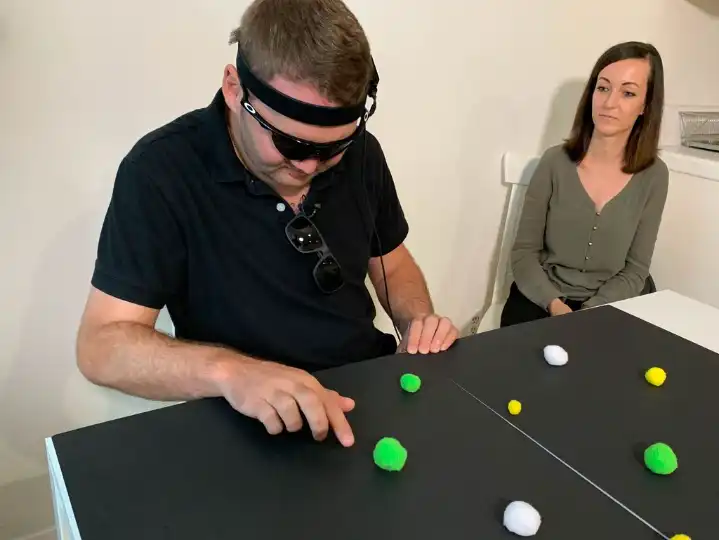

Redefining Strength Aesthetics: How FIRMABS Empowers Modern Women with Tech-Enabled Activewear
Featured 2026-01-16 05:49:44

Redefining Strength Aesthetics: How FIRMABS Empowers Modern Women with Tech-Enabled Activewear

Activewear is no longer just background gear for the gym. For FIRMABS, it is functional equipment, a fashion statement, and a second skin that embodies the independence, confidence, and strength of the contemporary woman. From the signature multi-pocket cargo leggings to the full range of high-performance sportswear, FIRMABS is redefining "athleisure."FIRMABS signature designs, where function meets style.I. Core Philosophy: A Style Revolution Rooted in FunctionalismFIRMABS was born from a simple insight: the activewear women need must seamlessly transition from high-intensity workouts to post-training life. Drawing inspiration from classic workwear, the brand's founders fused the durability and practicality of multi-pocket designs with the fit and flexibility demands of women's activewear, pioneering the "cargo athleisure" trend."We're not just designing clothes; we're crafting tools," emphasizes the design team. "The placement of every pocket and the direction of every seam are battle-tested. We want women in FIRMABS to carry their essentials effortlessly, moving freely from the weight rack to the café, always looking sharp and feeling confident."This "born for action" philosophy permeates the entire collection. Whether it's the high-impact sports bras for intense sweat sessions or the training leggings that balance flexibility with sculpting effects, FIRMABS prioritizes four-way stretch, breathable moisture-wicking fabrics, and long-lasting compression.II. Deep Dive into Signature Collections 1. The Pioneer Cargo Leggings SeriesThis is the series that put FIRMABS on the map. The signature multi-functional side pockets securely hold phones, keys, and cards, truly freeing your hands. Made with a proprietary high-density four-way stretch fabric, they offer strong support without restricting movement. Explore The Pioneer Series 2. The Apex High-Impact Sports Bra SeriesDesigned specifically for high-impact activities like running, HIIT, and boxing. The front features ergonomic seaming for superior lockdown and support, while the stylish cross-back design ensures stability. The lightweight, breathable fabric keeps you dry through the toughest workouts. Explore The Apex Series 3. The Foundation Training Essentials SeriesThis collection includes daily staples like tees, long-sleeve sweatshirts, and training shorts. With minimalist designs and clean cuts, it focuses on skin-friendly fabrics and versatile styling. Perfect for wearing alone or layered with cargo leggings, it effortlessly creates a sleek, powerful athleisure look. Explore The Foundation SeriesBlack Friday Note: All items sitewide are included in the Black Friday sale, with greater discounts on bundle purchases of essentials.The FIRMABS line offers flexible styling for all scenarios, from professional training to casual outings.III. Beyond Apparel: Building an Inspiring CommunityFIRMABS's brand impact extends far beyond products. Through social media, they've fostered a vibrant "FIRMABS Community," encouraging women to share their fitness journeys, achievements, and challenges. The brand regularly hosts online workshops with fitness coaches, physiotherapists, and nutritionists to provide science-backed knowledge."We're not selling anxiety; we're selling solutions and companionship," says the Community Manager. "Seeing our customers complete their first pull-up or run their first 10k in FIRMABS—these stories are our brand's most valuable asset."IV. Sustainability Commitment: Moving Towards a More Responsible FutureIn an age of fast fashion overload, FIRMABS adheres to a "less but better" principle. The brand is committed to selecting eco-friendly recycled fabrics, optimizing production to reduce waste, and using recyclable packaging. They believe true strength aesthetics also means being responsible to the planet.ConclusionFIRMABS has successfully infused the utilitarian soul of workwear into activewear, creating a distinctive and vibrant style. It represents a choice for the modern active woman: compromise neither on performance nor on style, feeling your own unique power and beauty with every stretch and rep. This Black Friday is the perfect opportunity to upgrade your activewear wardrobe and start a new chapter.Visit the FIRMABS Official Store: Women's Gym Wear & Sportswear |Workout Clothes to learn all details

Everyone’s at Home, the Earth is Shaking Less
Technology 2026-01-10 04:35:33

Everyone’s at Home, the Earth is Shaking Less

Everyone’s at Home, the Earth is Shaking LessNFK Editors - April 20, 2020Billions of people around the world are now on lockdown. That means there’s a whole lot less action on the planet’s surface. One result of that is that the earth is shaking less. And scientists can tell.Seismologists are scientists who study earthquakes and other vibrations inside the earth. They use special tools, including seismometers, to measure shaking in the ground. Though earthquakes can be huge and powerful, seismometers can measure much smaller vibrations, too.Seismologists are scientists who study earthquakes and other vibrations inside the earth. They use special tools, including seismometers, to measure shaking in the ground. Above, a seismograph, which measures and records earthquakes.(Source: Yamaguchi先生 [CC BY-SA 3.0], WikimediaCommons.org.)Seismic stations – special research stations with seismometers and other tools for measuring earthquakes – are usually set up far away from cities. Often seismometers are buried deep underground, away from human-created noise. That’s because cities shake too much.Think about it: trucks, buses, trains, subways, hundreds of thousands of cars, machinery like jackhammers and cement mixers – even the pounding of millions of pairs of feet. Ordinary human life, especially in cities, has a lot of noise, and that noise winds up vibrating in the ground.Seismic stations – special research stations with seismometers and other tools for measuring earthquakes – are usually set up far away from cities. That’s because cities shake too much. This seismic station is on Mount Vesuvius in Italy.(Source: daryl_mitchell [CC BY-SA], via Wikimedia Commons.)Now, with people on lockdown all over the world, a big part of this background noise has dropped away. It’s like when everyone at a party stops talking at once, and you can hear the smallest of sounds.One of the first people to notice this was Thomas Lecocq, a seismologist who works at the Royal Observatory in Brussels, Belgium. Mr. Lecocq says the levels of “seismic noise” have been about 30% to 50% lower since mid-March. He says those levels are about the same as the country would have on a big holiday like Christmas.Seismologist Thomas Lecocq says that levels of seismic noise have been about 30% to 50% lower since mid-March. He says the current levels are about the same as the country would have on Christmas. Mr. Lecocq created the graph above, showing the drop.(Source: Screenshot, Thomas Lecocq.)Mr. Lecocq shared details over the internet about how he detected the drop in seismic noise. Seismologists in several other countries, including France, New Zealand, and the United States, used Mr. Lecocq’s method and found similar results.The unusual quiet is giving seismologists a rare chance to “listen” to the earth without so much human noise. And it makes a big difference. Seismologists say they can now detect earthquakes on the other side of the world – something that would normally be lost in the background noise.The unusual quiet is giving seismologists a rare chance to “listen” to the earth without so much human noise. Seismologists say they can now detect earthquakes on the other side of the world. Above, an underground seismometer.(Source: SpacePen [CC BY-SA 3.0 DE], via Wikimedia Commons.)The quiet period may allow seismologists to study things that create such small vibrations that they normally can’t be detected – things like waves, or the way water moves underground.The drop in noise is improving even “bad” seismic stations. Brussels has a seismic station that was built over 100 years ago, before it became a big, busy city. Normally, Mr. Lecocq says, the station is “basically useless”. But without all the background noise, it’s almost as good as a much more protected seismometer.The scientists say that the lower seismic noise level is a strong sign that people are taking the lockdowns and social distancing rules seriously. Above, the Grand Place square in front of the Brussels City Museum is nearly empty because of the pandemic.(Source: Trougnouf (Benoit Brummer) [CC BY-SA], via Wikimedia Commons.)The scientists say that the lower seismic noise level is a strong sign that people are taking the lockdowns and social distancing rules seriously. Mr. Lecocq thinks these seismic measurements can be used to encourage people to keep doing the right thing and stay at home.Check Yourself0/41. Seismologists are scientists who study _______________.2. Why are most seismic stations set up away from cities?Land is cheaper outside of citiesPeople are more friendly in the countryCities shake too muchIt's hard to find parking in cities3. Scientists can measure the drop in vibrations caused by people staying at home.True   False4. During the quiet period, scientists may be able to study things that only create small vibrations. Name one example.Have you noticed if it's quieter where you live? Is it easier to stay home if you know everyone else is, too?ResetSourceswww.theatlantic.comwww.cnn.comwww.smithsonianmag.comwww.nature.comgizmodo.comShare:

The French guide to summer style
Fashion 2026-01-02 10:01:13

The French guide to summer style

Camille Romagnani wearssleeveless vest byBabaà, shirt byPatine, trousers byStudio Nicholson, ring byAgnès BMiles le Gras wearsshirt bySunnei, trousers byThe Frankie Shop, bag byRimowaZélikha Dinga wearsjumper byMiu Miu, shirt and skirt byRier, socks byFalke, shoes byMagasin Vivant!, glassesmodel’s ownTimothé Echelard wearsjacket byRier, shirt byCharvet, jeans, socks and shoes byGucciCésar Debargue wearsjacket byAndersen-Andersen, shirt byPaul Smith, trousers byMargaret Howell, socks and glassesmodel’s own, shoes byRierOscar Coop-Phane wearscoat, jumper, trousers and shoes byPrada, polo shirt byTricotGesa Hansen wearsshirt byPrada, trousers bySoeurPierre Touitou wearsshirt and jeans byBrooks Brothers, shoes byLa Botte Gardiane, cravatte and watchmodel’s ownHAIR & MAKE UP:Yoana TG

2019 Year in Review: World of Technology
Technology 2026-01-10 18:44:15

2019 Year in Review: World of Technology

2019 Year in Review: World of TechnologyNFK Editors - December 27, 2019To recap 2019, NewsForKids.net is taking a look back at some of the most interesting stories we’ve covered this year.Today we’re looking at stories that show how technology is changing our world.Google’s Quantum Computer Takes Huge StepOctober 31, 2019Google scientists say they have used a special “quantum computer” to complete a calculation that would take the fastest computers in the world up to 10,000 years to solve. It took Google’s computer 200 seconds.Man Builds Brain-Controlled Robotic HandMay 16, 2019In elementary school, Glenn Cameron was very aware of the challenges faced by his friend, who was missing a hand. Now Mr. Cameron has built a robotic hand that can be controlled by a human brain.Grocery Stores Try Self-Driving Delivery CarsJanuary 11, 2019Grocery stores are testing different ways of delivering orders using self-driving cars. Companies are experimenting more as self-driving cars get better and the pressure from online stores like Amazon gets stronger.Faking Videos is Easy – and DangerousSeptember 11, 2019It has become very easy for people to use computer programs to make fake videos that seem real. Many people are very worried about how these tools might be misused.Brazil to Sell Computer-Created PerfumeJune 4, 2019A beauty company in Brazil will soon begin selling two brand-new perfumes. But there’s an unusual story behind the perfumes – the smells were created by a computer.The Growing Problem of RansomwareAugust 28, 2019The computer systems of local governments, school districts, and businesses are being targeted more often by criminals, who lock the computer files, and refuse to unlock them until they are paid.Sweden Begins Using Driverless Electric TrucksMay 31, 2019A company called Einride has begun using driverless electric trucks on a public road in Sweden. The project is testing ideas that could bring important changes in transportation.Mara Makes First ‘Made in Africa’ SmartphonesNovember 22, 2019In October, a Rwandan company called Mara opened two factories – one in Rwanda and the other in South Africa. The factories will produce the first smartphones built completely in Africa.Company Turns Sunlight into Extreme HeatNovember 20, 2019A company called Heliogen has announced a new process that can reach extremely high temperatures using only the power of the sun. The process could help reduce the pollution that’s causing the climate crisis.San Francisco Says “No” to Facial RecognitionMay 30, 2019San Francisco has decided that its city government workers can’t use computer programs that recognize faces. San Francisco is the first US city to take such a strong step to keep this technology under control.Share:Scientists at Loughborough University in the United Kingdom have created what they call “the world’s smallest violin”. The violin is made of metal and is so tiny that it can only be seen with a powerful microscope. The project was designed to test new technology for building extremely small things.Rubik’s Cube Record Smashed by College StudentsNFK Editors - Jun 26, 2025Students at Purdue University have created a robot that can solve a Rubik’s Cube faster than any robot ever. The robot, which they call “Purdubik’s Cube”, solves the cube in just 0.103 seconds. That’s faster than the time it takes to blink your eyes.

News Roundup: Coronavirus Hits Businesses & Tech for Traffic Jams – x 2
Technology 2026-01-18 01:18:13

News Roundup: Coronavirus Hits Businesses & Tech for Traffic Jams – x 2

News Roundup: Coronavirus Hits Businesses & Tech for Traffic Jams – x 2NFK Editors - February 8, 2020Coronavirus Spreads, Causing Human and Business WorriesThe new coronavirus, which first appeared in Wuhan, China in December, has continued to spread. Currently there are nearly 35,000 cases, and 720 people have died. Though the disease has spread to over 25 other countries, almost all the cases are in China.In response to the outbreak, the Chinese government closed off 50 million people in Wuhan and cities near it. As the virus spread to other areas of China, the government took more actions to limit the spread of the disease.Currently, most people around the country are staying home. If people go out, they wear masks. Many places where people gather have been closed, including many museums, theaters, restaurants, and shopping areas.Currently, most people around the country are staying home. If people go out, they wear masks. Many places like museums, theaters, restaurants, and shopping areas have been closed. This Beijing street is normally busy, but in late January, it was empty.(Source: Pau Colominas [CC BY-SA], via Wikimedia Commons.)Hundreds of companies have closed their factories until the disease is more under control. Since China makes so many parts for products used by companies around the world, the effects of the factories shutting down are being felt in other countries, too.Car companies like Honda, Toyota, and others have closed their factories, some until the end of February. Many tech factories, such as those of iPhone maker Foxconn, are also closed.Car companies like Honda, Toyota, and others have closed their factories. Many tech factories, such as those of iPhone maker Foxconn, are also closed. This Dongfeng Honda factory in Wuhan, China (above) will be closed until the end of February.(Source: Wuchernchau [CC BY-SA], via Wikimedia Commons.)Most businesses expect some slowdown in China during the Chinese New Year holidays, which just finished. But if factories and businesses in China remain closed, the effects could soon be felt around the world.Many products like clothing, electronics, and even medicine could become a little harder to find or more expensive.Mumbai Traffic Lights Punish Honking DriversMumbai is famous for its bad traffic. It’s not just bad, – it’s loud! The noise at street level can reach above 85 decibels (dB). That’s about as loud as a blender or a garbage disposal. Listening to noises that loud for a long time can lead to hearing loss.Drivers in Mumbai traffic jams have a habit of honking their horns. Many of Mumbai’s traffic lights have countdown timers, which show drivers how long until the light turns green. But drivers often begin honking long before the countdown timer reaches zero.Mumbai police created a ‘Punishing Signal’ that makes people wait longer if there’s too much honking. The picture shows a timer that was just reset to 90 seconds because the noise level is over 85 decibels.(Source: Mumbai Police, via Twitter.)Mumbai police found a clever way to train drivers to stop honking. They attached devices which measure noise levels to several traffic lights. If drivers honk enough to raise the sound level above 85 dB, the countdown timer resets to 90 seconds, making drivers wait longer.The police warned drivers with a large sign saying, “Honk more, wait more”. Police hope that with time, Mumbai’s drivers will learn to honk less.The police warned drivers with a large sign saying, ‘Honk more, wait more’. Police hope that with time, Mumbai’s drivers will learn to honk less(Source: Mumbai Police, via Twitter.)Artist Uses 99 Phones To Trick Google MapsSimon Weckert, a German artist, created an unusual art project. He pulled a little red wagon holding 99 cell phones along streets in Berlin that were mainly empty,. The cell phones caused Google Maps to show that there were traffic jams on the streets.Mr. Weckert says Google Maps has changed the way that people interact with maps, and that this gives Google a lot of power over how people see cities.Artist Simon Weckert tricked Google Maps into showing traffic jams on nearly empty streets by pulling 99 cell phones along in a wagon. Mr. Weckert’s traffic jam is the heavy double red line toward the bottom of the map shown above.(Source: Simon Weckert .)Mr. Weckert wanted to turn that around, and show that people also have the power to affect Google Maps. His “traffic jam in a wagon” seems to have proved his point.Sourceswww.nytimes.comwww.voanews.comwww.bbc.comwww.laht.comwww.nytimes.comwww.theguardian.comwww.cnn.comwww.abc.net.auwww.wired.comShare:



Golf Partner USA: Your Premier Gateway to Pre-Owned Golf Excellence
Featured 2026-01-06 20:52:43

Golf Partner USA: Your Premier Gateway to Pre-Owned Golf Excellence

The world of golf is constantly evolving, and so is the gear that fuels our passion for the game. Golf Partner USA has emerged as a leading destination for golfers seeking exceptional value, quality, and selection in pre-owned golf equipment. Moving far beyond the traditional notion of "used" clubs, this platform curates a vast inventory of golf clubs, apparel, and accessories, offering a smarter way to upgrade your game. This guide will explore the Golf Partner USA advantage, detailing how to find your perfect match and the confidence that comes with every purchase.1. Beyond "Used": The Philosophy of Certified Pre-Owned GolfGolf Partner USA operates on a simple yet powerful premise: great golf should be accessible. They challenge the assumption that performance and quality are reserved for brand-new equipment with premium price tags. Their service is built on meticulous inspection, professional grading, and transparent presentation. Every club that enters their inventory undergoes a rigorous evaluation process, resulting in a certified condition rating (from "Mint" to "Value" grades) that provides clear, trustworthy guidance. This transforms the shopping experience from a gamble into a confident selection, allowing golfers at all levels to access premium brands and models that might otherwise be out of reach.2. Navigating the Green: Core Product CategoriesThe platform's strength lies in its organization and the sheer breadth of its offerings. Whether you're a seasoned pro, a weekend warrior, or a beginner, the inventory is designed for efficient discovery. ● Drivers & Woods: Unlock distance off the tee. The selection spans the latest models from TaylorMade, Callaway, Titleist, and Ping to previous-generation champions, all with detailed specifications and condition reports. Find forgiving game-improvement heads or low-spin player's models to suit your swing. ○ Shop Drivers: Browse Pre-Owned Drivers ● Irons & Iron Sets: The heart of the bag. Browse complete sets or individual irons from major manufacturers, categorized by player type (Game-Improvement, Players, etc.). Detailed listings include information on shafts, grips, and lie angles. ○ Shop Irons: Browse Pre-Owned Irons ● Wedges & Putters: Sharpen your short game. Discover a vast array of wedges for every bounce and grind, and putters of every head shape and technology to perfect your stroke on the greens. ○ Shop Wedges: Browse Pre-Owned Wedges ● Complete Sets & Apparel: For those seeking a full refresh or just starting out, curated complete sets offer incredible convenience and value. Furthermore, the selection often extends to high-quality, pre-owned golf apparel, shoes, and bags. ○ Shop Complete Sets: Browse Complete Golf Sets3. Signature Services: Trade-In, Fitting, and Expert GuidanceGOLF PARTNER USA enhances the standard retail model with value-added services that cater to the practical needs of golfers. ● Trade-In Program: They offer a straightforward trade-in service, allowing golfers to turn their old clubs into credit toward new purchases. This program simplifies the upgrade cycle and provides a sustainable way to refresh your bag. ● Expert Guidance & Fitting: While promoting the convenience of online shopping, their physical stores and customer service team are staffed by golf enthusiasts who can provide insights. For players ready to fine-tune, exploring professional club fitting with the equipment you choose is always recommended for optimal performance.4. Navigating Value: Smart Shopping for Every GolferGOLF PARTNER USA caters to a wide range of budgets and playing styles by presenting clear pathways to value. ● For the Tech-Driven Player: Invest in the newest, fully customized equipment to gain every technological advantage. Keep an eye out for Black Friday promotions, where brands like TaylorMade and Callaway often see significant discounts on current-season drivers and iron sets. ● For the Value-Conscious Player: The certified pre-owned section is a treasure trove. Here, you can find previous-generation models that were top-of-the-line just a year ago, offering professional performance at a fraction of the original price. This is a smart strategy year-round, but Black Friday can bring additional site-wide sales or bonus trade-in values, making it an excellent time to score a premium pre-owned set. ● For the Essentials Shopper: Don't overlook the savings on consumables and necessary gear. Black Friday is historically a great time to stock up on golf balls, with deals on premium models from Titleist, TaylorMade, and Srixon, or to find discounts on high-quality golf shoes and waterproof jackets.5. Conclusion: Playing Smarter, Not Just Spending MoreGolf Partner USA represents a modern, intelligent approach to golf commerce. It recognizes that the performance of a club is not diminished by a previous owner, only its price. By prioritizing rigorous quality control, absolute transparency, and an immense selection, they empower golfers to make informed, value-driven decisions. In doing so, they make the game more accessible and enjoyable, proving that the path to lowering your score doesn't have to come with a towering price tag.Ready to explore a smarter way to shop for golf? Discover unmatched value and selection in certified pre-owned equipment at GOLF Partner USA | Used Golf Club Shop.

Robotics Team Sets Toilet Paper Pyramid Record
Technology 2026-01-21 00:26:25

Robotics Team Sets Toilet Paper Pyramid Record

Robotics Team Sets Toilet Paper Pyramid RecordNFK Editors - January 31, 2020Midland, Michigan —(Map)Students at Bullock Creek High School in Midland, Michigan found an unusual way to raise money for their robotics team – they used 27,434 rolls of toilet paper to build the world’s largest toilet paper pyramid.Every year, the BlitzCreek 3770 Robotics team takes part in the FIRST Robotics Competition – a national robotics contest, where students are challenged to create a robot that can perform certain tasks.Members of Bullock Creek High School’s BlitzCreek 3770 Robotics Team found an unusual way to raise money for their robotics team – they used 27,434 rolls of toilet paper to build the world’s largest toilet paper pyramid.(Source: BlitzCreek 3770 Robotics.)The 28 students on the BlitzCreek team – about half female – design robots, build and wire them, and write the programs that run them.But building robots isn’t cheap, and teams are expected to help raise money for the program.Maxton Herst, 18, first had the idea of building a toilet paper pyramid to raise money in ninth grade, when he joined the robotics team. By accident, he came across a video about a toilet paper pyramid. Maxton realized that it was possible to build a record-setting pyramid, and then sell the toilet paper to raise money.Maxton Herst (above) first had the idea of building a toilet paper pyramid to raise money in ninth grade, when he joined the robotics team. Maxton, now 18, realized that it was possible to build a record-setting pyramid, and then sell the toilet paper to raise money.(Source: BlitzCreek 3770 Robotics.)The problem was convincing other members of the team. Year after year, he suggested the idea, but it never took off. But this year, Maxton is the captain of the robotics team. The rest of the team agreed to try his idea.BlitzCreek has been planning the pyramid since last May. One challenge was calculating how many rolls of paper were needed. The answer turned out to be 27,434.*In late December, team members gave up part of their winter holiday to build the pyramid. The pyramid was so big that they had to build it from the inside (above) before backing out and filling in the areas where they had been standing.(Source: BlitzCreek 3770 Robotics.)In late December, team members gave up part of their winter holiday to build the pyramid. The pyramid was so big that they had to build it from the inside before backing out and filling in the areas where they had been standing.It took about 16 hours, with many people working, to complete the pyramid. The final height of the pyramid was 16 feet 3 5/8 inches (4.95 meters) tall. The team believes their pyramid is about two feet (61 centimeters) taller than the current Guinness World Record.It took about 16 hours, with many people working, to complete the pyramid. In all, it took 27,434 rolls of toilet paper.(Source: BlitzCreek 3770 Robotics.)The pyramid opened for viewing on January 4. Sadly, because the pyramid was in the school’s front hall, it could only stay up three days.With all the excitement caused by the pyramid, it turned out to be fairly easy to sell the toilet paper. Families and other supporters bought nearly half of the rolls. A large company bought the rest.The pyramid opened for viewing on January 4. The final height of the pyramid was 16 feet 3 5/8 inches (4.95 meters) tall, which is about two feet (61 centimeters) taller than the current Guinness World Record.(Source: BlitzCreek 3770 Robotics.)The club is still calculating the costs for the project, but they believe the team made about $10,000 from the event. The money will help pay for the activities of the team, as well as similar programs at Bullock Creek’s elementary and middle schools.This isn’t the team’s first fun project. The team built a robot they call “T-shirt Bot”, which looks like a tank, and can shoot T-shirts into the air. The team has taken T-shirt Bot to hockey games, and to elementary schools, to get younger students excited about robotics.The BlitzCreek team also built a robot they call “T-shirt Bot”, which looks like a tank, and can shoot T-shirts into the air. The team has taken T-shirt Bot to hockey games, and to elementary schools, to get younger students excited about robotics (above).(Source: BlitzCreek 3770 Robotics.)Maxton hopes that the success of his “crazy idea” will inspire others. “If you’ve got an idea, and you know that that idea is good, push it,” he says. “Don’t stop.”* For people who want to do the math:The bottom layer of the pyramid has 43 rolls on a side. After that, each layer has one less roll per side than the layer below it. There are 43 layers in all, and the top layer has just one roll!Did You Know…?There are FIRST robotics contests at the elementary, middle school, and high school levels. You can find out more at the FIRST site.Sourceswww.mlive.comapnews.comwww.wnem.comwww.upi.comwww.freep.comMidland, MichiganView Larger MapShare:

Robot Lab Assistant Runs Its Own Experiments
Technology 2026-01-16 21:27:55

Robot Lab Assistant Runs Its Own Experiments

Robot Lab Assistant Runs Its Own ExperimentsNFK Editors - July 10, 2020Liverpool, England —(Map)Scientists at the University of Liverpool (UL) have developed a robot that can run experiments on its own. The robot works tirelessly, stopping only long enough to recharge its batteries. Recently, the robot finished nearly 700 experiments in eight days.It’s not new for labs to use robots. But earlier robots usually stayed in one place and did a single job over and over.The UL robot is the opposite of that. The 5 foot, 7 inch (1.75 meter) robot is similar in size to a human. Though it weighs much more than most people – 882 pounds (400 kilograms) – it’s able to easily move around in the same sort of space as humans do.Scientists at the University of Liverpool (UL) have developed a robot that can run experiments on its own. Using a special laser system called LIDAR to guide itself, the robot is able to easily move around in the same sort of space as humans do.(Source: University of Liverpool.)It uses a special laser system called LIDAR to guide itself – even in the dark. Once it’s close to a work station, it can move into a more exact position through its touch sensors.With one long arm which can turn in almost any direction, the robot is capable of using several different kinds of lab equipment. Some of the equipment has been changed slightly to make it easier for the robot, but basically, it’s the same equipment a human would use.With one long arm which can turn in almost any direction, the robot can use several different kinds of lab equipment. Some equipment has been changed slightly to make it easier for the robot, but basically, it’s the same equipment a human would use.(Source: University of Liverpool.)What’s more, the robot can perform many different tasks, such as picking things up, setting them down, pushing buttons, pouring liquids, weighing and measuring things, and studying its results. The robot was built and programmed by Benjamin Burger, a Ph.D. student at the university.Dr. Burger says it took a lot of effort to program the robot so that it can do things without making mistakes. That’s important because it’s meant to run for days without help. Once the programming is done, though, Dr. Burger says the robot makes fewer mistakes than a human.The robot can perform many different tasks, such as picking things up, setting them down, pushing buttons, pouring liquids, weighing and measuring things, and studying its results.(Source: University of Liverpool.)To test their robot, the scientists gave it a challenge: find a material which was good at producing hydrogen from water, using light.The robot was programmed to understand the basic methods for the experiment, but it was given 10 different things it could change which could affect the results. That meant that the robot could choose from around 98 million different mini-experiments.Over the next 8 days, the robot ran 688 experiments, always choosing its next experiment based on the results of the last one.Over the next eight days, the robot ran 688 experiments, always choosing its next experiment based on the results of the last one. The robot ran for 172 hours, stopping for only a couple of hours each day to recharge its batteries.(Source: University of Liverpool.)The robot ran for 172 hours, stopping for only a couple of hours each day to recharge its batteries. To do the same amount of work would have taken a human several months.Though the scientists ran the robot for eight days, its most successful result came on the third day of experimenting.Andrew Cooper, who led the program says the robot is meant to help scientists, not replace them. He says, “…it frees up time for the human researchers to think creatively..(Source: University of Liverpool.)The UL robot wasn’t cheap – it cost around $125,000 and took years to program. But the scientists compare that to the cost of other laboratory equipment which they say can also be quite expensive. The fact that the robot can be used for many different purposes is a huge advantage.Andrew Cooper, who led the program says the robot is meant to help scientists, not replace them. He says, “…it frees up time for the human researchers to think creatively.”Check Yourself0/41. The University of Liverpool's robot is different from earlier robots because it can move around and do many jobs.True   False2. The robot can guide itself safely even in the dark by using a special _______________ system called LIDAR.3. The robot can only work with equipment that was specially designed for it.True   False4. How many experiments did the robot do in eight days?88600400688Can you think of other areas where a robot with similar skills might be useful? Do you think such a robot would take away jobs or simply leave humans free for more creative work?ResetSourceswww.theverge.comwww.newsweek.comnewatlas.comnews.liverpool.ac.ukLiverpool, EnglandView Larger MapShare:

Jil Sander is bringing its modern, understated aesthetic to London
Fashion 2026-01-04 05:15:30

Jil Sander is bringing its modern, understated aesthetic to London

The house of Jil Sander operates in a world of its own, divorced from trends, the fashion industry’s rigorous schedules and expectations for seasonal renewal. Not that it ever really sought to be part of the collective. When founder Heidemarie Jiline Sander presented her first womenswear collection in 1973 in Hamburg, she wanted to address professional women like herself with pared-back, modernist designs: the smartest wool trousers, the most elegant outerwear and the sharpest white shirts. Her debut collection instantly sold out and, soon after, women the world over couldn’t imagine buying wardrobe staples anywhere else.In the 1980s, Sander decamped to Milan, finding ways to participate in the city’s fashion week on her own terms: her shows were always early morning affairs, her models were fresh-faced and dressed in pared-back looks that could be taken straight from the runway to the streets. She disregarded editors’ preference for late-night events, supermodel appearances and loud design, even if it meant that she rarely made front-page news. She was more interested in making clothes that enhanced the day-to-day lives of men and women – and did just that throughout the 1980s and 1990s, often referred to as the brand’s heyday.The pair favour simplicity in designThe 2000s were less stable, as Sander stepped down as creative director (she returned briefly in 2003 and 2012). The business changed many hands: from the Prada Group to private-equity firm Change Capital Partners, then Japan’s Onward Holdings Co and finally the current owner, OTB Group. Under OTB, the brand has reclaimed its individualist spirit and, along the way, regained cultural relevance and legions of new, loyal customers. This is thanks to Luke and Lucie Meier, who took over as co-creative directors in 2017. The husband-and-wife team didn’t set out to revive Jil Sander by following the usual branding playbook, often requiring a new logo, a highly publicised ad campaign and drastic change in design direction. They chose to focus on looser interpretations of Sander’s original independent spirit and sense of pragmatism, building a design language of their own – one that is based on intuition, the imagery they are drawn to, the architecture that inspires them and the conversations that they have with each other. “Lucie is always right,” says Luke, jokingly.The designers stress that they don’t believe in hierarchies. In their studio in Milan, there’s always an open dialogue and they encourage everyone to add their own perspective to the briefs they set at the beginning of each season. “Interestingly, we usually arrive exactly where we set off at the beginning but it’s also important to leave the door open for the unexpected and allow a lot of meandering along the way,” says Luke, who applies the same attitude to his own life and career. Born in Canada, he moved from his home in Vancouver to study finance in Washington and business policy at Oxford University, before studying fashion at New York’s Fashion Institute of Technology and Florence’s Polimoda. He became Supreme’s head designer after a chance meeting with its founder, James Jebbia, and went on to co-found the streetwear label OAMC. Lucie, who spent her early years in the Swiss village of Zermatt, followed a more traditional path into the industry, studying fashion marketing at Polimoda (where the two met) and going on to work for some of the most established houses in Paris, including Louis Vuitton and Dior.Spring 2024 designsTheir experience stretches from rarefied haute couture to mainstream streetwear design, from the offices of dynamic New York start-ups to the ateliers of Paris’s most storied houses and from quaint, countryside living to life in urban, fast-paced fashion capitals. But the couple refuse to attach themselves, or Jil Sander, to any labels, instead bringing the full breadth of their identities and rich backgrounds into their work. “You could say that we’re Canadian and Swiss but we moved around so much in our formative years, it doesn’t feel like we’re from one single place,” says Lucie. “Our studio is the same. It’s fully international and everyone brings their own experiences and points of view.” At a time when brands are doubling down on national identity, the Meiers are going against the grain. “That’s an asset, right?” says Luke.“Minimalist” is another label that the pair are eager to shed from the Jil Sander brand. Despite their affinity for neutral colour palettes and timeless silhouettes, including plenty of tailoring, they believe that “minimalism is old and boring”, and opt for simplicity or purity instead. “Even if you do something very bold, the approach can still be simple,” says Lucie, while Luke nods in agreement. “Pure or simple doesn’t mean boring, while minimalism can veer towards it,” he says. “You can have something fully embroidered or something in colour but it’s still a pure version of that design. There’s a bit more energy in this approach.”Accessories in the new boutiqueThis is why they always make a point to sprinkle playful details into their collections. Their autumn/winter 2023 range incorporated splashes of pastels, checkerboard patterns and 1990s-inspired colour-block leather, which took everyone by surprise. “The 1990s were a formative time for us, from the music to the cultural exchange that was happening,” says Luke, who is dressed in a pair of black-and-white leather trousers from the collection. “It felt inspiring and positive. I was studying at Oxford, I lived in New York for a while and felt that there was this open dialogue around the world, while now it seems like things are getting more insular and people want to close borders.” For Lucie, who is dressed in the kind of elegant black-and-white tailoring you would more easily associate with Jil Sander, the element of surprise remains important. “People might already expect something when they come to our shows or our shops but we need to exceed those expectations.”That was also the thinking behind Jil Sander’s new retail concept, formally introduced on London’s Bond Street this year. The aim was to surprise customers by marrying the purist design that the brand is known for with something warmer. “It’s easy to make something simple,” says Luke. “But to do something that’s simple but also has personality, soul and a warm energy is actually very difficult.” “It comes down to considering everything from colour to materials, and the small details such as the curves on the shelving. It all comes together to create this intimacy.”Indeed, the new space feels like a breath of fresh air on Bond Street, where new openings have become less frequent of late. At the door, smiling staff in crisp white shirts set the tone, while inside, the sense of warmth that the Meiers were aiming for is immediately felt through the use of raw travertine, brass poles that create more private, intimate sections and subtle touches of colour, like the pair of silver-blue benches, created using recycled CDs. There’s enough product on display to encourage browsing – a refreshing change from current design trends where shop floors are sparse and boutiques resemble museums. “The idea of slick, quite intimidating spaces is in the past,” says Luke. “There needs to be an element of discovery and you should feel like you’re having a unique experience. The sounds, the interaction with people, need to be at a very high level. This isn’t just a place where you come and pick something up; it’s a place to experience.”Travertine and marble is used throughout the new London shopBench made using recycled CDsDespite the ephemeral nature of fashion, the Meiers apply this long-term thinking to all their projects, whether retail design, their seasonal collections or their ongoing print project, Jil Sander Publishing. Their latest volume,Manchester, was made in collaboration with UK photographer Chris Rhodes, whose portraits of musicians and DJs, such as Jeff Mills, reflect the designers’ fascination with the 1990s. “We don’t like loud, online [communication],” says Luke. “With print there’s a curatorial element: every page deliberately follows the next rather than having a series of hyperlinks that send you into a labyrinth,” says Luke. “Having the perspective of someone like Jeff Mills about the late 1990s was so interesting because there are so many parallels with what’s going on today. Technology was becoming part of people’s daily lives and there was more information exchange – the difference was that there was more optimism back then. We want to encourage people to think a little bit more like that again, instead of seeing darkness everywhere and thinking that artificial intelligence will destroy the world.”At a time of global uncertainty, using creativity to inject a dash of optimism into the world is what the Meiers are ultimately hoping to achieve. “We’re not naive enough to think that what we’re doing is saving the world in any way,” says Luke. “But if we can inspire someone, work with great artisans who care about what they’re doing, that’s really important. In the end, it’s about good materials, good people, good design and a rigorous thought process – that’s our medium for commenting on the world.”jilsander.com

For Real? Solo Tourist, Dog Goggles, & a Record Flight
Technology 2026-01-17 15:12:02

For Real? Solo Tourist, Dog Goggles, & a Record Flight

For Real? Solo Tourist, Dog Goggles, & a Record FlightNFK Editors - October 17, 2020Peru’s Machu Picchu Re-Opened for One TouristMachu Picchu is an ancient fort-like city high in the Andes mountains in Peru. At 1.5 miles (2.4 kilometers) above sea level, Machu Picchu is hard to get to, but it’s still popular with tourists.Since March, Jesse Katayama, a 26-year-old Japanese tourist, has been living in a small village just below Machu Picchu, waiting for a chance to visit. Machu Picchu was shut down because of the coronavirus right as Mr. Katayama was scheduled to visit.Machu Picchu is an ancient fort-like city high in the Andes mountains in Peru. At 1.5 miles (2.4 kilometers) above sea level, Machu Picchu is hard to get to, but it’s still popular with tourists.(Source: Diego Delso [CC BY-SA 4.0], via Wikimedia Commons.)Instead of giving up, he’s been patiently waiting – for seven months. Mr. Katayama, who’s a boxing teacher, has been teaching local children how to box. He’s become famous in the area as the last tourist in Machu Picchu.As more people learned about Mr. Katayama’s situation, several of them asked the government to allow Mr. Katayama to visit Machu Picchu.Finally, he got his wish. Normally, Machu Picchu gets hundreds of visitors every day. But last Sunday, Mr. Katayama was the famous spot’s only visitor.Normally, Machu Picchu gets hundreds of visitors every day. But last Sunday, Mr. Katayama was the famous spot’s only visitor. Above, Jesse Katayama at Machu Picchu with a guide.(Source: Andean Roots Perú.)“After the lockdown, the first person on earth to visit Machu Picchu is meeeeeee,” he wrote.US Army Develops Augmented Reality for DogsAugmented reality (AR) is technology that puts a layer of information over what people see in real life. AR can put labels on things, draw diagrams, or even completely change the way something looks. If you’ve seen Pokemon Go, that’s AR in action.Now the US Army is developing AR goggles for dogs. The army already works with dogs in many different ways, including sniffing out bombs and helping track people down. Usually soldiers control the dogs by moving their hands or pointing at things with a laser.Augmented reality (AR) is technology that puts a layer of information over what people see in real life. AR can put labels on things, draw diagrams, or even completely change the way something looks. If you’ve seen Pokemon Go (above), that’s AR in action.(Source: Maria Narodetsky, Penn State, via Flickr.com.)So why would the army want dogs to wear AR goggles? Mainly so that dogs can travel farther away without always having to stay close to a trainer.Here’s how it works: the dog’s goggles record and send back everything the dog is seeing and hearing, allowing the trainer to see and hear the same thing. The trainer can then send a command to the dog through the goggles, telling it what to do next.The dog’s goggles record and send back everything the dog is seeing and hearing, allowing the trainer to see and hear the same thing. The trainer can then send a command to the dog through the goggles, telling it what to do next.(Source: US Army.)So far, the program is just being tested. But if it works well, it could change how dogs are used in the army.Godwit Sets Record With 11-Day Non-Stop FlightA new record for non-stop bird flight has been set by a male bar-tailed godwit. It flew from Alaska to New Zealand in just 11 days.Godwits are wading birds, which hunt for food in shallow ocean waters. In summer, they raise their families in the Arctic. When it’s winter in the Northern Hemisphere, they fly south – sometimes as far as Australia or New Zealand.In summer, godwits raise families in the Arctic. When it’s winter in the Northern Hemisphere, they fly south – sometimes as far as Australia or New Zealand. The map above shows their flight patterns.(Source: WikimediaCommons.org.)The bird who set the record is known as 4BBRW. That’s short for the blue, blue, red, and white bands on his legs that scientists use to identify him. To follow him while he flew, scientists attached a very lightweight tracking device to his back.On September 16, 4BBRW left Alaska and flew for 11 days straight. Scientists report that he covered 7,581 miles (12,200 kilometers) before landing near Auckland, New Zealand. His high speed was 55 miles per hour (89 kilometers per hour).On September 16, 4BBRW left Alaska and flew for 11 days straight. He covered 7,581 miles (12,200 kilometers) before landing near Auckland, New Zealand. His high speed was 55 miles per hour (89 kilometers per hour). The bar-tailed godwit above isn’t 4BBRW.(Source: Paul van de Velde [CC BY], via Wikimedia Commons.)Sourceswww.nytimes.comwww.abc.net.auwww.dw.comwww.theverge.comwww.bbc.co.ukwww.army.milwww.theguardian.comwww.independent.co.ukgizmodo.comShare:

For Real? Slow Music, Orca Baby, & a Broccoli Picture
Technology 2026-01-19 05:07:47

For Real? Slow Music, Orca Baby, & a Broccoli Picture

For Real? Slow Music, Orca Baby, & a Broccoli PictureNFK Editors - September 12, 2020Notes Changed in Organ Music Lasting 639 YearsHundreds of people gathered in a church in Germany last week for an unusual musical event: a small change in a piece of organ music that began playing in 2001. The last time the notes changed was seven years ago.The piece is called “Organ/ASLSP”. The ASLSP stands for “As Slow As Possible”. It was written by composer John Cage. Mr. Cage developed many unusual musical ideas. In another piece, called “4′33″”, the musicians simply remain silent for four minutes and 33 seconds.People gathered last week for an unusual musical event: a small change in a piece of organ music that began playing in 2001 and will finish in 2640. Above, the special organ used in the performance, as seen in 2005.(Source: [Public domain], via Wikimedia Commons.)Though the music is just eight pages long, the current performance of “Organ/ASLSP” is expected to take 639 years. If all goes well, it should end in 2640.ASLSP is being played on a special organ, which isn’t completely built. Pipes are added to the organ as they are needed. Last Saturday, two new pipes were added.Now the organ will keep playing the same notes until the next change, on February 5th, 2022.ASLSP is being played on a special organ, which isn’t completely built. Pipes are added to the organ as they are needed. Last Saturday, two new pipes were added. Above, the organ in 2015.(Source: Clemensfranz [CC BY-SA], via Wikimedia Commons.)Orca Who Lost Calf Gives Birth AgainIn 2018, a female orca whale known as J35 gave birth to a calf that didn’t live. J35 became famous when she carried her dead calf around with her for 17 days. The action seemed to show how sad she was over losing her calf.The news wasn’t just sad for the mother, but for all the orcas in the area.* These whales are endangered. Two years ago, there were only 88 left, and the numbers have kept dropping.The orcas face many challenges, including polluted seas and increased boat traffic. The biggest threat is the lack of Chinook Salmon – a fish that’s the orcas’ main food source. Salmon numbers have been greatly reduced by human actions, like fishing and damming up rivers.In 2018, a female orca whale known as J35 gave birth to a calf that didn’t live. Now there’s some happy news for J35 – she’s had another calf, and this time it appears to be strong and healthy. Above, the fin of the mother orca, J35, and the calf, J57.(Source: Photo by Katie Jones, Center for Whale Research.)Now there’s some happy news for J35 – she’s had another calf, and this time it appears to be strong and healthy. The new orca has been given the label J57. With the birth of J57, there are now 73 orcas in the area.Scientists report that several other orcas in the area are also pregnant.Scientists Test World’s Most Powerful Camera – on BroccoliScientists at the SLAC National Accelerator Laboratory in Menlo Park, California are building a camera so big that it’s 13 feet (4 meters) long, and 5 feet (1.5 meters) across.The camera’s pictures will be extremely high quality. If you look closely at your screen, you’ll see little colored dots called pixels. SLAC’s new camera has 3.2 billion of them. To see an image from the camera at full size, you’d need to join up 378 of the highest quality TVs there are.Scientists at the SLAC National Accelerator Laboratory in Menlo Park, California are building a camera so big that it’s 13 feet (4 meters) long, and 5 feet (1.5 meters) across. The camera’s pictures will be extremely high quality – they’ll have 3.2 billion pixels.(Source: Jacqueline Orrell, SLAC National Accelerator Laboratory, via Flickr.com.)The camera is designed to take pictures of the sky that cover an area as big as 40 moons. But the camera’s not ready to take pictures of the sky yet, since construction was delayed by the coronavirus.Still, the scientists wanted to test the camera, so they build a special box that allows them to take super high-quality pictures of ordinary things. What did they decide to take a picture of? Broccoli! Luckily, it was a cool, spiral variety known as Romanesco broccoli.The scientists wanted to test the camera, so they build a special box that allows them to take super high-quality pictures of ordinary things. What did they decide to take a picture of? Broccoli! Luckily, it was a cool, spiral variety known as Romanesco broccoli.(Source: SLAC National Accelerator Laboratory, via Flickr.com.)* The orcas featured in this article live off the west coast of North America, near the border of the US and Canada.Sourceswww.dw.comwww.theguardian.comwww.rollingstone.comwww.nytimes.comwww.theguardian.comwww.cbc.cawww.npr.orgwww.smithsonianmag.comwww.zdnet.comShare:

Lawmakers Go Virtual During the Pandemic
Technology 2026-01-18 08:34:34

Lawmakers Go Virtual During the Pandemic

Lawmakers Go Virtual During the PandemicNFK Editors - May 25, 2020While much of the world has been on lockdown, lawmakers around the world have struggled to decide whether to continue to meet or suspend their sessions. Lawmaking groups in several countries are now trying to meet virtually.The problem with lawmakers meeting in person is fairly clear. Lawmakers meet indoors in large groups where the coronavirus could be easily spread.Several members of the United States (US) Congress have gotten the coronavirus or were near people who had it. In the United Kingdom (UK), several members of Parliament, including Prime Minister Boris Johnson, also had COVID-19.Several members of the US Congress have gotten the coronavirus or were near people who had it. In the UK, several members of Parliament also had COVID-19, including Prime Minister Boris Johnson (shown above, after being released from the hospital).(Source: Pippa Fowles/Number 10 [CC BY-NC-ND 2.0], via Flickr.com.)Online meetings are a very different way of doing business for lawmakers. Many of the important agreements made in these groups are often worked out in short, unplanned meetings during the day.Though that kind of meeting can’t be imitated online, many of the planned meetings for these lawmaking groups, such as “hearings”, can be done virtually fairly easily.Embed from Getty ImagesThough casual, unplanned meetings can’t be imitated online, many of the planned meetings for these lawmaking groups, such as “hearings”, can be done virtually fairly easily. Above, a screenshot taken during a virtual hearing in the US Senate.But when full sessions of these lawmaking groups meet, it can involve hundreds of people. Figuring out who gets to speak and for how long is difficult in person. Managing it virtually is a massive challenge.The biggest challenge is voting. Since these groups are actually creating or changing laws when they vote, it is very important to make sure that the votes are counted securely and accurately.In the UK, the US, and Canada, lawmakers are meeting in a mix of live meetings and virtual sessions.In the UK, only 50 members are allowed in Parliament at one time. Another 120 join in sessions over the internet. Large screens have been placed on the walls to allow remote members to be seen. Above, the first virtual Prime Minister question time.(Source: Jessica Taylor/UK Parliament [Parliamentary Copyright], via Flickr.com.)In the UK, for example, only 50 members are allowed in Parliament at one time. Another 120 join in sessions over the internet. Large screens have been placed on the walls inside Parliament to allow remote members to be seen.Many of the UK Parliament’s virtual activities, including some voting, is happening through a computer system called MemberHub. Mr. Johnson’s Conservative party is pushing for a return to real-life sessions. But many members of Parliament don’t feel it’s safe to return yet.Canada’s Parliament has been meeting virtually over the last month. On Tuesdays and Thursdays, 338 ministers of parliament take part in a massive online meeting to question members of the government. On some other days, about 30 lawmakers meet in person to discuss special subjects.Embed from Getty ImagesCanada’s Parliament has been meeting virtually over the last month. On some days, there is a massive online meeting. On other days, a small group of lawmakers meet in person to discuss special subjects. Above, a meeting on the coronavirus pandemic.No new laws have been passed except for emergency spending bills. Canada is still studying how lawmakers can vote securely online. About 32 lawmakers are meeting in person today to discuss what Parliament’s virtual future looks like.The US House of Representatives has passed a temporary rule which allows members to vote even when they’re not actually in Congress, by choosing someone to vote for them.Embed from Getty ImagesThe US House of Representatives has passed a temporary rule which allows members to vote even when they’re not actually in Congress, by choosing someone to vote for them. Above, the House rules committee discussing the new rule.This is a huge change, and not everyone likes it. The move was passed by Democrats, with Republicans voting against the idea. House members will also be able to take part in some other activities virtually.The US Senate is holding some hearings over the internet, but voting will still be done in person. This is easier to manage for the Senate, since it only has 100 members, compared to the 435 in the House.Did You Know…?In Venezuela, the National Assembly has also approved a plan to allow members to take part and vote remotely, but not because of the coronavirus. The National Assembly is controlled by lawmakers who oppose Venezuelan President Nicolás Maduro. Mr. Maduro has often tried to interfere with the lawmakers. With the rule, which was passed in December, Venezuelan lawmakers can take part in the Assembly without worrying about Mr. Maduro trying to stop them.Check Yourself0/41. Several members of the US Congress and the UK Parliament have gotten the coronavirus.True   False2. One of the biggest challenges lawmakers face is figuring out how to _______________ securely.3. The ____________ voted to allow remote voting in the US House of Representatives.RepublicansDemocrats4. In which country are lawmakers NOT voting remotely yet?Canadathe UKthe USDo you think that large online meetings can work as well as large in-person meetings? Why or why not?ResetSourceswww.theguardian.comwww.nytimes.comwww.nytimes.comwww.npr.orgwww.axios.comnews.yahoo.comwww.cbc.cawww.msn.comapnews.comShare:

Tour accessories label Cinabre’s Paris guest apartments
Fashion 2026-01-19 22:00:30

Tour accessories label Cinabre’s Paris guest apartments

In Paris’s Cité Bergère, a small and thoroughly charming pocket of the 9th arrondissement, is French brand Cinabre’s treasure trove of handmade silk ties, lapel pins, slippers and dressing gowns, showcased among vintage cocktail shakers, vinyl records, antique furniture and framed drawings. In the entrance is a marquee with blue and white stripes, and bright-red piping, which gives way to a reception area, complete with a concierge’s desk. At the back, a honey-hued, wood-panelled space houses drawers that are brimming with silk “Made in France” wonders. Look closer and you might see an embroidered image of French former footballer Zinedine Zidane on a tie.Cinabre is opulent and a little irreverent, excessive without being overwhelming. It’s high and low. “If you’re a purveyor of bow ties and dressing gowns in the 21st century, you can’t take yourself too seriously,” Alexandre Chapellier, the French-Swedish founder of Cinabre, tells MONOCLE. “I like to modernise what are considered more serious, traditional accessories – and do it with panache.”Alexandre ChapellierTake a seatHandmade tiesIndoor marqueeWhat began in 2011 as a passion project soon gained traction when one of the label’s first clients, Karl Lagerfeld, picked out Cinabre items at the now-shuttered multi-brand shop Colette. The label gained more visibility when it was added to the rails of Parisian department stores Le Bon Marché, Neiman Marcus in the US and Isetan in Japan. US musician and producer Pharrell Williams, who is currently the creative director of Louis Vuitton menswear, was then photographed wearing a textile Cinabre boutonniere fastened to his suit’s lapel.Then the label reached another milestone: in 2016 it was given the opportunity to provide a young politician called Emmanuel Macron with a tie. After winning the presidential election the following year, Macron chose Cinabre as his official purveyor of silk ties. “I thought that it was a friend of mine pranking me when I got that call,” says Chapellier. “For a small, ‘Made in France’ artisanal brand such as mine, it’s the equivalent of a presidential warrant. We went to the Élysée Palace to present our products and since then we have worked with ministers and the French delegation to the UN.” Today the president’s bailiffs, orhuissiers, can be seen in the background of the Élysée sporting Cinabre bow ties handmade from Swiss cotton.“For our small atelier in the Loir-et-Cher department, two hours outside Paris in the French countryside, it’s a huge source of pride,” says Chapellier. “We have third-generation artisans passing down their savoir-faire and the craft of making a tie, which is an extremely technical skill.” Every tie is hand-cut and made using the highest-quality Italian fabric. “We want to bring back a sense of generosity in our products. What’s nice about working with old-school accessories such as bow ties is that people are often purchasing them for an occasion, such as a black-tie wedding or birthday. We’re specialists in items that are no longer obligatory. It’s a choice to wear a bow tie today.”Muted coloursStriped coloursLoud textiles and louder speakersHästens beddingVintage piecesParisian eleganceLast November, Chapellier opened Les Suites Cinabre: two guest apartments above the shop. The brand worked with Paris-based firm Necchi Architecture to create rooms that are a natural extension of the Cinabre brand, with plenty of character, colour and charm. There, visitors are offered the opportunity to embrace the lifestyle of a Cinabre gentleman, complete with velvet-lined slippers. “We wanted to shake up the straightforward retail model,” says Chapellier. “Today a shop needs to offer more than just a product. We wanted to go a level above.” In the coming months, the company will launch a range of perfumes candles, as well as a foray into ready-to-wear with a line of shirts, jackets and trousers. If it’s fit for a president…cinabre-paris.com

A Computer Assistant Built to Float in Space
Technology 2026-01-05 20:38:24

A Computer Assistant Built to Float in Space

A Computer Assistant Built to Float in SpaceNFK Editors - December 12, 2019A floating computer assistant called CIMON 2 has been sent to the International Space Station. CIMON will work for the next three years to help the astronauts, and also to be “someone” they can talk to.The International Space Station (ISS) is a science laboratory in space. The station rotates around the Earth, over 200 miles (320 kilometers) above it. The ISS lets scientists do research in a place with very low gravity.A floating computer assistant called CIMON 2 has been sent to the International Space Station. CIMON will work for the next three years to help the astronauts, and also to be “someone” they can talk to. The picture shows the first CIMON.(Source: Airbus.)The ISS also lets them test things that might be used on other trips into space, like CIMON. CIMON (pronounced “Simon”) stands forCrewInteractiveMobile Companion. In August, the first version of CIMON returned from over a year on the space station. The new device is called CIMON 2.CIMON was created by the European airplane company, Airbus. It has no arms or legs, but it has motors inside that allow it to rotate in any direction and move where it needs to go.CIMON was created with two jobs in mind. One is helping astronauts with tasks. The other, which is trickier, is trying to be a companion (friend).CIMON was created by the European airplane company, Airbus. Three of the people involved in the project are shown above. CIMON has no arms or legs, but it has motors inside that allow it to rotate in any direction and move where it needs to go.(Source: [(CC BY 3.0)], DLR.)Helping astronauts is easy for CIMON – it can hear, understand, and speak. The brains behind CIMON were provided by IBM, a computer company with a lot of experience training computers to understand human speech. CIMON can understand not just what people say, but what they mean.That allows astronauts to ask it for instructions or information using everyday language, keeping their hands and minds free for other, more important things. CIMON can answer the astronauts, or use its screen to display pictures or documents, if needed.Astronauts can ask CIMON for instructions or information using everyday language, keeping their hands and minds free for other, more important things. The picture shows the first CIMON during an activity on the ISS involving a Rubik’s Cube.(Source: Airbus.)CIMON has several cameras, which can take pictures and videos to help astronauts keep records of experiments or other important actions.The more difficult part of CIMON’s job is being a companion for the astronauts. The first CIMON could understand what people were saying, but it was limited.In one video, taken with German astronaut Alexander Gerst, CIMON seemed to become confused as Mr. Gerst spoke with another astronaut. “Don’t be so mean, please,” CIMON said.The first CIMON could understand what people said, but it didn’t understand feelings. In one video, taken with German astronaut Alexander Gerst (above), CIMON got confused as Mr. Gerst spoke with another astronaut. “Don’t be so mean, please,” CIMON said.(Source: NASA [Public domain], via Wikimedia Commons.)CIMON 2 has been improved so that it can recognize emotions and figure out how people are feeling.One big goal of the CIMON project is to give astronauts “someone” they can share their thoughts with on long trips. Currently there are six people on the ISS. Usually astronauts stay in the ISS for five or six months. Can you imagine what it might be like to live in a tight space with just five other people for six months?One goal of the CIMON project is to give astronauts “someone” to share their thoughts with on long trips. Currently there are six people on the ISS (shown above). Usually astronauts stay in the ISS for five or six months. From left to right: Andrew Morgan, Alexander Skvortsov, Luca Parmitano, Oleg Skripochka, Jessica Meir, and Christina Koch.(Source: NASA [Public domain], via Wikimedia Commons.)Having companions is important on the space station, but it could be even more important during longer trips in space, such as a trip to Mars.The goal is for CIMON to be a calm, trusted friend that astronauts can talk to when they don’t want to talk with others. This could be especially important if tension in a group of astronauts causes them to stop thinking clearly.The creators hope that CIMON would be able to help people stay calm and make good decisions.The goal is for CIMON to be a calm, trusted friend that astronauts can talk to when they don’t want to talk with others. This could be especially important if tension in a group of astronauts causes them to stop thinking clearly.(Source: [(CC BY 3.0)], DLR.)Sourceswww.dw.comwww.abc.net.auwww.discovermagazine.comwww.space.comwww.theverge.comwww.airbus.comwww.youtube.comShare:This week marks 25 years of humans living in space. On November 2, 2000, three astronauts became the first full-time workers at the International Space Station. Since then, the ISS has never been empty.Is Seeing Believing? AI Videos Look Extremely RealNFK Editors - Nov 5, 2025Over the last year or so, the quality of AI-generated videos has become so good that it’s extremely difficult to tell whether a video is real or not. An English TV channel recently ran a show about AI. At the end of the episode, the “woman” presenting the show announced that she wasn’t real.40 Years of Making Software “Free”NFK Editors - Oct 8, 2025The Free Software Foundation celebrated its 40th birthday last Saturday. First started in 1985, the FSF has helped shape the digital world we live in today. Its ideas about free software inspired the open‑source movement; now open‑source programs run on countless computers, phones, and devices around the globe.Meteorite That Hit House Is Older Than EarthNFK Editors - Aug 14, 2025When a fireball fell through the sky in the southeastern United States on June 26, it caught the attention of people across seven states. It was a meteor breaking up as it fell through the Earth’s atmosphere. A small part of the space rock tore through a house in Georgia. Scientists now say the meteorite is older than the Earth.

On the scent: Five brands to look out for this June
Fashion 2026-01-18 06:38:11

On the scent: Five brands to look out for this June

Le Labo FragrancesJapanKyoto’s historic woodenmachiyatownhouses are not always treated with the respect they deserve. But this hasn’t been the case for a 150-year-old, family-owned former saké brewery by the Kamo river, which has been turned into a new home for New York-based fragrance brand Le Labo Fragrances.The atmospheric old building has been renovated with a light touch: door frames and walls have been left in a comfortably worn state and nothing feels overly restored. “It was about finding the right balance between preserving the past and bringing in new life,” says Deborah Royer, Le Labo Fragrances’s president and chief creative officer. The courtyard garden has been revived, while the oldkurastorehouse at the back has been turned into a small coffee stand. A tatami-mat room upstairs hosted a Kyoto calligrapher for the opening and will be used to welcome other craftsmen in the future. “We always try to connect with local artisans,” adds Royer, who tends to opt out of releasing traditional ad campaigns. “We don’t overdo the explanations; we try to [focus] everything around the fragrances.”Royer, who grew up on a farm in France, has long had a soft spot for Japan and itswabi sabiaesthetic. “We only use high-quality ingredients and work with small businesses and family-owned farms.” Ingredients come from all over the world, including cardamom from Guatemala, roses from Grasse, bergamot from Italy and sandalwood from a farm in Australia. “There are many similar products in the world, so if we’re going to offer something, it has to be different and resonate with us,” adds Royer, who can spend more than three years developing a fragrance.Le Labo Fragrances was bought by Estée Lauder in 2014 but Royer is confident that she can retain the brand’s identity. “I feel good about respecting the original intention and focusing on our craft.”lelabofragrances.comSantoniItalyItalian footwear and accessories label Santoni is going full steam ahead with its expansion plans. After setting up shop in London’s Harrods in 2023, executive president Giuseppe Santoni is now plotting openings in Paris, Zürich and Dallas later this year. “We want to better understand our customers’ needs and offer them the best service available,” says Santoni. “That’s part of the luxury experience. Having this physical touchpoint is the best way to get closer to your consumer.”The brand is best known for its smart leather loafers, which are crafted in its own manufacturing facility in Italy’s Marche region. The shoes stand out for their rounded-toe silhouettes, buckle embellishments and nature-inspired colour palettes, and have been enjoying a resurgence as fashion returns to formality. “The younger generation seem to be drawn to them,” adds Santoni. “Trainers are part of everyday life but we can offer more formal shoes that are equally as comfortable by blending craft with innovation.”Santoni has also been working on expanding its men’s offering, as well as bolstering its women’s and leather-goods ranges. These unisex leather slides, featuring double-buckle straps, make for an elegant off-duty staple.santonishoes.comDior Men’sFranceAccessories have always been a focus for Dior, one of the largest businesses in the LVMH portfolio, with menswear artistic director Kim Jones creating hits including smart shoulder bags for work and modern-day iterations of the Saddle bag. The new Dior Gravity capsule extends to travel-friendly styles and introduces a new type of grained leather, featuring the house’s signature Oblique motif. The material has been used across backpacks, messenger bags and leather goods in a palette of blacks, beiges and khakis. We have our eye on the weekender tote – ideal for short getaways.dior.comAvartLuganoAlma Veragouth had been dreaming of opening a menswear shop for some time. She had been running Avart, her Lugano-based womenswear boutique for more than a decade when the opportunity to expand came up. It was too good to ignore. “It was difficult to get the space; there were seven other candidates,” says Veragouth. But she prevailed and Avart’s new menswear shop opened its doors earlier this year after six months of renovation work.It is housed in an elegant building with huge, curved windows and continues Veragouth’s work of bringing niche, high-end brands to the Italian-speaking Swiss city. Veragouth, who worked in fashion in her native Kazakhstan before moving to Switzerland, picked labels such as Nigel Cabourn, RRL, Studio Nicholson and Salvatore Piccolo for the new boutique. She recently returned from a trip to Japan – part-holiday, part-research mission – and spoke of her deep affinity for Japanese and American brands, pointing to her selection of favourites, including Orslow and Engineered Garments.She is equally fond of refined interiors and hired renowned designer Bruno Keller to work on the shop’s refit. Keller created a warm space, which includes a mezzanine with wooden accents and recessed neon lighting from Italy’s Viabizzuno. Look out for the area featuring shoes, bags and accessories, and the cosy corner where you can kick back on an Eames lounger with a magazine or book from the shop’s selection. “The idea is to create a multicultural, intellectual space,” says Veragouth.avart-shop.comHermèsFranceFrench luxury house Hermès is delving deeper into the world of beauty, with a growing perfume-and-cosmetics line. It has quickly gained the approval of connoisseurs thanks to its best-in-class formulas, playful colour palettes and pristine packaging. The label recently released Herbes Vives, the third instalment in its H24 perfume line. The scent, created by Swiss perfumer Christine Nagel, evokes the fresh, earthy aromas of the natural world following heavy rainfall. The fragrance blends notes of sorrel, hemp and parsley with pear granita and fresh mint. The perfume’s light-green and refillable glass bottle is also striking.hermes.com

Hul le Kes proves that small-city manufacturing can be the right choice
Fashion 2025-12-22 09:57:19

Hul le Kes proves that small-city manufacturing can be the right choice

Historically, the city of Arnhem was known as an industrial centre and a focal point for Dutch-German grain trading. But more recently the city, in the east of the Netherlands, has blossomed into a creative hub – a development triggered by the opening of the ArtEZ academy in the early 2000s, which offers courses in fashion design, dance and fine art, alongside a host of other creative disciplines. A number of homegrown labels and boutiques, such as Judith ter Haar’s Jones, have helped build this reputation even further. Co-founders Sebastiaan Kramer (on left) and Sjaak HullekesFor designers and ArtEZ alumni Sjaak Hullekes and Sebastiaan Kramer (who follow in the footsteps of other famous ArtEZ graduates, such as couturiers Iris van Herpen, Viktor Horsting and Rolf Snoeren), the city’s compact size and sense of community offer an opportunity to return to traditional ways of making clothes and building a fashion brand. In their world, a customer can easily drop by the atelier to ask for an alteration or a repair and know the makers by name. Linens are often sourced from French flea marketsHullekes and Kramer, who were disillusioned with the fashion industry’s waste footprint, founded their label, Hul le Kes, in 2018 with the goal of returning to the basics. Working in a small workshop in the Van Oldenbarneveldtstraat area next to the Rhine, the duo is committed to producing every piece that they design within their atelier’s four walls. More than 90 per cent of the materials that pass through the workshop are recycled and given a new lease of life.What we would buy:The Cremer jacket:Crafted entirely from upcycled vintage woollen blankets sourced from donations in the Netherlands.The Abramovic jumper:This oversized garment made using recycled cotton from an interiors company was inspired by the raw edges often found the work of Serbian artist Marina Abramovic.The Rodin shirt:A modern silhouette created from deadstock linen pays homage to the iconic Parisian sculptor.Inside the workshop, sewing machines hum with activity as the Hul le Kes team of 50 tailors, pattern makers and apprentices painstakingly sew, stitch and steam natural or recycled fabrics. “We wanted to get back to the knowledge of manufacturing that is almost non-existent in the Netherlands,” says Kramer. “Arnhem doesn’t traditionally have a strong textiles know-how. The city is known for its fashion and design prowess but not for manufacturing – that tends to happen in India and China. This is the craft that we are trying to renew.” Streamlined production allows Hullekes and Kramer to see the process through from start to finish, meaning that their craft is evident in every small design detail, from the hand-crocheted edges on the pockets of parkas to the loose cuts of their trousers, a nod to old sailor uniforms. “The Hul le Kes style is informed by an antiquarian aesthetic, reminiscent of the old-money style of dressing, but reimagined for the contemporary wearer who seeks practicality,” says Kramer.“The city is known for its fashion and design prowess but not for manufacturing. This is the craft that we are trying to renew”The names of the garments pay homage to the likes of Dutch author Jan Cremer, US painter Jackson Pollock and French philosopher Simone de Beauvoir – a testament to the designers’ penchant for honouring the past. In the same vein, antique markets are the perfect hunting ground for the duo, who are always scouring French flea markets to find old linens (which often come embroidered with family initials), unwanted tablecloths, blankets and deadstock from the fashion industry, which is most often discarded because of minor defects. Arnhem’s recycling initiatives and The Salvation Army also donate unwanted materials to the brand, as do the locals. As the reputation of the label has grown, Arnhem’s residents now make sure to save yarns from old pieces of clothing and make regular stops at the Hul le Kes atelier to drop them off.Hul le Kes showroom is in a former ironmonger’sPieces nod to the duo’s penchant for artThe dyeing processOnce the recycled materials are secured, a natural dyeing process follows, using onion peel, avocado skins, rust and walnuts collected from forests and restaurant kitchens, giving each piece its own identity. It’s a lengthy undertaking – the studio only manages to produce some 150 pieces a month – but they’re in no rush because the Hul le Kes ethos doesn’t revolve around trends. Instead, collections are painstakingly developed with both the previous owners of the materials and the brand’s future consumers in mind. “Knowing where your clothes have come from is an important part of the recycling procedure,” says Kramer. Each piece comes with its own passport, documenting its place of origin, the date it was completed and the origins of the fabric. Once ready, pieces make their way to the brand’s flagship boutique, which opened last summer. Located in a former ironmonger’s within walking distance of the atelier, the airy boutique also has an events space, where the brand’s creative clientele – a mix of film producers, architects, graphic designers and gallery owners – get together to host panel discussions, see exhibitions or celebrate their own milestones. Opening up their space to others is part of having a “regenerative mindset”, say the duo, so they make sure that part of the shop is always available for clients to hire.Though Hul le Kes is slowly building up its business – it participated at Florence’s Pitti Immagine Uomo this January – it only plans to work with a handful of retailers who share the same passion for craft and artisanal manufacturing methods. “We like to compare ourselves to a family business where you know people personally,” says Kramer. “We don’t want to lose the sense of where Hul le Kes started.” In many ways, the brand has gone back in time by running a business that is so intricately connected with its local community and with slow, handmade production. It is a bold statement that is also decidedly modern.hullekes.com

For Real? Brand-New Fish & 3D-Printing “Chicken” Nuggets
Technology 2025-12-30 14:47:10

For Real? Brand-New Fish & 3D-Printing “Chicken” Nuggets

For Real? Brand-New Fish & 3D-Printing “Chicken” NuggetsNFK Editors - July 25, 2020Scientists Create New Kind of Fish – by AccidentScientists in Hungary have created a new type of fish by accident. The new fish was created in a lab, and is a mix of the American paddlefish and the Russian sturgeon.The American paddlefish and the Russian sturgeon live on different sides of the world, and are two very different fish. Both are often called “living fossils” because they’ve been around for millions of years, and have changed very little over that time.The American paddlefish (bottom) and the Russian sturgeon (top) live on different sides of the world, and are two very different fish. Both are often called “living fossils” because they’ve been around for millions of years, and have changed very little over that time.(Source: Harka, Akos [CC BY], Sturgeon, Emőke Dénes [CC BY-SA], Paddlefish, via Wikimedia Commons.)Both kinds of fish are also in danger of dying out, so scientists are looking at other ways to keep their numbers up. One thing scientists are testing is a new way of getting fish eggs to develop in the lab.Scientists thought the two kinds of fish were too different to be able to produce any babies. So they were surprised when combining sperm from the paddlefish and eggs from the sturgeon resulted in a brand new kind of fish. People have begun calling the new fish a “sturddlefish”.The experiment resulted in around 100 living sturddlefish. All are meat-eaters, like their mother, the sturgeon, and some have the long snout and fins of their father, the paddlefish.Scientists were surprised when their experiment resulted in a brand new kind of fish, which is being called a “sturddlefish” (above). All of the new fish are meat-eaters, like the sturgeon, and some have the long snout and fins of the paddlefish.(Source: Attila Mozsar/Genes MDPI.)The scientists say they won’t be making any more sturddlefish, and sturddlefish are unlikely to be able to have any babies themselves.Still, the news has come as a big shock for scientists who study fish. Scientist Solomon David said, “I think it’s pretty cool that these living fossils can still surprise us.”KFC to Test 3D-Printed Chicken NuggetsKFC is working with a Russian laboratory called 3D Bioprinting Solutions to create chicken nuggets using a 3D “bioprinter”. The nuggets will be tested this coming fall, and if they’re successful, they’ll be the first lab-grown meat to be sold by a big fast-food chain.KFC is working with a Russian laboratory to create chicken nuggets using a 3D “bioprinter”. The nuggets will be tested this fall. If successful, they’ll be the first lab-grown meat sold by a big fast-food chain. Above, KFC’s normal Chicken Tenders.(Source: KFC.)3D bioprinting is a new way of growing meat in a lab without animals, using animal cells. Cells – sometimes called the “building block” of life – are so tiny that they can’t be seen without a microscope. 3D bioprinting uses cells from an animal to create meat that has never been part of an animal.KFC’s bioprinted chicken nuggets will be started from chicken cells, but will be grown with material from plants. The goal is to produce meat in a way that is better for the environment.3D bioprinting is a new way of growing meat in a lab without animals. 3D bioprinting uses cells from an animal to create meat that has never been part of an animal. Above, a 3D bioprinter.(Source: Андрей Ильин [CC0], via Wikimedia Commons.)Lab-grown meat will use less land, water, and energy. The process also avoids some of the dangerous medicines and chemicals that are used in raising live animals and keeping meat fresh. As a result, the lab-made nuggets may actually be healthier.The goal is for the lab-made chicken nuggets to look and taste just like real ones. KFC is calling the nuggets the “meat of the future,” and they’re hopeful that this will encourage other companies to create lab-grown meats too.Sourceswww.nytimes.comwww.smithsonianmag.comwww.cnet.comphys.orgwww.zdnet.comnewatlas.comwww.businessinsider.comglobal.kfc.comShare:

Electric Planes Start to Take Off
Technology 2026-01-17 20:04:29

Electric Planes Start to Take Off

Electric Planes Start to Take OffNFK Editors - December 20, 2019A company called Harbor Air in Vancouver, Canada has made a test flight of the world’s first all-electric airplane meant for carrying passengers. The 15-minute flight was an important step toward the future of electric planes.Harbour Air has over 40 seaplanes – planes designed to take off and land on water. The company makes about 300 flights a day, most of them flying a few passengers short distances.A company called Harbor Air in Vancouver, Canada has made a test flight of the world’s first all-electric airplane meant for carrying passengers. The plane was converted from a 62-year-old seaplane that can take off and land on water.(Source: Harbour Air/magniX.)To create their “e-plane”, Harbor Air worked with magniX, a company that makes electric motors. Together, they updated a 62-year-old seaplane so it could fly using magniX’s new motor. The plane, known as a “Beaver”, can carry six passengers.Harbour Air’s leader, Greg McDougall, piloted the e-plane for about 15 minutes before landing it again on the water. He said the experience was just like flying a regular Beaver, but more powerful. “I actually had to back off on the power,” he said.Harbour Air’s leader, Greg McDougall, piloted the e-plane for about 15 minutes before landing it again on the water. He said the experience was just like flying a regular Beaver, but more powerful.(Source: Harbour Air/magniX.)In the future, Mr. McDougall hopes to convert all of his planes into electric planes.About 3% of the world’s pollution comes from airplane travel. That number is likely to go up, since the number of people traveling by plane has been growing for years, and is expected to keep increasing.Electric planes have several advantages over regular planes. Creating less pollution is just one of them.Electric planes have several advantages over regular planes. Creating less pollution is just one of them. Planes powered by electricity are also cheaper to build and run.(Source: Harbour Air/magniX.)Planes powered by electricity are also cheaper to build and run. Electric motors have fewer moving parts and are easier to repair. Also, instead of burning fuel, the planes simply need to have their batteries recharged. That’s cheaper, and with energy from the sun or wind, it pollutes far less.Electric motors are far quieter than a typical plane engine, though they provide more power, more quickly. But that power only lasts as long as the batteries last.Electric motors are far quieter than a typical plane engine, though they provide more power, more quickly. But that power only lasts as long as the batteries last. Batteries are improving, but they’re still a challenge for electric planes.(Source: Harbour Air/magniX.)Batteries are improving, but they’re still a challenge for electric planes. The main problem is the weight. Planes need to be as light as possible, and right now, the only way to power planes with electricity is with large, heavy batteries.No one expects electric planes to replace large jumbo jets, but most companies working on electric airplanes expect batteries to become lighter, cheaper, and more powerful in the next few years.Bye Aerospace in Colorado is another company working on electric planes. Bye has orders for over 60 of its electric planes. Many of Bye’s planes will be used to train new pilots.(Source: Beekachu [CC BY-SA 4.0], via Wikimedia Commons.)Bye Aerospace in Colorado is another company working on electric planes. Bye has orders for over 60 of its electric planes. Many of Bye’s planes will be used to train new pilots. Flight schools like the planes because the costs are so much lower.Eviation, a company from Israel, also has a new e-plane for sale. The plane, called “Alice”, can seat nine passengers and two pilots and can travel about 620 miles (1,000 kilometers) on a charge.Eviation, a company from Israel, also has a new e-plane for sale. The plane, called “Alice”, can seat nine passengers and two pilots and can travel about 620 miles (1,000 kilometers) on a charge.(Source: Matti Blume [CC BY-SA 4.0], via Wikimedia Commons.)In Norway, the government is working to move the country to electric planes. That plan had a setback earlier this year, when an electric plane crashed during a test flight. Luckily, no one was hurt.Because electric planes are so new, they are being carefully tested. So don’t expect to see e-planes in the skies regularly until 2022 or later.Did You Know…?Just like there are “hybrid” cars, companies are also working on hybrid planes. These planes use a mixture of normal fuel and electric power. They pollute less than regular planes, but they can travel farther than all-electric planes.Sourceswww.theguardian.comwww.dw.comwww.cbc.cawww.denverpost.comwww.reuters.comwww.bbc.comwww.cnbc.comwww.theverge.comen.wikipedia.orgShare:Scientists from Japan and Taiwan may have solved an old mystery: how did ancient people with simple tools and little scientific knowledge make long, dangerous ocean trips to new places? To test their ideas, the researchers made a trip of their own in a canoe they built from a tree using stone tools.

What is the essence of modern luxury today?
Fashion 2026-01-09 18:54:00

What is the essence of modern luxury today?

The ExpertAlexandra CarlStylist and creative consultantWhile auction houses have long valued the importance of paintings, cars and watches, they’ve only turned their eye to fashion in recent years. “Collecting fashion is a relatively recent phenomenon,” says the Danish, London-based stylist and creative consultant Alexandra Carl. “But that is changing. Now, when you look at catalogues from Christie’s and Sotheby’s, clothes are almost on the same level as art and antiques.”Alexandra Carl, Stylist and creative consultantCarl’s new book,Collecting Fashion: Nostalgia, Passion, Obsession,surveys the wardrobes of the people who pioneered this practice, from French fashion designer Michèle Lamy’s extensive Comme des Garçons archive to Berlin showroom Endyma’s Helmut Lang collection. Carl, who has worked with photographers such as Viviane Sassen and Juergen Teller, spent three years travelling around the world to go inside the archives of the most prolific fashion collectors, including the late Azzedine Alaïa, Chanel sound director Michel Gaubert and Carla Sozzani, founder of Milanese retailer 10 Corso Como. Each collection is filled with stories of “the liaison between past and present, history and the moment, affection and consumption,” according to Italian writer Angelo Flaccavento, who contributed to the book, alongside professor and art advisor Dimitrios Tsivrikos, a specialist in consumer psychology. Together with Carl, they sought to shed light on why and how people buy and keep clothes, as well as our relationship with consumption.Ahead of the publication of her book, Carl sits down with Monocle to talk about her own interest in collecting, her visit to Zaha Hadid’s shoe archive and the process of researching her book and discovering what drives people to fall in love with clothing. When did you first become interested in collecting and in people who collect?I grew up with a mum who was a collector. Though she wasn’t collecting fashion per se, she had an interest in clothes and liked buying to invest and keep. As a child, I got to wear her clothes and her influence – along with that of my grandmother, who taught me how to make clothes – is probably where this all comes from.You are a stylist and creative consultant. Has your job shaped your understanding of collecting?I do meet amazing people who collect and have archives that I use for research when I work with fashion brands. It’s fascinating seeing their relationships with the items they own because it’s so contrary to the ways in which younger generations [treat clothing]. Nowadays, people buy things for exposure and wait 90 minutes for delivery. Everything is so readily available so you miss out on that element of desire – brands don’t really inspire that in you any more. The people I met [for the book] are interested in building relationships with brands; they are more interested in the hunt. They could wait two years, maybe three, for something. They don’t have this sense of immediate urgency.Who in particular comes to mind?Adrian Appiolaza, who is now the creative director of Moschino, was my first introduction to the phenomenon of owning many clothes and not necessarily needing to show them off. People like Appiolaza might only wear  the items they collect a few times but they’re happy to take a bank loan to acquire them or wait two years for a certain piece to be shipped in a special crate from Japan. I’m interested in individuals whose parents didn’t have access to collecting but who developed an emotional attachment to it. And it’s not about status – it’s not like they’re showing off items like Birkin bags. It’s more about dreaming of something [for a long time].How did you go about researching the book? It was commissioned just before the pandemic so I spent most of lockdown researching, even though I was also pregnant at the time. It wasn’t exactly easy getting access to homes so I spent a lot of time reaching out to people. Then we spent eight months or so travelling around. It got easier at some point as we got to meet people who knew collectors and could help out.Did any collections stick with you long after you finished researching the book?Zaha Hadid’s shoe collection was probably the wildest. Apparently there were 5,000 pairs in there but because the archive has not yet been catalogued, that number could be higher. We couldn’t even figure out what brand some of them were: we sent them to Prada and they didn’t know either so I suspect that Miuccia [Prada] had designed some items especially for her. It was very emotional stepping into someone’s life and thinking about what people leave behind.The ModernisersJoël Sraer and François-Cyrille de RendingerCEO and president, APCJoël Sraer and François-Cyrille de Rendinger, CEO and president, APCDid the experience shed any light on the psychology of why people collect? Nowadays a lot of clothes don’t make people feel anything because they don’t have a history. When people have an emotional connection to a piece of clothing and they pass it down, you feel something because [the previous owner] lived a life in it.When Jean Touitou founded French ready-to-wear label Atelier de Production et de Création (APC) in the late 1980s, the irony was that its pragmatic, understated aesthetic was considered somewhat rebellious. In an age of excess, APC was – and continues to be – a simple offering. At the heart of the label are everyday items, free from excess decoration: Japanese selvedge denim, workwear jackets and perfect cotton sweaters. For the past 37 years, APC has never veered too far from these design classics. The Paris-based brand was family-owned until 2018 when outside investor Vesper Investissement bought a minority share, helping the business to send its annual revenues above the €100m mark. Now, Touitou is aiming even higher. It’s why, last year, he sold a majority stake in his business to L Catterton, the private equity firm backed by LVMH (it also has investments in global labels such as Birkenstock and Tod’s), while he and his wife, art director Judith Touitou, are staying on.The ambition is to triple the brand’s revenues with more concerted marketing efforts and new category launches, ranging as far as limited-edition Cornishware, sunglasses and a much-anticipated beauty line called Self-Care, which consists of what Touitou calls “the best possible” cologne, bath and body-care products. “Still, this isn’t going to be a revolution – it’s an evolution,” says François-Cyrille de Rendinger, APC’s president. De Rendinger is among a number of seasoned APC executives who are staying to steer the brand in its next phase of growth, alongside CEO Joël Sraer. In a joint conversation from their Paris offices, Sraer and De Rendinger tell Monocle about their ambitions to grow APC, which is currently sold in 70 countries, into a fully fledged lifestyle brand – and how they plan to do it all without compromising the brand’s distinctly Parisian DNA. Now that APC has a new external partner, what changes have you implemented?François-Cyrille De Rendinger: People have been asking us, “What happened?” But it was a natural process after the pandemic. Jean [Touitou] is in his seventies and he wanted more time to himself. We started to meet private-equity funds and it was very important that whoever bought into APC would share the company’s values. L Catterton understood the three most important elements: the branding, the products and the team’s collective vision. It was quite an easy business plan because APC is a simple company – there’s no ego or politics. Joël Sraer: We plan to spearhead our expansion plans by cautiously finding the right balance between our wholesale and retail businesses. This year we will open four shops: one in London, one in Madrid and two in Stockholm. The company has tripled in size over the past 10 years but there’s still the spirit of the old days. APC’s public image has always been low-key. Have you had to rethink your communications?JS: In the past, the word “marketing” was forbidden at APC. But as the company grows, we understand that there’s a need to adapt so we launched our first marketing department last year. As we get bigger, there needs to be a stronger message about our products and what we stand for as a company. FDR: There has always been a mystery surrounding APC but we do recognise that it’s necessary for people to better understand what the brand represents. The social media landscape is very crowded and when it’s so noisy, we have to ask ourselves, “How can the customer discover APC?” That’s one of our challenges for the coming year: to communicate the brand’s identity without being too explicit. APC has a history of unexpected creative partnerships. How do you pick your collaborators?JS: We release four collections a year and maintain a permanent offering of items that are never discontinued, such as raw denim. On top of this, we generally have three or four “interactions” per year. They are the equivalent of a collaboration but with a more personal approach. They include partnerships with artists across the board, from musicians, designers, actors and photographers to stylists. It keeps things fresh. We’ve also been running a 14-year project with designer Jessica Ogden, who creates one-off patchwork quilts from excess fabric stock. Next, we’re collaborating with [former Chloé creative director] Natacha Ramsay-Levi.Environmental and social impact has been a priority since the brand’s inception. What initiatives are you working on now?FDR: The most challenging one is the reduction of carbon emissions. We’ve just concluded a partnership with Carbonfact, a French start-up that specialises in the fashion sector, which helped us hone our understanding of emissions at every stage of the production chain. Since 2020, APC has also provided financial sponsorship to a programme at Paris’s Sciences Po university that promotes the representation of students from underprivileged backgrounds. Members of the APC team, including myself, engage with students from the programme via a series of mentorships.What is your approach to launching new categories?JS: Last year we designed a Cornishware teapot with Jonathan Anderson [creative director at Loewe and JW Anderson] and we launched APC Self-Care with six core products. Everything is made in France and developed in-house. Next, we’re releasing a collection of sunglasses. That’s the fun part: APC has the capacity to be in almost every field; it’s becoming a lifestyle brand. We’ll never get bored of the possibilities.apcshop.comThe Brand RebootBenjamin ComarCEO, PiagetBenjamin Comar, CEO, PiagetSince becoming CEO of Piaget in 2021, all eyes have been on Benjamin Comar and his ambitious plans to restore the company to its former glory. Founded in the small Swiss village of La Côte-aux-Fées, the company was primarily a movement-maker until a turning point in 1957 when Piaget developed the ultra-thin 9P hand-wound mechanical movement. The 2mm-thick calibre revolutionised watchmaking and Piaget started setting its slim movements into daring watches and jewellery, becoming the go-to maison for the jet set of the Swinging Sixties: Miles Davis, Ursula Andress, Andy Warhol and Salvador Dalí were all fans.In more recent times, however, Piaget has notably underperformed its fellow Richemont-owned watch brands, such as Vacheron Constantin and A Lange&Söhne. According to latest report by Morgan Stanley and consultancy LuxeConsult, Piaget’s turnover is 2023 was CHF278m (€290m), which represented 3.8 per cent of sales at the group (and an implied market share of 0.7 per cent). A seasoned luxury executive, Comar is well-placed to revive the brand. The native Parisian started his career at Cartier Japan and Paris in the early 1990s, eventually rising to head of product marketing. After two years in London as deputy CEO of Dunhill, another Richemont-owned brand, he left the group for Chanel. A 12-year tenure as head of watches and jewellery saw Comar build the fashion brand’s presence in the watch and jewellery space, earning watchmaking legitimacy with successful new launches, such as the Monsieur, Chanel’s first timepiece for men. Following a stint as CEO of the LVMH-owned Repossi, Comar returned to Richemont. He has been galvanising Piaget with a specific focus on creativity – bold designs that bring together the brand’s expertise in both jewellery and watchmaking – and craftsmanship. “Creativity without craft doesn’t mean anything for me in luxury,” says Comar, who has already started attracting the attention of collectors. A new range of jewellery and cuff watches inspired by archival 1969 designs, as well as the brand’s latest high jewellery collection, sold out last year. The industry is equally seduced: in November, Piaget picked up two wins at the Grand Prix d’Horlogerie de Genève watchmaking awards – the only house to take home two gongs – in the ladies and artistic craft categories. Monocle caught up with Comar in Gstaad, where Piaget was launching the new Polo 79, a reissue of one of its most emblematic watches.You’re no stranger to reviving heritage brands. How is Piaget different? I learnt a lot at Cartier and Chanel. When it came to Piaget, I was drawn to the brand’s trajectory. It started as a very traditional movement supplier, known for being very rigorous with craftsmanship. It [was expected] to focus on traditional watchmaking but went the other way – towards creativity. When I joined Piaget, I spoke to the family and asked, “What happened to you guys?” They said that they didn’t want to be another watch brand; they wanted to do things that had never been done before. Piaget had collaborations before [they became mainstream] with the likes of Salvador Dalí. I’m fascinated by how this family, from a small village, made something that was creative, bold and audacious. What does Piaget’s 150th anniversary represent?It’s more of a kick-off, a starting point to show what Piaget is about. Not in a nostalgic way but in a forward-looking way. I always want to do more, go faster – but luxury is tradition, it takes time and we’re very happy about that. We’ve set the base for what we want to do and now we have to go and seduce our customers.Why did you choose to launch the Polo 79 now?Piaget is about paradoxes. The Polo 79 is a sports watch but very dressy at the same time; it’s a day watch but works well for evening; it’s a piece of jewellery but also a watch. It’s also a visible yet chic design – a result of our commitment to the traditions of watchmaking and the rigours of alpine culture. Rather than watchmaking’s technical features, there is a strong emphasis on image at Piaget. Why is image so important?You invest a lot when you buy a luxury piece – both money but also spirit, whether that’s love, power or another emotion. It’s about an image you want to show the world or express to yourself. The product has to be exquisite but it is also about the spirit that it represents. You’re buying an experience, a dream, a reward. It’s an emotional purchase more than a technical one. The technique is at the service of the emotion.The Polo 79 is an all-gold watch, reflecting Piaget’s broader focus on high-end, meticulously crafted designs. In a world of growing economic uncertainty, why do you think these pieces still resonate so profoundly?Luxury is steeped in tradition and craftsmanship – it has long been about the same techniques, which is reassuring in a world that’s increasingly virtual. Luxury has its roots in tradition and can act as a go-between, balancing traditional craft and innovation. I recently saw the launch of the Apple Vision Pro glasses, which was great, but at the same time you still need a traditional watch. Do you see Piaget becoming a global brand?We want to grow but we want to grow in our world. We are not a fashion brand and will never be. The values carried by Piaget are strong: this is a true connoisseur’s brand but there are more and more connoisseurs out there. People are getting more interested in luxury and what it represents: life, enjoyment, tradition. We can speak to all those needs.piaget.com

The agenda opener: Updates from our correspondents and a conversation with Chris Black
Fashion 2026-01-12 23:17:22

The agenda opener: Updates from our correspondents and a conversation with Chris Black

How to live – UniformsSmart chanceTyler Brûlé on why dressing the part is about more than just self-expression.It was 2008. To mark the recent launch of Monocle, we had decided to host a dinner for our advertisers and bought crisp, white waiter jackets from Hakuï in Japan for the occasion. All was going to plan on the night until I overheard one of the serving staff tell her manager that she wasn’t happy with the jacket that she had been given.“What’s wrong with it?” asked the manager. “It looks good on you.”“It inhibits my creativity,” said the woman. “I need to express myself.”What a curious comment, I thought. Had she been booked for the wrong event? Did she assume that there would be a dance component to the evening? Maybe some acrobatics? The exchange continued for another minute or so before the gent in charge told her that therewasan alternative outfit for her: the coat that she had arrived in, which she should collect on her way out.I didn’t recognise it at the time but that exchange was a taster of what many companies now have to contend with: staff putting their own freedom of expression before what’s best for the company. Firms must stand up for what is right for the brand, the customer and corporate culture.In this fashion-and-hospitality-themed edition of Monocle, we highlight a few hotel brands that understand the power of giving their staff uniforms that make the wearer proud, while also allowing guests to identify who is staffing the lobby or bar. The vogue for putting everyone in polar fleece cannot be the solution for banks, airlines and courier companies. If you don’t like the uniform of a potential employer, you might want to reconsider applying.Reporting from…Monocle has a network of correspondents in cities around the world. This month, our brief updates feature greased wheels in London, a buzz above the streets of Tokyo and a wet’n’wild festival in Bangkok.TokyoHoney trapGinza might be famed for its high-end shops and restaurants but less well known is that the area is home to five volunteer-run rooftop beehives. The Ginza Mitsubachi Project started in 2006; today 250,000 bees make two tonnes of honey every year. Tours are available, as is the sweet stuff.BangkokMaking a splashHeading to Bangkok in April? Be prepared to get wet. Annual water festival Songkran is set to unfold over the entire month as part of the government’s push to promote Thai soft power. The festival’s global ambitions mean that it might one day rain on even the Easter bunny’s parade.LondonPedal powerIs London in a golden era of cycling? Ridership is up 20 per cent on pre-pandemic levels, while cycling trips make up the equivalent of a third of all Tube journeys. Transport for London says that more than eight million motor-vehicle journeys a day could be biked instead.The InterrogatorChris BlackCo-host, ‘How Long Gone’Chris Black is the New York- and Los Angeles-based co-host of podcastHow Long Gone, as well as a cultural commentator and fashion consultant for brands such as J Crew. Alongside his co-host, Jason Stewart, Black offers a refreshingly honest take on the fashion, entertainment and hospitality industries, and regularly interviews high-profile musicians, restaurateurs and journalists. Here, we ask him about his media habits and what it takes to be a skilled conversationalist.Chris Black portraitWhere do you get your news?Newspapers such asThe New York Timesand theFinancial Times. I’m a big Puck person. I go to Mediastar for media news, Hits Daily Double for music and Vogue Business for fashion. I like to be in the know about all of these industries. Being informed helps my career and show. I never feel exhausted by keeping up with the news. Music, fashion and media are businesses that are constantly in flux.What’s on your sofa-side magazine stack?I have so much stuff.Apartamento,The Gentlewoman,Fantastic Man,Middle Plane,Staf,The New Yorker,The Paris Review,System,Epoch,L’Étiquette,Popeye,Slop. And then I have a lot of old issues ofIndex,The Face,Dazed & ConfusedandGQ. I have the first issue of Monocle.‘How Long Gone’ doesn’t pull its punches when it comes to making fun of the industries it covers. Why do you think this approach has worked for you?It’s fun and it comes from a place of respect. When you record three hours of yourself talking every week, you care less about what you’re saying and it’s easier to be honest. You’re not thinking about repercussions. Most people who listen to the show know that there’s a tongue-in-cheek element to it.Do you think the cultural conversation is ready for a little more cheekiness?People revel in doom and gloom. They make that an identifying feature. Yes, there are ills in the world. And maybe it’s worse now than it used to be. But you can’t let every little thing affect you. And humour or honesty still shine through.What are your tips for being a good conversationalist?Be curious. We are so used to talking about ourselves. Our culture rewards it. When it comes to conversation, the only way to make it interesting is to ask genuine questions. On our show, we have an hour with someone and we want to make it fun for all of us. And everybody likes talking about themselves.Key messagesWhile it’s true that we’re bookshop and newsstand aficionados here at Monocle, even we are prepared to admit that some shopping experiences can be a tad mirthless. Luckily, Lisbon retailers Luis Cunha and Arturas Slidziauskas might have found a solution: humour. Our editors recently visited the pair’s shop, Under the Cover, in Bairro Azul. There, we discovered the art of canny copywriting flourishing in an unlikely place: on keychains, emblazoned with arch, oddball slogans. Was it Kant or a keyring that first said, “My cat is right about you”? You get the idea. Sure, it’s not quite Pessoa but it certainly sends a message: words matter and the best ones ring true. And it’s also a reminder that a little humour here and there can be as key to reading as it is to retail.Three things you’ll learnMonocle’s correspondents have brought back insights into design, world leaders, education and more. Here are just three things you’ll learn in this issue.1.Kyriakos Mitsotakis doesn’t mince his wordsThe Greek prime minister isn’t amused by a recent report about press freedom in his country. “May I be a little blunt?” he asks Monocle contributing editor Andrew Mueller, who he spoke to at the Munich Security Conference. “This report is a joke.” The EU’s report – not ours, we hope. Read our Q&A for more on Greek equality, defence and how to handle the neighbourshere.2.Not everyone needs (or wants) a university degreeEducation rates are rising but university courses can lead to debt and not always to jobs. That might be why a growing number of US students are choosing to take a hands-on approach. We visit North Bennet Street School in Boston to see what the next generation is making of the opportunity to learn a tradehere.3.Paris is home to tens of thousands of state-owned design treasuresFrench diplomats have a secret weapon when it comes to showing off Gallic design: Mobilier National. Since the 17th century, this Paris-based workshop has decked out embassies, repaired priceless antiquities, dressed rooms and provided fittingly grand backdrops for statecrafthere.Tipping pointUS tipping culture is on the march and could soon be coming to an after-dinner bill,facturaorRechnungnear you (writes Christopher Lord). I have always preferred not to complain about what is an unavoidable fact of dining out stateside, even if it confounds most visiting Europeans. Yet I have started to see its influence spreading: a percentage point added to the bill in London restaurants, for example, and a growing pressure to fork out. Most Americans recognise that tipping is out of control. Gratuity has become gratuitous.Point-of-sale (POS) machines – those devices at the till on which you tap your card, digitally sign your name and select a tip percentage – have become ubiquitous. Adding 20 per cent was once a solid recognition of good service in the US but some pos machines now urge you to add more than 35 per cent to your bill – all before you get your coffee. How do you know that the service will be any good?For daily opinions, analysis and insights, subscribe to The Monocle Minute, our free email newsletter, atmonocle.com/minuteWild blue yonderIt has been almost 42 years since Argentina lost its war with the UK over the Falklands. It has been 11 years since the people of the Falkland Islands voted – 1,513 to three – to remain an overseas territory of the UK. Argentina has never taken the hint. Perhaps the only Argentinian political orthodoxy observed by its eccentric new president, Javier Milei, is the belief that the Falkland Islands are in fact Islas Malvinas and should be returned.The dispute has nevertheless long been at a fairly low simmer: even the combustible Milei has ruled out another war. However, the standoff is bad news for the South Atlantic’s sea creatures. Wedged between the UK’s exclusive economic zone (EEZ) surrounding the Falkland Islands, and Argentina’s EEZ, which borders Argentina, is a rich but lawless realm that has become known as the Blue Hole.Trawlers in South Atlantic blue holeThe area has been overrun by trawlers (many of them Chinese), drawn by the area’s extraordinary diversity of marine life, as well as by the fact that there’s nothing to stop them from harvesting as much of it as they can carry. Reports suggest that many of the trawlers turn off their tracking systems, further liberating them from oversight.A possible solution would be the establishment of a Regional Fisheries Management Organisation (RFMO) but that would involve Argentina co-operating with the UK – therefore implicitly acknowledging that the UK gets a say in the matter. It is quite the diplomatic conundrum but reaching a compromise would be (marginally) easier than persuading the local squid to avoid the area.

Girls Takeover: Girls Try Out Jobs As Leaders
Technology 2026-01-15 06:34:15

Girls Takeover: Girls Try Out Jobs As Leaders

Girls Takeover: Girls Try Out Jobs As LeadersNFK Editors - October 9, 2020Helsinki, Finland —(Map)On Wednesday, 16-year-old Aava Murto took over for a day as prime minister of Finland. The move was part of an international effort called “Girls Takeover”, designed to bring attention to the rights of girls.Finland’s prime minister, Sanna Marin, handed over the position to Aava and showed her how things worked. Though Aava didn’t make any laws, she did meet with politicians, speak to reporters, and give a speech.On Wednesday, 16-year-old Aava Murto (left) took over from Sanna Marin (right) for a day as prime minister of Finland. The move was part of an international effort called “Girls Takeover”, designed to bring attention to the rights of girls.(Source: Finnish Government, via Flickr.com.)Girls Takeover is a global program run by a group called Plan International. The program allows girls around the world to temporarily take over positions normally held by leaders of all different kinds.This is Finland’s fourth year taking part in the program. In addition to Aava taking over as prime minister, other girls took charge of other businesses, including a magazine, a university, and Rovio Entertainment, the company behind the Angry Birds video game.Other girls took charge of other businesses in Finland, including a magazine and a university. Above, 16-year-old Dristi (left) took over from Kati Levoranta (right) as the head of Rovio Entertainment, the company behind the Angry Birds video game.(Source: Sini Leskinen, Plan International.)This year, the focus of Girls Takeover is on equality for girls in technology. Aava normally spends a lot of her time working to promote climate action and human rights. But on Wednesday, she focused on technology in her speech.“Inequality affects many of us girls globally and impacts our lives in a variety of ways,” she said. Aava pointed out that many people assume that boys are interested in technology and that girls aren’t, which can make it harder for girls to master these skills.Aava said that since up to 90% of jobs in the future will rely on digital skills, it’s important to make it easy for everyone to develop these abilities. Aava notes that this is especially important in poorer countries where technology isn’t as cheap or as common.(Source: Finnish Government, via Flickr.com.)Aava said that since up to 90% of jobs in the future will rely on digital skills, it’s important to make it easy for everyone to develop these abilities. Aava notes that this is especially important in poorer countries where technology isn’t as cheap or as common.“Girls, too, have a digital future,” she said, “And that is why girls should have a voice in technology.”Many of the activities for Girls Takeover haven’t happened yet. That’s because the day is linked with the United Nations’ International Day of the Girl, which is celebrated on October 11. This year, that falls on a Sunday.In the Dominican Republic, 15-year-old Lorena (center) took over as mayor of Santo Domingo, replacing the current mayor, Carolina Mejía Gomez. She met with several politicians during the day to share her ideas about the needs of girls and teenagers.(Source: Plan International.)Several other countries around the world are taking part in Girls Takeover, including the Dominican Republic, Kenya, Paraguay, Peru, Sudan, and Vietnam.In the Dominican Republic, 15-year-old Lorena took over as mayor of Santo Domingo, replacing the current mayor, Carolina Mejía Gomez. She met with several politicians during the day to share her ideas about the needs of girls and teenagers in Santo Domingo.Mary (center), who’s 18, took over from Joe Mucheru (right) as Kenya’s Cabinet Secretary in the Ministry of Information and Communications. Mary pointed out that girls need to feel safe online.(Source: Plan International.)Mary, who is 18 years old, took over from Joe Mucheru as Kenya’s Cabinet Secretary in the Ministry of Information and Communications. Mary pointed out that many girls feel harassed or mistreated on the internet. She said that this needs to stop, since girls need to feel safe online.In Paraguay, Diana (top left) took over as the Minister of Children and Adolescents. During her day, she took part in remote meetings with others in the ministry. Diana highlighted how important it is for everyone to have a good connection to the internet.(Source: Plan International.)In Paraguay, Diana took over as the Minister of Children and Adolescents. During her day, she took part in remote meetings with others in the ministry.Like Aava, Diana highlighted how important it is for everyone to have a good connection to the internet – something that’s even more important now, with so many students learning from home.Did You Know…?In the next few days, many more girls will be taking part in Girls Takeover. You can see more examples of their experiences on Plan International’s interactive map.Check Yourself0/41. Aava Murto took over as the prime minister of _______________ as part of a program called Girls Takeover.2. During Girls Takeover, girls get to spend a day as the _______________ of important businesses and other organizations.3. This year, the focus of Girls Takeover is on equality in ________.sportsmoneytechnologyjobs4. Aava mentioned a study that said up to ______ of jobs in the future will require digital skills.90%50%75%10%How do you think taking on positions of power changes the ideas girls have about the things they can do? How do you think it changes boys' ideas about what girls can do?ResetSourceswww.washingtonpost.comwww.dw.comwww.bbc.co.ukwww.scmp.comvaltioneuvosto.fiplan-international.orgHelsinki, FinlandView Larger MapShare:

Why traditional fashion thrives in Germany
Fashion 2026-01-16 04:20:06

Why traditional fashion thrives in Germany

FashionBavariaSeptember 5, 20234 MIN 1 SECWhy traditional fashion thrives in GermanyLederhosen and dirndls aren’t just donned for Oktoberfest in southern Germany; tracht has been experiencing a renaissance in recent years with many wearing these traditional clothes every day. Monocle Films travels across the region to meet the makers and retailers who are successfully keeping this traditional heritage alive while adapting it for contemporary tastes.SubscribeEmailiTunesYouTube

News Roundup: Brexit, Impeachment, & Cookies in Space
Technology 2026-01-20 04:16:24

News Roundup: Brexit, Impeachment, & Cookies in Space

News Roundup: Brexit, Impeachment, & Cookies in SpaceNFK Editors - January 26, 2020Brexit Passes – UK Will Leave EU January 31On Wednesday, the British Parliament finally approved an agreement for the United Kingdom (UK) to leave the European Union (EU). Though the UK announced its plan to leave in March 2017, it took nearly two years for the country to reach an agreement with the EU on how to do that. It took longer still for the British Parliament to agree.Brexit is a word made up to describe the“BritishExit“from the European Union. In 2016, in a special vote called a “referendum”, more than half of the people of the United Kingdom chose to leave the EU.After Parliament rejected or blocked Brexit deals many times, Prime Minister Boris Johnson called a general election in December, hoping to get enough votes to approve the deal. He got his wish.Prime Minister Boris Johnson is shown signing the Brexit agreement after it was passed by Parliament and the Queen agreed to it. The deal will allow the UK to leave the EU on January 31.(Source: Number 10, via Flickr.com.)The Brexit bill finally passed on Wednesday. The House of Lords tried to change the bill to add protection for young refugees in the EU whose families are in the UK, but the House of Commons rejected all changes. Queen Elizabeth II agreed to the bill on Thursday.The deal is expected to pass a vote in the European Parliament next week. If it does, the UK will leave the EU on January 31.Impeachment: Democrats Make the Case Against TrumpThe impeachment trial against US President Donald Trump began in the Senate this week. The first days were spent agreeing on rules about how the trial will be run.From Wednesday to Friday, seven Democratic “Impeachment Managers” from the US House of Representatives presented the case against Mr. Trump.They went through the evidence gathered during the House investigation. The Managers said that Mr. Trump’s behavior made it clear that he should be found guilty and removed from office.From Wednesday through Friday, Democrats presented the case against the president to the Senate. Mr. Trump’s defense began on Saturday. Above, Representative Adam Schiff, one of the Impeachment Managers, is shown speaking.(Source: Screenshot via Senate.gov.)The days were long and full of speeches. The Senate had special rules during the impeachment, and senators weren’t allowed to use phones or drink coffee. Some senators seemed bored and a few even fell asleep.On Saturday, Mr. Trump’s lawyers began their three days of defending the president, saying the president did nothing wrong.So far, Republicans, who control the Senate, haven’t shown much interest in bringing in witnesses or new information, in spite of strong arguments by Democrats.Astronauts Bake the First Cookies in SpaceIn December, astronauts on the International Space Station (ISS) tried something new – baking chocolate chip cookies in space. Baking cookies may sound easy, but in space it’s a challenge.There’s very little gravity on the ISS. That means heat doesn’t rise like it would in a regular oven, since there is no “down”. Also, the dough would just float around in the oven.So the astronauts tested a special new oven. The Zero G Oven is shaped like a tube, and heats things from all sides. To keep the dough from flying around, it was sealed inside a special tray as it baked into a cookie.Astronauts Luca Parmitano and Christina Koch pose in the International Space Station with the first cookies baked in space. Ms. Koch joked that they had baked cookies and milk for Santa. The cookie is in the floating box and the milk is in the pouch Ms. Koch is holding.(Source: Christina Koch/NASA, via Twitter.)It took astronaut Luca Parmitano several tries before his cookies came out well. The first few cookies came out undercooked. But he left the fourth and fifth cookies in the oven for over two hours, and they came out nice and brown.Sadly, the astronauts weren’t allowed to taste the cookies. They had to put them in a freezer for testing back on Earth. Luckily, they had a small supply of cookies that were already baked.Sourceswww.nytimes.comwww.theguardian.comwww.dw.comwww.nytimes.comwww.theguardian.comwww.nytimes.comwww.theverge.comwww.bbc.comapnews.comShare:This week marks 25 years of humans living in space. On November 2, 2000, three astronauts became the first full-time workers at the International Space Station. Since then, the ISS has never been empty.

Spring into action with brand new styles
Fashion 2026-01-16 22:27:32

Spring into action with brand new styles

jacket and trousers byGiorgio Armani, jumper byZanonefromSlowear, shoes byJohn Lobb, scarf byCanalisunglasses byLa Paz3Alf, Seamaster Aqua Terra 150m watch byOmega, bag by Rue deVerneuilJacket and trousers by Hermès, shirt by Massimo Alba, glasses by Oliver Peoples, pen by ST Dupont,Bag by Louis Vuitton, Tank Française watch and Trinity ring by Cartier, glasses case with lanyard by Valextraovershirt byAndWander, t-shirt byCorneliani, trousers bySnow Peak, backpack byPrada Re-Nylonjacket byLa Paz, jumper byBrioni, trousers byAltea, socks byRototo, shoes byHeschung, bag byCanalijacket byMoncler Grenoble, gilet byDe Bonne Facture,jumper byGoldwin 0, trousers bySnow Peak, backpack byAndWanderjacket and trousers byHerno Laminar, jacket byTod’s, t-shirt byCorneliani, bag byA Kind of Guisecoat and t-shirt byBaracuta, jacket byLoro Piana, jeans by ResolutefromTrunk, shoes byParaboot, hat byLa Paz, dog leash, dog pouch and dog collar byHermèscoat byMackintosh, jumper, trousers and bag byGucci, trainers byCQPJacket and cap by Applied Art Forms, sweatshirt by La Paz, T-shirt by BaracutaTrousers by Snow Peak, socks by The Workers Club, sandals by Birkenstock 1774, bag by Rue de Verneuilgilet byMackintosh, apron and garden gloves byNiwaki, shirt byLoro Piana, t-shirt byBaracuta, trousers by Arpenteur, trainers byMoonstar, beanie by Colorful Standardjacket byBoglioliforTrunk, shirt byLouis Vuitton, trousers byIncotexfromSlowear, tie byBigi Cravatte MilanofromTrunkGrooming: Sam BashamModel: Alexis Petit

Ekster: Where Smart Function Meets Crafted Design – Redefining Modern Everyday Carry
Featured 2025-12-30 07:39:00

Ekster: Where Smart Function Meets Crafted Design – Redefining Modern Everyday Carry

In the pursuit of efficiency and style in modern life, men’s daily carry essentials are also undergoing a revolution of intelligence and refinement. The Dutch brand Ekster is at the forefront of this trend, seamlessly integrating cutting-edge technology, innovative functionality, and traditional leather craft. It aims to solve the clutter, inefficiency, and security risks modern men face when carrying wallets, keys, phones, and more. This guide delves into how Ekster transforms daily necessities into smart companions that enhance life efficiency and security through its signature pop-up card holders, tracking technology, and modular ecosystem.1. Brand Philosophy: Minimalist, Secure, EfficientEkster’s brand philosophy is rooted in the concept of “Smart Minimalism.” It recognizes that modern men are no longer satisfied with a wallet that merely holds cash; they need an integrated solution that consolidates identity, payment, security, and even digital life. At its core is “Function-Driven Design”—every product, from cardholders to backpacks, is designed to solve a specific daily pain point: How to access cards quickly? How to prevent item loss? How to make commuting easier? By embedding technology like RFID blocking, one-touch ejection, and global tracking modules into classically durable designs, Ekster makes efficiency and security a seamless, unspoken experience.2. Core Product Series: Building Your Smart Carry EcosystemEkster’s product line expands outward from the “wallet” as its core, forming a smart gear system that can be combined as needed. ● Signature Smart Wallets & CardholdersThis is Ekster’s claim to fame. The centerpiece is the patented One-Touch Ejection mechanism; a press of the button fans out all cards for quick, one-handed access. All styles feature built-in RFID Blocking to prevent unauthorized scanning of card information. Materials range from Italian full-grain leather to lightweight, eco-friendly recycled options. ○ Explore Smart Wallets: all | Ekster® ● Global Trackers & Anti-Loss SolutionsEkster integrates with the world-leading tracking network, Chipolo. Slim tracker cards or key finders fit easily into wallets or attach to keys, enabling precise finding via a phone app, separation alerts (for forgetfulness), and global crowd-finding. ○ Learn About Tracking: trackers | Ekster® ● Modular Accessories & BackpacksTo provide a complete carry solution, Ekster developed matching leather key hooks, multipurpose belt bags, and commuter backpacks with minimalist design and sensible compartments, ensuring everything from cards and keys to laptops has its dedicated place. ○ Complete Your Kit: Smart Accessories: Trackers, Key Cases & RFID Cards | Ekster®3. Key Technologies: Invisible Intelligence, Tangible ConvenienceEkster’s exceptional experience comes from the deep integration of several key technologies: ● Mechanical Ejection Mechanism: A precise spring system, built for durability, provides satisfying tactile feedback. ● Integrated RFID Blocking: A metal foil layer embedded throughout the card slot area provides full protection for credit card and passport chip information. ● Solar Panel Charging (Parliament Series Wallets): Some premium wallets feature an integrated solar panel on the back, continuously charging the built-in tracker and eliminating range anxiety. ● Modular Compatibility: Trackers and wallet slots, key finders and backpack attachment points all share a unified design language, allowing users to mix and match freely. 4. Value Proposition & Shopping GuideChoosing Ekster is a long-term investment in efficiency, security, and style. ● Identify Your Core Need: If slow card access and security are your main concerns, a basic smart cardholder is sufficient. If loss prevention is key, pairing it with a tracker is essential. ● Choose Material & Style: From classic business leather to tech-fashion carbon fiber, different materials suit various occasions and personal styles. ● Seize the Best Shopping Moment: For new users and those looking to upgrade, Black Friday is the premier window to experience Ekster’s full range. The brand typically launches its biggest annual discounts, especially on bundles combining a wallet and tracker, allowing you to build your first smart carry system at a very attractive price. Subscribing to their emails ensures you receive promotion notifications first. 5. Conclusion: More Than Storage, an Extension of EfficiencyEkster has successfully redefined an everyday item category into “Smart Everyday Carry.” It transcends the limitations of traditional accessories focused solely on appearance by integrating well-considered functionalities that tangibly improve the fluidity and security of a user’s daily life. For the modern urban man who values organization, prioritizes efficiency, and appreciates crafted design, Ekster offers an irreplaceable solution—it lets you carry less but control more.Ready to upgrade your daily carry and experience the efficiency of one-touch access and the peace of mind of global tracking? Visit the Ekster® | Smart Trackable Wallets, Backpacks and EDC gear now to explore the full product range and design your personalized smart combination.

Ransomware Hits Targets Around the World
Technology 2025-12-31 20:27:59

Ransomware Hits Targets Around the World

Ransomware Hits Targets Around the WorldNFK Editors - September 9, 2020Criminals are targeting the computer systems of school districts, universities, banks, large businesses, and other groups around the world, locking up their computer files, and refusing to unlock them until they are paid.This kind of computer attack is called “ransomware”. The criminals, often called “hackers”, use special software to scramble the files on computers so they can’t be used. The hackers say they will unlock the files if they are paid money – a “ransom”.Ransomware is special software used by criminals to scramble the files on computers so they can’t be used. The criminals, called “hackers”, say they will unlock the files if they are paid money – a “ransom”.(Source: WeissenbachPR, via Flickr.com.)About RansomwareHackers usually target groups that have important information on connected computers, but not enough money or computer experts to protect that information.In recent years, attacks of this kind have grown rapidly. Experts say that such attacks affected 1,000 or more schools in the US in 2019 alone.Attacks often begin through email. If a worker downloads a dangerous file, for example, the file can often copy itself to all of the connected computers. Since so much work is now computer-based, when ransomware hits an organization, it can affect almost everything.One recent example of ransomware happened in Hartford, Connecticut, where the first day of the new school year was delayed by a ransomware attack.The Hartford school system shares computer resources with the city of Hartford, which was attacked on Saturday. The city was able to recover many of its systems, but it was unable to get the software for its school transportation system working in time for the first day yesterday.One recent example of ransomware happened in Hartford, Connecticut. The first day of the new school year was delayed by a ransomware attack. The schools will now be opening on Wednesday, instead.(Source: Screenshot, Hartford Public Schools.)Hartford joins Atlanta, Baltimore, and New Orleans as one of the many cities that have been hit with ransomware in recent years. Some cities have spent millions of dollars recovering. Luckily, Hartford spent $500,000 preparing for such an attack, and didn’t need to pay the ransom to get going again.The University of Utah, on the other hand, wound up paying criminals $457,000 after it was hit with a ransomware attack in July. The university said that it paid the money because the hackers threatened to put private student information online.The University of Utah wound up paying criminals $457,000 after it was hit with a ransomware attack in July. The university said that it paid the money because the hackers threatened to put private student information online.(Source: विजय ठाकुर [Public domain], via Wikimedia Commons.)Newcastle University in the United Kingdom was hit by a computer attack on September 1. It’s not clear whether it’s ransomware or not, but the university says it could take weeks for its computer systems to return to normal.These are just a couple of the colleges or universities that have suffered similar attacks. In June, the University of California at San Francisco paid $1.14 million to rescue some of its files. The university was also worried about private information being made public.Embed from Getty ImagesIn late July, Garmin, which makes GPS and mapping products sold around the world was hit by a ransomware attack. The attack shut down all of Garmin’s services for several days (above).In late July, Garmin, which makes GPS and mapping products sold around the world was hit by a ransomware attack. The attack shut down all of Garmin’s services for several days. The company is reported to have paid several million dollars to get its data back.Even organizations which are expected to have strong security have fallen to these attacks. In Chile, BancoEstado – one of the country’s three largest banks – was forced to close across the country on Monday. The bank is working to recover from a ransomware attack that happened over the weekend.In Chile, BancoEstado – one of the country’s three largest banks – was forced to close across the country on Monday. The bank is working to recover from a ransomware attack that happened over the weekend. Above, the main office of BancoEstado.(Source: Carlos yo [CC BY-SA], via Wikimedia Commons.)On August 27, the government of Argentina was the victim of a ransomware attack. The attack forced the country to close its border crossings for about 4 hours. The hackers demanded $4 million, but the government says it won’t pay.Most experts believe that paying the ransom encourages hackers. But once they have been hit, many organizations feel like they don’t have a choice. That’s especially true when the hackers threaten to reveal private information.For now, the best choice seems to be spending money on backups and security before a ransomware attack comes.Check Yourself0/41. Ransomware is special software used by criminals to scramble the files on computers so they can’t be used.True   False2. In Hartford, Connecticut, the first day of school was _______________ by a ransomware attack.3. The University of Utah paid $457,000 after criminals threatened to reveal _______________ student information.4. Experts believe it's usually a good idea to pay the ransom.True   FalseMost people think that computers make our lives easier. But ransomware only exists because of computers. Can you think of other problems that we wouldn't have if we didn't have computers?ResetSourceswww.nytimes.comwww.fastcompany.comwww.zdnet.comwww.zdnet.comwww.zdnet.comwww.theverge.comwww.zdnet.combeincrypto.comwww.bleepingcomputer.comShare:The computer systems of local governments, school districts, and businesses are being targeted more often by criminals, who lock the computer files, and refuse to unlock them until they are paid.Baltimore’s Computers Frozen by HackersNFK Editors - May 23, 2019Around 10,000 computers belonging to the city of Baltimore have been taken over and made useless by a group demanding money in exchange for fixing the computers.Atlanta’s Computers Locked By HackersNFK Editors - Mar 30, 2018For over a week, the City of Atlanta’s computer systems have been under attack. The computer files have been taken over by criminals who want over $50,000 to allow the computers to work again.You might be interested in…Bondi Beach Shooting & US Takes Over TankerNFK Editors - Dec 16, 2025Today, NewsForKids.net looks at important stories from Australia and the Americas. Australians are shaken after two men shot at people celebrating Hanukkah on a popular beach. And last Wednesday, the US took control of a tanker carrying Venezuelan oil, raising tensions between the US and Venezuela.The US Mints Its Final PennyNFK Editors - Nov 20, 2025On November 12, the US Mint announced that, after 232 years, it had produced the country’s final penny. The Mint says it costs too much to make the coins and that few people actually use them anymore.ISS Celebrates 25 Years of People Living in SpaceNFK Editors - Nov 6, 2025This week marks 25 years of humans living in space. On November 2, 2000, three astronauts became the first full-time workers at the International Space Station. Since then, the ISS has never been empty.Is Seeing Believing? AI Videos Look Extremely RealNFK Editors - Nov 5, 2025Over the last year or so, the quality of AI-generated videos has become so good that it’s extremely difficult to tell whether a video is real or not. An English TV channel recently ran a show about AI. At the end of the episode, the “woman” presenting the show announced that she wasn’t real.

For Real? Storm Alphabets, Mailing Litter, & an Old TV
Technology 2026-01-17 05:47:02

For Real? Storm Alphabets, Mailing Litter, & an Old TV

For Real? Storm Alphabets, Mailing Litter, & an Old TVNFK Editors - September 26, 2020Second Alphabet Needed to Name This Year’s HurricanesThis year’s busy hurricane season in the Atlantic Ocean has made it hard for the US National Hurricane Center (NHC) to name all of the large storms. For the second time ever, the NHC has had to use a second alphabet to come up with the names.Normally the NHC uses alphabetical lists of 21 storm names every year, skipping unusual letters like Q, U, X, Y, and Z. The lists repeat every six years.This year’s busy hurricane season in the Atlantic Ocean has made it hard for the US National Hurricane Center to name all of the large storms. The map above shows the tracks of the hurricanes in the 2020 Atlantic hurricane season.(Source: Master0Garfield Public domain, via Wikimedia Commons.)But this year, there have already been 23 named storms, forcing the NHC to begin giving storm names from the Greek alphabet (Alpha and Beta). This has only happened once before, in 2005, when there were 27 named storms.Officially, the Atlantic hurricane season runs from June 1 to November 30. But this year, the first storm, Arthur, formed on May 16.This year, there have already been 23 named storms, forcing the NHC to begin giving storm names from the Greek alphabet (Alpha and Beta). The National Weather Service posted the message below.With the naming of Subtropical Storm #Alpha, we've officially entered the Greek Alphabet for named Atlantic storms this year.We've made it as far as Zeta one time on record, in 2005.Visit https://t.co/meemB5uHAR for the latest. pic.twitter.com/B4TO7JL1Kv— National Weather Service (@NWS) September 18, 2020This hurricane season has already set a number of records, and there are still more than two months left. Many people are wondering (and worrying) about how many Greek letters will be needed before the season finally ends.Littering in Thailand? Expect a Package in the MailThailand has an unusual plan to get tourists to stop littering: mailing the litter back to the people who dropped it.Even though Thailand has laws against littering which can lead to heavy fines or even jail time, the country struggles to control the garbage created by tourists.Recently, in response to a trashy campsite in Thailand’s oldest national part, Khao Yai National Park, the country’s Environment Minister, Varawut Silpa-archa, announced that he’s mailing the litter back to the litterbugs – after posting pictures of it on social media.Thailand’s Environment Minister, Varawut Silpa-archa, announced that he’s mailing litter back to litterbugs – after posting pictures of it on social media. Above, the litter being packaged up with a note saying, “You forgot these things at Khao Yai National Park.”(Source: Thailand Ministry of Natural Resources and Environment via FaceBook.)“Your trash – we’ll send it back to you,” reads one post. The pictures show plastic bottles and chip bags packaged up with a friendly note saying, “You forgot these things at Khao Yai National Park.”The country seems to be hoping that returning the litter in a public way will embarrass the litterbugs, and remind other people not to litter in the first place.So how did they figure out who left the garbage? By checking the park’s records and studying the trash left behind.Internet Troubles for 18 Months. The Problem? An Old TV.For a year and a half, the small village of Aberhosan in Wales, United Kingdom struggled to understand why the internet suddenly stopped working every morning at 7.The local internet provider, Openreach, replaced lots of old cables in the town in the hopes of solving the problem. No luck.Finally, Openreach sent out a team at 6 in the morning to check for electrical problems. Sure enough, right at 7, they saw a big spike of electrical noise.The workers tracked the noise down to one house, where the owner had a very old TV which was turned on every morning at 7 a.m. The TV (not the one above) created enough electrical noise to take out the internet for the rest of the village.(Source: WikimediaCommons.org.)The workers were soon able to track the noise down to one house, where the owner had a very old TV. Like clockwork, every morning at 7 a.m., the owner turned on the TV, which created enough electrical noise to take out the internet for the rest of the village.The TV’s owner was very embarrassed to learn that their device was the source of the problem, and promised to never turn it on again.Sourceswww.npr.orgwww.smithsonianmag.comen.wikipedia.orgwww.nytimes.comwww.laht.comwww.bbc.comarstechnica.comwww.bbc.comwww.news.com.auShare:Strong storms and heavy rains have caused terrible flooding in several countries in southern Asia, including Indonesia, Sri Lanka, and Thailand. In all, over 1,100 people have died, and millions have been forced to leave their homes.Rare “New” Music by Bach Found and PerformedNFK Editors - Nov 27, 2025Last week, two “new” pieces of music by the famous composer Johann Sebastian Bach were played for the first time in centuries. The discovery of the pieces is the result of 30 years of hard work by Peter Wollny, who studies Bach’s music.Is Seeing Believing? AI Videos Look Extremely RealNFK Editors - Nov 5, 2025Over the last year or so, the quality of AI-generated videos has become so good that it’s extremely difficult to tell whether a video is real or not. An English TV channel recently ran a show about AI. At the end of the episode, the “woman” presenting the show announced that she wasn’t real.

Student Names NASA’s New Mars Rover
Technology 2026-01-13 14:40:14

Student Names NASA’s New Mars Rover

Student Names NASA’s New Mars RoverNFK Editors - March 9, 2020Burke, Virginia —(Map)When NASA sends its new rover blasting off to Mars in July, it will carry the name “Perseverance”. The name was suggested by Virginia middle-school student Alexander Mather, who won NASA’s “Name the Rover” contest.NASA has a long-term plan of sending people to Mars. But there’s a lot to figure out before that can happen. For years, NASA has been sending rovers to Mars to learn more. In 2012, it landed a rover named Curiosity on Mars.When NASA sends its new rover blasting off to Mars in July, it will carry the name “Perseverance”. The name was suggested by Virginia middle-school student Alexander Mather (above), who won NASA’s “Name the Rover” contest.(Source: NASA/JPL-Caltech.)Now NASA’s getting ready to send another rover to the red planet for more research.As it has done with other rovers, NASA held a contest to name the new machine. Around 28,000 students entered the contest. Those entries were narrowed down to nine choices. After 770,000 people voted online, Alex’s name, “Perseverance”, was chosen.For years, NASA has been sending rovers to Mars to learn more about the planet. Now NASA’s getting ready to send another rover to the red planet for more research. This drawing is an artist’s idea of what the rover might look like on Mars.(Source: NASA/JPL-Caltech [Public domain], via Wikimedia Commons.)NASA’s Thomas Zurbuchen congratulated Alex last Thursday at Lake Braddock Secondary School in Burke, Virginia, where the seventh-grader’ goes to school.The word “persevere” means to keep going even when things are tough. In his essay for the contest, Alex wrote, “We, …as humans, will not give up. The human race will always persevere into the future.”NASA’s Thomas Zurbuchen (left) congratulated Alex last Thursday at Lake Braddock Secondary School in Burke, Virginia, where the seventh-grader’ goes to school. Lori Glaze (right), director of NASA’s Planetary Science Division, looks on.(Source: NASA [Public domain], via Wikimedia Commons.)Perseverance is a pretty good name for a rover that will fly hundreds of millions of miles through space to land on a dusty, rocky, planet with no known life.Finding out about life on Mars will actually be one of the big goals for Perseverance. The Curiosity rover has turned up information suggesting that Mars might once have supported tiny forms of life called microbes.Perseverance will be looking for proof or any signs of earlier life. It is landing in an area which NASA believes may have once had life.Perseverance is a pretty good name for a rover that will fly hundreds of millions of miles through space to land on a dusty, rocky, planet with no known life. The photo above shows Alex’s name on the rover.(Source: NASA/JPL-Caltech [Public domain], via Wikimedia Commons.)Having a reliable supply of oxygen and water will be required for any future trip to Mars that involves humans. Part of the rover’s job will be trying to locate water below the surface of Mars.The rover will also be testing a system called MOXIE (Mars Oxygen In-Situ Resource Utilization Experiment). MOXIE, which is about the size of a shoebox, is meant to pull carbon dioxide out of the Martian atmosphere and use it to create oxygen.Perseverance has many complicated parts to help it accomplish many different challenging tasks. The rover is seen here on its first test drive.(Source: NASA/JPL-Caltech [Public domain], via Wikimedia Commons.)One of the main jobs of the Perseverance rover is to be a rock hunter. NASA is looking for samples of Mars rocks that are worth bringing back to Earth to study. Perseverance will travel around, checking out different kinds of rocks and dirt samples, and storing those most worth studying.A future trip to Mars will be needed to bring the samples back.Perseverance will travel around, checking out different kinds of rocks and dirt samples, and storing those most worth studying. The drawing on the photo above shows how the rover may search, collect, and store samples.(Source: NASA/JPL-Caltech/Cornell Univ./Arizona State Univ. [Public domain], via Wikimedia Commons.)The mission to send Perseverance to Mars is expected to launch on July 17, and land on Mars on February 18, 2021. For winning the contest, Alex and his family will get to travel to NASA’s Kennedy Space Center in Florida to watch the launch.Did You Know…?You can learn more about NASA’s Mars 2020 program here.Sourceswww.nytimes.comphys.orgwww.smithsonianmag.comwww.sciencealert.comen.wikipedia.orgwww.jpl.nasa.govwww.nasa.govBurke, VirginiaView Larger MapShare:On Monday, NASA will land its InSight spacecraft on Mars. The landing will be difficult, but if all goes well, InSight will send back important information about the inside of Mars.You might be interested in…ISS Celebrates 25 Years of People Living in SpaceNFK Editors - Nov 6, 2025This week marks 25 years of humans living in space. On November 2, 2000, three astronauts became the first full-time workers at the International Space Station. Since then, the ISS has never been empty.Meteorite That Hit House Is Older Than EarthNFK Editors - Aug 14, 2025When a fireball fell through the sky in the southeastern United States on June 26, it caught the attention of people across seven states. It was a meteor breaking up as it fell through the Earth’s atmosphere. A small part of the space rock tore through a house in Georgia. Scientists now say the meteorite is older than the Earth.Rubik’s Cube Record Smashed by College StudentsNFK Editors - Jun 26, 2025Students at Purdue University have created a robot that can solve a Rubik’s Cube faster than any robot ever. The robot, which they call “Purdubik’s Cube”, solves the cube in just 0.103 seconds. That’s faster than the time it takes to blink your eyes.Students Shine at International Science FairNFK Editors - Jun 12, 2025In mid-May, the 2025 International Science and Engineering Fair was held in Columbus, Ohio. It’s the world’s largest science contest for students who haven’t gone to college yet. The grand prize went to a student from Slovakia for a new way of making a medicine.

Le19M: Chanel’s commitment to craftsmanship
Fashion 2025-12-27 02:01:07

Le19M: Chanel’s commitment to craftsmanship

FashionParis, FranceDecember 17, 20214 MIN 35 SECLe19M: Chanel’s commitment to craftsmanshipDesigned by French architect Rudy Ricciotti, Chanel’s new creative centre in Paris is dedicated to preserving traditional skills and nurturing opportunities for a new generation. We visit the specialist ateliers to witness the savoir-faire unique to fashion in France.Editor Olivier AzpitarteNarrator Sophie GroveSubscribeEmailiTunesYouTube

News Roundup: Secret Messages, Stolen Jewels, and VR for Cows
Technology 2026-01-02 12:14:09

News Roundup: Secret Messages, Stolen Jewels, and VR for Cows

News Roundup: Secret Messages, Stolen Jewels, and VR for CowsNFK Editors - December 1, 2019Teen’s Political Message Spreads Across the InternetA 17-year-old created one of the internet’s most-viewed videos by hiding a political message inside a video offering beauty tips. Feroza Aziz began her video for the social media site TikTok by talking about how to curl eyelashes. But she quickly changed subjects and began talking about China’s treatment of Muslims.Ms. Aziz said she made the video look like a beauty video to keep it from getting blocked by TikTok. TikTok is run by a Chinese company. Many people believe that TikTok blocks videos that make China look bad.A 17-year-old created one of the internet’s most-viewed videos by hiding a political message inside a video offering beauty tips. Feroza Aziz began her TikTok video by talking about how to curl eyelashes. But she quickly changed subjects and began talking about China’s treatment of Muslims.(Source: Feroza Aziz.)In the video, Ms. Aziz spoke about the horrible treatment of hundreds of thousands of Muslims who have been put into camps in Xinjiang, China. She posted two more videos encouraging people to spread the word about the situation in Xinjiang.But as Ms. Aziz’s videos were becoming popular, TikTok suddenly blocked her account. The company later unblocked Ms. Aziz, saying that her account wasn’t blocked because of the video. Ms. Aziz says she doesn’t believe that.Ms. Aziz’s first video has been seen by over 2.1 million people on TikTok. Even more people have seen it on other social media sites.Ms. Aziz’s first video has been seen by over 2.1 million people on TikTok. Even more people have seen it on other social media sites.(Source: Feroza Aziz.)Treasure Stolen From German Museum Still MissingLast Monday, thieves broke into the Green Vault museum in Dresden, Germany. The thieves stole jewels that once belonged to Augustus the Strong, a ruler of Saxony (an old kingdom in Germany). The museum describes the missing objects, which are from the 1700s, as “priceless”.The thieves broke a window to enter the museum. Then they broke into several display cases and quickly grabbed the jewels. The car that the thieves used for their escape was found later. It had been set on fire.Last Monday, thieves broke into the Green Vault museum in Dresden, Germany. The thieves stole jewels that once belonged to Augustus the Strong, a ruler of Saxony (an old kingdom in Germany). The museum describes the missing objects (above), which are from the 1700s, as “priceless”.(Source: Saxony Police.)The police are still working on the case, which they say is similar to a 2017 robbery in Berlin, Germany. A reward of $550,000 has been offered for the jewels.The museum is worried that the jewels may never be recovered. The value of the items doesn’t come just from the jewels themselves, but from the importance of the jewels in history.Russia Tries Out Virtual Reality – on CowsA news report from Moscow, Russia suggests that farmers at RusMoloko Farm are working on an unusual plan to get more milk from their cows. They are giving the cows virtual reality (VR) glasses. Virtual reality glasses show images that seem so real that the mind is tricked.The farmers are testing two ideas: 1. That virtual reality can calm cows down, and 2. That cows will give more milk if they are less anxious (worried).A news report from Moscow, Russia suggests that farmers at RusMoloko Farm are working on an unusual plan to get more milk from their cows. The farmers are testing two ideas: 1. That virtual reality can calm cows down, and 2. That cows will give more milk if they are less anxious.(Source: Moscow Ministry of Agriculture and Food.)The report says the VR glasses have been adjusted to work well for cows. The cows are being shown images of green fields in the summertime. The farmers report that the devices seem to have improved the “mood of the herd”.The next part of the experiment is meant to study whether calmer cows actually give more milk.Some people have wondered whether the story is really true or if it’s just a way for the farm to get some attention.Sourceswww.nytimes.comwww.voanews.comwww.bbc.comwww.dw.comwww.nytimes.comwww.theguardian.comwww.bbc.comwww.engadget.comwww.theverge.comShare:Humans are not the only ones who use dating sites and apps to find a mate. Frogs and cows are also finding partners through creative use of technology.China Cracks Down on UighursNFK Editors - Dec 19, 2018China has put up to a million Uighur people in special camps in Xinjiang. Most people think the Uighurs are being punished. China says they are being trained.Thieves Steal Royal Crowns in SwedenNFK Editors - Aug 6, 2018Thieves in Sweden have stolen royal crowns from a display case in a church. In a daring robbery, thieves smashed the case and took the treasures away in a motorboat.You might be interested in…Is Seeing Believing? AI Videos Look Extremely RealNFK Editors - Nov 5, 2025Over the last year or so, the quality of AI-generated videos has become so good that it’s extremely difficult to tell whether a video is real or not. An English TV channel recently ran a show about AI. At the end of the episode, the “woman” presenting the show announced that she wasn’t real.Thieves Steal French Crown Jewels from LouvreNFK Editors - Oct 22, 2025On Sunday, a group of thieves used a truck with a ladder on it to get into the Louvre museum in Paris. They then broke into display cases and stole several important items from the French crown jewels. So far, no one has been arrested.China Opens World’s Tallest BridgeNFK Editors - Oct 15, 2025China already held the record for the world’s tallest bridge. Now it has beaten its own record with an even higher bridge – one which crosses 2,051 feet (625 meters) above the Beipan River in Guizhou province. The bridge is expected to make travel much faster, and to bring tourists to the area.40 Years of Making Software “Free”NFK Editors - Oct 8, 2025The Free Software Foundation celebrated its 40th birthday last Saturday. First started in 1985, the FSF has helped shape the digital world we live in today. Its ideas about free software inspired the open‑source movement; now open‑source programs run on countless computers, phones, and devices around the globe.

Fergus Hotels: Your Gateway to Scottish Highland Hospitality and Adventure
Featured 2026-01-15 18:48:50

Fergus Hotels: Your Gateway to Scottish Highland Hospitality and Adventure

Nestled in the heart of some of Scotland's most breathtaking landscapes, from the serene shores of Loch Lomond to the majestic peaks of the Cairngorms, Fergus Hotels offers more than just a place to sleep. It represents a carefully curated collection of properties designed to be the perfect base for adventure, relaxation, and immersion in authentic Scottish culture. This guide explores how Fergus Hotels combines strategic locations, characterful accommodations, and a deep commitment to guest experience to create unforgettable Highland getaways, whether you're seeking a tranquil loch-side retreat or an action-packed mountain hub.1. A Philosophy Rooted in Place and ExperienceFergus Hotels is built on the understanding that the perfect Scottish holiday hinges on location, authenticity, and comfort. The brand's philosophy centers on selecting and operating hotels that are gateways to their unique environments . Each property is chosen not only for its inherent charm and quality but for its ability to connect guests with the soul of its surroundings—be it the dramatic scenery of Glencoe, the wildlife-rich wilderness of Aviemore, or the historic allure of the Trossachs. This approach ensures that a stay at any Fergus Hotel is an integral part of the Highland experience, not just a backdrop for it. The focus extends beyond the walls of the hotel, with staff renowned for their local knowledge and willingness to help craft personalized itineraries, from recommending the best hillwalking routes to booking a distillery tour .2. A Diverse Portfolio: From Loch-Side Charms to Mountain LodgesThe collection’s strength lies in its diversity, offering distinct experiences tailored to different types of travelers and adventures. The portfolio is thoughtfully categorized to help guests find their ideal match. ● Loch-Side Escapes: For those dreaming of tranquil water views and leisurely boat trips, properties like those on the banks of Loch Lomond are quintessential. These hotels often feature restaurants with stunning vistas, offering the chance to dine while watching the sunset over the water. They serve as perfect hubs for kayaking, sailing, or simply enjoying the peaceful ambiance of Scotland's most famous loch. ○ Discover Loch-Side Stays: Explore options like the charming Loch Lomond Hotel for a classic waterfront experience. ● Adventure & Activity Hubs: Located in or near key adventure destinations like Aviemore and Glencoe, these hotels are built for the active traveler. They cater to skiers, mountain bikers, hikers, and climbers, often featuring practical amenities like drying rooms for gear, packed lunch services, and boot rooms. Their locations provide direct access to some of the UK's best outdoor pursuits. ○ Plan Your Active Trip: Consider the Aviemore Hotel as your base for exploring the Cairngorms National Park. ● Town & Country Inns: For travelers seeking a blend of local community charm and easy access to the countryside, Fergus Hotels includes classic inns in picturesque towns and villages. These properties often boast characterful bars with local ales and restaurants serving hearty, locally sourced fare, providing a warm and social atmosphere after a day of exploration. ○ Experience Local Character: Look into the Townhouse Inn for a cozy, community-focused stay. 3. Signature Services & Thoughtful AmenitiesUnderstanding the needs of the modern traveler, Fergus Hotels enhances the stay with consistent, high-quality services across its portfolio. ● Dining with a View & Local Flavor: A highlight across many properties is the commitment to food. Expect restaurants and pubs that emphasize Scottish produce—from fresh seafood and estate venison to classic dishes like Cullen Skink. Many feature spectacular views, turning a meal into a memorable event. ● Event & Celebration Facilities: Several hotels are well-equipped for special occasions, from intimate weddings with loch-side backdrops to corporate retreats seeking an inspiring setting. Function rooms, catering, and dedicated event coordinators are available. ● Pet-Friendly Policies: Recognizing that dogs are essential companions on Highland adventures, many Fergus Hotels properties welcome four-legged friends, ensuring the whole family can enjoy the holiday.4. Planning Your Highland Journey: Seasons, Savings, and TipsTo maximize your experience and value, consider these strategic insights for booking your Fergus Hotels stay. ● Seasonal Splendor: Scotland's landscapes transform dramatically with the seasons. Summer (June-August) offers long days for hiking and sightseeing, while autumn brings spectacular foliage. Winter is ideal for cozy fireside stays and, in Aviemore, skiing. Spring sees the countryside burst into life with fewer crowds. ● Securing the Best Value: To enjoy the famous Scottish hospitality at an excellent price, planning ahead is key. Keep an eye on the Fergus Hotels website, particularly around major sales periods like Black Friday, when exclusive limited-time offers and discounted package rates on rooms and dining are often released, providing significant savings for early planners booking their winter escapes or following year's summer adventures. For the best availability, especially for popular loch-side rooms or during festival periods, booking several months in advance is advisable. ● Building Your Itinerary: Use your chosen hotel as a anchor point. The knowledgeable staff can provide invaluable advice on day trips, hidden gems, and activity providers, helping you create a seamless and enriching Highland itinerary that goes beyond the guidebook. 5. Conclusion: More Than Accommodation, A Key to the HighlandsFergus Hotels successfully positions itself as a trusted curator of Scottish Highland experiences. By offering a range of properties that are deeply connected to their environments, coupled with genuine hospitality and practical amenities for explorers, the brand removes the uncertainty from planning a Highland holiday. It promises and delivers comfortable, characterful bases from which the drama, beauty, and adventure of Scotland can be fully embraced.Ready to unlock your Scottish adventure? Begin exploring the unique collection of hotels, check availability for your dates, and discover special offers at the official Fergus Hotels website

Changing Maps to Win Arguments
Technology 2026-01-07 23:19:30

Changing Maps to Win Arguments

Changing Maps to Win ArgumentsNFK Editors - December 4, 2019Countries that are fighting over land are using maps to prove their arguments. Map makers and other companies are often caught in the middle of these disputes.Apple is the most recent company to give in to this kind of pressure by displaying an area called Crimea as part of Russia.Crimea has been part of Ukraine since the 1950s. But in 2014, Russia took control of Crimea. Though no country stopped Russia or forced it out, most countries still believe Crimea belongs to Ukraine. This map shows Crimea as part of Ukraine.(Source: VOA [Public domain], via Wikimedia Commons.)Crimea has been part of Ukraine since the 1950s. But in 2014, Russia took control of Crimea. Though no country stopped Russia or forced it out, most countries still believe Crimea belongs to Ukraine.Now Russia is forcing mapping companies like Google and Apple to show Crimea as part of Russia. The government says that inside of Russia, Crimea must be shown as Russian.Apple and Google changed their maps of Crimea. Now, anyone in Russia looking at Crimea on those mapping services will see the area as part of Russia. Outside of Russia, both services show Crimea as if it isn’t a part of any country. This screenshot of Apple’s Crimea map was taken from outside of Russia.(Source: Screenshot, Apple Maps.)Google made the change in March. Apple changed their maps in late November. Now, anyone in Russia looking at Crimea on those mapping services will see the area as part of Russia. Outside of Russia, both services show Crimea as if it isn’t a part of any country.Many people criticized Apple for changing its map. The company says will take a “deeper look” into how it displays disputed lands.China – TaiwanThe dispute over Crimea isn’t the only argument over mapping. Many disputes involve China.From 1927 to 1949, there was a war for control of China. When the Communists won the war in 1949, the group that had been fighting them escaped and set up their own government on the island now called Taiwan. But China has always believed that Taiwan belongs to it.For years, China has forced companies that call Taiwan a “country” to change their language. Most airlines don’t list Taiwan as a country, even if they fly there. They do this to avoid being punished by China. The picture shows a United Airlines plane at Taipei Taoyuan Airport in Taiwan.(Source: Sunil Gupta [GFDL 1.2], via Wikimedia Commons.)For years, China has forced companies that call Taiwan a “country” to change their language. Most airlines don’t list Taiwan as a country, even if they fly there. They do this to avoid being punished by China.Many other companies – car companies, clothing companies, hotels, and more – have apologized to China for calling Taiwan a “country”.In 2018, Gap apologized for selling a t-shirt with a map of China that didn’t include Taiwan. In October, the fashion brand Christian Dior apologized for a presentation that used a similar map. The map of China shown above includes the areas that China claims.(Source: DrRandomFactor [CC BY-SA 3.0], via Wikimedia Commons.)In 2018, Gap apologized for selling a t-shirt with a map of China that didn’t include Taiwan. In October, the fashion brand Christian Dior apologized for a presentation that used a similar map. In August, three clothing companies apologized for t-shirts that showed Hong Kong as its own country.Disputes with ChinaSeveral other countries are upset that China seems to be trying to grab parts of the world that they think belong to them.The most famous examples involve maps with a “nine-dash line”. This line shows China claiming most of the South China Sea. Five other countries say that parts of this sea belong to them.Many disputes involve China’s nine-dash line, which covers most of the South China Sea and it represents waters that China says belong to it. But five other countries say that parts of this sea belong to them. The nine dashes are the short black dashed lines in the water.(Source: PRC/UN [Public domain], via Wikimedia Commons.)In October, the children’s movie “Abominable” was blocked in Malaysia and Vietnam because it briefly showed a map with the nine-dash line.Vietnam’s government took away a Volkswagen car because its built-in mapping program showed the nine-dash line. In the future, similar mapping apps will be removed from all cars brought to Vietnam. Vietnam says no products with maps showing a nine-dash line will be permitted.In October, the children’s movie “Abominable” was blocked in Malaysia and Vietnam because it briefly showed a map with the nine-dash line. The line can be seen just to the right of the girl in the picture above. Vietnam says no products with maps showing a nine-dash line will be permitted.(Source: Screenshot of Abominable Trailer, DreamWorksTV.)One thing seems clear – when countries disagree about who owns what, companies working in those countries will have a hard time keeping everyone happy.Did You Know…?It’s not just maps – flags are important, too. In China, Apple products don’t show the flag of Taiwan. Earlier this year, Apple removed the Taiwan flag from iPhones and iPads in Hong Kong, too.Sourceswww.nytimes.comwww.voanews.comwww.latimes.comwww.businessinsider.com.aumashable.comwww.bbc.comwww.scmp.comwww.voanews.comwww.scmp.comShare:Vladimir Putin has been elected to lead Russia for the fourth time. If he finishes the next six years as president, he will have led Russia for almost 25 years.You might be interested in…ISS Celebrates 25 Years of People Living in SpaceNFK Editors - Nov 6, 2025This week marks 25 years of humans living in space. On November 2, 2000, three astronauts became the first full-time workers at the International Space Station. Since then, the ISS has never been empty.Is Seeing Believing? AI Videos Look Extremely RealNFK Editors - Nov 5, 2025Over the last year or so, the quality of AI-generated videos has become so good that it’s extremely difficult to tell whether a video is real or not. An English TV channel recently ran a show about AI. At the end of the episode, the “woman” presenting the show announced that she wasn’t real.China Opens World’s Tallest BridgeNFK Editors - Oct 15, 2025China already held the record for the world’s tallest bridge. Now it has beaten its own record with an even higher bridge – one which crosses 2,051 feet (625 meters) above the Beipan River in Guizhou province. The bridge is expected to make travel much faster, and to bring tourists to the area.40 Years of Making Software “Free”NFK Editors - Oct 8, 2025The Free Software Foundation celebrated its 40th birthday last Saturday. First started in 1985, the FSF has helped shape the digital world we live in today. Its ideas about free software inspired the open‑source movement; now open‑source programs run on countless computers, phones, and devices around the globe.

Scandinavian minimalism with an inviting generosity
Fashion 2025-12-28 14:34:31

Scandinavian minimalism with an inviting generosity

In an industry as fast-paced as fashion, the value of long-term collaboration can easily be forgotten. But some creative relationships deserve to be more than just flings. Stockholm-based luxury fashion label Toteme has called on design and architecture studio Halleroed for 10 years to help create a visual identity for its offices and shops. What started as a commission to design the label’s first office in New York has flourished into a global partnership. Toteme’s co-founder Karl Lindman and Christian Halleröd, his counterpart at Halleroed, have worked together to design shops in London, New York, Los Angeles, Shanghai and Seoul, establishing a design language that is as recognisable as the brand’s signature outerwear and contrast-stitch knits. They have proven that architecture and good interior design can help to define a label. “Our shops have become the physical expression of Toteme as we develop into a global business,” says Lindman.When Monocle visits Toteme’s Stockholm headquarters in the Stureplan neighbourhood, we find Halleröd sitting across from Lindman – a position you’ll find him in whether the duo are sharing design references or plotting their next project. “With every new shop, we’re getting closer to what Toteme stands for,” says Halleröd. “As interior architects, we try to align with the brands that we partner with by following their work and putting in the research.” When the pair envision a new space, they try to capture Toteme’s aesthetic with neutral palettes and playful antique finds that add warmth and signal that this is far from your average Scandinavian minimalist label. “We want to be generous to our customers,” says Lindman (pictured, on left, with Halleröd). “Their time is important.”The first design reference that Lindman and Elin Kling, his partner and Toteme co-founder, shared with Halleröd was the work of Donald Judd, the US artist known for his clean colour palettes. “Looking back, I think that it was the first hint of what we would develop together,” says Lindman. A sense of restraint has come to define every boutique that they have since worked on, starting with the brand’s flagship on Stockholm’s Biblioteksgatan 5, designed to resemble a townhouse, complete with a lounge, a walk-in wardrobe and a bedroom. In New York, they went on to design an even more distinctive space in which metal shelving is placed next to striking patterned sofas by Austrian architect and artist Josef Frank. Customers come to replenish their denim and silk shirts but equally to see the vibrant patterns on Frank’s sofas up close and take in the interiors. “The design always remains pure and minimal to reflect Toteme,” says Halleröd.More recently, the pair worked on the brand’s first London opening. In a Queen Anne revival building on Mayfair’s Mount Street, you’ll find a marble statue from the 1900s by Swedish sculptor Carl Milles, a steel sofa by Australian industrial designer Marc Newson and various items by designers from the 1930s Swedish Grace aesthetic movement, including a coffee table by Otto Schulz and a couch by Olle Engkvist. “Every new project starts with a site visit and broad conversations about the city and Toteme’s place in it,” says Lindman. “The physical space that we work on needs to reflect where the brand is at that given moment. I’m not interested in applying a formula. Every city and neighbourhood is unique and should be treated accordingly.” For Toteme’s co-founder, this process of applying the brand’s design values and Swedish heritage in different contexts is the most exciting part of the retail-expansion process.Toteme’s next and biggest outpost will open this spring on Melrose Avenue in Los Angeles. Meanwhile, the original Stockholm flagship is currently under renovation and doubling in size. You can expect more Marc Newson pieces; the designer is a fixture in all of the brand’s flagships. For Stockholm’s, Lindman bought a sleek silver cashier desk from the 1990s that was designed for the Skoda boutique in Berlin. And he has become fond of a little ceramic statue of leaping zebras; so far, he has acquired two of these at auction and they are now installed in Stockholm and London. “If you come across another one, please get it for me,” he says.Halleröd nods, understanding what types of objects appeal to Lindman. “That’s the beauty of our collaboration,” he says. “We have built a common understanding of what we like. We share memories and references so, if I mention a zebra, for example, Christian immediately knows which one I mean.”As in any long-term relationship, the key to their success seems to be communication. “It’s our job to move different ideas forward, be it materials, techniques or architectural elements,” says Halleröd. “We’re always in dialogue.” According to Lindman, this type of open exchange between trusted partners is “part of evolving the brand while retaining our dna”. “Sometimes the best way to move forward is to be consistent,” he says.Toteme and the Halleroed studio also share a sense of pride about their Swedish roots, which, in typical Scandinavian fashion, their joint design projects express discreetly. “Eight years ago we found a sofa by functional designer Bruno Mathsson for the first Toteme flagship in Stockholm,” says Halleröd. “We are still finding new pieces from Scandinavian design history. Stockholm is quite clean in terms of lines and colour palettes. It’s not like Paris, where there are decorative layers to the interiors.” Further nods to their homeland can be found in details such as pewter railings made by Swedish ironmongers or the Milles statue in the London boutique. “We want to bring a minimalist Swedish aesthetic to different parts of the world and highlight the country’s design and art whenever we can,” says Lindman. “These shops are like embassies for us. We put our hearts into these spaces to leave room for emotions and discovery.”toteme-studio.com

Municipal: The Complete Guide to Sport Utility Performance - Where Technical Innovation Meets Everyday Style
Featured 2026-01-07 10:13:45

Municipal: The Complete Guide to Sport Utility Performance - Where Technical Innovation Meets Everyday Style

1. Discover Municipal: Redefining Performance WearMunicipal represents a new era in athletic apparel - what we call Sport Utility Performance. We create gear specifically designed for individuals who are relentlessly working to turn their visions into reality. Our philosophy bridges the gap between high-intensity training and sophisticated urban life.Why Choose Municipal? ● Sport Utility Aesthetic: Perfect fusion of technical performance and modern design ● World-Class Materials: Premium fabrics engineered for durability and comfort ● Dual-Purpose Design: Equally suited for intense workouts and stylish daily wear ● Technical Innovation: Advanced features that enhance performance ● Sophisticated Styling: Modern aesthetics that transcend traditional sportswearExplore Our Collection: Products | MUNICIPAL2. Our Product Ecosystem: Performance Meets LifestyleApparelEngineered for movement, designed for life. Our apparel combines technical fabrics with sophisticated silhouettes that work as hard as you do.Featured Collections: ● Men's Apparel: Performance-driven clothing for the modern man ● Women's Apparel: Technical garments designed for female athletes ● All Clothing: Complete apparel collectionFootwearFootwear that transitions seamlessly from gym to street, featuring advanced support and contemporary design.Signature Styles: ● Men's Footwear: Performance shoes for training and lifestyle ● Women's Footwear: Technical footwear for athletic and urban environments ● Footwear | MUNICIPAL: Complete footwear collectionAccessoriesComplete your Sport Utility look with technically advanced accessories designed for modern life.Essential Accessories: ● Men's Accessories | MUNICIPAL: Technical gear to complement your performance ● Bags | MUNICIPAL: Functional carrying solutions ● Essential Gear: Must-have performance accessories3. The Sport Utility Difference: Technology & InnovationAdvanced Material Science ● Moisture Management: Proprietary fabrics that keep you dry and comfortable ● Four-Way Stretch: Unrestricted movement for any activity ● Temperature Regulation: Adaptive materials for optimal climate control ● Sustainable Fibers: Eco-conscious materials without compromising performanceTechnical Features ● Strategic Ventilation: Precision airflow where you need it most ● Reinforced Construction: Enhanced durability in high-stress areas ● Minimal Seam Design: Reduced friction and chafing ● Magnetic Closures: Easy access and secure storage 4. Style Guide: From Studio to StreetTraining to Urban TransitionLearn how to build versatile outfits that work as hard as you do, transitioning effortlessly between environments.Key Outfit Combinations: ● Morning to Evening: Performance layers under sophisticated outerwear ● Office Ready: Technical fabrics with tailored silhouettes ● Weekend Versatility: Mixing performance pieces with lifestyle elementsSeasonal Collections ● All-Weather Gear: Explore Collection ● Summer Performance: Explore Collection ● Winter Training: Explore Collection5. Size & Fit GuideFinding Your Perfect Fit ● Performance Cut: Streamlined for athletic activities ● Standard Fit: Versatile for everyday wear ● Extended Sizing: Comprehensive size range for all body typesFit Technology ● Anatomic Mapping: Patterned to follow natural body movements ● Strategic Compression: Support where you need it ● Range of Motion: Engineered for unrestricted activitySize Guide: Find Your Size 6. Care & Performance MaintenanceProduct Longevity ● Washing Instructions: Preserve technical properties and color ● Drying Recommendations: Maintain fabric integrity ● Storage Solutions: Proper care between usesPerformance Preservation ● Waterproofing Maintenance: Restoring DWR coatings ● Elasticity Care: Maintaining stretch recovery ● Color Protection: Keeping fabrics vibrantCare Guide: Complete Care Instructions 7. Why Athletes Choose MunicipalPerformance Benefits ● Uncompromising Performance: Tested by athletes, trusted by professionals ● All-Day Comfort: Engineered for extended wear ● Durability: Built to withstand rigorous training schedules ● Style Confidence: Look polished while pushing limitsCommunity & Vision ● Driven Community: Join individuals turning visions into reality ● Innovation Focus: Constantly advancing sport utility performance ● Quality Commitment: Never sacrificing craftsmanship for styleNew Arrivals: Latest Drops Ready to Experience Sport Utility Performance? Explore our complete collection at Municipal Official Website

News Roundup: Floods, Puffins, and Pokémon Go
Technology 2025-12-27 04:08:11

News Roundup: Floods, Puffins, and Pokémon Go

News Roundup: Floods, Puffins, and Pokémon GoNFK Editors - January 4, 2020Heavy Rains Cause Deadly Flooding in IndonesiaDays of nonstop rain in Indonesia’s capital, Jakarta, has brought flooding that has killed at least 43 people, and forced tens of thousands of people from their homes.Jakarta often has floods at this time of year, but the rains that fell on Tuesday and Wednesday were the heaviest ever recorded. On Tuesday, an airport in East Jakarta recorded 14.8 inches (37.7 centimeters) of rain in a single day.The waters have flooded much of the city and caused landslides in areas around Jakarta. In some areas, the power has been turned off to prevent people from being hurt by the electricity. Some train services were stopped for the same reason.Days of nonstop rain in Indonesia’s capital, Jakarta, has brought flooding that has killed at least 43 people, and forced tens of thousands of people from their homes. The waters have flooded much of the city and caused landslides in areas around Jakarta. The picture shows flooding in a village outside of Jakarta on January 1.(Source: Sasmito Madrim, VOA News.)Jakarta is home to about 10 million people. Nearby cities bring this number to over 30 million. Yet Jakarta is built on swampy ground – around 40% is below the level of the sea.The government has taken some steps to control flooding in Jakarta, but most of these projects aren’t complete. Recently, the government announced plans to move the country’s capital to East Kalimantan, an area that is much less likely to flood. But that project will take years to complete.More rain is predicted. The government now plans to spray salt crystals into rain clouds outside of the city, hoping to force the rain to fall before the clouds reach the city.Puffin With a Stick Gets Scientists’ AttentionA puffin (a kind of seabird) has excited scientists by using a stick to scratch itself. Why would that be exciting? Well, the stick is considered a “tool”, and it’s very unusual for animals to use tools.A few kinds of birds, such as crows, vultures, and parrots are known to use tools. But puffins are the first seabirds to be recorded using tools.A puffin caught on video scratching itself with a stick is exciting for scientists because it’s the first known case of a seabird using a “tool” for “body care”.(Source: Fayet et al [CC BY], via PNAS.)What’s more, scientists call the scratching “body care”. In this case, the puffin was probably trying to get rid of an itchy tick. Using tools for body care is unknown among birds. Usually animals use tools to get food.Annette Fayet, who studies puffins, first saw one use a stick for scratching in 2014. But it wasn’t until last year that Dr. Fayet caught the behavior on video.Pokémon Go Causes Trouble at Canadian Army BasesWhen the game Pokémon Go came out in 2016, it caused a lot of excitement. The game gets people to travel to different locations in the real world to collect made-up creatures called Pokémon. Players use cell phones which show a make believe world laid on top of the real world.In Pokémon Go, players use cell phones which show a make believe world laid on top of the real world. The goal is to collect made-up creatures called Pokémon. The game caused a lot of confusion for Canada’s Army.(Source: Maria Narodetsky, Penn State, via Flickr.com.)While some people may have been excited, the Canadian Broadcasting Corporation (CBC) has learned that Pokémon Go left Canada’s Army very confused. The Army couldn’t understand why people suddenly started showing up at Army bases with their cell phones out. (They were looking for Pokémon.)The army had at least three policemen at different bases walk around with cell phones and notebooks to try to find all the Pokémon hidden there. How confusing was it? “We should almost hire a 12-year-old to help us out with this,” wrote one security expert.Sourceswww.bbc.comwww.voanews.comwww.japantimes.co.jpwww.washingtonpost.comwww.smithsonianmag.comwww.axios.comwww.cbc.cawww.nytimes.comwww.bbc.comShare:Strong storms and heavy rains have caused terrible flooding in several countries in southern Asia, including Indonesia, Sri Lanka, and Thailand. In all, over 1,100 people have died, and millions have been forced to leave their homes.Rare “New” Music by Bach Found and PerformedNFK Editors - Nov 27, 2025Last week, two “new” pieces of music by the famous composer Johann Sebastian Bach were played for the first time in centuries. The discovery of the pieces is the result of 30 years of hard work by Peter Wollny, who studies Bach’s music.

advertisement
WEBGAMEARENA
  • Privacy Policy
  • Terms
Copyright © 2025-2026 All rights reserved | yay.webgamearena.top
  • About Us
  • Contact Us

Join our Newsletter

  • facebook
  • twitter
  • instagram
  • youtube