advertisement
Recent Posts













Featured Posts
Most Read
A bustling Japanese market that offers a luxury shopping experience
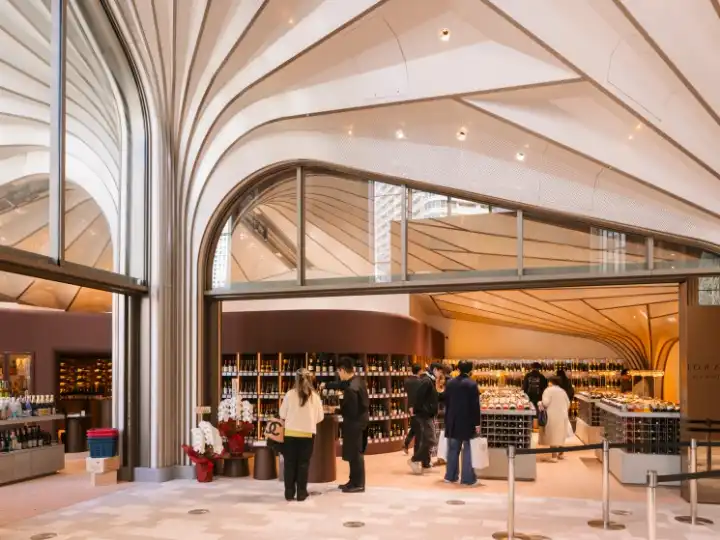
May 2024InventoryA monthly round-up of all you needThat food in Japan is outstanding is hardly news but what really separates the average meal in Tokyo from other big cities is often the quality of the ingredients. From grapes wrapped in muslin on the vine to freshly caught fish handled with the gentlest touch, Japanese producers are on another level. And what if the humble shopper wanted to get their hands on such produce? One new food market in Tokyo is offering just that and more under one roof. This is no regular supermarket – and is priced accordingly – but it’s a fascinating stop for anyone wanting to get to the heart of why the best Japanese food is so good. Even the sushi counter here, Sushi Saito, is a Michelin-starred operation.Choose your own ‘dashi’ at Okume ShotenGet your daily catch from the best fish wholesalersThe Azabudai Hills Market – part of Mori Building’s giant new development – covers 4,000 sq m and 34 speciality shops. “We have had lots of experience with restaurant tenants but we had never done food retail,” says Masanori Tsukamoto, who developed the market with his colleague Takashi Ohgaki. “When we thought about how to do really good food retail, it was all about high-quality products,” says Tsukamoto. “We realised that great restaurants had access to the best produce so we talked to the ones we worked with about where they were getting their produce from. Sushi restaurant Saito told us that it was getting its fish from [seafood wholesaler] Yamayuki. We felt that it would be innovative if businesses that were only doing B2B became available B2C.”Serving food with finesseTraditional welcome at Maehara grilled-eel shop“We wanted to showcase the richness of Japanese food culture, so we selected retailers of the highest quality for each category,” Ohgaki tells Monocle. “And to show the variety of Japanese cuisine, not just sushi and tempura but also home cooking, from potato salad tokaraage.” Hiyama butchers’ shop has been based in Ningyocho – a quaint Tokyo neighbourhood – for more than 100 years. The Hiyama buyers favour Yonezawa wagyu from Yamagata, marbled with just the right amount of fat; the thinnest slices need only be licked by a flame and they’re good to go. Tsukiji Toritoh is another traditional wholesaler founded in 1907 on the fringes of Tsukuiji fish market; this is where the bestyakitorirestaurants are sourcing their birds – and now you can too.For fish, the team has netted top-drawer fishmongers Nezu Matsumoto and Yamayuki, which supplies many of the best restaurants in Tokyo. “I’ve been selling fish for 40 years but once I hit 60, I wanted to explore food education,” says Yukitaka Yamaguchi, owner of Yamayuki. “It’s difficult to find an [marine] environment like Japan anywhere else. I want to show what’s out there. I don’t think farming is bad but I want people to know the natural taste of real, wild fish.” By working face to face with customers, Yamaguchi can also give advice. “We get to say, ‘It’s delicious if you eat it this way’”, he adds. One of the staff is skilfully cutting a 164kg tuna caught in Shimoda.For fresh fruit and vegetables, the market has called on Kyoto Yaoichi, a greengrocer, to handle only the best and most in season of produce: bamboo shoots (still covered in soil), the juiciest Japanese strawberries and perfectly ripemikancitrus. There are also unfurled ferns, fresh wasabi and edible flowers. This is the place for those ¥50,000 (€300) melons and presentation boxes of uniform Japanese cherries but they also have everyday vegetables – just better versions. Look at the sad, out-of-season produce in the typical urban supermarket and weep.Arranging vegetables at Kyoto YaoichiPremium fish lunchboxes There are 34 restaurants and food countersNezu Matsumoto is renowned for its fish and chirashi sushiBlend your own beans at Ogawa Coffee LaboratoryMeidi-Ya supermarketCitrus at Kyoto YaoichiSlicing tuna at YamayukiThe bread shop, Comme’N Tokyo, whose popular mother shop is in Okusawa in Tokyo, is excellent, though you might never find out. So long are the queues that only the most dedicated will be going home with one of its baguettes or pastel-coloured meringues. The young baker in charge, Shuichi Osawa, was the first Japanese to take home top prize at international bread competition Mondial du Pain. Osawa knows his audience and there are almost 100 varieties on offer. Just don’t be in a hurry.For pickles, customers will head to Nakaya, which, like so many classic food shops, originated on the outer edges of Tsukiji fish market. Nakaya is based in rural Ibaraki and specialises in vegetables pickled in rice bran. Free from additives, these pickles bear no relation to the wincingly sharp onions in a jar but allow the taste of the vegetable to shine through. Fordashistock – made frombonitoand the basis of so much Japanese cooking – the amateur chef can go to Okume Shoten, which has been selling seafood since 1871. Customers can select their owndashi. For miso, look no further than Tokyo favourite Sano.Expert counter service at Nezu Matsumoto Sealing the dealVarious cuts of fishVariety and vitality in actionNeighbourhood favourites include Hiyama butchers Baskets at the ready“The age group of our customers runs from seniors to young children,” says Ohgaki. “We have fish tanks that little kids can see, as well as a bakery dedicated for children [Comme’N Kids], so it’s a fun place for them as well.” From this month the Azabudai Hills Market Lab will host events and workshops that offer opportunities to eat the produce at pop-up sushi counters and sit-down lunch bars. Every aspect of a meal is available here, with ingredients so superb, that even the least adept cook might make the meal of a lifetime.azabudai-hills.comCase study:RiceRice is a Japanese preoccupation that potato-loving Western cultures can never quite get t o grips with. At Azabudai Hills, customers can buy from celebrated century-old Tokyo rice shop Sumidaya Shoten, which is now run by Shinichi Katayama. The rice is top quality, of course, but Katayama is also keen to teach people how to prepare it properly. “No matter how good the rice is, if it is cooked incorrectly, it will not be delicious.”Case study:WineWine is given its own space on an upper floor and run by Yamajin, a century-old wine merchant from Utsunomiya, led by Kenichi Ohashi, the only person in Japan to hold the Master of Wine title. It sells big French classics, amphora-aged wines from Georgia and a strong saké selection, and has a counter for trying the odd glass or two. For coffee lovers, emerge from the entrance (admiring the architecture by Thomas Heatherwick and architect Ai Yoshida of Japan’s Suppose Design) and pick up beans from Kyoto roasters Ogawa Coffee Laboratory. Dozens of varieties are lined up like fragrances and staff will blend according to taste.
Australian Bushfires Threaten Animals
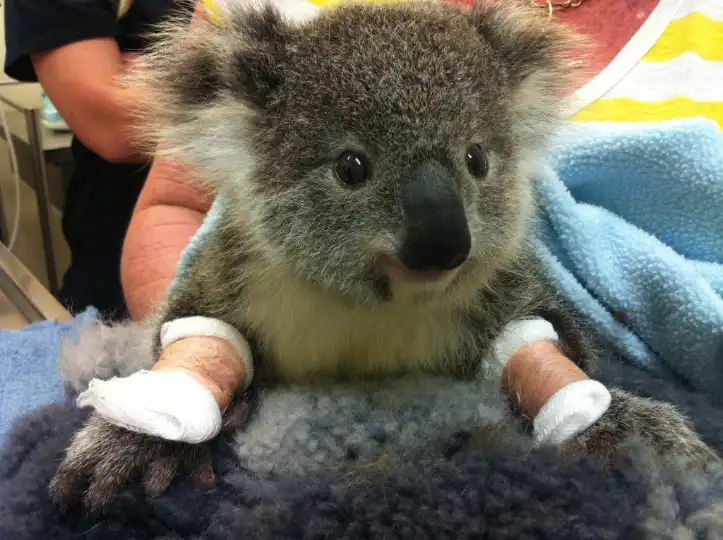
Australian Bushfires Threaten AnimalsNFK Editors - January 15, 2020New South Wales, Australia —(Map)Cooler weather and rain are expected in Australia, where this year’s bushfire season has brought damage like never before. The fires have been terrible for humans, and worse for animals.Since September, the fires have burned around 31,000 square miles (80,000 square kilometers). That’s nearly as large as Austria. Thousands of homes have been burned and 28 people have died.Cooler weather and rain are expected in Australia, where this year’s bushfire season has brought damage like never before. The fires have been terrible for humans, and worse for animals. This picture is from December.(Source: Sean Cox, USDA Forest Service.)Australia’s Bushfires Bushfires are common in Australia because of the hot, dry weather. Strong winds can blow the flames and make them travel far and fast. This year’s bushfires have set records for their size and the destruction they’ve caused. The country has been going through a very long drought. The dry conditions make things burn easily. Other weather patterns have just made things worse. Though the bushfires weren’t caused directly by climate change, the climate crisis has helped create conditions that make fires like this more likely and more serious.Though the expected cooler weather and rain will make the fires easier to manage, experts believe many fires will continue for months. “These fires aren’t out and they’re not going to be out until they burn themselves out or we finish with a really big rain event,” said Victoria’s premier (leader), Daniel Andrews.Still, the change in weather is some of the best news Australia has had for months.Though the expected cooler weather and rain will make the fires easier to manage, experts believe many fires will continue for months.(Source: Michelle Moore, Bureau of Land Management, National Interagency Fire, via Flickr.com.)Early on, most reports about the bushfires focused on the loss of land and cost to humans. Recently, people have become more aware of the effects of the fires on animals.Chris Dickman, a scientist at the University of Sydney tried to figure out how many animals might have been killed by the fires. The number he came up with was surprisingly large: over 1 billion animals. Other scientists say it’s very hard to get this number right.A scientist at the University of Sydney says that over 1 billion animals may have been killed in the fires. The picture shows USDA Forest Service fire fighter Dave Soldavini, who is volunteering, with a rescued joey (young kangaroo).(Source: US Embassy Canberra.)Fast animals, or those that can fly, may be able to escape a bushfire. Slow-moving animals like koalas, may not.In New South Wales, around 8,000 koalas – about a third of the state’s koalas – are believed to have been killed. In other areas, like Kangaroo Island in South Australia, as many as 25,000 may have died.Slow-moving animals like koalas may not be able to escape the fires. Around 8,000 koalas are believed to have been killed in New South Wales. In other areas, the numbers could be as high as 25,000. The koala shown above was hurt in a fire in 2013.(Source: Ausgrid photos, via Flickr.com.)The loss of animals would be a tragedy any time and anywhere, but it could be especially bad news in Australia, which is home to many special animals that can’t be found anywhere else.Scientists worry that the bushfires might put an end to some kinds of animals that were already in danger of dying out.The loss of animals is especially bad news in Australia, which has many special animals not found anywhere else. Scientists worry that the bushfires might put an end to some kinds of animals that were already in danger of dying out. There were only a few hundred remaining Glossy Black Cockatoos, shown above. Now much of the area they live in has been destroyed.(Source: Aviceda [CC BY-SA], via Wikimedia Commons.)It’s not just about animals killed directly by the fires. Even when animals survive, it can be hard for them to stay alive in the world left behind by the fires. That’s because many of the places they live and their sources of food have been destroyed.For that reason, workers for Australia’s National Park are using helicopters to drop sweet potatoes and carrots onto 12 different areas where rock-wallabies live. Rock-wallabies often survive bushfires, but can have difficulty finding enough to eat once the fires have passed.Workers for Australia’s National Park are using helicopters to drop sweet potatoes and carrots onto 12 different areas where rock-wallabies live. Rock-wallabies like the one above often survive bushfires, but can have difficulty finding enough to eat once the fires have passed.(Source: Jesper Örtlund [CC BY-SA], via Wikimedia Commons.)The “1 billion animals” number doesn’t include farm animals like sheep and cows. Some people expect the fires to kill as many as 100,000 farm animals.Other animals, like thousands of wild camels, are being killed on purpose in order to protect farms and homes. Because of the drought, thirsty camels have been invading places where people live, looking for water.Insects and fish are also not included in the number. For fish, the worst could still be in the future. There is so much ash on the ground from the fires that when strong rains finally do arrive, rivers and lakes will be heavily polluted with ash.For fish, the worst could still be ahead. There is so much ash on the ground from the fires that when strong rains finally do arrive, rivers and lakes will be heavily polluted with ash. The picture above shows ash from the bushfires in New South Wales on a Newcastle beach.(Source: Tim J Keegan [CC BY-SA], via Wikimedia Commons.)Sourceswww.theguardian.comwww.abc.net.auwww.smithsonianmag.comwww.theguardian.comwww.abc.net.auwww.smithsonianmag.comwww.nytimes.comwww.voanews.comNew South Wales, AustraliaView Larger MapShare:
Coronavirus: More, Faster Tests, & Re-Using Masks
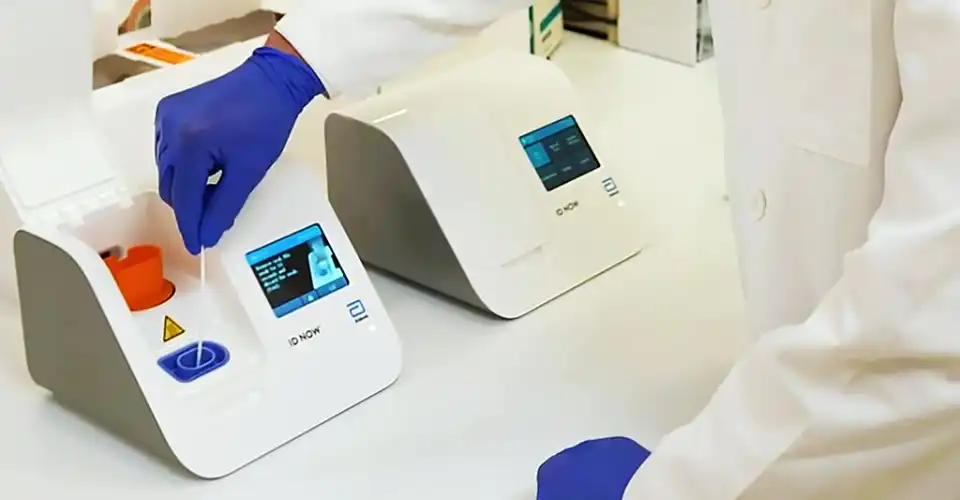
Coronavirus: More, Faster Tests, & Re-Using MasksNFK Editors - April 2, 2020This article is the second in a series about different ways people are working hard to help bring the challenges of the coronavirus pandemic under control.Companies around the world are working quickly to help solve problems created by the new coronavirus, COVID-19. Recently, two big problems have been that there aren’t enough tests and that there aren’t enough masks.It is very important to be able to test quickly whether someone has COVID-19. Test results can help doctors figure out how to treat a patient, and whether they need to be isolated.It’s very important to be able to test quickly whether someone has COVID-19. Test results can help doctors figure out how to treat a patient, and whether they need to be isolated. Above is a kit used to test for COVID-19 in the US.(Source: U.S. Centers for Disease Control [Public domain], via Wikimedia Commons.)More importantly, when health experts know that someone has the disease, they can try to trace back, to find and help other people that person came in contact with. This can help to limit the spread of the disease.Getting clear numbers of how many people have the disease also helps scientists predict how the virus might spread, and figure out the best ways to fight it.Around the world, most countries haven’t been prepared to do enough tests. Germany can now test 500,000 people a week. The US has only recently tested 1 million people in total. Above, a drive-through testing station in Germany.(Source: Henning Schlottmann [CC BY-SA], via Wikimedia Commons.)But around the world, most countries haven’t been prepared to do enough tests. Even when tests did become available, they had to be sent off to a laboratory. It can take days to get the results back. In the US, the average wait time is still four to five days.Many companies have been working hard to produce more tests. They’ve also been working to produce faster tests. A US company called Abbott Laboratories has been given permission to begin producing machines that can tell in about 15 minutes whether someone has the coronavirus or not.A US company called Abbott Laboratories has been given permission to begin producing machines that can tell in about 15 minutes whether someone has the coronavirus or not. The machines, called ID Now (above), are small enough that they can be moved easily.(Source: Abbott Laboratories.)The machines, called ID Now, are about the size of a toaster – small enough that they can be moved easily. And best of all, the test materials don’t have to be sent off to a lab. The whole test happens on the machine.Other companies in the US and Australia have created similar tests. One of the problems with these tests is that they only catch patients who have had the coronavirus for several days, and miss people who just got the disease.With Abbott’s new machine, the test materials don’t have to be sent off to a lab. The whole test happens on the machine. One problem with these tests is that they only catch patients who have had the coronavirus for several days.(Source: Abbott Laboratories.)Early testing in the US was slowed because of strict government rules about what tests were allowed. These rules were designed to protect people. Normally, medical equipment and methods must be very carefully tested.But the coronavirus crisis is so severe that governments are now agreeing to new ideas with less double-checking than usual. One area where this is true is in the re-using of protective gear like masks and gowns.Because so many people have the coronavirus, supplies of medical gear like masks are running very low. Masks are generally used once and thrown away.The US government has agreed to allow a special cleaning system made by a company called Battelle. The system can clean up to 80,000 masks a day so that they can be re-used. Each mask can be re-used up to 20 times. Above, masks ready to be cleaned.(Source: Battelle.)Now the US government has agreed to allow a special cleaning system made by a company called Battelle. The system can clean up to 80,000 masks a day so that they can be re-used. Each mask can be re-used up to 20 times. This will make the current supply of masks last a lot longer.Two of Battelle’s machines are in use in Ohio. More machines will be sent to New York, Seattle, and Washington, DC.NewsForKids.net has these COVID-19 resources:• Overview of COVID-19• Coronavirus Words Explained• Collection of our articles on COVID-19• Regular, detailed COVID-19 updatesCheck Yourself0/41. The article names two things that there aren’t enough of. What are they?2. Testing people quickly for COVID-19 helps health experts control the spread of the disease.True False3. The new machine from Abbot Laboratories can give test results in 15 minutes. What's one problem with it?test materials need to be sent to a labit's too bigit's hard to moveit only works on people who've had COVID-19 for several days4. Battelle created a cleaning system that allows people to re-use masks up to _______________ times.How can early testing help prevent the spread of viruses like COVID-19?ResetSourceswww.theguardian.comwww.npr.orgwww.theverge.comwww.msn.comwww.news.com.auwww.vox.comwww.npr.orgwww.usatoday.comen.wikipedia.orgShare:Scientists have created the first gene-editing medicine made for a single patient. The patient – a young baby who was sick because of a problem with his DNA – is now greatly improved, and is expected to go home soon.Doctors Say Vaccines Key to Fighting US Measles OutbreakNFK Editors - Mar 18, 2025The US is facing a serious measles outbreak, with over 300 cases reported across 14 states so far this year. That’s more cases in the first three months of 2025 than in all of last year. The rise in measles cases is connected to a drop in vaccination rates.

Shimon the Robot Writes and Sings Songs
Shimon the Robot Writes and Sings SongsNFK Editors - April 1, 2020Researchers at Georgia Tech have been working to improve a musical robot called Shimon. Now Shimon doesn’t simply play music, he also writes the words to his own songs – and sings them.Shimon is a four-armed robot with a ball-like head. He holds small mallets in his “hands” to play a kind of xylophone called a marimba. As Shimon plays, his head moves around in time to the music.Shimon is a four-armed robot with a ball-like head. He holds small mallets in his “hands” to play a kind of xylophone called a marimba. As Shimon plays, his head moves around in time to the music.(Source: Gil Weinberg, Georgia Tech.)Shimon has been around for quite a while as a musical robot. Even back in 2015, he was playing with other musicians at the Kennedy Center in New York. What Shimon could do back then was already pretty cool.Using “deep learning”, Shimon was taught to write his own music. Deep learning – also known as Artificial Intelligence (AI) – means that computer programs sort deeply through huge amounts of information. This allows them to find patterns humans may not have noticed. The programs can then use those patterns in new and surprising ways.Using “deep learning”, Shimon was taught to write his own music. He can create his own music in real time, while playing with other musicians. This is called “improvising”. Above, project members Gil Weinberg (left) and Richard Savery play with Shimon.(Source: Gil Weinberg, Georgia Tech.)For Shimon, that meant he could not only make up his own music, he could do it in real time, while playing with other musicians. This is called “improvising”.Now Shimon is back with a whole bunch of new tricks. He can write the words to his own songs, and sing them.Now Shimon is back with a whole bunch of new tricks. He can write the words to his own songs, and sing them.(Source: Gil Weinberg, Georgia Tech.)Shimon learned to write the words for the songs the same way he learned to write music – by being “fed” thousands and thousands of examples. Shimon was trained on the lyrics (words) to 50,000 songs.Georgia Tech professor Gil Weinberg, who leads the Shimon project, gets Shimon going with a starting idea. Shimon then writes the lyrics based around that idea. Mr. Weinberg usually provides much of the music for the songs, but Shimon helps out there, too.Georgia Tech professor Gil Weinberg, who leads the Shimon project, gets Shimon going with a starting idea. Shimon then writes the lyrics based around that idea.(Source: Gil Weinberg, Georgia Tech.)Richard Savery, one of the researchers, says, “You’ll get a word like ‘storm’, and then it’ll generate a whole bunch of related words, like ‘rain’.” He says Shimon comes up with many ideas, keeps the good ones, and builds on them.Singing the songs is another story. To give Shimon a voice, the Georgia Tech team worked with experts at Pompeu Fabra University in Spain. The voice was created using AI and sounds very much like a man.Shimon’s face has also gotten new features. Shimon’s mouth now moves smoothly in time as he sings. He also has eyebrows, which allow his face to show more emotion.Shimon’s face has also gotten new features. Shimon’s mouth now moves smoothly in time as he sings. He also has eyebrows, which allow his face to show more emotion.(Source: Gil Weinberg, Georgia Tech.)To show off Shimon and his new abilities, the researchers have recorded one of Shimon’s songs, called “Into Your Mind”. They have made a video for the song, which is out on YouTube.Later this spring, the team plans to put out an album of about 8-10 of Shimon’s songs. The album will be released on the music streaming service Spotify. There are also plans for Shimon to go on tour with a band to play and sing his songs live.To show off Shimon and his new abilities, the researchers have recorded one of Shimon’s songs, called “Into Your Mind”. They have made a video for the song, which is out on YouTube (above).(Source: Gil Weinberg, Georgia Tech.)For Mr. Weinberg, that’s the main goal behind the Shimon project – not to have robots take over, but to have robots and humans make something beautiful together.Did You Know…?By chance, Shimon’s new song has some words of hope for people stuck at home because of the coronavirus: “Home is where the rainbow comes.”Screenshot from video for “Into Your Mind”, by Shimon.(Source: Gil Weinberg, Georgia Tech.)Check Yourself0/41. Shimon plays a kind of xylophone called a _______________.2. What skill does Shimon NOT have?singing songsplay the marimbaplaying drumswriting songs3. To learn to write songs, Shimon was trained on the _______________ of 50,000 songs.4. Later this spring, the team will put out an _______________ of Shimon’s songs.Do you think robots like Shimon mainly replace humans, or do they help humans and robots work together?ResetSourcestechcrunch.comnewatlas.comspectrum.ieee.orgqz.comwww.news.gatech.eduwww.news.gatech.edugizmodo.comShare:Scientists at Loughborough University in the United Kingdom have created what they call “the world’s smallest violin”. The violin is made of metal and is so tiny that it can only be seen with a powerful microscope. The project was designed to test new technology for building extremely small things.

Apotheke, the Athenian natural cosmetics brand taking beauty back to basics
“This is all about bringing back a liberating simplicity to people’s lives,” says Eva Papadaki, as she moves through 10am Apotheke (Greek for “storage room”), her new concept shop in Athens’ vibrant neighbourhood of Gazi. Just beside the boutique – where Papadaki picks a collection of homeware, cosmetics and culinary ingredients – is a garage that repairs old cars. There’s a link to these unlikely neighbours: both are focused on preservation.The idea for Apotheke (as it’s usually known) was born in the basement of the brutalist, concrete 10am Lofts building where Papadaki, for the past seven years, has based her talent management agency for photographers and artists. “It feels like I have given birth to this project and there’s so much sentiment attached to it for me,” she says, looking up towards the space’s incredibly high ceilings. Minimalist shelving units line the walls, displaying limited-edition products that Papadaki promises are sustainable all the way down to the manner in which they are transported from her native Crete to Athens.On the wall, a film projection of the inky blue, sun-scorched Aegean landscapes and whitewashed houses captures the very essence of Papadaki’s new brand – a conscious movement back to simple living, inspired by the ways her Greek grandparents lead their lives. It’s why she has sourced limited-edition ingredients from Cretan producers who she has known since childhood. Olive oil, honey, handmade soaps, beeswax candles (just like the ones used in Greek Orthodox churches) and moisturising beeswax balms that can be applied all over the body. Most products fit in a beauty cabinet as much as they do in a kitchen pantry and will inspire you to rethink your beauty rituals – replacing complex formulas with natural ingredients and finding joy in the process rather than just the result, from applying a soothing balm on your pulse-points to lighting incense.Minimalist living was the guiding principle for the shop fit-out but Papadaki also wanted to pay homage to the history of the building. “This was once a warehouse for dried foods,” she says. “I love the word ‘Apotheke’ because it also refers to our inner, metaphorical storage rooms, where we keep our memories, our feelings, our spirit.” Her own spirit remains firmly in her native Crete. “It’s where I’m from and it’s where I will always go back to,” she says, referencing the sounds, scents and landscape of the island, which inspired all the products now available at Apotheke.Her commitment to local sourcing was also guided by her experiences growing up on the Mediterranean island. “So many people talk about sustainability but no mass-produced product is really sustainable,” she says. “Here, products are not made in huge quantities. The honey and the oil might run out. It’s whatever nature can give in that moment. I always want to be in tune with and respectful of what nature has to give me.”Papadaki travels to Crete to pick up the products herself and ensure that she maintains an ongoing dialogue with the producers she collaborates with. Her ultimate aim? To transport people to Crete, every time they light the Apotheke incense or use the wild herb soap that has been made using her grandmother’s old recipe.Every Saturday, Papadaki opens the heavy doors of Apotheke to Athens’ ever-growing community of artists, designers and photographers, making the most of the airy space as a gathering spot as well as a shop. Nodding back to her previous job as a talent agent, the idea of Apotheke Saturdays is to create opportunities for creatives to come together and inspire each other with conversations about art, creativity – and, of course, the best natural beauty remedies.“I want to offer a space for artists to showcase their work, so we have this weekly gathering that is interlinked with the ethos of Apotheke,” she says. “It’s all about returning to your roots.”10amapotheke.com
Companies Rush to Make Ventilators
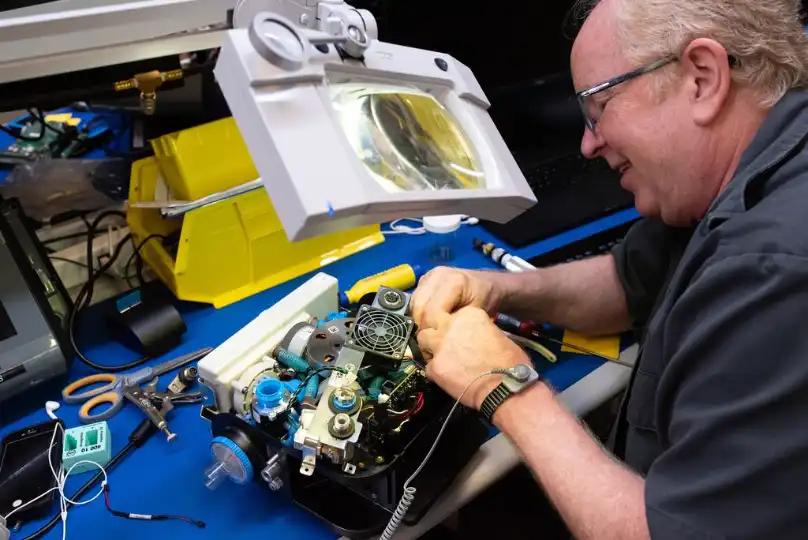
Companies Rush to Make VentilatorsNFK Editors - March 31, 2020This article is the first in a series about different ways people are working hard to help bring the challenges of the coronavirus pandemic under control.Worldwide, doctors, nurses, and other health care workers are struggling to find the special equipment they need to deal with the coronavirus. Now people around the world are moving quickly to tackle these problems.Because the COVID-19 pandemic has affected so many people so quickly, hospitals worry they may not have enough ventilators to keep up.Ventilators are machines that can move air into and out of the lungs of a person who can’t breathe well on their own. Because COVID-19 has affected so many people so quickly, hospitals worry they may not have enough ventilators to keep up.(Source: Quinn Dombrowski, via Flickr.com.)Ventilators are machines that can move air into and out of the lungs of a person who can’t breathe well enough on their own. Most cases of COVID-19 don’t require a ventilator. But in some severe cases, especially among older people, ventilators are needed.Ventilators cost huge amounts of money – as much as $30,000 – so companies normally don’t make that many of them. Now countries around the world are racing to make more.In Italy, one of the countries that’s been hit hardest, only one company makes ventilators. The company makes just 125 machines a month. The government has now ordered the company to make 500 a month and has sent soldiers to help out.Ventilators cost huge amounts of money – as much as $30,000 – so companies normally don’t make that many of them. Now countries around the world are racing to make more.(Source: أمين [CC BY-SA], via Wikimedia Commons.)The United States (US) currently has more COVID-19 cases than any other country. Health experts worry that hospitals could soon need more ventilators than there are.With its factories closed because of the pandemic, car maker General Motors (GM) has been working hard since mid-March to change some of its factories to build ventilators instead of cars.GM is working with a ventilator company called Ventec (above). Ventec only produces about 200 ventilators a month. Now, working together, the two companies hope to make as many as 10,000 ventilators each month.(Source: Ventec Life Systems.)GM is working with a ventilator company called Ventec. Ventec only produces about 200 ventilators a month. Now, working together, the two companies hope to make as many as 10,000 ventilators each month.The companies had to scramble to find all the parts they’ll need to make 10,000 machines a month, but they say the new ventilators should be on their way to hospitals before the end of April.The companies had to scramble to find all the parts they’ll need to make 10,000 machines a month, but they say the new ventilators should be on their way to hospitals before the end of April. Above, a Ventec ventilator in a hospital.(Source: Mark Stehle/AP Images, Ventec Life Systems.)Elon Musk, who runs the Tesla car company, has promised to give hospitals in New York hundreds of ventilators he bought in China. New York is the US state hit hardest by the pandemic. Mr. Musk says he’s also working to convert one of his factories in New York to make ventilators.In the United Kingdom (UK), inventor James Dyson says he’s come up with a new design for a ventilator that’s quick and easy to produce. That will make it simpler for factories to make many of them. The UK government has already ordered 10,000 of the machines, which Mr. Dyson calls CoVent. The inventor says he plans to give 5,000 of his ventilators away to other countries.Inventor James Dyson (above) says he’s come up with a new design for a ventilator that’s quick and easy to produce. That will make it simpler for factories to make many of them. The UK government has already ordered 10,000 of the machines, which Mr. Dyson calls CoVent.(Source: The Royal Society [CC BY-SA 3.0], via Wikimedia Commons.)Tackling the problem from another angle, MIT has come up with a cheap way of making ventilators which brings the cost down to around $500. The university is releasing the design information so that experts in other parts of the world can make the ventilators.MIT’s ventilator, called the E-Vent, is based on an old student project. It may be especially useful in poorer countries. Like most ventilators, the E-Vent works automatically. But the bag it uses to move air was originally designed to be pressed by a doctor or nurse. That could come in handy in emergencies or in places where the electricity sometimes goes out.MIT has come up with a cheap way of making ventilators which lowers the cost to about $500. The university is releasing the design information so that experts around the world can make them. Above, MIT’s system is hooked up to a dummy to show how it works.(Source: MIT.)NewsForKids.net has these COVID-19 resources:• Overview of COVID-19• Coronavirus Words Explained• Collection of our articles on COVID-19• Regular, detailed COVID-19 updatesCheck Yourself0/41. Because so many serious COVID-19 patients need help breathing, hospitals worry they might not have enough _______________.2. General Motors is working on making ventilators. What does it normally make?carsbicyclesairplaneslight bulbs3. General Motors and Ventec hope to make 10,000 ventilators a month. How many ventilators does Ventec currently make?4. MIT has come up with a cheap way of making ventilators that costs just $_______________.What sorts of changes do you think might be needed to turn a car factory into one that makes medical equipment?ResetSourceswww.voanews.comwww.cnn.comwww.nytimes.comwww.zdnet.comwww.cnet.comwww.bbc.comnews.mit.eduShare:Scientists at Loughborough University in the United Kingdom have created what they call “the world’s smallest violin”. The violin is made of metal and is so tiny that it can only be seen with a powerful microscope. The project was designed to test new technology for building extremely small things.
A Bangkok food emporium’s recipe for success
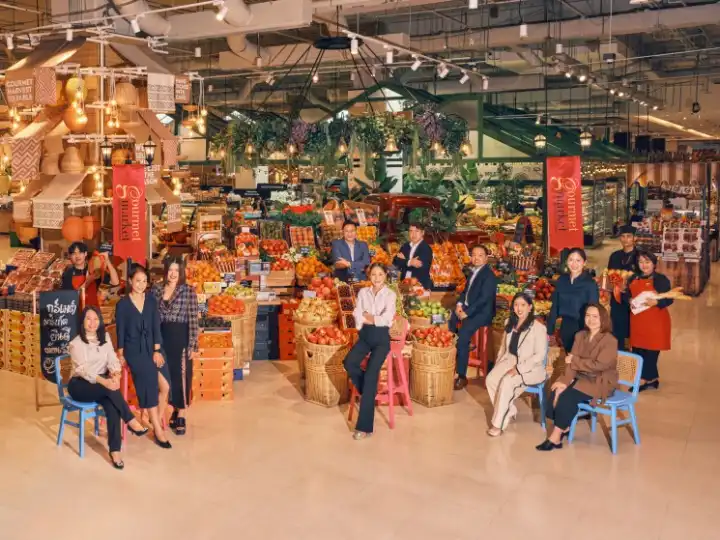
Gourmet Market’s flagship in Bangkok is a giant food emporium found inside the city’s premier shopping mall, Siam Paragon. Every morning, staff form a line at the end of each aisle to greet the first customers of the day with a cheerfulsawadee. This sizeable welcoming party makes food shopping feel like a royal visit. A repeat performance after lunch involves dancing to music.“An exceptional customer experience is crucial to food retail because there are so many options,” says Ploychompu Umpujh, who heads up Gourmet Market’s 17 branches and the rest of the food department at The Mall Group, one of Bangkok’s leading mall operators. “We have to consistently improve and think beyond what the customer wants.”Supermarket shopping might have been boiled down to an exact science in many parts of the world but in Thailand the pie charts and schematics come with five-star service and lashings of entertainment. At Gourmet Market, a handful of floor staff are trained to guide customers through fresh produce and groceries, giving ordinary items the star treatment usually associated with fine wine and premium cuts of meat. Then there’s the “you hunt, we cook” scheme, with chefs on hand to whip up a recipe for customers using ingredients sourced from the supermarket.“Food appreciation is in our DNA,” says Umpujh, before rattling through a shopping list of supporting reasons. These include Thailand’s diverse cuisine and cooking styles, a service mindset, the dominance of agricultural exports and the central role of food in daily life. “Have you eaten?” is a popular way of saying hello. And the likely response is, “Yes, I have but I’m starting to get peckish.”Beyond the fun and frivolity, putting food on Thai plates is big business. The department that Umpujh leads contributes the largest slice of the Mall Group’s overall revenue and Gourmet Market plans to double in size in five years, primarily via shop expansions. It’s fair to say that Bangkok’s premium supermarkets are home to some of the freshest concepts in food retail.From left toright:1. Adithep Saomok, Sales representative, fruit,“Durian season begins in April – I can’t wait.”2. Napaporn Wongmas, Assistant general manager, Gourmet Eats,“Joined Umpujh’s team a year ago but she has been with the company for more than 15 years.”3. Thanida Limsirivallop, General manager of merchandising, Gourmet Eats,“When international food brands come to Thailand, she’s in charge of bringing them to us first.”4. Rewadee Arunyakanont, Assistant manager, Gourmet Market,“She handles promotions and the planogram system; in other words, how products are placed on the shelves.”5. Yarnintorn Temiyaputra, General manager of operation, Gourmet Market, Siam Paragon,“He looks after all of the operations at the flagship store, from customer service to controlling the area where suppliers come to drop off products every morning.”6. Pongsak Oransuwanchai, Group general manager, supermarket merchandising (food),“He goes to the local street-food stalls to convince the owners to come into malls.”7. Pakawat Chintacanun, Group general manager, supermarket merchandising,“Industry veteran who knows everything about the fresh department and seasonal products.”8. Watsakarn Pongsanguansuk, Group general manager, supermarket merchandising (grocery),“A proven executor. When asked for different merchandising from abroad, she always makes things happen.”9. Saknarin Kamphrommee, Sales representative, fruit,“Fresh fruit and vegetables generate the most sales.”10. Rapeepan Sawangchang, Section manager Gourmet Fresh,“Apples are our biggest sellers and cherries sell really well on promotion.”11. Panita Haritaworn, General manager, marketing, Gourmet Marketand Gourmet Eats,“Very creative, a good leader and not scared to try new things.”12. Chidchanok Boonchamnan, Assistant general manager, marketing, Gourmet Market,“She mainly looks after Gourmet Market’s many events. End of the year and Songkran in April are the most important.”
advertisement